Why Is My Succulent Stretching? What’s Really Happening and How to Fix It

September 29, 2026
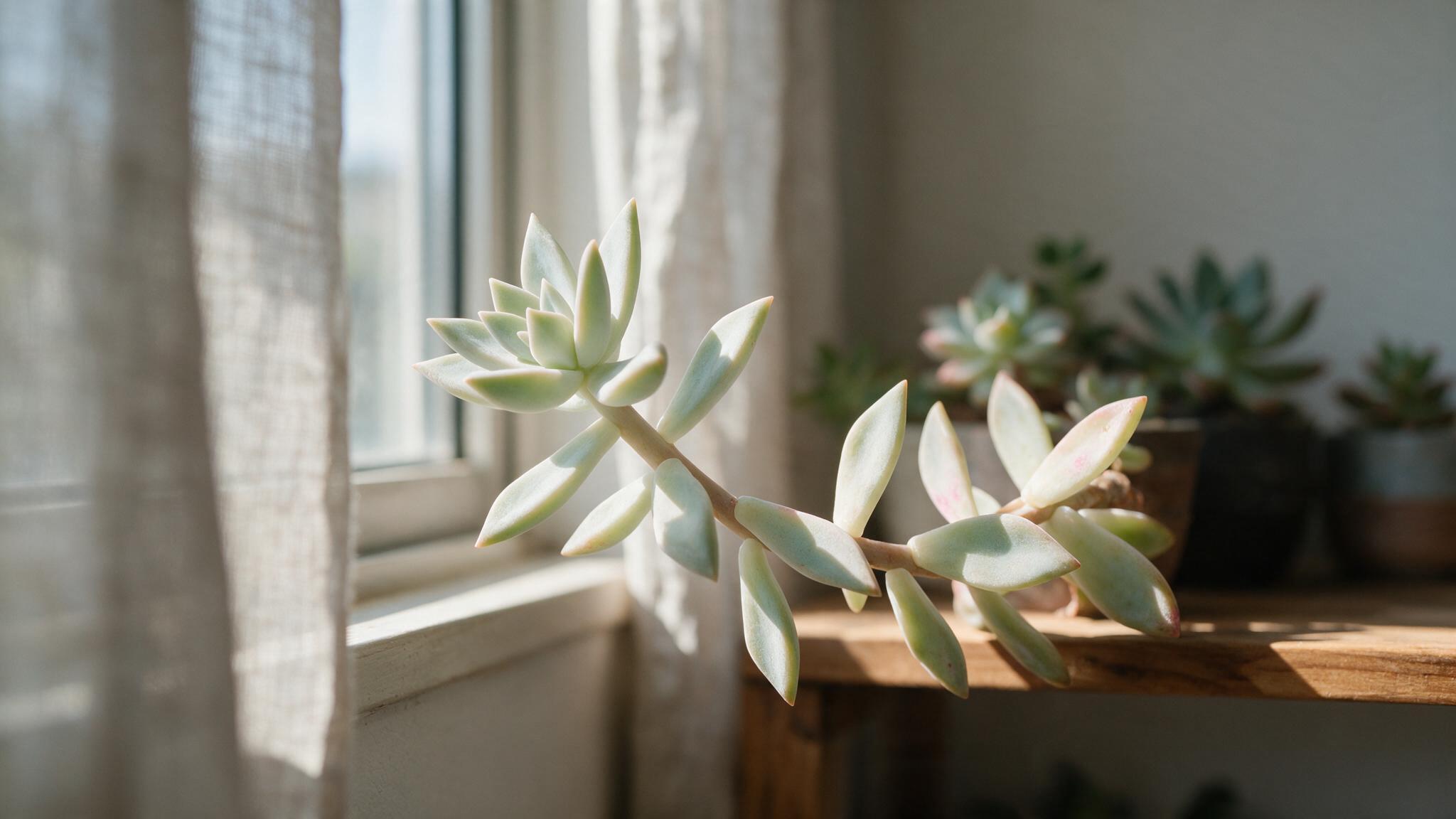
You set your succulent on a shelf, gave it water, and stepped back to admire it — then one day you noticed it looked a little… tall. Then taller. Now the stem is long and bare, the leaves are spread wide apart, and the whole plant is leaning toward the window like it’s trying to escape. Sound familiar?
What you’re seeing has a name: etiolation. It occurs when a succulent stretches toward a distant light source in a desperate attempt to photosynthesize more efficiently. It’s one of the most common problems indoor succulent growers face in the US, and the good news is that once you understand what’s driving it, you can stop it in its tracks — and prevent it from happening again.
What’s Actually Happening to Your Succulent Right Now
In nature, succulents grow in open, sun-drenched environments where light is abundant from above. When you bring one indoors and place it on a bookshelf or a dim coffee table, the plant suddenly finds itself in a very different world. Etiolation is most common with indoor succulents and is a response mechanism to insufficient sunlight. When a plant needs more light, it stretches out and grows toward the place where it thinks it will reach maximum light.
At the cellular level, the process is driven by plant hormones. Sunlight contains ultraviolet (UV) and blue spectrum light, which acts as a natural growth inhibitor. Specifically, blue light around 430–450nm tells the plant to grow compact and strong. Without it, the plant produces hormones called auxins that cause rapid cell elongation in the stems to “reach” for a light source.
The stem becomes long and bare, the space between leaves (internodal spacing) increases dramatically, and new leaves grow smaller and paler than usual. You may also notice the color washing out from a rich green or purple to a dull, pale tone — that’s because etiolation occurs when the plant fails to form chlorophyll, the substance that gives leaves their green color and is essential for absorbing energy from light.
One of the earliest warning signs is easy to miss. Leaves arching downward is one of the first signs of light deprivation and is commonly seen in Echeverias and Sempervivums. Beginning from the lower leaves, they start to droop down, creating a large leaf surface area — allowing the plant to take in more of the little sunlight it’s getting. If you catch your succulent at this stage, you’re ahead of the game.
Pro Tip: A room that looks bright to you can be surprisingly dark for a plant. Windows filter out a lot of the light plants need, but our eyes adjust for it. A room that seems well-lit to you can actually be pretty dark for a plant, so try to keep them near windows.
Is This Normal, or a Sign Something’s Wrong?
Stretching is always a signal, but it’s worth knowing whether it’s a true problem or just the plant’s natural form. Many succulents, such as some Senecio varieties, naturally grow tall and may seem a bit stretched — but this is just what they are like. There is absolutely nothing wrong with them. Before you panic, check whether your plant is a naturally upright, columnar species.
If your plant was once compact and is now elongating, that’s a different story. Succulents are prized for their compact forms, vibrant colors, and architectural shapes. When they begin to stretch unnaturally, losing their tight rosettes and growing long, weak stems, it’s a clear sign of distress. This condition, known as etiolation, is one of the most common issues faced by indoor succulent growers.
There’s also a difference between a plant that’s simply leaning and one that’s fully etiolating. Sometimes a succulent will stretch straight up; other times, if it is near a window, it may stretch to the side that the light is coming from. Leaning on its own can be corrected early by rotating the pot. Full etiolation — with bare, elongated stems and pale, widely spaced leaves — is a more advanced stage. You can learn more about how to plant and position succulents to give them the best start from the beginning.
In some succulents like the Paddle plant or the Graptoveria, stretching can occur naturally after 2–3 years of growing, and not necessarily because of a light problem. Age-related stretching is normal and not a cause for concern. The key question is: did the stretching happen gradually alongside pale coloring and wide leaf spacing? If yes, light is almost certainly the culprit.
The Real Trigger Behind Succulent Stretching
The primary cause is simple: not enough light. Succulent etiolation is caused by a lack of light. Water and temperature can also affect it. But let’s break down what “not enough light” really means in a typical American home.
Most succulents typically need at least 4 to 6 hours of bright sunlight a day. If you’re planning to grow one indoors, it needs to be placed in the brightest area of your home or office. Most succulents are high-light plants, which means they want at least six hours of sunlight per day. South-facing windows are best for these plants, but they can also handle the heat of a west-facing window if it’s not too shady during the day.
The problem is that even a south-facing window isn’t as powerful as it looks. Succulents evolved in sunny, arid environments where they receive 6–12 hours of direct sunlight daily. When you bring them indoors, even the brightest south-facing window provides only about 50% of the light intensity they’d receive outdoors. Glass filters out crucial wavelengths, and the angle of light changes throughout the day.
Popular spots like a kitchen counter away from the window, a bathroom shelf, or a bedroom nightstand are almost always too dim for most succulents — even if those rooms feel bright to you. Although your succulents may look cute on your bedside table or coffee table, these places often just aren’t bright enough. If you’re looking for plants that genuinely thrive in lower-light rooms, check out this guide to the best houseplants for low-light areas — succulents generally aren’t on that list.
Key Insight: If you keep a high-light succulent in a window that doesn’t get at least six hours of good sunlight, it will begin to stretch, looking for light. Sometimes people mistake stretching for growing.
Other Factors That Can Speed It Up or Make It Worse
Light deprivation is the root cause, but several other conditions can accelerate stretching or make an already light-stressed plant deteriorate faster.
Warm temperatures combined with regular watering are a major accelerant. Etiolation is usually a signal of light deprivation, but it can also be about temperature and the amount of water a succulent receives. If the plant is kept warm with regular watering but without enough light, it will also stretch as the plant is tricked into thinking it’s growing season, resulting in new growth searching for light.
Overwatering compounds the problem directly. A common cause of etiolation paired with light deficiency is overwatering. Succulents plump up when they have stored water. If the soil is wet, they grow fast and loose. Let the soil dry out completely between waterings.
Seasonal light shifts catch a lot of US growers off guard. As seasons change, so do light conditions. In winter, the sun is lower in the sky, and your plants may require a different placement to receive adequate light. Be proactive in adjusting their location based on the season to ensure they continue to thrive. A windowsill that worked beautifully in July may leave your succulent starved for light by November.
Uneven light exposure causes the one-sided lean many growers notice. The way to prevent this is to rotate the plant every few days so that the light reaches the plant uniformly and no part is deprived of light for too long. This way the succulent can receive adequate light and maintain its vibrancy on all its sides.
Genus and variety sensitivity also plays a role. Subgenera such as Echeveria, Sedeveria, Crassula, Sedum, and Graptopelatum are highly prone to etiolation. You’ll want to look out for varieties that won’t show signs of etiolation when growing under partial shade. If your home doesn’t have great natural light, choosing a lower-light-tolerant variety like Haworthia from the start makes a real difference. You can explore different types of aloe vera plants and Succulent Plant Care’s indoor lighting guide to match the right species to your conditions.
Can You Reverse It?
Here’s the honest answer: the stretched stem itself cannot be undone. No part of the already-stretched stem will contract or regain its original form. However, with proper light, the plant will produce new, compact growth. Think of the etiolated section as a permanent record of a difficult period — but the plant’s future doesn’t have to look the same.
What you can do depends on how far along the stretching is:
- Early-stage stretching (leaves drooping, slight lean): Simply move the plant to a brighter spot. Gradually move the succulent into brighter light over the course of 1–2 weeks so it can slowly acclimate to the sun. Moving a plant immediately into more light can cause permanent sunburns.
- Moderate etiolation (bare lower stem, pale color): Move the plant to a location with more sunlight or provide supplemental artificial light. Prune back the stretched growth and propagate the healthy cuttings, if desired.
- Severe etiolation (long bare stem, very small pale new leaves): In cases of severe etiolation, the succulent becomes excessively weak and there can be a risk of losing the plant. The best way to fix the etiolation or save a succulent from dying is propagation.
Propagation is genuinely the most effective reset. Once a succulent has etiolated, it cannot revert to its original compact form. However, you can propagate new plants from the etiolated one, essentially giving it a “second life.” The new plants, when provided with adequate light, will grow in a more compact and healthy manner. You can behead the rosette top, let the cut end callus for a few days, then set it on fresh, dry succulent soil. Don’t throw away the rooted stump still in the pot. Continue giving it light and occasional water. Within a few weeks, the bare stem will begin to push out new baby pups from the leaf nodes. You’ve turned one leggy plant into multiple new ones.
For grow light users: if you’re supplementing with artificial light and the plant is still stretching, the issue is usually distance or duration. Position lights 6–12 inches above your succulents. Too far and they’ll stretch; too close and they might protest. Bulbs do not need to be labeled as a “grow light” — they can simply be regular fluorescent or LED bulbs in a “daylight” spectrum, preferably a color temperature of 5000–6500K.
Important Note: When you increase light, do it gradually — even for grow lights. Your succulent needs to be adjusted to brighter light gradually. Give them 30 minutes more light per day every third day while keeping a close watch on them. If the plant seems to stop stretching but still has a few leaves pointing down, continue to add more light until it stops showing signs of stress. If the leaves show brown spots, the plant is sunburnt and the adjustment is too quick.
How to Prevent It Next Season
The best time to set your succulent up for success is before the problem starts. These habits will keep your plant compact, colorful, and healthy through every season.
- Choose the right window. A south-facing window is often the best location, but be cautious of intense afternoon sun, which can burn the leaves. East-facing windows work well for moderate-light varieties. If you’re not sure what window orientation you have, a free compass app on your phone will tell you in seconds.
- Rotate your pot regularly. Aim to rotate your succulents at least once a week. A quarter turn — 90 degrees — should be enough for most lighting conditions. This gradual shift in light exposure can do wonders for your plants’ health and appearance.
- Add a grow light in winter. Unless you have large, south-facing windows with direct sunlight all day, it’s very difficult to give your succulents the light they need. Using grow lights is an easy way to help your plants grow compact, colorful, and healthy even if you don’t have the perfect window light.
- Match the variety to your light. Most succulents prefer bright, indirect light. Some succulents can still thrive even if your lighting condition indoors is less than ideal. Haworthias and some Gasterias tolerate lower light far better than Echeverias or Sedums. Use a succulent light guide to match species to your home’s conditions.
- Cut back on watering when light is low. If you have etiolated succulents, try holding back their water to slow the stretching. Less water in low-light conditions means the plant isn’t being pushed to grow with nowhere to go.
- Move plants seasonally. As seasons change, so do light conditions. In winter, the sun is lower in the sky and your plants may require a different placement to receive adequate light. Be proactive in adjusting their location based on the season.
If you’re building out a larger indoor plant collection and want to explore what else thrives in bright spots alongside succulents, the types of plants guide is a good place to browse. You can also use one of these iPhone apps for identifying plants or Android plant ID apps to confirm exactly which succulent variety you have — knowing the species makes it much easier to nail down its specific light needs.
Frequently Asked Questions
Will my succulent go back to its original shape if I give it more light?
Once a succulent stretches out, you can’t make it turn back to its former size. Your only options are to change its conditions to prevent further stretching and to cut down the leggy parts. New growth after correcting the light will be compact, but the stretched section stays stretched.
Is etiolation dangerous for my succulent?
While not immediately lethal, prolonged etiolation weakens the plant structurally and metabolically. It increases vulnerability to pests, disease, and environmental stress. Address it sooner rather than later.
My succulent is stretching even though it’s right next to a window. Why?
Even the brightest south-facing window provides only about 50% of the light intensity a succulent would receive outdoors. Glass filters out crucial wavelengths, and the angle of light changes throughout the day. A grow light positioned 6–12 inches above the plant is often the most reliable fix for indoor growers.
Can I just cut off the stretched part and replant the top?
Yes — this is actually the recommended approach. You can propagate the top to create a new, non-etiolated plant. Let the cut end dry and callus for 2–3 days before placing it on dry succulent soil, and keep it in bright light from the start.
What succulents are least likely to stretch indoors?
Haworthias are among the most forgiving. Most Haworthia species will grow well in low light, but will look their best in a bright, warm environment. They’re a smart choice for rooms without strong natural light. Browse the different types of rubber plants and types of ivy plants for additional low-light-friendly alternatives if succulents keep struggling in your space.