Why Is My Fiddle Leaf Fig Dropping Leaves? Causes and Fixes

September 25, 2026
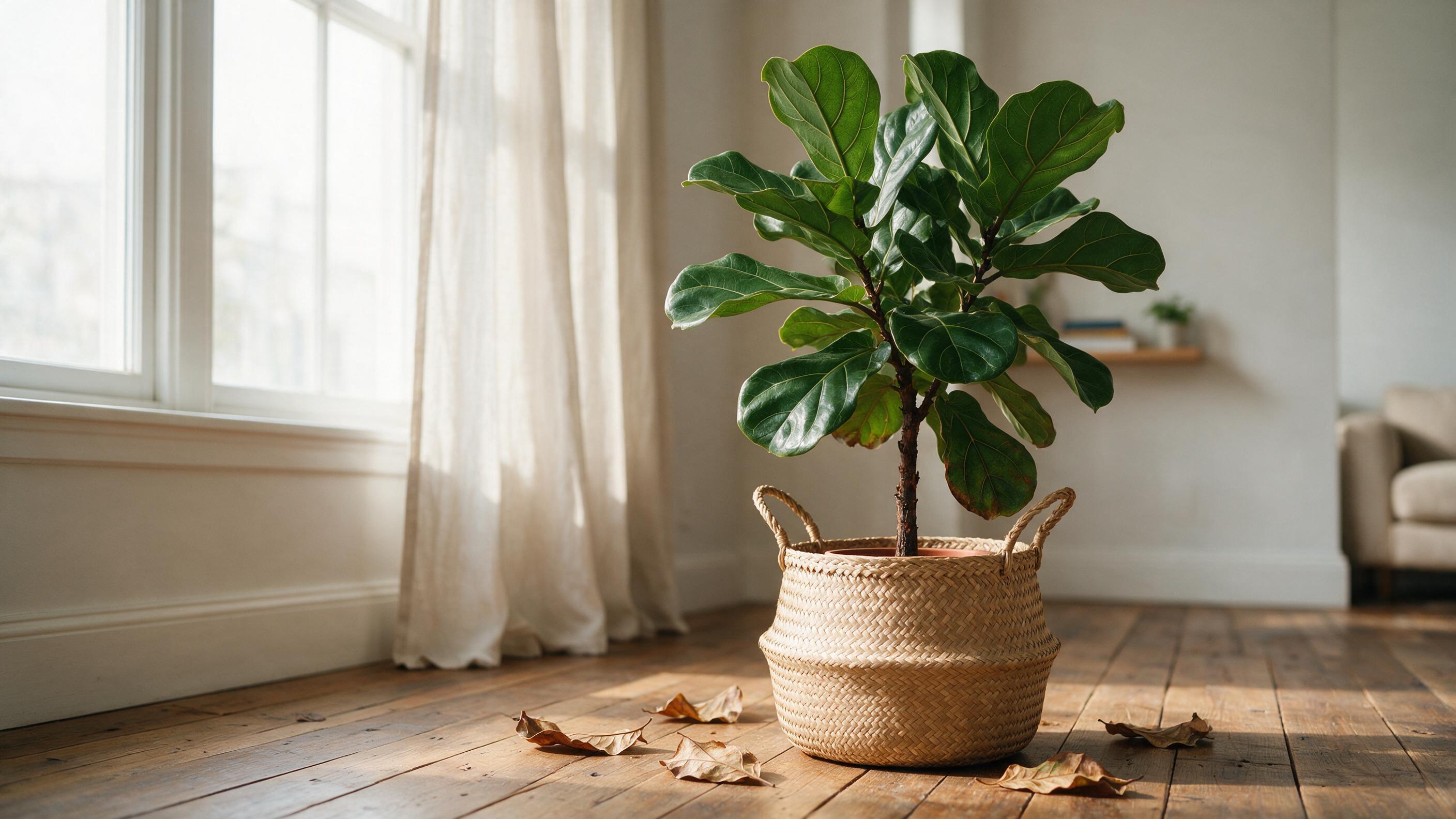
Few houseplants inspire as much admiration — or as much anxiety — as the fiddle leaf fig. Fiddle leaf figs are notorious for dropping leaves at the slightest provocation, and these sensitive plants can leave their owners wondering what went wrong. The good news is that leaf drop is almost always a signal, not a sentence. Once you know what your plant is trying to tell you, you can take clear steps to help it recover.
This guide walks you through every major reason why your fiddle leaf fig might be shedding leaves, how to pinpoint the exact cause, and what to do about it — whether you’re dealing with a single fallen leaf or a plant that seems to be dropping everything at once. If you love big-leaf indoor plants, understanding this one will make you a far more confident plant parent overall.
What Does It Mean When Your Fiddle Leaf Fig Is Dropping Leaves?
When your fiddle leaf fig starts losing leaves, it’s easy to feel like something has gone terribly wrong. These beautiful but sensitive indoor trees can react quickly to changes in watering, light, humidity, temperature, or root health. The plant isn’t being dramatic for no reason — leaf drop is its primary way of communicating stress.
The fiddle leaf fig (Ficus lyrata) is native to the lowland tropical rainforests of West Africa, where conditions are warm, humid, and stable. Ideal conditions for optimal growth include a humidity level between 25% and 49%, temperatures ranging from 65°F to 75°F (18°C to 24°C), and exposure to bright indirect light. When your home deviates significantly from those conditions, the plant responds by shedding leaves to conserve energy.
Lower leaves tend to go first in most cases, but sudden upper leaf drop points to shock or pests. Paying attention to which leaves are falling — and what they look like before they drop — is your first clue toward a diagnosis.
Pro Tip: Before you change anything about your care routine, take a photo of the affected leaves and note where on the plant they fell from. This simple record makes diagnosis much faster and prevents you from accidentally making the problem worse.
Is Dropping Leaves in a Fiddle Leaf Fig Always a Sign of a Problem?
Not always. Some leaf drop is normal, especially during fall and winter when growth slows. Fiddle leaf figs may shed a few older lower leaves as they adjust to reduced light and drier indoor air. If your plant is only losing one or two older leaves and the rest of the plant looks healthy, there may be no major problem.
Some leaf drop after bringing a new plant home is also normal and expected. The shift from greenhouse conditions to your home environment is significant, and most fiddle leaf figs will start dropping leaves during this adjustment period. As long as the plant isn’t losing more than one or two leaves per week and you see new growth emerging from the top, it should recover fine.
The situations that warrant immediate attention are rapid or widespread leaf loss, leaves falling from multiple areas of the plant at once, or leaves dropping alongside other symptoms like brown spots, yellowing, or a musty smell from the soil. Once the underlying issue is corrected, a healthy fiddle leaf fig can produce new growth during the growing season, though bare lower stems may not always refill.
Watering Issues Causing Fiddle Leaf Fig Leaf Drop
Watering problems are probably the most common cause of fiddle leaf figs dropping leaves. Both overwatering and underwatering can trigger it, though they show up slightly differently. The tricky part is that the two conditions can look remarkably similar at first glance.
Overwatering
Overwatering tops the list of causes for fiddle leaf fig leaves dropping. Soggy roots from too much water can suffocate the plant, and leaves turn yellow from the bottom up, then drop as rot sets in. If soil stays wet too long, it invites root rot that spreads fast and smells bad when you check on your plants.
Signs of overwatering include yellowing leaves, soft stems, soggy soil, a musty smell, or leaf drop from the lower part of the plant. According to the New York Botanical Garden Mertz Library , mass yellowing and drooping of leaves with some curl and sometimes brown spots is characteristic of overwatering, and it can be so similar to underwatering that it is hard to differentiate.
Underwatering
Underwatering dries out roots, makes leaves curl and turn brown at edges, and eventually makes fiddle leaf figs drop their leaves to save energy. You can spot this issue easily when you see soil pull away from the sides of your pot. Check the roots to see if they’re shriveled and feel brittle.
Signs of underwatering include crispy leaf edges, dry soil pulling away from the pot, drooping, and brown patches. In US homes, underwatering often spikes in summer when air conditioning dries out indoor air quickly, or during winter when heating systems reduce humidity levels significantly.
How to Water Correctly
Most fiddle leaf figs need watering when the top 1–2 inches of soil become dry. The exact frequency depends on light, humidity, pot size, soil mix, and season. Rather than following a fixed schedule, start checking dryness before you re-water rather than going with a set schedule.
Water only when 50–75% of the soil volume is dry. When you do water, give your plant a good long drink, making sure the root ball is thoroughly wet — ensure water flows freely from the bottom of the pot, then let the plant rest and expel excess water before placing it back on its saucer.
Pro Tip: A simple finger test beats any schedule. Stick your finger about an inch into the soil — if it still feels damp, wait another day or two before watering. A moisture meter works even better for deeper pots.
Light Conditions Behind Fiddle Leaf Fig Leaf Drop
Fiddle leaf figs love bright, indirect light. If your plant is sitting in a dim corner, it may drop lower leaves because it does not have enough energy to support them. This is one of the most common placement mistakes in US homes, where rooms with large windows are often occupied by furniture rather than plants.
Low light slows photosynthesis, leaving lower leaves yellow and eventually making them drop. The fix is straightforward: move your plant closer to a bright window where it receives strong filtered light, and avoid harsh direct afternoon sun, which can scorch the leaves.
Too much direct sun causes its own problems. If your plant gets too much direct sunlight, it can get a sunburn, which presents as light brown spots that may look bleached. The spots will be predominantly on the top leaves and sometimes can show some red or yellow coloring. A sheer curtain on a south- or west-facing window is usually enough to filter the light to the right intensity. If your home doesn’t get enough natural light, you might also explore the best houseplants for low-light areas to find companions that thrive where your fiddle can’t go.
The ideal placement in most US homes is within a few feet of a large east- or north-facing window, or a south- or west-facing window with a sheer curtain. Move the plant to a position where it receives no more than a half day of indirect sun.
Soil, Nutrients, and Root Health Causing Fiddle Leaf Fig Leaf Drop
The soil your fiddle leaf fig lives in affects almost every aspect of its health. Fast-draining, well-aerated soil is best for fiddle leaf figs. They prefer fairly dry soil to keep roots moist but not wet. Standard all-purpose potting mix often retains too much moisture and can contribute to the root problems that lead to leaf drop.
Root Rot
Root rot is the bane of any plant owner’s existence. It’s typically caused by overwatering, creating an environment that fosters the growth of dangerous bacteria. The bacteria causes roots to lose their firm white color and turn brown, black, or slimy.
With roots decimated by infection, a fiddle leaf fig can’t absorb water and nutrients, leaving it susceptible to leaf drop. Common signs include soggy soil, a musty smell, yellowing leaves, soft stems, and mushy brown roots. The only way to be certain that your plant has root rot is to remove the pot and inspect the roots.
Root Bound Plants
While fiddles like to be fairly snug in their pots, they can run into issues when the roots are wrapped up too tightly. Cramped roots have a harder time absorbing water and nutrients because the soil can become very compacted, and the roots don’t have room to stretch out. This can lead to both over- and underwatering because the root ball will have trouble absorbing water effectively.
If you see roots popping out of the top or bottom of the pot, the roots are squished and looking for somewhere to go — if you see this, you definitely have a root-bound fiddle leaf fig. Fiddles need to be repotted every 1–2 years to give the roots room to grow. To repot, select a pot that’s about 2–3 inches larger than the current one.
Nutrient Depletion
Unlike plants growing outdoors in the wild, potted fiddle leaf figs depend on their potting soil for all nutrients. If you haven’t repotted your plant in over a year, chances are that your fiddle leaf fig is in desperate need of fertilizer. If your fiddle doesn’t get the nutrients it needs, you might notice slow or stunted growth, smaller leaves, or leaf discoloration ranging from yellowing to browning.
Fiddle leaf figs need nutrients to support large, healthy leaves. If your plant has not been fertilized or repotted in a long time, depleted soil may contribute to weak growth and leaf drop. During the active growing season, use a balanced houseplant fertilizer according to the product instructions. Avoid overfertilizing, which can burn roots and make stress worse.
According to the Greenhouse Studio , since we grow fiddle leaf figs for foliage rather than flowers, a fertilizer with a higher ratio of nitrogen compared to phosphorus and potassium is ideal. The ideal N:P:K ratio should be 3:1:2 or 3:1:3. Also, even if your plant isn’t root bound, it’s a good idea to repot it with fresh soil every 2–3 years to enable the plant to get fresh nutrients from the new soil.
Pro Tip: After repotting, hold off on fertilizing for at least four weeks. As noted by Dossier Blog, waiting a few weeks after repotting before fertilizing allows the roots to settle in and ensures delicate or cut roots don’t get fertilizer burn while they are recovering.
Environmental Stress Triggering Fiddle Leaf Fig Leaf Drop
Fiddle leaf figs prefer warm, stable indoor conditions. Sudden temperature changes, cold drafts, heating vents, air conditioners, and dry air can shock the plant and trigger leaf drop. This is especially relevant in the US, where central heating and air conditioning are the norm in most homes.
Temperature Extremes
Leaf drop is generally caused by getting too much or too little water, but exposure to temperature extremes — either hot or cold — can also cause fiddle leaf figs to drop their leaves. Drafts from chilly air conditioning or too much hot air can stress out your plant, causing it to drop leaves quickly. If necessary, move your fiddle to a bright location with consistent temperatures.
In winter, a very cold winter will mean that the heat is blasting more than usual and drying out the plant’s soil much more quickly than usual. This seesawing of wet and dry is stressful for the plant, so keep a good eye on soil moisture and keep the air around the plant humid to minimize the drying.
Low Humidity
The West African rainforests that fiddle leaf fig plants call home mean they need humid and warm conditions to thrive. In dry climates — or in any US home during winter when heating systems run constantly — indoor humidity can drop well below what this plant needs.
To boost humidity, try misting every one to three days or using a humidifier near your plant. Grouping it with other houseplants also helps, as plants naturally release moisture through transpiration. Make sure you do not have it right near a heating or cooling unit.
Relocation Shock
When you move a fiddle leaf fig, it experiences shifts in light levels, temperature, humidity, and air circulation all at once. The fiddle leaf fig responds to this stress by dropping leaves, often starting with the older, lower leaves first. It’s the plant’s way of conserving energy while it adjusts to the new conditions.
The key is preventing relocation stress in the first place by choosing your plant’s location carefully from the start and committing to leaving it there. If you absolutely must move your fiddle leaf fig, try to match the conditions of its previous location as closely as possible. Once you’ve found the right spot, find a good location with bright indirect light, stable warmth, and good airflow, and avoid moving your plant repeatedly. Give it time to adjust before making additional changes.
Pests and Disease Leading to Fiddle Leaf Fig Leaf Drop
Pests can cause a fiddle leaf fig to drop leaves. Spider mites, scale, mealybugs, and thrips can weaken the plant by feeding on leaves and stems. These pests suck the sap and other nutrients from the leaves, causing them to turn brown and fall off.
Check the undersides of leaves, the base of stems, and new growth for webbing, sticky residue, small bumps, cottony white patches, or tiny moving insects. Inspect your fiddle leaf fig regularly, especially on the undersides of the foliage, to catch insect problems early. If you notice obvious signs of bugs — webbing, small holes, discolored dots, or the actual insects themselves — act quickly, as the sooner you treat the issue, the easier it will be.
For treatment, use a neem oil product designed for houseplants. Take your plant outside if possible, as neem oil has an unpleasant smell that lingers. Spray all of the leaves thoroughly, turn each leaf to spray the underside, and don’t forget where the leaf meets the stem. Wait two weeks, inspect again, then repeat the spraying process if needed.
Beyond pests, disease can also cause leaf drop. The telltale sign of bacterial leaf spot is yellowing of the leaves in addition to brown spots. With root rot, leaves will typically remain dark green with brown spots, but with bacterial leaf spot, the leaf will turn yellow as the brown spot spreads. Both root rot and bacterial leaf spot will cause the leaves of your fiddle leaf fig to eventually fall off. Bacterial leaf spot prefers feeding on new growth, so if your newer leaves are worse off than your older leaves, bacterial leaf spot is likely to blame.
If you’re managing multiple houseplants and want to keep potential pest problems from spreading, it also helps to know how to keep cats out of houseplants, since curious pets can damage leaves and create entry points for pests and disease.
How to Diagnose Why Your Fiddle Leaf Fig Is Dropping Leaves
The most common culprits of fiddle leaf fig leaves falling off are overwatering, underwatering, low light, temperature swings, or shock from moving. Each shows slightly different signs, so matching symptoms to causes will help you save time. Use the checklist below to work through each possibility systematically.
| Symptom | Most Likely Cause | Key Clue |
|---|---|---|
| Yellow leaves from the bottom up, musty soil smell | Overwatering / Root Rot | Soil stays wet days after watering |
| Crispy brown edges, soil pulling from pot sides | Underwatering | Top 2 inches of soil bone dry |
| Lower leaves yellowing, slow growth | Low light | Plant in dim corner or far from windows |
| Bleached brown spots on upper leaves | Too much direct sun | Plant in direct afternoon sunlight |
| Sudden drop of green leaves, no discoloration | Temperature shock / relocation | Recently moved or near an AC/heat vent |
| Brown spots on new growth, yellow halos | Bacterial leaf spot | Newest leaves affected worst |
| Webbing, sticky residue, tiny dots on leaf undersides | Pest infestation | Visible insects or webbing under leaves |
| Stunted growth, small new leaves, overall paleness | Nutrient deficiency | No fertilizing or repotting in over a year |
Work through this table from top to bottom. Start by checking your soil moisture — it’s the most common cause and the easiest to rule in or out. Then assess your light situation, check for temperature sources nearby, and finally inspect the plant closely for pests. The frustrating part is that leaf drop can have multiple causes, and figuring out which one is affecting your plant takes some detective work. The good news is that most causes are fixable if you catch them early enough.
If you’d like extra help with identification, plant identification apps for iPhone and Android plant apps can help you compare your plant’s symptoms against a database of known conditions.
How to Fix a Fiddle Leaf Fig That Is Dropping Leaves
Once you’ve identified the cause, the fix is usually straightforward. Here are the targeted steps for each scenario:
Fixing Overwatering and Root Rot
- Fix an overwatered fiddle leaf fig by letting it dry out completely. Then if the roots are mushy, repot your plant and trim away any rotted roots with sterile scissors.
- Move the plant to a spot with bright indirect light to help the soil dry out faster.
- Switch to a well-draining potting mix and ensure your pot has drainage holes.
- Hold off on watering until the top 1–2 inches of soil are dry to the touch.
Fixing Underwatering
- Water your plant thoroughly until it drains out the bottom. You can also soak the entire pot in the sink if the soil is totally dried out and hydrophobic, or won’t take in any water.
- Check the soil every few days rather than watering on a fixed schedule.
- Consider adding a layer of mulch or moving the plant away from heat vents that dry out the soil faster.
Fixing Light Problems
- Move the plant to within a few feet of a bright window, ideally east- or north-facing.
- Remove sunburned leaves with sharp scissors or pruning shears and relocate your plant to an area that is protected from the direct rays of the sun.
- Rotate the pot a quarter turn every few weeks so all sides get even light exposure.
Fixing Environmental Stress
- Check its location to see if it’s too close to an A/C vent, heater, or draft and move it if necessary.
- Aim to keep room temperature consistently between 65°F and 75°F.
- Use a humidifier or pebble tray with water to raise humidity around the plant.
Fixing Root Bound Plants
- Select a pot that’s about 2–3 inches larger than the pot it’s currently in.
- Gently loosen the root ball and shake off as much old soil as possible before repotting.
- Because the roots have been disturbed, skip the fertilizer for around the first month after repotting as it can potentially damage the roots.
Fixing Pest Infestations
- Isolate the plant immediately to prevent spreading to other houseplants.
- Wipe down all leaves — top and bottom — with a damp cloth to remove insects manually.
- Apply neem oil spray to all leaf surfaces, repeating every two weeks until the infestation clears.
- Keep infected plants away from your other houseplants.
Pro Tip: Once a leaf is fully yellow or brown, it will not turn green again. Remove it with clean scissors or pruners so the plant can focus energy on healthy growth.
How to Prevent Fiddle Leaf Fig Leaf Drop Going Forward
Prevention is far easier than recovery. Building a consistent care routine around your fiddle leaf fig’s natural preferences will dramatically reduce the chances of future leaf drop. Here are the habits that matter most:
- Water by soil feel, not by schedule. Stick to watering only when the top 1–2 inches of the soil are dry — use a stick or your finger to check.
- Find the right spot and leave it there. Choose your plant’s location carefully from the start and commit to leaving it there. Avoid moving it seasonally or rearranging furniture around it.
- Keep it away from vents and drafts. Make sure you do not have it right near a heating or cooling unit. Even a few feet of distance makes a difference.
- Maintain humidity. Mist this humidity-loving plant or keep it near a humidifier. In dry US climates or during winter heating season, a small humidifier nearby is one of the best investments you can make.
- Fertilize during the growing season. Use fertilizer once a month during a fiddle leaf fig’s growing season (spring and summer). Pause or reduce fertilizing in fall and winter when growth slows.
- Repot regularly. Repot your fiddle leaf fig every 1–2 years to prevent root-bound issues and keep it happy and growing.
- Inspect leaves regularly. Inspect your fiddle leaf fig regularly, especially on the undersides of the foliage, to catch insect problems early. A quick weekly check takes less than a minute.
- Refresh soil even without repotting. Even if your plant isn’t root bound, it’s a good idea to repot it with fresh soil every 2–3 years to enable the plant to get fresh nutrients from the new soil.
If you enjoy growing a variety of statement plants indoors, you might also find it helpful to explore different types of rubber plants, which are close relatives of the fiddle leaf fig in the Ficus family and share many of the same care preferences. For a broader look at what’s possible indoors, our guide to types of plants is a great starting point.
Frequently Asked Questions
Why is my fiddle leaf fig dropping leaves after I just bought it?
Some leaf drop after bringing a new plant home is normal and expected. The shift from greenhouse conditions to your home environment is significant, and most fiddle leaf figs will start dropping leaves during this adjustment period. As long as the plant isn’t losing more than one or two leaves per week and you see new growth emerging from the top, it should recover fine.
Can a fiddle leaf fig recover after dropping a lot of leaves?
In many cases, yes. Once the underlying issue is corrected, a healthy fiddle leaf fig can produce new growth during the growing season. Bare lower stems may not always refill, but the top of the plant can continue growing.
Why is my fiddle leaf fig dropping green leaves with no yellowing?
Dropping green leaves often points to sudden stress, such as overwatering, cold drafts, relocation, repotting shock, or temperature swings. Check whether anything in the plant’s environment changed recently — a new location, a cold window, or a nearby vent are the most common culprits.
How often should I water my fiddle leaf fig?
Most fiddle leaf figs need watering when the top 1–2 inches of soil become dry. The exact frequency depends on light, humidity, pot size, soil mix, and season. In most US homes, this works out to roughly once every 7–10 days in summer and every 10–14 days in winter, but always let the soil be your guide rather than the calendar.
Should I mist my fiddle leaf fig?
You can mist your fiddle leaf fig regularly to boost its humidity. Misting every one to three days works well, though a humidifier placed nearby provides more consistent results, especially in dry climates or during winter heating season in the US.
What soil is best for a fiddle leaf fig?
Choose fast-draining soil to prevent root rot, and use a pot with a proper drainage hole. The soil should also retain enough moisture for your fiddle leaf fig plant to absorb. According to Homes & Gardens , a good soil mix for a fiddle leaf fig should contain one part compost, one part peat moss, one part perlite, and one part sand — a mix that provides the plant with all the nutrients and moisture it needs to grow and thrive.
Is it normal for a fiddle leaf fig to drop leaves in winter?
Some leaf drop is normal in fall and winter when growth slows. Fiddle leaf figs may shed a few older lower leaves as they adjust to reduced light and drier indoor air. If the drop is limited to one or two older leaves and new growth is still appearing, there is no cause for concern. If multiple leaves are falling rapidly, check for heating vents, low humidity, and reduced watering frequency as the season changes.