Why Are My Zucchini Plants Not Producing? (Here’s What’s Really Going On)

September 28, 2026
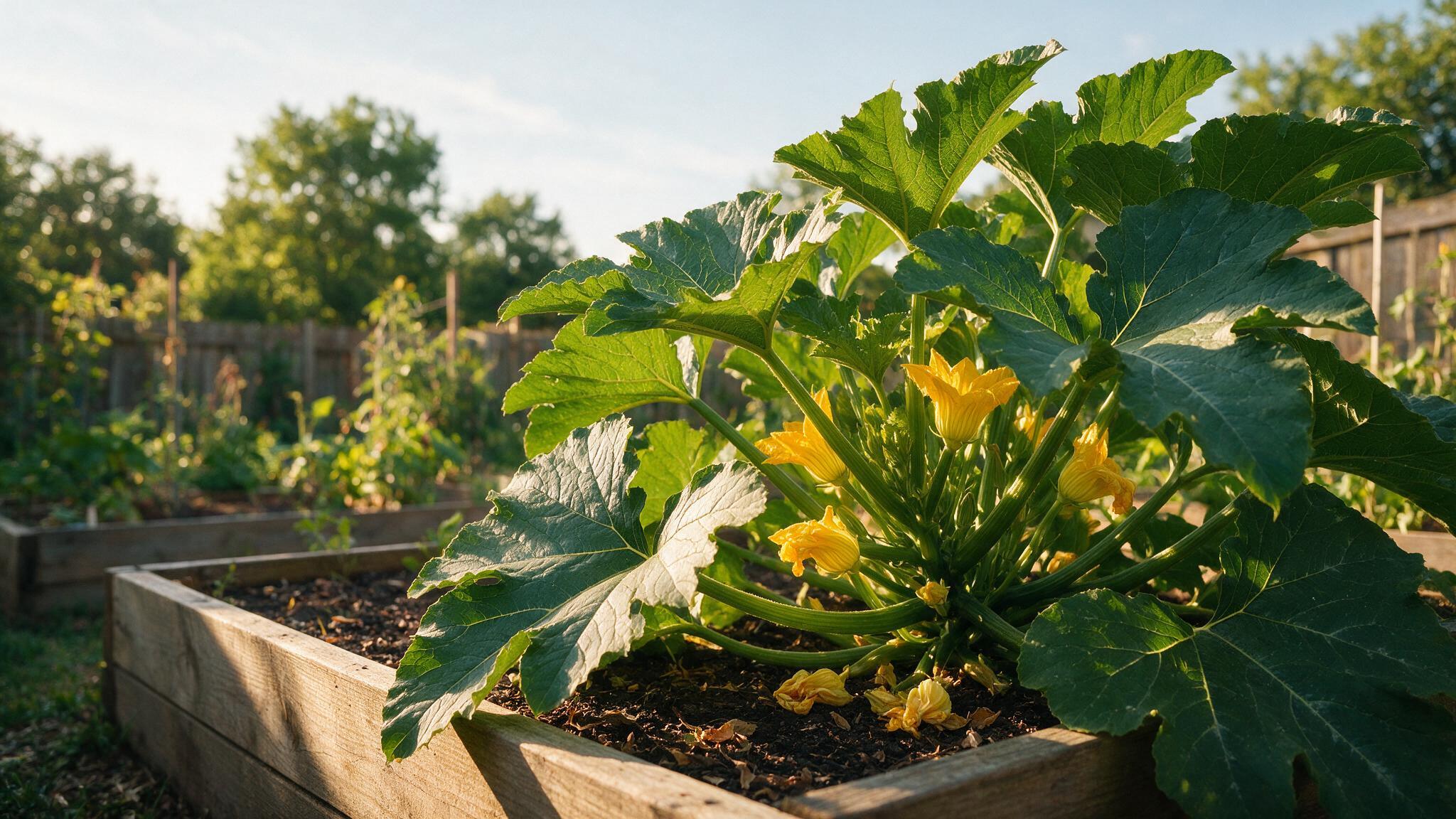
You did everything right — you planted on time, watered consistently, and watched your zucchini grow into a big, leafy, flower-covered plant. And then… nothing. No fruit. Just flowers that open in the morning and fall off by afternoon.
This is one of the most common frustrations in the American summer garden, and the good news is that it almost always has a fixable cause. Cucurbita pepo — the species that includes most zucchini varieties — is actually a highly productive plant when its needs are met. Understanding what those needs are is the fastest path from empty vines to a full harvest bowl.
This guide walks through exactly what’s happening inside your plant right now, what’s normal versus what signals a real problem, and what you can actually do about it — including an honest look at which situations can be turned around and which ones can’t.
What’s Actually Happening to Your Zucchini Plant Right Now
Zucchini and other squash plants are monoecious, meaning they produce separate male and female flowers on the same plant. That single fact explains the majority of “why no zucchini?” questions. Unlike a tomato or pepper, where every flower can become a fruit, zucchini needs a two-flower system to work together.
The most obvious differences between the two flower types are the small immature fruits at the bases of female flowers and the long thin stems of male flowers. Look closely at the base of each bloom. If there’s a tiny, finger-shaped swelling that looks like a miniature zucchini, you’re looking at a female flower. If the stem is plain and slender, it’s male.
Bees and other pollinators are usually responsible for transferring pollen from the male flowers to the female flowers, which ultimately leads to fruit development. Without that transfer, the female flower closes, the tiny fruit behind it yellows, and it drops off — which is exactly what you’re probably watching happen right now.
Pro Tip: Check your flowers early in the morning. Zucchini flowers tend to open up wide in the morning and are often closed by the afternoon, so it is important to hand pollinate in the morning.
Is This Normal, or a Sign Something’s Wrong?
Seeing flowers drop without producing fruit can feel alarming, but in many cases it’s completely normal — at least early in the season. Like all varieties of summer squash, zucchini tend to produce a number of male flowers ahead of developing female flowers, sort of a test run. So even if you’ve lost a handful of blooms with no fruits in sight, your plants are probably fine.
The male flowers tend to appear and open earlier than — sometimes several days before — the female flowers. They open early in the morning and then die and fall off. More male blossoms will replace them and female flowers will also eventually bloom. So if all you’re seeing are flowers falling off and your plant is still young, give it another week before worrying.
The situation shifts when you have both male and female flowers open at the same time and still no fruit is forming. Poor pollination is by far the most common cause of female blossoms dropping without producing fruit. That’s when it’s time to investigate further and step in.
| What You’re Seeing | Likely Explanation | Action Needed? |
|---|---|---|
| Only male flowers, no females yet | Normal early-season timing | Wait 1–2 weeks |
| Both flower types present, no fruit | Pollination failure | Yes — hand-pollinate |
| Tiny fruit starts, then yellows and drops | Incomplete or failed pollination | Yes — hand-pollinate, check bee activity |
| Lush leaves, almost no flowers | Too much nitrogen | Yes — adjust fertilizer |
| Sudden wilting despite watering | Squash vine borer or disease | Yes — inspect stems immediately |
The Real Trigger Behind Zucchini Not Producing
Pollination failure is the single most common reason a healthy-looking zucchini plant refuses to fruit. A zucchini plant covered in blossoms that never become fruit is one of the most common — and most fixable — summer garden frustrations. In most cases the problem is pollination, temperature, watering, or nutrient balance, not a sick plant.
When few pollinators are visiting — common in urban gardens, during cool or wet spells, or where broad-spectrum insecticides have reduced bee activity — female flowers go unpollinated, and the tiny fruit behind them yellows and shrivels. If you’ve recently sprayed anything in or near your garden, that’s a likely culprit.
Hand-pollination is the most reliable fix. The pollen of squash plants is very sticky and is formed in the center of the male flowers. You can try using a small paint brush to move some of the pollen from the male flower to the stigma of the female flower. If that sounds too tedious, you can also just remove the male flower and gently roll its pollen onto the stigma of the female flower.
Each female needs pollinating only once, and the fruit should begin swelling within a few days. According to the University of New Hampshire Extension , it’s best to attempt hand-pollination early in the morning when flowers are fully open and pollen is most viable.
Temperature is the second major trigger most gardeners overlook. Zucchini sets fruit best in warm — not scorching — conditions. Once daytime temperatures climb above roughly 90°F (32°C) or nighttime temperatures stay above roughly 75°F (24°C), pollen viability and fruit set typically decline. If you’re gardening in the South or Southwest during a heat wave, this alone can shut down production even when bees are active.
Nutrient imbalance is the third common trigger. Zucchini is a heavy feeder, but more nitrogen is not always better. Excess nitrogen is the central nutrition mistake with cucurbits: it produces dense, leafy vines and delays or suppresses flowering and fruit set. If your plant looks gorgeous and green but won’t flower, back off any high-nitrogen fertilizer and let it shift energy toward blooming.
Key Insight: Overhead watering in the morning when bees are most active can reduce pollination — bees don’t like working in wet conditions. Switching to late-afternoon watering allows bees to pollinate without being rained on or finding flowers filled with water.
Other Factors That Can Speed It Up or Make It Worse
Even when pollination is working, several other stressors can cause young fruit to abort or slow production significantly. Understanding these helps you catch problems early rather than losing an entire season.
Inconsistent watering is a major one. Too little water causes wilting, flower drop, and aborted fruit. The goal is steady, even moisture. Water deeply when the top inch of soil dries out rather than giving frequent shallow drinks, and mulch to buffer swings. Zucchini plants need a consistent supply of moisture for healthy growth and good flower production. Drought-stressed plants produce few, if any, flowers.
Pest pressure quietly robs fruit production before you notice visible damage. A plant fighting squash bugs, squash vine borers, powdery mildew, or bacterial wilt diverts energy away from flowering and fruiting. Scout plants regularly — check leaf undersides and the base of stems — and address problems early with targeted, pollinator-safe controls.
Overcrowding also plays a role that many gardeners underestimate. Plants that are too crowded can suppress flowering, just as drought stress, pest pressure, or overfertilization can. Zucchini plants spread wide and need good airflow around them to stay healthy and productive throughout the season.
You can also explore companion planting strategies that apply equally well to zucchini — pairing your squash with pollinator-attracting flowers like nasturtiums, zinnias, or borage draws bees into the garden and improves fruit set naturally. Planting zucchini companion plants like nasturtiums, zinnias, and sweet alyssum in and around the zucchini patch helps lure pollinators to the garden and more specifically to the zucchini flowers.
Can You Reverse It?
Here’s the honest answer: it depends entirely on what caused the problem. Some situations are very fixable right now. Others are not, and pretending otherwise just leads to frustration.
What you can fix mid-season:
- Poor pollination — hand-pollinate immediately and results appear within days
- Watering inconsistency — adjust your schedule and new flowers should hold
- Excess nitrogen — stop applying high-N fertilizer; the plant will rebalance over a few weeks
- Bee absence — attract pollinators with companion flowers, stop pesticide use near blooms
What you likely cannot reverse this season:
Zucchini are pragmatic plants: if they sense pollination isn’t adequate for the flowers to produce mature fruits, they drop their blossoms and bloom again to give it another try when conditions are more favorable. So while individual flowers that have already dropped cannot be recovered, the plant will keep producing new ones — giving you more chances if you address the root cause quickly.
Heat damage to pollen is a different story. Cold has the opposite effect: temperatures near or below frost stall growth and fruiting altogether. If your plant hit a prolonged heat wave or cold snap, the affected flowers are gone. You’ll need to wait for the plant to produce a new flush under better conditions — or accept that this season’s window may be limited.
Once a plant is infected with bacterial wilt, there isn’t anything you can do. Pull it out of the garden to prevent the disease from spreading to other squash plants. Don’t put the plant in your compost or you risk further spread. The same applies to a plant that has been fully taken over by squash vine borers — most of the time, fighting squash vine borer is a losing battle because we manage to find them once our squash is past the point of no return.
Important Note: If you see sawdust-like frass at the base of your plant’s stem and the vine is wilting despite normal watering, check for squash vine borer damage immediately. The squash vine borer is a type of moth that lays its eggs at the base of squash plants. When the eggs hatch, the larvae burrow into the lower stems, weakening or killing the plant outright.
How to Prevent It Next Season
Most of what makes zucchini fail mid-season is preventable with a few smart decisions before you plant. These steps won’t guarantee a perfect harvest, but they stack the odds heavily in your favor.
Time your planting strategically. Time your planting so plants reach peak production before the hottest part of summer, and use shade cloth during heat waves or row cover on unexpectedly cold nights. In most of the US, this means getting transplants in the ground 2–3 weeks after your last frost date so the plant is actively fruiting before midsummer heat peaks.
Rotate your crops. Do not plant squash in the same area two years in a row. Squash vine borers overwinter in cocoons in the soil. Moving your zucchini to a new bed each year disrupts the pest’s lifecycle and reduces disease buildup from pathogens that persist in the soil.
Choose resistant varieties. Your first line of defense against powdery mildew is to always plant varieties with a known resistance. Look for the code “PM” in seed catalog descriptions. You can also find certain varieties called parthenocarpic seeds. While they are more expensive, they do not require pollination from an outside source. These are worth considering if you garden in a dense urban area with low bee activity.
Use row covers early, then remove them. According to The Old Farmer’s Almanac , before flowers appear on the plants, use row covers to keep squash vine borers away. The covers will need to be removed for pollinators eventually. This will not only give you a head start over pests but protect your plants from strong heat and frost.
Space plants properly and improve airflow. Providing good air circulation by spacing squash plants several feet apart is one of the most effective ways to prevent powdery mildew. According to Oregon State University Extension , crop rotation is also effective — rotating your crops so that you only have squash in one area of your garden every 3–4 years can help reduce the buildup of pathogens.
Test your soil before fertilizing. A soil test tells you what your medium actually needs before you add anything. Adding nitrogen to soil that already has enough will push your plant into leaf production at the expense of flowers — exactly the opposite of what you want. You can check out the different types of plants that benefit from the same balanced-soil approach.
If you end up with a bumper crop, check out ideas for what to serve with zucchini, what to serve with zucchini noodles, or what to serve with grilled zucchini — because once you fix the pollination problem, you’ll have more zucchini than you know what to do with.
Frequently Asked Questions
Why does my zucchini flower but never produce fruit?
The most common reason is poor pollination. Zucchini has separate male and female flowers, and fruit only forms when pollen reaches a female flower’s stigma. Early in the season plants often produce mostly male flowers, and heat or few pollinators can prevent fruit set.
How do I tell male flowers from female flowers?
Males have a straight, thin stem just behind the petals and contain the anther inside, which should be loaded with powdery, yellow pollen. Females are easily identified by a tiny, immature zucchini fruit (or ovary) that sits just behind the petals.
My tiny zucchini starts growing and then rots and falls off — what’s happening?
A tiny fruit that yellows, softens, and drops is usually an unpollinated female flower rather than a disease. Without pollination the immature fruit cannot develop, so it aborts. Hand-pollinate the next morning and keep watering consistent.
Can I hand-pollinate if I don’t have a paintbrush?
You can use a Q-tip, small dry paintbrush, or even your finger to transfer pollen from a male to female flower. Or, pick a male flower, remove the petals, and gently touch the pollen-coated male anther to the stigma in the female flower.
My plant has tons of leaves but almost no flowers — what’s wrong?
Too much nitrogen encourages the plant to focus on leaf, not flower, development. Stop applying any high-nitrogen fertilizer, water deeply, and wait. The plant should begin shifting energy toward flowering within a couple of weeks. A soil test will confirm whether nitrogen is actually the issue before you make any changes.
Will my plant recover after a heat wave?
Once temperatures drop back into the comfortable range — daytime highs below 90°F and nights below 75°F — your plant should resume producing viable flowers. The flowers lost during the heat wave cannot be recovered, but new ones will form. If you’re in a region with extended summer heat, try planting earlier next season so the plant peaks before the worst heat arrives. Using a shade cloth during peak afternoon hours
can also protect blooms mid-season.
How many zucchini plants do I actually need?
Because of their generous yield, most gardening experts recommend only one plant per household. That said, planting two or more different varieties can also help — not only will they pollinate one another, but different varieties have a better chance of having male and female flowers open at the same time. If you want to use an app to help identify plant issues as they develop, check out the best iPhone apps for identifying plants or the best Android apps for identifying plants.