Why Are My Tomato Leaves Turning Brown? Causes, Fixes, and Prevention

September 24, 2026
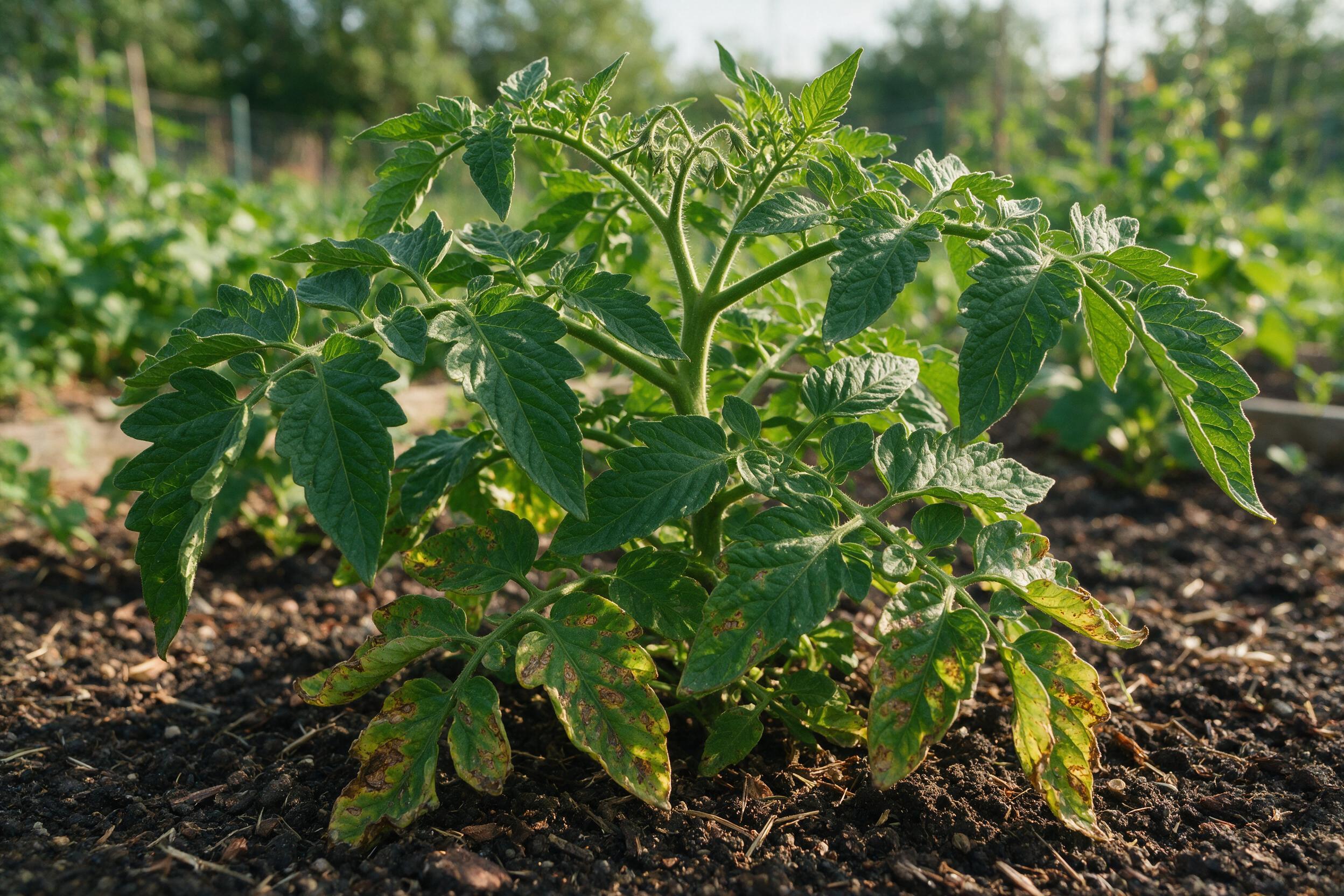
Few things are more discouraging than heading out to your garden and noticing your tomato plants looking less than healthy. When tomato leaves start turning brown, there are actually several factors that can be the root cause — it could be a lack of water or nutrients, the start of a fungal disease, or even an invasion of pests. The good news is that most causes are fixable, especially when you catch them early.
This guide walks you through every major reason your tomato leaves might be turning brown, how to tell them apart, and what you can do about each one. Whether you’re growing in a backyard garden bed in the Southeast or in containers on a patio in the Southwest, the same core principles apply.
What Does It Mean When Your Tomato Leaves Are Turning Brown?
Tomato plant leaves turning brown can be caused by several things. Sometimes it might be natural, and other times it might be caused by bacteria or disease. The most important thing is to identify the signs quickly and apply solutions to save your plants from dying.
Brown leaves are essentially your tomato plant’s way of sending a distress signal. The color change happens when leaf cells die — and the trigger for that cell death can range from a simple watering mistake to a serious fungal infection spreading through your soil. The location of the browning on the plant and the pattern of discoloration are your biggest clues.
This can be especially true for the lower leaves of tomato plants in mid to late summer. Quite often, when a plant has any issue at all, it will show up first on the lowest leaves — and if the issue is serious enough, it then spreads to the rest of the plant. Knowing where to look is half the battle.
Pro Tip: Before you treat anything, take a photo of the affected leaves and note whether the browning starts at the edges, in spots, or across the whole leaf. That pattern alone will narrow down your diagnosis significantly.
Is Browning in Tomatoes Always a Sign of a Problem?
Not always. Some leaf browning is completely normal and not a cause for alarm. As tomato plants mature through the growing season, the oldest leaves at the base of the plant naturally yellow and die back. This is the plant redirecting energy toward fruit production rather than maintaining old foliage.
In some cases, the reason a tomato plant’s leaves may be yellowing and dying off can be 100 percent natural, and the plant dying back is completely natural. If you only see a few lower leaves browning on an otherwise healthy plant that is actively flowering and setting fruit, there is a good chance this is just normal senescence.
The situations that do warrant concern are when browning spreads rapidly upward, when you see distinct spots or lesions with defined patterns, when multiple plants are affected at once, or when the browning is accompanied by wilting, webbing, or sticky residue on the leaves. Those are signs of something that needs your attention.
Watering Issues Causing Tomato Leaves to Turn Brown
Watering problems are among the most common and easily corrected reasons for brown tomato leaves. Both too little and too much water can produce browning, though the patterns look different.
If you find a crispy, brown edge developing around the leaves, you likely need to water your plants more. To correctly water your tomatoes, water at the root of the plant — tomato roots run deep, so making sure they’re receiving adequate water goes a long way in keeping them happy.
Another big reason tomato plants suffer in mid summer and their leaves turn brown is from either too much or too little water. Tomato plants need between 1 and 1.5 inches of rain weekly. If it’s not falling from the sky, watering is vital to keep the foliage strong and the plant producing.
Overwatering is equally problematic. When soil stays waterlogged, roots suffocate and can no longer deliver nutrients to the leaves, causing them to brown and wilt even though there is plenty of moisture in the ground. Always check the top 2–3 inches of soil before watering — if it still feels damp, hold off.
- Water deeply and infrequently rather than shallowly every day
- Water deeply and not just for a few minutes at the surface — this helps the plant grow its roots deeper, protecting them from drying out easily.
- Avoid overhead watering since the roots will not get the moisture they need, and water splashing during overhead watering could spread disease.
- Use mulch around the base of plants to retain soil moisture and regulate temperature
Pro Tip: A drip irrigation system or soaker hose is one of the best investments you can make for tomatoes. It delivers water directly to the root zone, keeps foliage dry, and dramatically reduces the risk of fungal disease.
Light Conditions Behind Tomato Leaf Browning
Tomatoes love sun — but too much of the wrong kind of light can actually scorch their leaves. This is especially common in hot-summer states like Arizona, Texas, and California, where afternoon sun can be intense enough to cause real damage.
Too much exposure to sunlight and excessive pruning cause sunscald. Symptoms may include yellowing or browning of the upper side of the leaf. Unfortunately, once the leaves and fruit have been affected, the only solution is to remove them — ensure you shade or cover the plant with a cloth to avoid too much exposure to the sun.
Leaves will also experience sunburn when they haven’t been properly hardened off or when water droplets concentrate light on the leaves. If the burn is not too extensive, your plants will heal on their own and are not cause for concern.
On the opposite end, tomatoes grown in too much shade become weak and more susceptible to fungal diseases that thrive in low-light, high-humidity conditions. Tomatoes need at least 6–8 hours of direct sunlight daily to stay healthy and productive. If you’re growing in a shadier spot, check out this guide on best houseplants for low-light areas to understand which plants genuinely thrive with less sun — tomatoes are not among them.
Soil, Nutrients, and Root Health Causing Tomato Leaf Browning
What happens underground shows up above it. Poor soil health, nutrient deficiencies, and damaged roots are all common culprits behind browning leaves that gardeners often overlook.
One of the biggest reasons tomato plants suffer in the summer is from a lack of nutrients. Tomato plants are heavy feeders. Because of that, they can quickly use up the available nutrients in the soil — and when they do, the leaves and the plant can begin to suffer.
Lack of magnesium can cause the leaves to turn yellow and then brown. Magnesium deficiency typically shows up as yellowing between the leaf veins on older leaves, eventually progressing to brown. A diluted Epsom salt solution (1 tablespoon per gallon of water) applied as a foliar spray or soil drench can help correct mild magnesium deficiency.
When your tomato plants can’t access enough phosphorus, the leaves will turn dark purple, almost brown. Purplish-brown leaves can be an indication of a phosphorus deficiency. The cause of the deficiency may be a number of things — first, it is possible that your soil has been depleted of phosphorus, which is unlikely if you are growing in the ground but can happen in potted plants. Another cause for phosphorus deficiency is cold soil, as cooler temperatures can lead to poor nutrient absorption.
When a tomato plant’s roots are damaged from transplant shock, pests, or physical injury, they struggle to absorb water and nutrients. This stress can cause the leaves to turn brown and wilt. To prevent this, handle the plant gently when transplanting and ensure the soil is loose enough for root growth.
Key Insight: Before adding fertilizer, do a basic soil pH test. Tomatoes prefer a pH between 6.0 and 6.8. Outside that range, nutrients can be present in the soil but locked out from the plant’s roots entirely.
Root rot from waterlogged soil is another root health issue to watch for. If you pull a struggling plant and find mushy, dark brown roots instead of firm white ones, overwatering or poor drainage is likely to blame. Improving soil drainage by amending with perlite or raised bed planting can help prevent this. You can also explore companion planting strategies that support tomato health from the ground up.
Environmental Stress Triggering Tomato Leaf Browning
Sometimes your tomato leaves turn brown not because of disease or pests, but because the growing environment itself is putting the plant under stress. Temperature extremes, humidity swings, wind, and chemical exposure can all leave their mark on foliage.
Cold weather injury is commonly seen in the early spring when tomatoes, a warm-season crop, experience nighttime temperatures below 35°F. Affected leaves can out-grow the injury if plants are healthy and not stressed further by low temperatures. If you planted your tomatoes a little early and got hit by a late frost, the damaged lower leaves may brown and die while the rest of the plant recovers.
Heat stress is the other extreme. When temperatures push above 95°F for extended periods — common in much of the American South and Southwest during peak summer — tomatoes can drop flowers and develop scorched-looking leaf margins. Providing afternoon shade cloth and maintaining consistent soil moisture helps buffer the plant against heat stress.
If used incorrectly, herbicides can curl the leaves and turn them yellow and brown. Once you notice signs of herbicide exposure, wash the plant’s leaves immediately and thoroughly — you might also need to prune affected leaves. Herbicide drift from nearby lawn treatments is a surprisingly common problem in residential gardens, so be cautious when treating grass near your vegetable beds.
Wind damage can also cause browning, particularly on the leaf edges and tips. In exposed garden locations, a simple windbreak — a row of taller plants or a temporary fabric barrier — can reduce mechanical damage significantly. For ideas on plants that serve dual purposes in your landscape, browse this list of deer-tolerant plants that can double as windbreaks in certain regions.
Pests and Disease Leading to Tomato Leaf Browning
This is the category most gardeners worry about most — and for good reason. Fungal diseases, bacterial infections, and pest infestations are all capable of causing widespread browning that can devastate a tomato crop if left unchecked.
Fungal Diseases
Early blight is one of the most widespread fungal problems in American home gardens. The fungus that causes early blight in tomatoes (Alternaria linariae) is incredibly widespread, and growers in almost any climate may experience it if the conditions are right. Early blight causes brown spots with subtle concentric rings — to identify it, look for brown or black lesions on the lower leaves, with the most unique trait being the concentric circles in the center of the spots. Other common spotting diseases will not have this concentric ring pattern.
Early blight symptoms include small, irregular brown lesions, often with yellow halos, that enlarge rapidly, with a “bull’s-eye” pattern appearing within the lesions. It is a fungal disease caused primarily by Alternaria linariae, and it can spread in wet and dry weather but is favored by rainy weather.
Septoria leaf spot is another extremely common fungal culprit. Symptoms include small, round gray spots with dark margins that develop on the lower leaves, usually when the first fruits begin to form. Septoria leaf spot is caused by the fungus Septoria lycopersici, which is favored by wet weather. Fungal lesions gradually enlarge, coalesce, and cause leaves to turn yellow and die.
Late blight is the most serious of the three. Leaves develop brown patches that turn dry and papery when infected with late blight, and sometimes a white mold grows along the edges of the brown patches. If your tomato plants have late blight, you will also notice blackened areas along the stems, and the tomatoes develop hard brown lesions. Late blight will wipe out your tomato crop, and there is no treatment for infected plants — try to prevent this disease by removing and destroying infected plants, and don’t compost them; send them to the landfill and clean and remove all remnants of the infected crops from your garden.
Fusarium wilt is another soil-borne fungal threat. Symptoms include lower leaves turning yellow and then brown, with leaf and stem wilting that shows some recovery at night. This is caused by the soilborne fungus Fusarium oxysporum sp. lycopersici — when the outside of an infected stem is scraped, you will see browning of the vascular tissue underneath.
Verticillium wilt follows a similar pattern. Verticillium wilt is a soil-borne fungus caused by Verticillium dahliae. If this disease is not mitigated quickly, it will spread to neighboring plants. Verticillium wilt usually affects lower-lying leaves first, turning them brown, then spreads to the stems, leaving them frail and wilted, and eventually spreads to the entire plant.
Bacterial Diseases
The two most common bacterial diseases of tomatoes in a home garden are bacterial spot and bacterial speck. The bacteria overwinter on crop residue and are seed-borne. Small dark spots on leaves that then turn brown and fall off are a symptom of bacterial speck and bacterial leaf spot — these diseases thrive in hot, humid environments and can be transmitted by your hands and garden tools.
In tomatoes, bacterial spot is characterized by small brownish spots on leaves that often turn into holes as the disease progresses. It may also cause brown spots on the tops of the tomato fruits. It is most common in warm, humid weather and spreads readily in these conditions — it is best to prevent it, as treatment options are limited once an infection sets in.
Pests
If you see smaller brown specks with webbing, they are likely a sign that your tomato plants are infested with spider mites. Spider mites thrive off sucking sap from leaves’ undersides, depleting them of nutrients. The malnourished leaves will turn brown or sometimes yellow, and if left untreated, will lead to the ultimate demise of the plant. Watering your tomato plants properly helps keep spider mites at bay since they love hot and dry climates. If watering isn’t enough to stop an infestation, you can try neem oil or insecticidal soaps.
Aphids love tomato plants and cause yellow, misshapen, and sticky leaves. Look for tiny insects on the undersides of leaves and on the stem — these pests will suck the sap from your tomato plant and can be a real problem in any garden.
For help identifying what’s attacking your plants, a plant identification app can be a useful first step. Check out these guides to the best iPhone apps for identifying plants and the best Android apps for identifying plants to get a quick ID on pests or disease symptoms right from your garden.
How to Diagnose Why Your Tomato Leaves Are Turning Brown
Accurate diagnosis is everything. Treating for fungus when the problem is actually drought stress — or vice versa — wastes time and can make things worse. Use this step-by-step approach to figure out what you’re dealing with.
- Check the location of browning first. Browning that starts on the lowest leaves and moves upward points to a soil-borne fungal disease like early blight, Septoria leaf spot, Fusarium wilt, or Verticillium wilt. Browning on the upper leaf surface or tips points to sun, heat, or drought stress.
- Look at the pattern of discoloration. Early blight causes brown spots with subtle concentric rings — look for brown or black lesions on the lower leaves, with concentric circles in the center of the spots. Other common spotting diseases will not have this concentric ring pattern.
- Check the undersides of leaves. Tiny yellow or white spots (stippling) that can coalesce to cause yellow blotching, with leaf undersides appearing dirty, indicate spider mite feeding injury. Spider mites can be seen on leaf undersides with the naked eye or using a hand lens.
- Look for webbing, sticky residue, or visible insects. Webbing between leaves signals spider mites. Sticky honeydew on leaves points to aphids or whiteflies. Visible small insects on stems or leaf undersides confirm a pest problem.
- Assess your watering habits. Crispy, brown leaf edges with no spots or lesions almost always point to underwatering or drought stress. Yellowing followed by browning across the whole leaf, combined with soggy soil, suggests overwatering or root rot.
- Check the stems. When the outside of an infected stem is scraped and you see browning of the vascular tissue underneath, this indicates internal stem discoloration consistent with Fusarium wilt.
- Consider recent weather and treatments. Did you apply a lawn herbicide nearby? Did temperatures drop below 35°F recently? Did you repot or transplant? These events can all trigger browning that looks like disease but isn’t.
Important Note: When multiple plants show identical symptoms at the same time, a soil-borne disease or widespread pest infestation is more likely than a watering or environmental issue, which tends to affect plants unevenly. Act quickly and consider sending a sample to your local university extension service for a definitive diagnosis.
You can also learn more about how different types of leaves respond to stress, which can help you read the visual cues your plants are giving you more accurately.
How to Fix a Tomato Plant That Is Turning Brown
The right fix depends entirely on the cause. Here is a breakdown of the most effective solutions for each major category.
Fixing Watering Problems
Watering your plants consistently fixes underwatering problems. The best time to water your tomato plant is in the morning — water at the soil level to keep the leaves dry, and only water your plant if the top three inches of the soil feel dry to prevent overwatering. For overwatering, let the soil dry out between waterings and improve drainage if needed.
Fixing Fungal Diseases
Unlike many other tomato diseases, you can treat early blight successfully if you catch it early enough. Caused by an air-borne fungus, it appears as approximately half-inch spots on tomato leaves — despite a similar appearance, early blight is different from bacterial leaf spot, as the spots will darken and develop light green halos. Remove affected leaves, improve air circulation, and apply a copper-based or chlorothalonil fungicide according to label directions.
For future crops, try applying a preventative copper fungicide or Bacillus subtilis spray, make sure to water your plants at the base as wet conditions favor the spread of disease, and look for resistant varieties labeled LB.
For incurable diseases like late blight and Fusarium wilt, removal is the only option. Do not compost the plants, but instead burn or discard them. Also, locate next year’s plants as far from the space as possible.
Fixing Bacterial Diseases
Small dark spots on leaves that then turn brown and fall off are a symptom of bacterial speck and bacterial leaf spot. These diseases thrive in hot, humid environments and can be transmitted by your hands and garden tools — be careful working with plants suspected to be infected. To prevent future issues, remove and destroy severely infected plants and choose varieties with BLS and PST resistance in the future.
Fixing Pest Infestations
For spider mites, start with a strong spray of water to knock them off the plant, then follow up with neem oil or insecticidal soap applied to the undersides of leaves. Attracting beneficial insects to feed on the mites — by planting flowers like alyssum and cosmos to attract minute pirate bugs, lacewings, and hoverflies — is another effective approach. For aphids, treat aphids organically by dusting them with diatomaceous earth.
Fixing Nutrient Deficiencies
Ensure you give the plant the essential nutrients like nitrogen, phosphorus, and potassium, which are important for the plant to thrive. Liquid fertilizers especially formulated for tomatoes help keep plants producing all summer long. When fertilizing, give your plants half of the recommended dose by diluting the mix in half — this allows you to feed more often with a steady supply of nutrients.
Looking for ideas on what to do with a harvest that comes in before your plants fully recover? Check out these helpful guides on substitutes for tomato paste and substitutes for tomatoes in recipes.
How to Prevent Tomato Leaf Browning Going Forward
Prevention is far easier than treatment, especially for the diseases that have no cure. Building good habits into your routine from planting day forward will dramatically reduce how often you deal with brown leaves.
- Choose resistant varieties. Choose one of the resistant tomato varieties for garden plots you are certain are free of disease. If you’re uncertain about your soil, grow tomatoes in containers with commercial potting mix. Look for disease-resistance codes on plant tags: V (Verticillium), F (Fusarium), N (nematodes), T (tobacco mosaic virus), and A (Alternaria/early blight).
- Practice crop rotation. The fungi responsible for many tomato diseases overwinter in infested crop residue in the garden. Move your tomato planting location each year and wait at least 3 years before returning tomatoes to the same spot.
- Keep the garden clean. Clean and sterilize your garden tools after each use, and keep your greenhouse and things inside it clean and sterile. Clean your shoes so you don’t track wilt-infected dirt around the yard.
- Water correctly from the start. Preventing many tomato conditions comes down to proper watering, buying disease-resistant plants, mulching around the base of the plants, and practicing good garden hygiene.
- Stake and prune for airflow. Good air circulation between plants slows the spread of fungal spores. Stake your plants early, prune suckers to open up the canopy, and space plants at least 24–36 inches apart.
- Harden off transplants properly. Leaves will experience sunburn when they haven’t been properly hardened off. Spend 7–10 days gradually introducing seedlings to outdoor conditions before transplanting.
- Mulch the soil surface. A 2–3 inch layer of straw or wood chip mulch prevents soil splash, which is one of the main ways fungal spores travel from soil to lower leaves. It also helps retain moisture and regulate soil temperature.
- Monitor plants weekly. Pests are a common cause of tomato leaf problems and are often carriers of tomato diseases as well, so it’s prudent to keep an eye out for any insects on your tomatoes. Catching issues early is the single biggest factor in whether you can save the plant.
Companion planting can also play a role in keeping your tomatoes healthier. Some plants naturally deter pests or improve soil conditions when grown nearby. Explore your options with this guide on different plants to grow with tomatoes and browse the full range of types of plants that can complement your vegetable garden.
Pro Tip: Keep a simple garden journal. Note when you first planted, when symptoms appeared, what the weather was like, and what treatments you tried. Over a few seasons, patterns emerge that help you prevent problems before they start.
FAQ
Why Are My Tomato Leaves Turning Brown and Crispy?
If your plants go too long without rain or water, the leaves may turn brown and turn crisp. This is an extreme example of underwatering — once it happens, the leaves won’t recover, but the plant itself can rebound with proper watering going forward. Brown, crispy leaf edges without any spots or lesions almost always point to drought stress or heat damage.
Why Are My Tomato Leaves Turning Brown at the Bottom of the Plant?
A common complaint among homeowners is “My tomato plants are turning brown, starting with the bottom leaves and working toward the top of the plant.” This description fits the symptoms of two diseases: early blight and Septoria leaf spot — both diseases cause lesions that initially appear on lower leaves. It can also simply be natural senescence of the oldest leaves as the plant matures.
Can Brown Tomato Leaves Recover?
Individual leaves that have already turned brown will not turn green again — once leaf tissue dies, it stays dead. However, the plant itself can absolutely recover and produce new healthy growth once the underlying problem is resolved. Remove the damaged leaves to reduce disease spread and redirect the plant’s energy toward new growth and fruit production.
Should I Remove Brown Leaves from My Tomato Plant?
Yes, in most cases. Removing brown or heavily spotted leaves reduces the number of fungal spores and bacteria on the plant and improves air circulation. Trim off infected leaves and remove them from your garden, and sanitize your hands after dealing with infected plants. Do not compost diseased leaves — bag them and put them in the trash.
What Is the White Fuzzy Mold on My Tomato Leaves?
In humid environments, a telltale sign of late blight is the appearance of a light, fuzzy mold. Sometimes a white mold grows along the edges of the brown patches caused by late blight infection. This is a serious disease with no cure — remove and destroy affected plants immediately to prevent spread to the rest of your garden.
How Do I Know If My Tomato Has Blight vs. a Watering Problem?
The pattern is your biggest clue. Blight produces defined spots or lesions with distinct borders, often with concentric rings (early blight) or dark brown patches with possible white mold (late blight). The real tell-tale sign of tomato blight is greasy, oily spots appearing on your tomatoes. Watering problems, by contrast, produce uniform browning along leaf edges or tips without distinct spot patterns, and the browning tends to be consistent across the whole plant rather than showing up as isolated lesions.
Are There Tomato Varieties That Resist Brown Leaf Diseases?
Yes. Many modern hybrid tomato varieties have been bred for resistance to the most common diseases. Look for the letters V, F, N, T, and A on the plant tag or seed packet — these indicate resistance to Verticillium wilt, Fusarium wilt, nematodes, tobacco mosaic virus, and Alternaria (early blight) respectively. Gardeners can take preventive measures such as planting Verticillium wilt-resistant strains of tomatoes. Popular disease-resistant varieties available at most US garden centers include Celebrity, Mountain Fresh Plus, and Defiant.