13 Traditional Russian Breakfast Dishes That Define Russia’s Morning Table

November 21, 2026
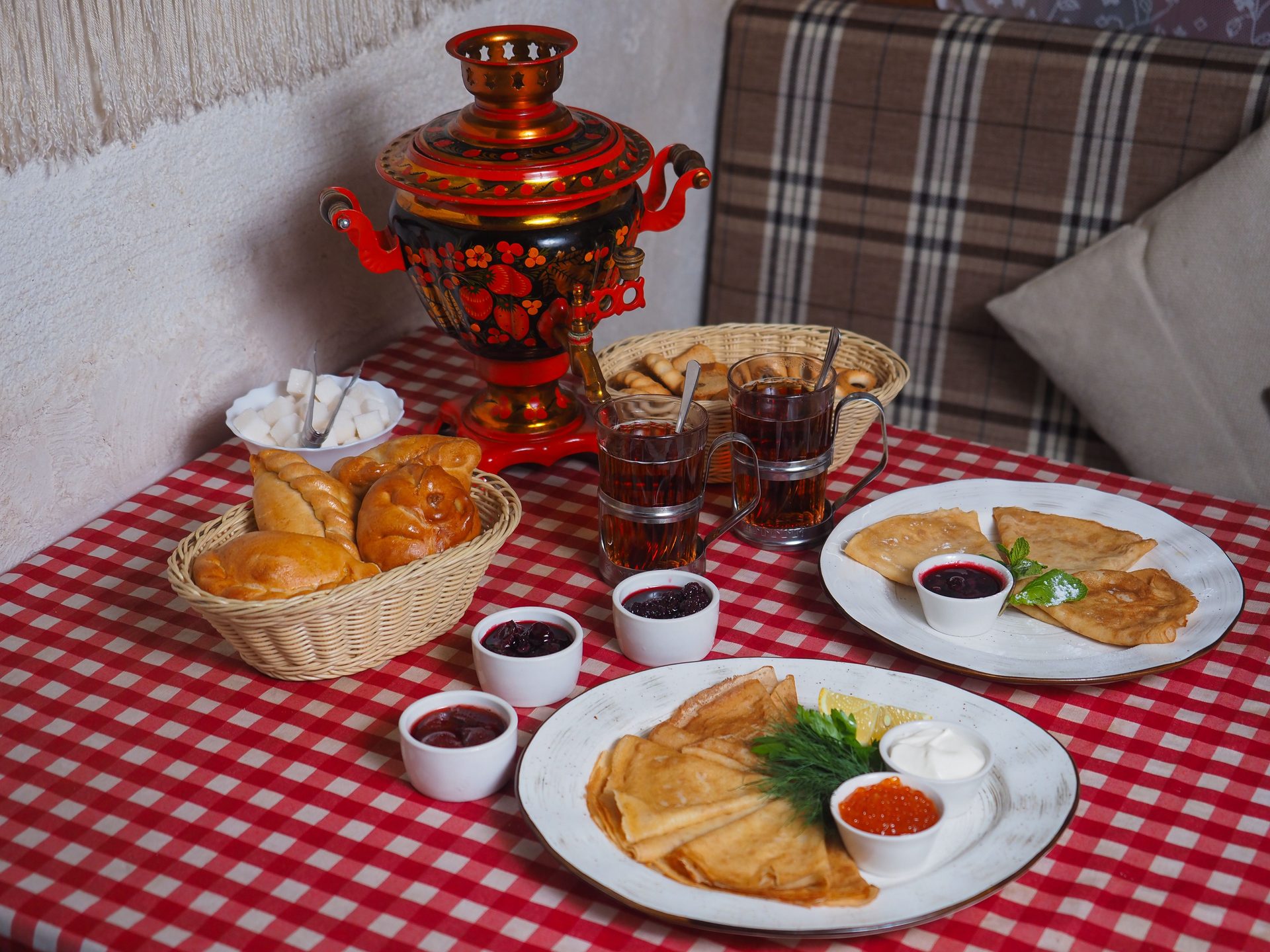
Walk into a Russian kitchen at 7 a.m. and you won’t find a stack of bacon and eggs waiting on the stove. A traditional Russian breakfast leans on grains, cultured dairy, and yeasted dough, foods built to survive long winters and keep a household fed through a full morning of work. These dishes carry centuries of peasant cooking, Orthodox fasting rules, and Soviet-era kitchen habits into a single plate.
This guide walks through 13 dishes that make up the backbone of a traditional Russian breakfast, from pancakes rolled with jam to porridges thickened with butter. Some are weekday staples; others appear only around holidays like Maslenitsa. Together, they show how resourceful cooking and traditional Russian food habits shaped an entire culture’s morning routine.
| Dish | Type | Main Ingredient |
|---|---|---|
| Blini | Pancake | Flour, milk, yeast |
| Kasha | Porridge | Buckwheat or grain |
| Mannaya kasha | Porridge | Semolina |
| Syrniki | Pancake | Tvorog (curd cheese) |
| Zapekanka | Baked casserole | Tvorog |
| Draniki | Fried pancake | Potato |
| Ponchiki | Fried pastry | Yeasted dough |
| Grenki | Fried bread | Bread, egg, milk |
| Vareniki | Dumpling | Dough, cheese or fruit |
| Sharlotka | Cake | Apples, eggs, flour |
| Vatrushka | Sweet bun | Yeasted dough, tvorog |
| Plushki | Sweet bun | Yeasted dough, sugar |
| Pirozhki | Stuffed bun | Dough, savory or sweet filling |
1. Blini
Blini are thin, yeasted pancakes that sit at the center of Russian breakfast culture, and they’re far older than most people assume. According to the Moscow Times , blini “are a truly iconic dish that is now an integral part of folk life and tradition,” though written records of them only go back to the 16th century. The Blini (Pancake) genus of dish isn’t a scientific classification, of course, but the pancake family itself is ancient: Wikipedia notes that traditional Russian blini are made with yeasted batter, left to rise and then diluted with milk, soured milk, and water.
Blini are most closely tied to Maslenitsa, the week of feasting before Orthodox Lent. During that week, households fry stack after stack, since dairy and butter were traditionally allowed even when meat was restricted. Outside of the holiday, blini still show up on an ordinary morning, folded around jam, honey, or sour cream, and sometimes paired with a glass of hot tea from the traditional Russian drinks table.
- Sour cream (smetana) with sugar
- Butter and honey
- Sweetened cottage cheese
- Jam or fresh berries
- Caviar, for special occasions
Pro Tip: Stack cooked blini with a small square of parchment or wax paper between each one so they don’t stick together while you finish the batch.
2. Kasha
Kasha is the broad Russian word for porridge, and buckwheat kasha is the version most associated with breakfast. It’s simmered in water or milk until the grains soften, then finished with a generous pat of butter, a method that turns a cheap grain into something genuinely satisfying. Buckwheat’s nutty, slightly bitter flavor makes it distinct from oatmeal, and it has long been treated as a thrifty, everyday food rather than a special-occasion dish.
Kasha appears across Russian cuisine well beyond breakfast, from savory buckwheat stuffing to sweet porridge served with dried fruit. The dish’s staying power comes from its simplicity: grain, liquid, salt, and butter are all that’s needed, which is part of why it has remained a fixture even as the rest of the traditional Russian food landscape has changed.
3. Mannaya Kasha
Mannaya kasha is semolina porridge, cooked by whisking fine semolina into simmering milk until it thickens into a smooth, almost custard-like texture. It’s gentler and creamier than buckwheat kasha, which is why it’s often the first solid food given to small children in Russian households. Sugar, butter, and sometimes a spoonful of jam are stirred in just before serving.
Key Insight: Semolina porridge has a reputation problem in Russia, largely because Soviet-era school cafeterias served it lumpy and under-seasoned; made properly, with constant whisking and a short cooking time, it’s closer to a light custard than a punishment.
The dish has close cousins outside Russia. Readers familiar with traditional Indian foods will recognize the family resemblance in sooji halwa, another semolina-based dish cooked in milk or ghee until thick and fragrant.
4. Syrniki
Syrniki are soft, golden pancakes made from tvorog, the fresh, slightly tangy curd cheese that anchors much of Eastern European cooking. The name itself points to a linguistic quirk: Wikipedia lists syrniki (Syrnyky, tvorozhniki) as fried Eastern Slavic quark pancakes associated with Belarusian, Polish, Russian, Serbian, and Ukrainian cuisine. The batter is simple, curd cheese, egg, a little flour, and sugar, pan-fried until the outside crisps while the center stays creamy.
Syrniki aren’t exclusively Russian. CulturallyOurs notes that they got their peak of popularity during the existence of the USSR and spread throughout it, across Russia, Belarus, Ukraine, Poland, Latvia, and Lithuania. They’re typically served with sour cream, jam, or a dusting of powdered sugar, and they show up on café menus as often as on home breakfast tables.
Important Note: Tvorog can be hard to find outside Eastern Europe. Babaganosh suggests dry, crumbly farmer’s cheese as a close substitute, since wetter cheeses like ricotta need extra flour to hold their shape.
5. Zapekanka
Zapekanka is a baked casserole, and the breakfast version is almost always built around tvorog, baked with eggs, sugar, and a little semolina or flour to bind everything into a dense, slightly sweet loaf. It bakes up with a golden top and a texture somewhere between a cheesecake and a bread pudding, then gets sliced and served warm with sour cream or jam.
Because it bakes in one dish and keeps well, zapekanka is a practical choice for feeding a family without standing over a stove flipping individual pancakes. The same baked-custard logic shows up in other cuisines, including the fruit-and-batter bakes found in traditional French food, where clafoutis follows a similar set-it-and-bake approach.
6. Draniki
Draniki are crisp potato pancakes, made by grating raw potato and onion, binding them with a little egg and flour, then frying until the edges turn deep brown and crackly. They’re closely associated with Belarusian cooking but are just as common on Russian breakfast tables, especially in regions where potatoes have long been a dietary staple.
Common Mistake: Skipping the step of squeezing excess liquid from the grated potato is the most common reason draniki turn out soggy instead of crisp. Draining the potato shreds in a clean towel before mixing makes a noticeable difference.
Draniki are usually served with sour cream, and sometimes with a fried egg or mushrooms on the side for a heartier version. The technique, grated potato bound lightly and fried, has quiet parallels in other fritter traditions found across traditional South African food, where vegetable fritters follow a similar logic with different seasonings.
7. Ponchiki
Ponchiki are Russia’s answer to the doughnut: small rounds of yeasted dough, deep-fried until puffed and golden, then dusted heavily with powdered sugar. Some versions are filled with jam or sweetened condensed milk after frying, injected through a small hole in the side. They’re a weekend treat more than a weekday habit, but they belong firmly in the breakfast and brunch category.
The frying method itself isn’t unique to Russia. A similar fried-dough-and-sugar logic appears in traditional Greek foods, where loukoumades are fried and drenched in honey instead of sugar, showing how many cultures land on the same basic solution for turning dough, oil, and sweetness into a breakfast pastry.
8. Grenki
Grenki are Russia’s version of fried bread, and the dish splits into two very different directions depending on how it’s seasoned. The sweet version soaks bread in an egg-and-milk batter before frying, essentially the same method used for French toast elsewhere. The savory version rubs fried bread with garlic and sometimes cheese, closer to a garlicky toast served as a side or snack.
For breakfast specifically, the sweet version is more common, topped with sugar, jam, or condensed milk. The basic technique, stale bread revived with egg batter and a hot pan, turns up in other fried-bread traditions too, including the griddle-fried flatbreads found across traditional Pakistani food.
9. Vareniki
Vareniki are boiled dumplings made from a simple flour-and-water dough, folded around a filling and sealed at the edges before cooking in simmering water. For breakfast, the filling is usually sweet: farmer’s cheese mixed with sugar and a little egg yolk, or sour cherries when they’re in season. Savory versions filled with potato or cabbage exist too, but those tend to show up later in the day.
- Roll the dough thin and cut into circles.
- Place a spoonful of filling in the center of each circle.
- Fold the dough over and pinch the edges firmly to seal.
- Boil in salted water until the dumplings float, then simmer briefly.
- Serve warm with melted butter, sour cream, or a spoonful of sugar.
Pro Tip: Press the edges of each dumpling with a fork after pinching to make a tighter seal; loose edges are the main reason filling leaks out during boiling.
10. Sharlotka
Sharlotka is a simple apple sponge cake, and it’s one of the most forgiving recipes in Russian home cooking. Sliced apples go into a pan or dish, and a thin batter of eggs, sugar, and flour is poured over the top before baking. The apples soften and the batter rises around them, producing something between a cake and a baked pudding.
Because it comes together quickly with pantry staples, sharlotka is often served warm at breakfast with tea, especially in autumn when apples are plentiful. It occupies a similar role to the sweet bakes featured in ideas for a special occasion breakfast, a dessert-leaning dish that’s casual enough for an everyday morning table.
11. Vatrushka
Vatrushka is a round, yeasted bun with a sweetened tvorog filling pressed into a shallow well in the center before baking. The result looks a little like a small open-faced tart, with soft golden bread around the edges and a creamy cheese center that sometimes gets a brush of egg wash or a sprinkle of sugar before it goes into the oven. It’s a bakery staple as much as a home recipe, sold warm from trays in Russian and Ukrainian bakeries alike.
Vatrushka works well for breakfast because it travels easily and doesn’t need extra toppings. The cheese-filled pastry logic, dough wrapped or shaped around a dairy filling, is a pattern that recurs across regional breakfast traditions far beyond Eastern Europe, wherever cooks have looked for a portable way to combine bread and dairy in one bite.
12. Plushki
Plushki are sweet yeasted rolls, usually shaped into spirals or knots and brushed with butter before baking until soft and golden. Sugar is often sprinkled on top, sometimes mixed with cinnamon, giving the rolls a light crackle on the outside while the inside stays pillowy. They’re a bakery and home-oven staple, baked in batches and kept on the counter for several days of breakfasts.
Unlike vatrushka or pirozhki, plushki usually skip the filling altogether, relying on the dough itself plus a sugar topping for flavor. That simplicity makes them a reliable entry on the breakfast rotation for households that want something sweet without much morning prep.
13. Pirozhki
Pirozhki are small stuffed buns, either baked or fried, filled with anything from ground meat and onion to mashed potato, cabbage, or sweet fillings like jam or farmer’s cheese. The dough wraps fully around the filling before cooking, making pirozhki easy to eat on the move, which is part of why they’ve remained popular for breakfast, lunch, and travel snacks alike.
The format isn’t unique to Russia. Stuffed, hand-held pastries show up across regional breakfast traditions worldwide, including the layered, savory pastries central to Albanian food culture, where byrek and similar dishes follow the same basic logic: wrap an affordable filling in dough and bake or fry it into something portable. That shared instinct, visible in both a traditional Russian breakfast and a traditional Balkan breakfast spread, says something about how home cooks everywhere solve the same morning problem with the ingredients they have on hand.
Readers curious about how other cultures approach the same idea might enjoy looking into Albanian breakfast dishes directly, where authentic Albanian recipes for byrek and petulla show a similarly resourceful, dough-centered approach to the first meal of the day. The comparison also holds with other hearty morning spreads, including the grain- and legume-based dishes found in traditional Venezuelan food or the rice-forward dishes common to a traditional Japanese breakfast.
Taken together, these 13 dishes show why a traditional Russian breakfast rarely looks like breakfast anywhere else. Grains, cultured dairy, and yeasted dough do most of the work, stretched and shaped into pancakes, porridges, dumplings, and buns that have fed households through centuries of cold mornings. Whether it’s a quick bowl of kasha on a weekday or a full spread of blini and syrniki on a weekend, the logic stays the same: simple ingredients, prepared with care, built to last through a long morning.