Traditional Kerala Breakfast: 18 Dishes That Define Malayali Mornings

November 20, 2026
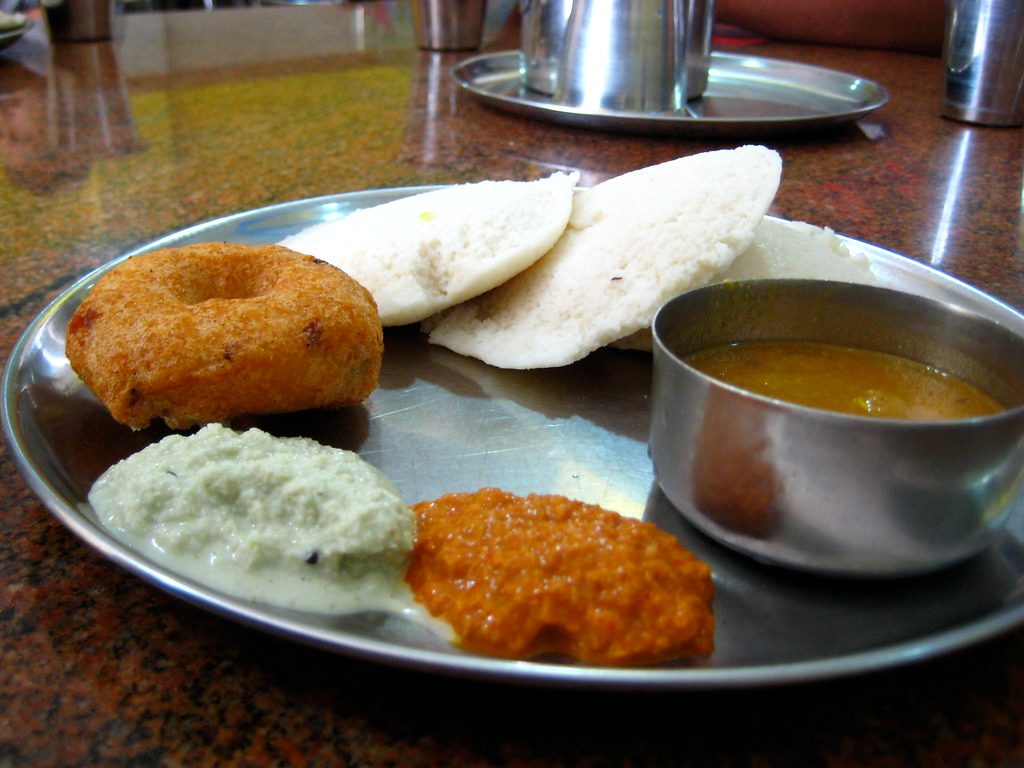
A traditional Kerala breakfast rarely arrives as a single plate. It shows up as a small procession of steamed rice cakes, simmering curries, and a glass of something hot and sweet, built around rice, coconut, and whatever curry happens to be simmering that morning. The pattern repeats across Malayali kitchens from Kasaragod to Thiruvananthapuram, though each household and each community along the coast has its own spin on the spread.
Kerala’s morning table carries the fingerprints of its trading history. Centuries of spice trade brought Arab, Portuguese, Dutch, and Chinese influences to Kerala’s shores, and all of it filtered into the kitchen. That history explains why a Malabar Muslim breakfast of pathiri and meat curry looks so different from a Syrian Christian spread built around fermented kanji, even though both are unmistakably Kerala. The eighteen dishes below, from steamed puttu to filter kaappi, make up the backbone of that morning table.
1. Puttu
Puttu is the dish most outsiders picture first when they think of Kerala mornings: a soft, cylindrical rice cake steamed in layers with grated coconut. It is made in a narrow container called a puttu kudam, where rice flour and coconut alternate in layers before steam does the cooking in just a few minutes.
In Kerala, puttu is served with banana or plantain, kadala curry, payar thoran with papad, fish or meat curry. The rice cake itself is mild, almost neutral, which is exactly the point. It is built to carry whatever curry sits next to it on the plate, and most Kerala kitchens keep more than one option ready for that job, a habit shared across traditional Indian breakfast cooking more broadly.
Pro Tip: Puttu firms up fast once it cools, so it is best steamed in small batches and eaten within minutes of coming off the heat.
2. Kadala Curry
Kadala curry is the curry most often paired with puttu, and for good reason. Kadala curry is made by cooking soaked black channa (Bengal gram) with chopped onion, spices and tomatoes. The black chickpeas are soaked overnight, simmered until tender, and finished with a roasted coconut masala that gives the curry its deep brown color and nutty undertone.
What makes kadala curry distinct from other chickpea preparations found across India is the coconut oil base and the small onions, or shallots, used instead of regular onion. The result is thicker and earthier than a typical north Indian chana masala. Readers exploring the broader world of breakfast traditions will notice this coconut-forward approach shows up again and again across Kerala’s morning dishes.
3. Cheru Payar Curry
Cheru payar curry swaps the black chickpeas for green gram, a smaller and quicker-cooking legume that needs no overnight soak. The curry is lighter than kadala curry, often finished with just a tempering of mustard seeds, curry leaves, and grated coconut rather than a heavy masala paste.
Payar, or green lentils, is traditionally served as a thoran alongside puttu in many Kerala households, and the curry version follows the same logic: a mild, protein-rich side that lets the rice cake remain the center of the plate. Families who find kadala curry too heavy for a weekday morning often keep cheru payar curry as the lighter alternative.
4. Chakka Puttu
Chakka puttu folds ripe jackfruit into the standard rice-and-coconut puttu mixture, adding a natural sweetness that changes the character of the dish entirely. The jackfruit is mashed and mixed directly into the rice flour before steaming, so the sweetness runs through every bite rather than sitting on top as a garnish.
This variation tends to appear seasonally, when jackfruit trees across Kerala’s backyards are heavy with fruit, usually in the summer months. Because jackfruit shows up across tropical Southeast Asian cooking in similarly inventive ways, chakka puttu sits at an interesting crossroads between Kerala’s rice traditions and its love of the fruit itself. Served plain or with a drizzle of coconut milk, it needs no curry on the side.
5. Dhe Puttu
Dhe puttu is a richer take on the base recipe, built with extra layers of grated coconut packed between each round of rice flour rather than just a dusting at the base and top. The added coconut makes the cake moister and slightly sweeter than standard puttu, closer in texture to a steamed coconut cake than a rice dumpling.
Home cooks who prepare this version often use fresh coconut rather than desiccated coconut, since the natural moisture helps bind the extra layers together during steaming. It pairs well with the same curries used for classic puttu, though some households prefer to eat it on its own with a little sugar, treating it almost like a dessert that happens to arrive at breakfast.
6. Erachi Puttu
Erachi puttu brings meat directly into the steaming process, most often minced beef or mutton folded into the rice flour layers or packed as a filling between them. This version is strongly associated with Malabar Muslim households in northern Kerala, where meat-forward breakfasts are far more common than in the state’s southern districts.
The spiced meat filling, usually a small-onion masala similar to what goes into a meat cutlet, gives erachi puttu a heartier profile than its vegetarian cousins. It shares some DNA with other meat-rich morning meals found in South Asian breakfast traditions, where protein-heavy starts to the day are standard rather than exceptional. It is usually eaten plain, since the filling already does the work a side curry would otherwise handle.
7. Idiyappam
String hoppers, also known as idiyappams or nool appams, are a staple breakfast dish in Kerala and Tamil Nadu, made with rice flour and eaten with coconut milk or a spicy egg curry. The dish gets its name from the pressing action used to make it, since rice flour dough is pushed through a mould to create thin strands that are then steamed into flat nests.
It is generally served as the main course at breakfast or dinner together with a curry, and it is served with coconut milk and sugar in the Malabar region of Kerala. The texture sits somewhere between a noodle and a dumpling, soft enough to soak up curry gravy without falling apart. Idiyappam’s reliance on pressed, steamed rice strands puts it in the same technical family as other pressed noodle breakfasts found in Japanese morning cooking, even though the flavors head in completely different directions.
| Rice-Based Dish | Main Preparation Method | Typical Pairing |
|---|---|---|
| Puttu | Steamed in layers inside a cylindrical mould | Kadala curry, banana |
| Idiyappam | Pressed into strands, then steamed flat | Egg curry, coconut milk |
| Appam | Fermented batter, pan-cooked into a bowl shape | Vegetable stew, egg roast |
| Pathiri | Rolled dough, dry-cooked on a flat tawa | Meat or fish curry |
8. Appam
Appam is a bowl-shaped pancake made with fermented rice batter and coconut milk, typically paired with stew or egg curry. The edges turn thin and lacy while the center stays soft and slightly spongy, a texture that comes from the natural fermentation of the batter overnight.
A splash of toddy or a spoonful of cooked rice is traditionally added to kickstart fermentation, though modern cooks often rely on yeast or baking soda instead. The fermented-batter technique places appam alongside other pancake traditions, including the crepes found in French breakfast cooking, even though the ingredients and fermentation process differ substantially. Vegetable stew is the most common pairing, though a Sunday breakfast in a Syrian Christian home often brings out a mutton or chicken stew instead.
9. Pathiri
Pathiri is a thin flatbread made from rice flour, rolled into soft discs and cooked dry on a flat tawa, a staple of Mappila cuisine whose roots trace directly to the 7th century, when Arab spice traders settled along the Kerala coast. Local cooks adapted rice flour into a bread-like form to suit visiting traders who were used to eating flatbread with their meals.
Pathiri belongs to the Mappila cuisine of the Malabar coast, made through centuries of contact with Arab traders who stayed in the region during long trading voyages. That trade history connects pathiri to flatbread traditions found across the Arab world and in Egyptian food culture, where similarly thin, unleavened breads anchor the morning meal. Pathiri is almost always eaten with a curry, whether meat, fish, or egg, since the bread itself carries little seasoning.
Key Insight: Pathiri’s name is believed to connect back to an Arabic word for flatbread, a small linguistic trace of the centuries of trade that shaped northern Kerala’s Mappila cuisine.
10. Pazham Pori
Pazham pori is a banana fritter, made by slicing ripe plantain and dipping it in a sweetened batter before frying it until golden. It sits closer to a snack than a full breakfast, but it shows up on Kerala’s morning table often enough to count as a staple in its own right.
Pazham pori is one of the dishes that gets frequently made at home alongside other favorites like puttu and avial, usually as a quick addition when there is overripe banana on hand. Nendran bananas, a starchy plantain variety grown across Kerala, are the preferred choice because they hold their shape and caramelize well. Some households treat it as a sweet counterpart to an otherwise savory breakfast, not unlike the sweeter options found on a festive breakfast table elsewhere in the world.
11. Pazhankanji
Pazhankanji is leftover rice soaked overnight in its own cooking water, eaten the next morning with whatever condiments are on hand. It is a simple, practical dish born out of necessity rather than a specific recipe, and it shows up most often in households that cook rice fresh every day and don’t want to waste what’s left.
A typical bowl comes with pickle, a few raw shallots, green chillies, and a side of yogurt or buttermilk to cut the fermented tang. It is sometimes compared to other cooling, fermented breakfast porridges served across warm climates, including the maize-based porridges common in South African food traditions. Despite its humble reputation, pazhankanji is credited by many Kerala households with being easier on the stomach during hot, humid mornings than a heavier rice cake.
12. Kanji
Kanji is a broken rice porridge, cooked longer and with more water than regular steamed rice, until it breaks down into a thick, almost soupy gruel. It is typically served warm, unlike its overnight cousin pazhankanji, and often appears alongside a small side of green gram curry or a wedge of mango pickle.
Many Syrian Christian households in central Kerala treat kanji as a proper breakfast rather than a convalescent food, pairing it with payar curry and a papadam for crunch. The dish’s simplicity makes it a comfort food in the same register as other warm, rice-based morning meals eaten across Latin American breakfast traditions, where rice and legumes play a similarly central role. Kanji is light enough to eat daily without feeling repetitive, which is part of why it has stayed a fixture for generations.
13. Kappa Puzhukku
Kappa puzhukku takes tapioca, known locally as kappa, and boils it until soft before mashing it coarsely with a tempering of coconut, cumin, and shallots. It is heavier than most other items on this list, closer to a filling midday meal than a light start to the morning, but it still appears regularly on Kerala’s breakfast table, particularly in the southern districts.
The tapioca itself is mild, so the real character of the dish comes from the tempering, which usually includes turmeric, green chilies, and curry leaves fried briefly in coconut oil. It is often served with a side of spicy fish curry or a simple chutney, functioning much like a hearty one-pot dish in the same spirit as German one-pot stew cooking, despite the very different ingredients involved. Kappa puzhukku is especially popular in Kerala’s coastal belt, where tapioca has long been grown as a reliable staple crop.
14. Idli
Kerala also has a variety of breakfast dishes like idli, dosa, appam, idiyappam, puttu, and pathiri. Idli is the steamed rice cake most familiar to visitors from outside South India: small, soft, pillowy discs made from a fermented batter of rice and urad dal, steamed in a dedicated idli mould.
In Kerala, idli is usually served with coconut chutney and a thin, tangy sambar rather than the thicker sambar varieties found further south in Tamil Nadu. The fermentation process, left overnight, is what gives idli its characteristic lightness and slight tang. It remains one of the most common quick breakfasts across South Indian households precisely because the batter can be made in bulk and kept refrigerated for several days.
15. Dosa
Dosa is a thin, savoury crepe in Indian cuisine made from a fermented batter of ground black gram and rice. The batter is spread thin across a hot griddle and cooked until the edges turn crisp and golden while the center stays soft, a texture contrast that makes dosa distinct from idli despite sharing the same base batter.
Kerala’s version often leans slightly thicker than the paper-thin dosas found in Tamil Nadu, and it is almost always served with coconut chutney alongside a vegetable or potato curry. Dosa remains one of the most flexible items on Kerala’s morning table, showing up plain, stuffed with spiced potato as masala dosa, or rolled thin as a crisp paper dosa depending on the household and the occasion. It sits firmly within the broader catalog of rice and lentil breakfast dishes that define South Indian mornings.
16. Pappadam
Pappadam is a thin, crisp wafer made from black gram flour, either fried briefly in hot oil or roasted directly over an open flame until it puffs and crackles. It rarely stands alone as a dish, functioning instead as the crunchy counterpoint to softer items like puttu, kanji, or pazhankanji.
The dough is rolled thin and left to dry before cooking, which is what gives pappadam its signature crackle. Black pepper and cumin are the most common seasonings worked into the dough, though plain versions are just as widely eaten. A Kerala breakfast plate rarely feels complete without at least one pappadam on the side, even when the main dish is already rich enough to stand on its own.
17. Chaya
Chaya is the Malayalam word for tea, and in Kerala it almost always means a milky, well-sweetened brew rather than the lighter, more diluted tea served elsewhere. Black tea leaves are boiled directly in milk and water together, then strained and poured from a height between two vessels to create a light foam on top.
Roadside tea stalls across Kerala, often called “chaya kada,” are a fixture of small-town mornings, serving glass after glass alongside a snack like parippu vada or a banana fritter. The preparation method, boiling tea and milk together rather than brewing them separately, puts Kerala chaya closer in spirit to the strong, sweet teas found in Chinese tea traditions than to a typical Western cup of tea. For many Malayalis, the day genuinely does not start until the first glass of chaya is finished.
18. Kaappi
Kaappi is filter coffee, brewed through a two-chamber stainless steel filter that drips strong, concentrated decoction slowly into the bottom compartment overnight. That decoction is then mixed with hot milk and sugar and poured back and forth between a tumbler and a small bowl, called a davara, to cool it and build a frothy top.
While chaya tends to dominate northern and central Kerala, kaappi has a stronger hold in parts of the state with closer ties to Tamil Nadu’s filter coffee culture, where coffee rather than tea anchors the breakfast table. The ritual of serving kaappi, poured dramatically from height, has its own quiet theater to it, not unlike the ceremony built around coffee service in Egyptian coffee traditions. Whether a household reaches for chaya or kaappi often comes down to family habit more than any strict regional rule.
Together, these eighteen dishes show why a traditional Kerala breakfast resists being reduced to a single iconic plate. Rice and coconut run through nearly everything, from the steamed layers of puttu to the fermented batter of appam, yet the curries, fillings, and brewing styles stacked on top carry the fingerprints of Malabar traders, Syrian Christian households, and coastal fishing communities alike. That range, built up over centuries rather than designed in a single kitchen, is what keeps Kerala’s morning table worth returning to.