Traditional Brazilian Breakfast: 14 Dishes That Define Café da Manhã

November 21, 2026
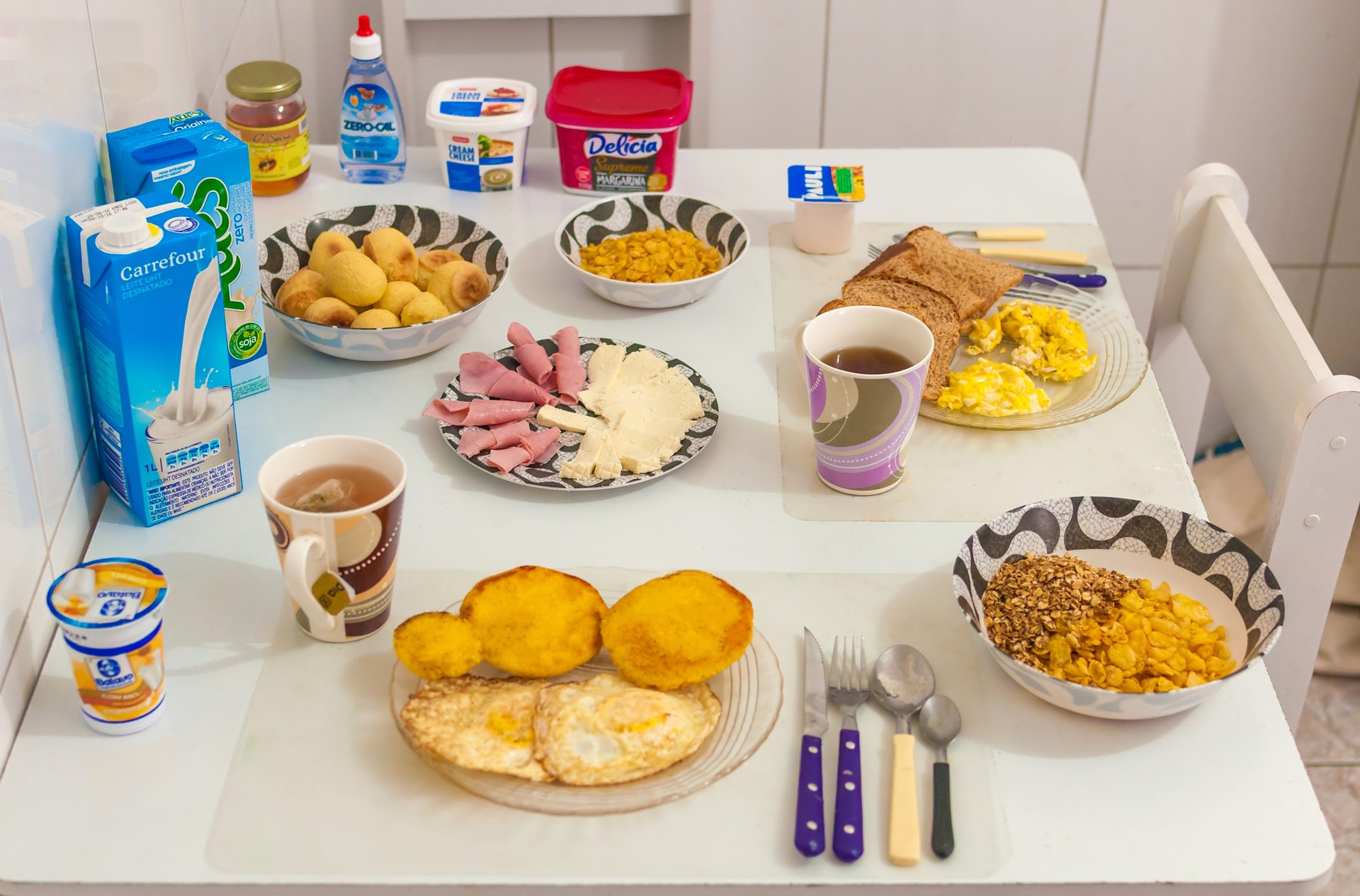
Most visitors picture Brazil through its feijoada and churrasco spreads, so it comes as a surprise that a traditional Brazilian breakfast is usually small, quick, and built around bread, coffee, and whatever fruit is in season. Café da manhã rarely lasts more than twenty minutes, yet it still carries enormous regional variety: a bakery counter in São Paulo looks nothing like a breakfast table in Recife or a kitchen in Porto Alegre. What ties it all together is a rotation of staple items that show up, in some form, almost everywhere in the country.
This guide walks through fourteen dishes and drinks that define that morning routine, from the crusty rolls sold fresh at neighborhood padarias to the sun-dried beef eaten in the Northeast. Each one tells a small piece of Brazil’s history, shaped by Indigenous ingredients, Portuguese colonization, African culinary knowledge, and waves of European immigration.
1. Pão Francês
Pão francês, literally “French bread,” is the roll most Brazilians eat without thinking twice about it. It has a thin, crackly crust, a light and airy crumb, and almost no fat in the dough, which is why it goes stale within hours and has to be bought fresh every morning. Despite the name, it bears little resemblance to an actual French baguette; the style developed locally after European bread-making techniques arrived and were adapted to Brazilian flour and ovens.
It is sold by weight at the neighborhood padaria, the small bakery-café that functions as a daily meeting point in most Brazilian towns. Sliced open and spread with butter, or stuffed with ham and cheese, it is the base that almost every other breakfast item gets paired with. Some regions bake a slightly larger, rounder version, but the texture and purpose stay the same nationwide.
2. Pão De Sal
Pão de sal is essentially the same roll known elsewhere as pão francês, but the name itself, “salt bread,” is the one used in Rio de Janeiro and parts of the Southeast. Naming conventions for this roll change almost town by town: some call it pão careca, others pão de trigo, and bakeries will often use two or three names interchangeably on the same display case.
What matters more than the name is the ritual around it. Brazilians buy it fresh, warm, and in small quantities, since a whole bag loses its crunch by midday. A basic pão de sal recipe uses wheat flour, water, salt, yeast, and a touch of fat, baked at high heat to get the signature crust that separates it from softer sandwich breads found in other countries.
3. Pão De Queijo
Pão de queijo, or Brazilian cheese bread, is arguably the country’s best-known breakfast export, and its backstory is more complicated than the simple cheese roll suggests. Food historians researching the dish trace its roots to enslaved Africans forcibly taken to the Minas Gerais region, who worked from techniques already developed by the area’s Indigenous peoples to process cassava, or Manihot esculenta, into a usable starch. Cheese was likely added generations later once dairy farming expanded in the region.
The result is a small, chewy, naturally gluten-free roll made from tapioca starch, cheese (usually fresh Minas cheese), eggs, and milk. It bakes up with a crisp shell and a stretchy, cheesy interior, and it is sold fresh at padarias across the country, often alongside a cup of coffee. Brazil is not alone in this family of cassava breads either; Paraguay’s chipa uses a nearly identical starch base and is considered a close regional cousin of pão de queijo.
Pro Tip: Frozen pão de queijo dough, available at many grocery stores outside Brazil, bakes up almost as well as the fresh version. Keep the oven hot and do not overcrowd the tray, or the rolls will steam instead of crisping.
4. Cacetinho
Cacetinho is a smaller, denser cousin of pão francês, shaped into a short, torpedo-like roll with a thicker crust and a tighter crumb. It is especially common in São Paulo and Minas Gerais bakeries, where it is sold as a quicker, more filling option than the airier French-style roll.
Because the crumb holds together better, cacetinho is the roll most often used for sandwiches with cold cuts, cheese, or scrambled eggs rather than eaten plain. Some bakeries bake it with a slightly sweeter dough, which makes it work equally well with butter and jam at breakfast or with savory fillings later in the day.
| Bread | Texture | Most Common Region | Typical Topping |
|---|---|---|---|
| Pão francês | Crackly crust, airy crumb | Nationwide | Butter, ham and cheese |
| Pão de sal | Same as pão francês | Rio de Janeiro, Southeast | Butter, queijo prato |
| Cacetinho | Denser, tighter crumb | São Paulo, Minas Gerais | Cold cuts, eggs |
5. Misto Quente
Misto quente is Brazil’s version of the grilled ham and cheese sandwich, made with two slices of soft white bread pressed on a hot griddle until the cheese melts and the outside turns golden. It is a lunch-counter and padaria staple that also shows up at breakfast when people want something more substantial than bread and butter.
The classic version keeps the filling simple: ham, a mild melting cheese like queijo prato, and sometimes a light brush of butter on the outside. It is not far in spirit from the toasted sandwich sets served at cafés in other countries, including the simple pressed toast combinations found in a traditional Japanese breakfast setting, where quick, light morning meals are also the norm rather than the exception.
6. Tapioca
Tapioca, in the Brazilian breakfast sense, refers to a flatbread made entirely from hydrated tapioca starch, cooked on a dry griddle until it sets into a thin, slightly rubbery disc that can be folded like a crepe. It originated in the Northeast and has since spread nationwide as a gluten-free alternative to wheat-based breads.
Wheat was never easy to grow in much of colonial Brazil, which is part of why cassava-derived starches became the backbone of so many regional breads. Culinary writers researching the region’s food history note that wheat flour was not even produced locally until the early twentieth century, so cooks relied on polvilho, the same tapioca starch used in pão de queijo, for generations before that changed. Common tapioca fillings include:
- Shredded coconut with condensed milk
- Butter and grated cheese
- Carne de sol with cream cheese
- Banana with cinnamon
The technique and the starch itself are not unique to Brazil; cassava-based flatbreads and fillings appear across other tropical food cultures, including parts of traditional Malaysian cooking, where similar starches turn up in both sweet and savory morning dishes.
7. Cuscuz
Cuscuz brasileiro is easy to confuse with North African couscous by name alone, but the two dishes share almost nothing beyond a name borrowed through Portuguese colonial trade routes. Brazilian cuscuz is made from fine cornmeal, not wheat semolina, steamed in a dedicated mold called a cuscuzeira until it sets into a firm, slightly sweet cake.
Important Note: If a recipe or menu abroad lists “Brazilian couscous,” expect a steamed corn dish rather than the fluffy wheat grain served in North African and Middle Eastern cooking, such as the grain dishes found in traditional Egyptian food.
It is sliced and served warm, usually with butter, a splash of milk, or a fried egg on top, and in the Northeast it sometimes comes with sardines or coconut milk instead. Leftover slices are often pan-fried the next morning, giving the dish a slightly crisp edge that many Brazilians prefer to the fresh-steamed version.
8. Café Com Leite
Café com leite, warm milk mixed with strong brewed coffee, is the everyday coffee drink served to children and adults alike at the breakfast table. The ratio of milk to coffee shifts by household and region, and a close cousin called pingado, where the coffee is “dripped” into the milk, is served in bakeries and corner cafés nationwide.
It is almost always paired with bread, whether that is pão francês with butter or a slice of cuca. The pairing of hot milk with a spiced or strongly brewed drink is not unique to Brazil either; similar milk-forward morning drinks appear in the chai traditions found across many traditional Indian foods, where sweetened, spiced tea with milk plays a comparable role at the start of the day.
9. Cafézinho
Cafézinho, literally “little coffee,” is a small, strong, often heavily sweetened cup of black coffee served after meals or to welcome a guest into someone’s home. Turning down a cafézinho when offered is considered slightly rude in many Brazilian households, since the gesture is as much about hospitality as it is about the drink itself.
It is typically brewed through a cloth filter rather than a paper one, which some Brazilians insist changes the flavor, and it is served in small cups rather than mugs. The ritual of offering a small, strong cup of something hot to a visitor echoes customs found elsewhere too, including the tea-centered hospitality rituals described in pieces on traditional Russian drinks.
10. Vitamina
Vitamina is a thick fruit and milk smoothie, usually blended with banana, papaya, or avocado, and sometimes with an egg or oats stirred in for extra substance. It is a breakfast-table regular for anyone who wants something more filling than coffee and bread but still wants to eat light.
The name comes from “vitamin,” a nod to how the drink was marketed decades ago as a healthy, fortifying start to the day. Heavy reliance on blended tropical fruit for a quick, nutrient-dense breakfast shows up in other Latin American food cultures as well, including several dishes covered in guides to traditional Venezuelan food.
11. Chimarrão
Chimarrão is the southern Brazilian way of drinking yerba mate, made from the dried, ground leaves of Ilex paraguariensis steeped in hot water inside a hollowed gourd called a cuia and sipped through a metal straw known as a bomba. It is most closely associated with Rio Grande do Sul, Santa Catarina, and Paraná, where it is treated less like a beverage and more like a daily social ritual.
According to Brazil’s Institute of Geography and Statistics, as reported by Brazilian Farmers , the country produced more than 527 thousand tons of yerba mate in 2020, with the overwhelming majority coming from its southern states, and Rio Grande do Sul standing out as the largest consumer within Brazil. The tradition traces back to the Indigenous Guarani people, and the habit of passing a shared gourd around a circle of friends or family has been handed down for generations.
Preparing it correctly takes a bit of practice. Guides to the drink describe the traditional method in a few basic steps:
- Fill roughly two-thirds of the cuia with finely ground yerba mate.
- Tilt the gourd so the leaves settle to one side, leaving an empty pocket.
- Insert the bomba against the empty side, not directly into the leaves.
- Pour hot (not boiling) water slowly into the empty pocket and sip.
Chimarrão’s finely ground, brighter green leaf makes it noticeably less bitter than the coarser yerba mate drunk in Argentina or Uruguay. For anyone curious how different cultures turn a simple steeped leaf into a daily ritual, it is worth comparing chimarrão’s gourd-and-straw ceremony with the more formalized pouring rituals found in guides to traditional Chinese drinks.
Key Insight: Chimarrão is almost never drunk alone at a table the way coffee is. It is passed hand to hand from a single gourd, which is part of why it functions more as a social activity than a quick caffeine fix.
12. Cuca
Cuca is a sweet, crumbly coffee cake topped with a streusel-like crumble, usually flavored with banana, guava, or seasonal fruit baked right into the batter. It is most common in Santa Catarina and Rio Grande do Sul, regions with large German and Pomeranian immigrant communities who brought the recipe with them in the nineteenth and early twentieth centuries.
The crumb topping, made from butter, sugar, and flour rubbed together into coarse pieces, is what distinguishes cuca from a plain fruit cake. It is sliced and served alongside café com leite, and the German-immigrant imprint on southern Brazilian baking is similar to the way other European settler communities shaped regional comfort food, as seen in dishes like Eintopf, the traditional German stew, that traveled with immigrants and adapted to new ingredients abroad.
13. Bolo Do Rolo
Bolo do rolo is a thin, tightly rolled sponge cake layered with guava paste, originally from Pernambuco and based on the Portuguese rocambole tradition of rolling cake batter while it is still warm and pliable. The result looks like a spiral when sliced, with dozens of paper-thin layers of cake and fruit filling packed into a single roll.
It takes real patience to make correctly, since each thin layer has to bake briefly, get spread with guava paste, and be rolled before it cools and cracks. The technique of layering delicate rolled pastry with a sweet filling is not exclusive to Brazil either; it shares a family resemblance with other rolled pastry traditions found in Mediterranean baking, including some of the rolled sweets covered in guides to traditional Greek foods.
14. Carne De Sol
Carne de sol is lightly salted beef that is partially dried, traditionally in the sun or a well-ventilated space, which concentrates the flavor without fully curing the meat the way jerky does. It is a defining dish of Northeastern Brazil and shows up at breakfast grilled and sliced thin, often alongside tapioca, beans, or fried cassava.
A near-constant companion on the plate is queijo coalho, the firm, squeaky cheese from Brazil’s Northeast that is commonly grilled and sold at beaches and street stalls throughout the region. The combination of salty dried beef with grilled cheese and a side of tapioca is one of the clearest examples of how a single regional meal can carry an entire area’s agricultural history on one plate. Dried, salt-preserved meat as a breakfast protein is not unique to Brazil either; similar preservation methods for meat show up in other regional cuisines, including some of the cured meat traditions described in overviews of traditional South African food.
Pro Tip: If queijo coalho is not available outside Brazil, a firm, low-melt cheese like halloumi makes a reasonable substitute for grilling alongside carne de sol.
Taken together, these fourteen dishes explain why a traditional Brazilian breakfast feels so different from the country’s reputation for big, slow-cooked meals later in the day. Morning food here leans light, starchy, and fast, built around whatever the local bakery or kitchen can put together in a few minutes, from a crusty pão francês in São Paulo to a cuia of chimarrão passed around a table in Porto Alegre. Anyone curious about how other countries structure their first meal of the day can find more regional comparisons in this collection of traditional breakfast guides from around the world.