15 Traditional Filipino Breakfast Dishes That Define Pinoy Mornings

November 22, 2026
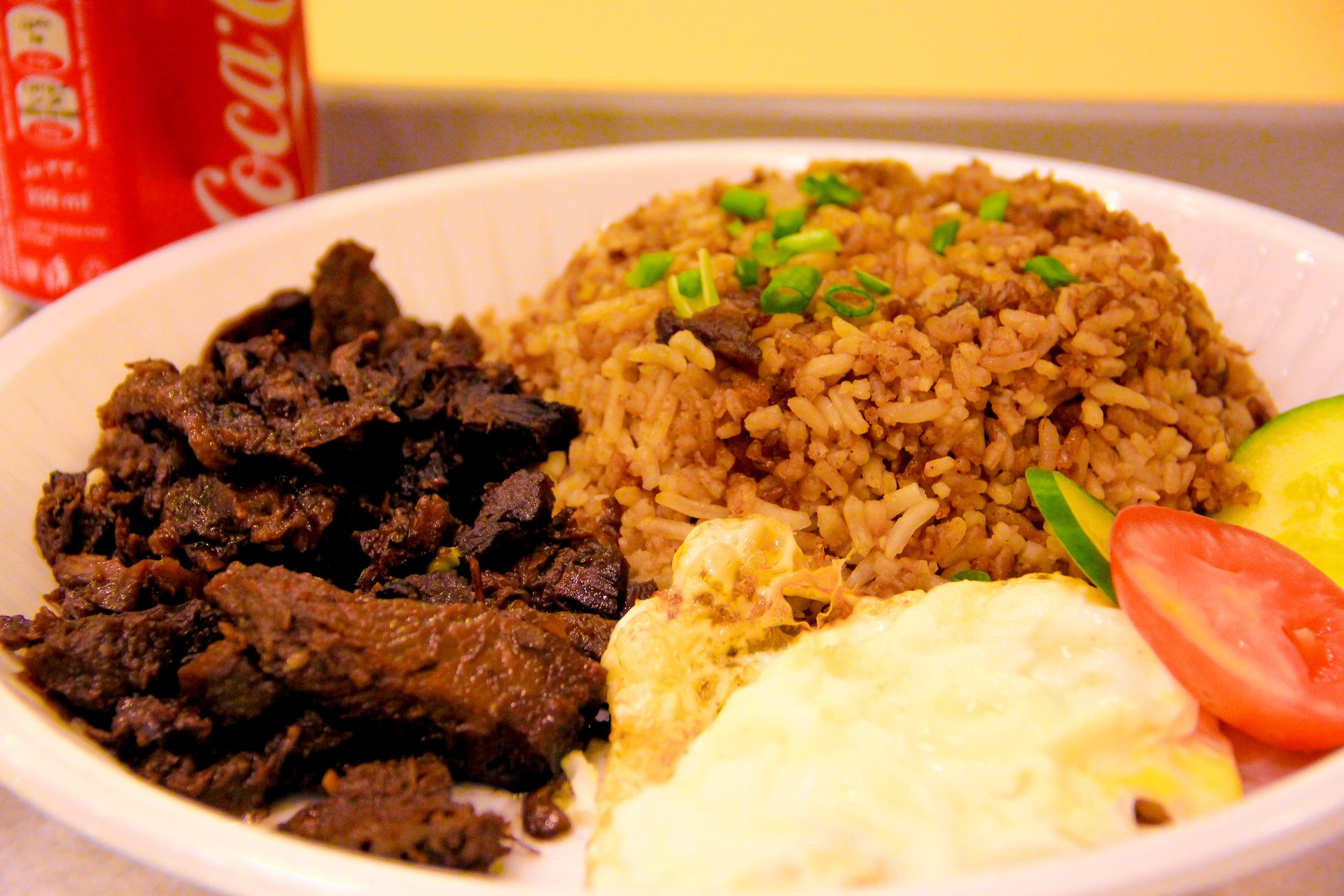
Rice, not cereal or toast, anchors the Filipino morning plate, and it almost always arrives fried with garlic and sitting next to a fried egg and something cured, smoked, or dried. A traditional Filipino breakfast is built on contrast: salty and sweet, chewy and crisp, rich and acidic, often eaten with bare hands or a fork pressed into the side of a spoon. These fifteen dishes, from the beef-and-rice classic tapsilog to the thick cacao porridge champorado, show how Spanish colonial cooking, Chinese trading influence, and homegrown ingenuity shaped what Filipinos eat before the workday starts.
Readers curious about how other cultures build their morning tables can compare notes with breakfast traditions from around the world already covered on this site. What follows is a tour through the Philippines’ most recognizable morning dishes, organized the way they’d actually appear on a home table or at a neighborhood carinderia.
1. Tapsilog
Tapsilog is the dish that gave an entire category of Filipino breakfasts its name. It’s served with accompanying savory dishes such as tapa, longganisa, or ham, and the name of the accompanying dish determines the portmanteau name of the silog, so the three examples become tapsilog, longsilog, and hamsilog. The formula is simple on paper: cured beef, garlic fried rice, and a fried egg, but the balance of sweet-salty meat against sharp garlic rice is what keeps people ordering it.
The dish has a surprisingly specific origin story. According to Esquire Philippines, the term “tapsilog” was coined by a restaurant owner named Vivian del Rosario in the mid-1980s, when she opened a canteen in Quezon City that catered to the working class, offering a garlic rice dish with beef tapa and fried eggs that she called “tapsilog.” That single eatery’s menu item spread into one of the most recognizable breakfast formats in the country.
Key Insight: Almost any Filipino protein can become a “silog” by pairing it with garlic rice and a fried egg. The table below shows how the most common versions differ.
| Silog Variant | Protein | Flavor Profile |
|---|---|---|
| Tapsilog | Beef tapa | Savory, slightly sweet, chewy |
| Longsilog | Longganisa sausage | Garlicky or sweet, depending on region |
| Tocilog | Tocino (cured pork) | Sweet, sticky, caramelized |
| Bangsilog | Bangus (milkfish) | Salty, vinegar-marinated, flaky |
2. Tapa
Before it became the “tap” in tapsilog, tapa was already its own standalone breakfast staple. In the Philippines, tapa refers to dried cured beef that’s soft and chewy, mostly savory and mildly sweet. The curing method predates refrigeration by centuries. The practice of curing meat existed for generations as a way to preserve food in tropical climates where refrigeration wasn’t available, so Filipinos traditionally cured meat by rubbing it with salt and spices, then drying it under the sun.
Modern tapa swaps the sun-drying step for a quick marinade of soy sauce, vinegar, garlic, and sugar before pan-frying. Readers interested in how other cuisines handle salt-cured breakfast meat might also look at South African food traditions, where dried and cured meats play a similarly central role in the morning or midday meal.
3. Sinangag
Sinangag is the rice half of every silog dish, and it rarely goes to waste. The term silog is itself a portmanteau of sinangag (fried rice) and itlog (egg), meaning a silog meal has at least these two elements present. Cooks typically use day-old cooked rice (Oryza sativa), since slightly dried grains fry up firmer and absorb garlic oil better than freshly steamed rice.
The dish itself is unglamorous by design: leftover rice, minced garlic, a pinch of salt, and enough oil to get the grains crisping at the edges. That frugality is part of why sinangag appears at nearly every Filipino breakfast table, regardless of region or income level.
4. Longganisa
Longganisa is the Filipino answer to the Spanish chorizo, reshaped by three centuries of colonial rule into something distinctly local. The Philippines was a colony of Spain for over 300 years, and the longganisa, or Filipino sausage, drew inspiration from the Spanish chorizo, with many regional versions that range from sweet and salty to sour and garlicky. No two provinces make it quite the same way.
- Vigan longganisa: garlic-forward, slightly sour, from Ilocos Sur
- Lucban longganisa: coarsely ground, heavily spiced, oregano-scented
- Alaminos longganisa: sweet, often grilled rather than pan-fried
However it’s seasoned, longganisa is almost always pan-fried in its own rendered fat until the casing blisters slightly, then served alongside sinangag and a vinegar-chili dipping sauce.
5. Tocino
Tocino takes the same preservation logic as tapa and pushes it toward dessert territory. Tocino is a pork dish cured in sugar, garlic, pink salt, and pepper, getting its trademark pinkness from the salt, and when fried in oil, the sugar turns into a sweet, sticky glaze that coats the pork. The curing tradition itself goes back to necessity rather than flavor. The tradition of curing meat like tocino originated as a method of food preservation in the Philippines’ tropical climate, historically using salt and sugar to achieve its bright pink hue and deep sweetness, which over time evolved into a national culinary preference.
Common Mistake: Cooking tocino over high heat burns the sugar glaze before the pork fully cooks through. Low, steady heat with a splash of water added partway through gives the meat time to cook while the glaze caramelizes evenly.
6. Bangus
Bangus, or milkfish (Chanos chanos), is farmed extensively in fishpond provinces like Pangasinan and Bulacan and shows up at breakfast most often as daing na bangus: deboned, marinated overnight in vinegar, garlic, and black pepper, then pan-fried until the skin crisps. Its mild, slightly sweet flesh takes on the marinade well without turning overly fishy, which is part of why it’s one of the few fish dishes Filipinos eat regularly before noon.
Fish-based breakfasts aren’t unique to the Philippines. Coastal cultures elsewhere build similar morning habits around the catch available locally, a pattern also visible in traditional Venezuelan food, where seafood and starch combinations serve a comparable role.
7. Tapang Taal
Tapang Taal is a regional cousin of standard beef tapa, native to the heritage town of Taal in Batangas province. It tends to be leaner and more garlic-forward than the commercial tapa sold in supermarkets, and some versions blend in carabao meat alongside beef. The curing time is also typically shorter, giving the meat a firmer bite rather than the softer, jerky-like texture found in mass-produced tapa.
Taal’s culinary identity is tied closely to its preserved heritage houses and old trade routes, and the town’s tapa-making tradition is often mentioned in the same breath as its ancestral architecture. For a sense of how other regions treat cured meat as a point of cultural pride, the cured-meat culture in South African cuisine offers a useful parallel.
8. Lugaw
Lugaw is plain rice porridge, cooked low and slow until the grains break down into a thick, savory gruel. It’s typically topped with toasted garlic, scallions, and a squeeze of calamansi, and street vendors sell variations like goto (with beef tripe) and arroz caldo (with chicken and ginger) from the same pot. Rainy mornings and mild stomachs both call for a bowl of it.
Rice porridge as a breakfast format isn’t exclusive to the Philippines. It echoes the rice-based morning meals found in traditional Japanese breakfast spreads, and shares a slow-cooked, one-pot logic with hearty dishes like Eintopf, Germany’s traditional one-pot stew.
9. Champorado
Champorado is a thick, chocolate rice porridge made by simmering glutinous rice with tablea, pressed tablets of ground cacao (Theobroma cacao), then sweetening the mixture with sugar and finishing it with a splash of evaporated milk. The texture sits somewhere between porridge and pudding, dense enough to eat with a spoon rather than drink.
Its defining pairing isn’t another sweet dish but a salty one: dried fish on the side, cutting through the chocolate’s richness with sharp, briny contrast. Sweet rice porridges with regional variation also appear across Malaysian food, where coconut and palm sugar play a similar sweetening role.
10. Tuyo
Tuyo is sun-dried, salted fish, usually small herring or sardines, fried until the edges turn brittle and the skin crisps. It’s an unapologetically humble dish, often dismissed as “poor man’s food” despite being a staple across income levels, and it’s the traditional partner to champorado’s sweetness. A plate of tuyo with garlic rice, sliced tomatoes, and a dish of vinegar is breakfast enough on its own.
Drying and salting fish as a preservation method long predates refrigeration in the Philippines, much as it does in other archipelagic and coastal food cultures. Preserved seafood shows up in a comparable way within traditional Greek foods, where salted and dried fish remain a pantry staple.
11. Tortang Talong
Tortang talong is a Filipino eggplant omelet made by grilling or pan-roasting a whole eggplant (Solanum melongena) until the skin blisters and the flesh softens, then flattening it with a fork, dipping it in beaten egg, and frying it until golden. The result holds its shape like a thin patty rather than scrambling apart, with the eggplant’s smoky flavor running through every bite.
It’s one of the few vegetable-forward dishes in the traditional Filipino breakfast lineup, usually served with rice and a side of banana ketchup or spiced vinegar. Eggplant appears just as prominently at breakfast and beyond in traditional Indian foods, where it’s treated with similarly heavy spicing and smoky grilling techniques.
12. Puto Bumbong
Puto bumbong is a purple glutinous rice cake steamed inside hollow bamboo tubes set over boiling water, a method that gives the rice its distinctive cylindrical shape and faint smoky-sweet aroma. It’s strongly associated with the Christmas season, especially the pre-dawn Simbang Gabi masses, when street vendors set up steaming carts right outside churches.
- Soak the purple glutinous rice (locally called pirurutong) overnight.
- Pack the soaked rice into hollow bamboo tubes.
- Steam the tubes upright over boiling water until the rice cooks through.
- Push the rice cylinder out onto a banana leaf or plate.
- Top with margarine, sugar, and freshly grated coconut before serving.
It’s typically sold alongside bibingka, a baked rice cake cooked in clay pots over charcoal, making the two a near-inseparable Christmas-morning pairing.
13. Pandesal
Pandesal is the soft, slightly sweet bread roll that shows up in nearly every Filipino bakery (panaderia) and household bread basket. Its exterior is dusted in fine bread crumbs rather than flour, giving it a faint crunch that gives way to a pillowy interior once torn open. Most Filipinos eat it warm, split in half and spread with butter, margarine, or a slice of cheese or luncheon meat.
As a breakfast bread that pairs almost exclusively with coffee rather than tea, pandesal plays a role similar to the baguette-and-coffee combination found in traditional French food, even though the two breads differ enormously in texture and preparation.
14. Kapeng Barako
Kapeng barako is a strong, aromatic coffee grown almost exclusively in Batangas and Cavite provinces. It’s a coffee varietal grown in the Philippines, particularly in those two provinces, belonging to the species Coffea liberica. The name itself comes from the Tagalog word for a wild boar or stud animal, nodding to the coffee’s unusually bold, almost smoky flavor.
Its history runs through one of the country’s most dramatic agricultural booms and busts. The romance of Batangas coffee began with its gradual introduction to the province starting in the middle of the 18th century, and the Kapeng Barako that’s known today took shape in the 19th century, when coffee was so widely planted in Lipa that by the mid-1800s about two-thirds of the municipality was planted to the crop. That wealth didn’t last. Those heady times did not last very long, as Batangas coffee fell from its lofty height with a thud in 1889 with the arrival of the dreaded coffee rust in the province.
Pro Tip: Kapeng barako is traditionally brewed strong and black, often with a hint of sugar, to stand up to its naturally bold, slightly nutty flavor rather than masking it with cream.
Readers comparing coffee-first breakfast cultures might also look at how tea and coffee anchor the morning in traditional Russian drinks, where strong brewed beverages play an equally central role in starting the day.
15. Tokwa’t Baboy
Tokwa’t baboy pairs fried tofu, made from soybeans (Glycine max), with boiled pork, typically ears or belly, cut into small cubes and tossed in a soy sauce, vinegar, and garlic dressing with scallions and chopped chili. It’s less a standalone breakfast and more a savory topping, most often spooned directly over a bowl of plain lugaw to turn the porridge into a full meal.
The dish is one of several reminders of how Chinese trading influence shaped Filipino morning food, tofu having entered Filipino cooking through centuries of trade contact. Protein-forward, legume-based breakfast additions show up elsewhere too, including in traditional Egyptian food, where beans and legumes anchor the morning meal in a comparable way.
Taken together, these fifteen dishes show that a traditional Filipino breakfast isn’t one fixed plate but a modular system: rice as the constant, a cured or dried protein as the variable, and coffee or porridge filling in wherever meat doesn’t. Anyone building a themed breakfast spread at home might also enjoy browsing breakfast ideas for Valentine’s Day for a very different, but equally hearty, morning table.