10 Traditional Moroccan Breakfast Dishes Locals Eat Every Morning

November 21, 2026
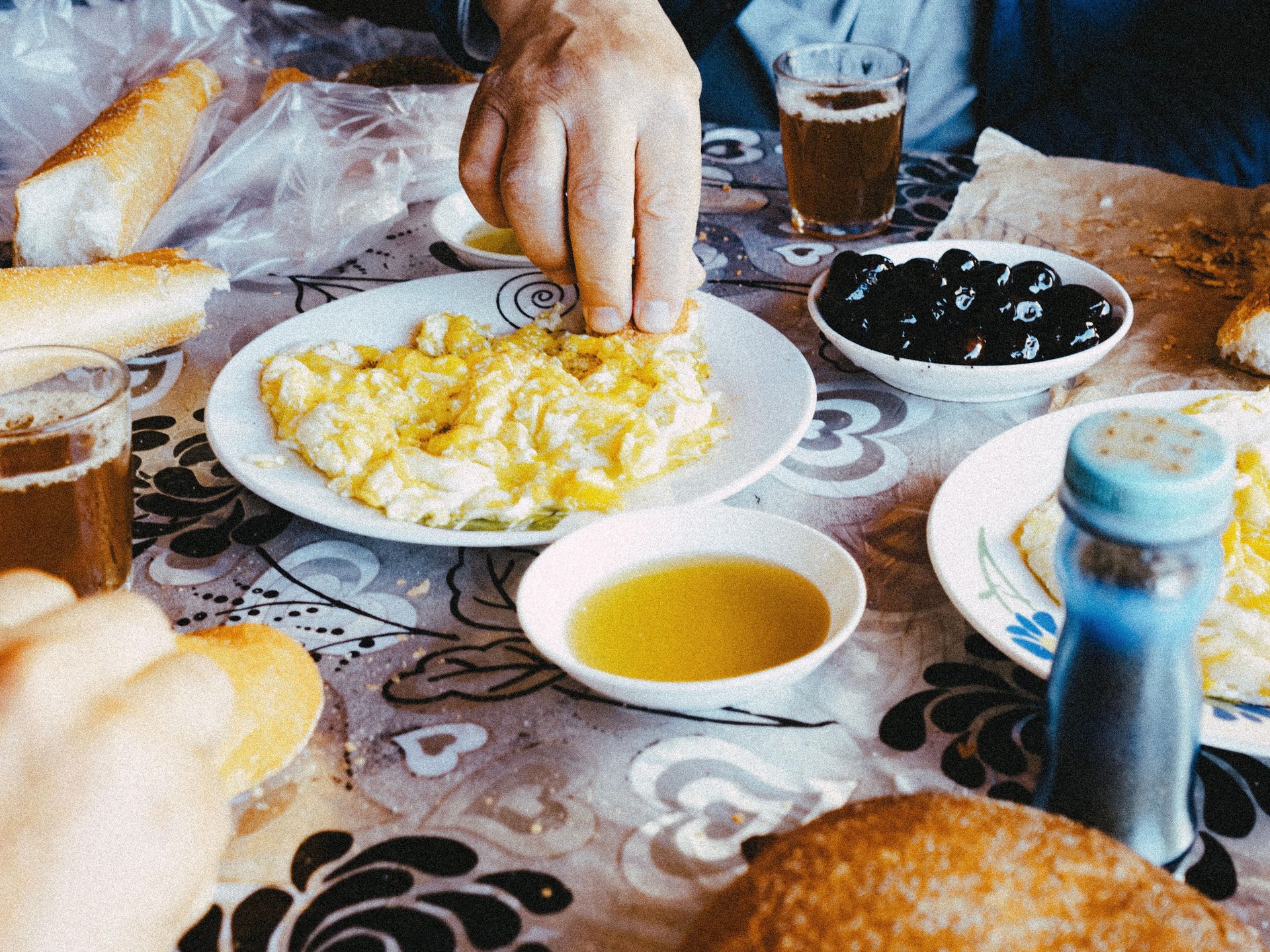
On most weekday mornings, a traditional Moroccan breakfast looks almost deceptively plain: a torn piece of bread, a drizzle of olive oil, and a glass of sweet mint tea. Step into the same home on a Friday, a wedding morning, or during Ramadan, and that modest spread grows into a table that can rival lunch.
Morocco’s breakfast habits carry Amazigh, Arab, and Andalusian influence stacked across centuries, and each dish below tells its own story about region, season, and family ritual. From a pancake riddled with tiny holes to a preserved meat that predates refrigeration, these ten dishes explain why Moroccans treat the first meal of the day as a craft worth slowing down for. Readers curious about how other cultures start their morning can also browse this site’s wider collection of breakfast traditions from around the world.
| Dish | Type | Main Ingredients | Typical Serving Style |
|---|---|---|---|
| Baghrir | Pancake | Semolina, yeast, baking powder | Honey and melted butter |
| Khobz | Bread | Semolina and wheat flour | Torn by hand, dipped in olive oil or jam |
| Jben | Fresh cheese | Curdled milk, salt | Spread on bread with honey or oil |
| Mint tea | Drink | Green tea, fresh mint, sugar | Poured from height into small glasses |
| Bissara | Soup | Fava beans or split peas, cumin | Warm bowl with bread for dipping |
| Khlea | Preserved meat | Beef or lamb, garlic, cumin, fat | Fried with eggs as khlea bel beid |
| Msemen | Flatbread | Semolina dough, oil layers | Honey, amlou, or cheese |
| Moroccan spiced coffee | Drink | Coffee, cinnamon, ginger, pepper | Strong, often cut with milk |
| Kika dial kouk | Porridge | Ground kouk, water or milk | Honey or argan oil drizzle |
| Halwa dyal kouk | Sweet confection | Roasted kouk flour, honey, argan oil | Small portions on festive mornings |
1. Baghrir
Baghrir earns Morocco’s “thousand-hole” nickname from the lace of tiny air pockets that forms across its surface while it cooks on a dry skillet. It is a pancake made with semolina or flour that, when cooked correctly, ends up covered in small holes that soak up whatever sauce it’s served with. Cooks pour the batter thin and only ever brown one side, letting the yeast and baking powder push bubbles all the way through before the surface sets.
Baghrir shares its popularity with msemen as a near-mandatory dish during Ramadan and Eid mornings, when families serve both alongside tea or coffee. On an ordinary day it still shows up often, stacked on a plate and finished with melted butter and warm honey, sometimes with a touch of orange blossom water for fragrance.
Pro Tip: Resist the urge to flip baghrir. The holes only form properly when the pancake cooks undisturbed on one side until the top looks completely dry.
2. Khobz
Khobz is the round, semolina-dusted bread that anchors nearly every Moroccan meal, breakfast included, and it rarely meets a knife. Families tear it by hand into wedges for scooping, dipping, and sandwiching whatever else sits on the table that morning.
Many neighborhoods still send dough to a shared wood-fired oven, known as a ferran, where a baker marks each household’s loaf so it comes back to the right kitchen. In cities with a strong French colonial imprint, breakfast baskets often set khobz beside baguettes or croissants, a pairing that mirrors how traditional French food blended with Moroccan baking habits during the protectorate era. Either way, the bread’s real job stays the same: carrying olive oil, butter, honey, jam, or cheese to the mouth without any cutlery involved.
3. Jben
Jben is Morocco’s everyday fresh cheese, made by letting curdled milk drain through cloth until it firms into a soft, rindless block. It carries a mild, slightly tangy flavor and a light salting, closer to a farmer’s cheese than anything aged or sharp.
- Spread thin on warm khobz with a drizzle of honey
- Paired with olive oil and a sprinkle of dried thyme or zaatar
- Wrapped in cheesecloth and sold fresh at weekly souks
Rural households that keep a goat or cow often make jben at home rather than buy it, which keeps the recipe close to family tradition rather than any fixed formula. Readers who enjoy that style of simple, just-made dairy might also like the fresh curds found in traditional Greek foods, another cuisine built around milk turned quickly into cheese.
4. Mint Tea
Moroccans call it atay, and it shows up at breakfast, after lunch, and again in the late afternoon, built from green tea leaves, a generous handful of fresh mint, and sugar. The person pouring lifts the teapot high above the glass so the stream aerates the tea and raises a thin foam on top, a small flourish that signals care rather than show.
The gunpowder green tea at the base of the recipe traces back to old trade routes with China, a connection readers can follow further in this site’s rundown of traditional Chinese drinks. At breakfast, mint tea usually sits beside khobz, msemen, or baghrir, cutting through the richness of butter and honey with its sharp, sweet bite.
5. Bissara
Bissara is a thick, warm soup made from dried fava beans or split peas, boiled soft and blended until smooth, then finished with a pool of olive oil, cumin, and a dusting of paprika. Street vendors in northern cities like Tangier and Tetouan ladle it into bowls from early morning, and regulars tear bread straight into the pot instead of using a spoon.
The soup’s appeal is practical as much as it is comforting: it costs little, fills a bowl fast, and warms a cold morning better than almost anything else on a Moroccan breakfast table. Bissara belongs to the same family of hearty, one-pot cold-weather cooking found elsewhere in the world, not unlike the slow-simmered German traditional stew known as eintopf.
6. Khlea
Khlea, also spelled khlii, is a preserved meat usually made from beef or lamb that’s cut into strips, marinated with garlic, coriander, and cumin, then cooked in a mixture of water, oil, and animal fat. Once sealed in its own fat, it keeps at room temperature for up to two years, which made it an essential pantry staple long before refrigerators reached rural Morocco.
Families sometimes know the preserved version by its regional name, and mqila slaouia describes the same traditional dish of beef or lamb that’s marinated, cooked, and preserved in its own fat. For breakfast, cooks typically fry a spoonful of khlea with eggs into a dish nicknamed khlea bel beid, pairing the rich, slow-cooked meat with soft bread for scooping.
Key Insight: Khlea’s long shelf life made it a seasonal pantry hedge, often prepared after Eid al-Adha when households had surplus meat to preserve for the months ahead.
The technique of salting and slow-cooking meat for long-term storage has close cousins worldwide, including the air-dried biltong covered in this site’s guide to traditional South African food.
7. Msemen
Msemen is a square, flaky flatbread built by folding oiled dough over itself several times before it hits the griddle, a technique that creates thin, crisp layers once it cooks. The outside turns golden and slightly crunchy while the inside stays soft and chewy, a texture contrast that makes it stand out next to plain bread.
Breakfast tables usually serve msemen warm, torn into pieces, and finished with honey, amlou (a peanut, almond, and argan oil spread), or a few slices of jben. The layering technique behind msemen produces a texture similar to other laminated flatbreads eaten at breakfast worldwide, including the roti canai featured in this site’s guide to traditional Malaysian food.
8. Moroccan Spiced Coffee
Moroccan spiced coffee, sometimes called qahwa b’nafass, blends ground coffee with warming spices such as cinnamon, ginger, black pepper, nutmeg, and sesame seeds. Spice merchants in the souks sell the pre-mixed blend by weight, and households brew it strong, often cutting the final cup with hot milk.
Many Moroccans drink it specifically on cold mornings or after a heavy meal, treating the spice mix as much as a digestive aid as a morning pick-me-up. Morocco’s spiced coffee sits alongside a wider North African coffee culture that includes the thick, aromatic brews covered in this site’s look at traditional Egyptian drinks.
9. Kika Dial Kouk
Kika dial kouk is a warm porridge rooted in Amazigh, or Berber, home cooking, built from finely ground kouk and simmered with water or milk until it thickens into something closer to a thin pudding than a bowl of oatmeal. Families in the Atlas Mountains and the Souss region tend to finish it with a spoonful of honey or a swirl of argan oil, turning a plain grain porridge into a dish with real local identity.
Because the recipe passes through oral family tradition rather than published cookbooks, the exact grain, thickness, and toppings shift from one household to the next. Readers interested in how other cultures turn simple grains into breakfast comfort food can compare notes with the porridges and grain dishes covered in traditional Indian foods.
Important Note: Regional dishes like kika dial kouk vary significantly between households and villages, and few standardized recipes exist outside oral family tradition, so details can differ from one Amazigh community to another.
10. Halwa Dyal Kouk
Halwa dyal kouk is the sweet counterpart to kika, a dense confection made by mixing roasted kouk flour with honey and argan oil or butter until it binds into a thick, spoonable paste. Some households fold in crushed almonds or sesame for extra texture, placing it in the same rustic sweet-spread family as sellou, Morocco’s better-known festive paste of toasted flour, nuts, and honey.
Because the mixture is energy-dense, families often serve it in small portions, especially on colder mornings or during celebrations when a heavier breakfast suits the occasion. Like kika, the exact ratio of honey to oil to flour tends to follow a grandmother’s memory rather than a written recipe, which keeps the dish tied closely to specific families and villages rather than a single national standard.
From the honeycomb pockets of baghrir to the slow-cooked richness of khlea, Morocco turns breakfast into a sampler of its geography, history, and family ritual within a single sitting. Trying even a few of these dishes at home, paired with a properly poured glass of mint tea, offers a clearer sense of Moroccan hospitality than almost any other meal of the day.
Readers who enjoy this kind of morning deep dive might also appreciate the quieter, seasonal rhythm of a traditional Japanese breakfast, or browse this site’s coverage of traditional Egyptian food for a neighboring North African take on the first meal of the day.