16 Traditional European Breakfast Dishes from Belarus to the Balkans

November 22, 2026
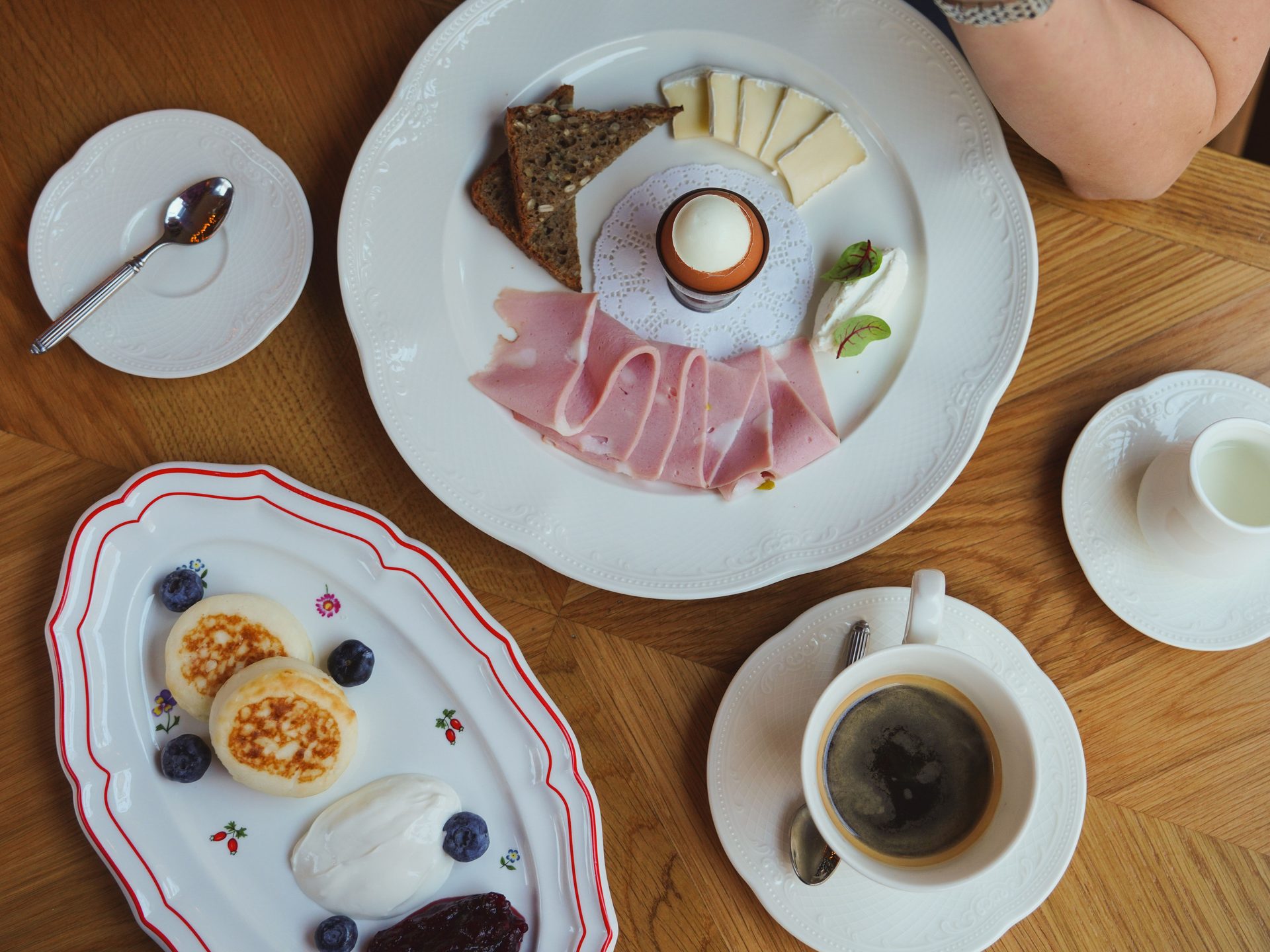
Ask someone in Minsk, Rome, and Zagreb what they eat before 9 a.m. and you will get three completely different answers. A traditional European breakfast is not one meal; it is dozens of regional habits built around whatever grew, was milled, or was fermented nearby for centuries. Some mornings start with a grated potato pancake sizzling in a pan, others with a cream-filled bun eaten standing at a café counter.
What ties these dishes together is not shared ingredients but shared logic: use what is local, make it fast enough for a workday, and make it filling enough to last until lunch. The sixteen dishes below span Eastern Europe, the German-speaking world, the Mediterranean, Scandinavia, Finland, Greece, and the Balkans. Together they form a working map of how the continent actually eats in the morning, documented in this collection of traditional breakfast dishes from around the world.
| Dish | Country / Region | Main Ingredient |
|---|---|---|
| Draniki | Belarus | Grated potato |
| Oladi | Russia / Ukraine | Pancake batter |
| Semmeln | Germany / Austria | Wheat bread roll |
| Fette biscottate | Italy | Twice-baked bread |
| Caffè latte | Italy | Espresso and milk |
| Churros | Spain | Fried dough |
| Tostada | Spain | Toasted bread |
| Manteca colorá | Andalusia, Spain | Seasoned pork lard |
| Knäckebröd | Sweden | Rye crispbread |
| Cornetto alla crema | Italy | Pastry cream filling |
| Maritozzo | Rome, Italy | Sweet bun and cream |
| Karjalan piirakka | Finland | Rye and rice porridge |
| Puuro | Finland | Oat or rice porridge |
| Tiropita | Greece | Phyllo and cheese |
| Paximadia | Greece | Twice-baked rusk |
| Sir i vrhnje | Croatia / Balkans | Fresh cheese and cream |
1. Draniki
Draniki are grated potato pancakes and the dish most Belarusians would name first if asked about their national food. Belarus.by notes that draniki became very popular in Belarus in the 19th century, and they were often eaten for breakfast as a very delicious and nourishing dish.
The pancakes themselves are simple: shredded potato, a little onion, salt, and sometimes an egg or flour to bind the mixture, fried until the edges turn crisp and golden. Despite being so tied to Belarusian identity today, the dish has older, murkier roots. According to Tasting Table , these savory pancakes originated in the Russian Empire and were first mentioned in print in 1830.
Serving style matters almost as much as the recipe. Hot potato pancakes are traditionally served with fresh homemade sour cream, piled onto a plate rather than arranged neatly. Some households add fried salo, a pork-stew topping called machanka, or even fruit jam for a sweeter version eaten later in the day.
Pro Tip: Squeeze as much liquid as possible from the grated potato before frying. Wetter batter steams instead of crisping, which turns draniki soggy rather than golden.
2. Oladi
Oladi are the thicker, fluffier cousin of the Russian blini, and they fill much the same role in a traditional Eastern European breakfast that pancakes or waffles fill elsewhere. According to Wikipedia , oladyi are small thick pancakes or fritters common in Russian and Ukrainian cuisines.
The batter usually relies on kefir, buttermilk, or yeast rather than plain milk, which gives the pancakes their characteristic puffiness and slightly tangy edge. Cooks often fold in grated apple, raisins, or mashed banana directly into the batter instead of adding fruit as a topping afterward.
At the table, oladi are stacked rather than laid flat, then finished with honey, sour cream, jam, or condensed milk depending on the household. Paired with strong black tea, oladi make a filling start to a cold-climate morning, much like the hearty soups and grain dishes covered in traditional Russian drinks and breakfast pairings.
3. Semmeln
Semmeln are small, round bread rolls, and in much of the German-speaking world they are breakfast itself rather than a side to it. Naming gets regional fast: a roll bought in Munich and one bought in Berlin are the same basic product with different names on the bakery sign. Germanfoods.org explains that German bread rolls are generally called Brötchen, but regional names include Semmeln, Schrippen, Wecken, and Rundstücke, and specifically that in Bavaria and Austria, they may be called Semmeln.
A good Semmel has a thin, crackling crust and an airy, slightly chewy interior, made from little more than flour, water, yeast, and salt. Toppings run from butter and jam to cold cuts, soft cheese, or a soft-boiled egg, and the roll is almost always eaten fresh the same morning it was baked.
The weekend version of this ritual is practically a national institution. The Brot Box describes how many people in Germany go to the bakery on Sunday morning to buy fresh bread rolls, a ritual that defines the weekend for many families, and plain rolls are especially popular for the Sonntagsfrühstück, a lengthy Sunday breakfast that easily turns into lunch. The same bread culture extends into dinner, where slow-cooked dishes like the traditional German stew called Eintopf round out the other end of the day.
Key Insight: Semmeln are named by region, not recipe. The roll itself barely changes from Bavaria to Berlin; only what the bakery calls it does.
4. Fette Biscottate
Fette biscottate are thin slices of bread baked, cooled, and then baked a second time until they turn pale gold and dry throughout. The texture sits somewhere between a cracker and melba toast, sturdy enough to hold a layer of jam, honey, or chocolate spread without going soft too quickly.
Italian households keep a box of fette biscottate in the pantry the way other countries keep sliced bread, because the twice-baking process gives them a shelf life of weeks rather than days. For breakfast, they are usually spread thin and eaten alongside coffee, rarely as a meal on their own.
Their appeal is practical as much as culinary. On busy weekday mornings when there is no time for a bakery run, fette biscottate turn a cupboard staple into a reasonably satisfying breakfast in under a minute.
5. Caffè Latte
Caffè latte in Italy is a home drink first, and only secondarily something ordered at a café. It is espresso stretched with a generous pour of hot milk, served in a wide bowl-shaped cup or mug rather than the smaller cup used for cappuccino.
The ratio of milk to coffee is higher and the foam lighter than a cappuccino, which is part of why caffè latte reads as a breakfast drink specifically, something gentle enough to pair with fette biscottate or a plain cornetto first thing in the morning. Many Italians make it at home with a stovetop moka pot and warmed milk rather than an espresso machine.
This milk-forward, slow-sipped approach to morning coffee has close cousins elsewhere on the continent. Café culture in places like France leans on a similarly large, milky cup of coffee to start the day, a pattern explored further in this look at traditional French food and breakfast customs.
6. Churros
Churros are strips of fried dough, piped through a star-shaped nozzle so the ridges crisp up more than a smooth surface would, then dusted with sugar while still warm. In Spain they show up at breakfast far more often than dessert menus elsewhere might suggest.
The classic pairing is thick hot chocolate for dipping, though plain coffee works just as well on an ordinary weekday. Churrerías, small stalls or shops dedicated almost entirely to churros, open early specifically to catch the breakfast and mid-morning crowd before closing by early afternoon.
A thicker, less sweet relative called porras appears in some regions, made from a looser batter and fried in longer coils instead of individual sticks. Either version turns breakfast into something closer to a treat than a routine.
7. Tostada
Tostada, in the Spanish breakfast sense, is simply toasted bread, but the toppings define the meal far more than the bread does. The most common version is pan con tomate: toasted bread rubbed with ripe tomato, drizzled with olive oil, and finished with a pinch of salt.
Other mornings call for a simpler approach, just butter and jam, or olive oil alone on good bread. What stays consistent is the pairing with coffee and the pace: tostada is a sit-down, unhurried breakfast eaten at a bar counter or kitchen table rather than on the move.
This slow, bread-and-coffee rhythm is not unique to Spain. Morning routines built around strong coffee or tea paired with simple toasted bread show up across the Mediterranean and beyond, including in the customs covered in traditional Egyptian drinks and breakfast habits.
8. Manteca Colorá
Manteca colorá is an Andalusian spread made from pork lard rendered down and seasoned heavily with paprika, giving it the reddish color the name refers to. Some versions add oregano, garlic, or chili for extra depth.
Spread thickly on toasted bread, it has a savory, slightly smoky flavor that is closer to a cured meat than to butter, despite the similar texture. It remains most associated with breakfast bars in cities like Seville and Córdoba, where it is often served alongside olives and a small glass of coffee or anise liqueur.
Manteca colorá is a regional specialty rather than a nationwide Spanish habit, and that regional pride is part of its appeal. Ordering it signals familiarity with Andalusian food culture specifically, not Spanish breakfast in general.
Important Note: Manteca colorá is a pork-based product, so it is not suitable for readers following halal, kosher, or vegetarian diets. Plain olive oil or butter on toast is the common substitute.
9. Knäckebröd
Knäckebröd is Swedish crispbread, a flat, dry, rye-heavy cracker bread baked until completely dehydrated, which is exactly what gives it a shelf life measured in months rather than days. The texture is firm enough to snap cleanly, hence the name, which translates roughly to “crack bread.”
On a breakfast table, knäckebröd is usually topped with butter and a thin layer of cheese, cold cuts, or a Swedish fish roe spread sold under brands like Kalles kaviar. Its low moisture content means it needs very little to feel satisfying; a single cracker with the right toppings can carry real flavor.
Long before refrigeration was common, crispbread like this was partly a practical solution for Scandinavian winters, when fresh bread could not be baked often and needed to last. That practical origin is still visible in how long a bag of knäckebröd sits in a Swedish pantry without going stale.
10. Cornetto Alla Crema
Cornetto alla crema is Italy’s cream-filled take on the croissant, lighter and slightly sweeter than its French counterpart, with a piping of vanilla pastry cream injected into the center. It is eaten standing at a café counter almost as often as sitting down.
The pairing with caffè latte or cappuccino is close to automatic in Italian bars; ordering one without the other would look odd to a regular. Other common fillings include apricot jam (marmellata) and chocolate, though the cream version remains the most traditional breakfast choice in much of central and southern Italy.
Unlike a French croissant, which can be eaten plain at any time of day, cornetto alla crema is specifically morning food. Bakeries rarely sell the cream-filled version much past midday, since the pastry cream is best fresh.
11. Maritozzo
Maritozzo is a soft, slightly sweet Roman bun, split and filled with a generous mound of whipped cream, traditionally eaten standing at a bar with a cup of coffee. The dough itself is enriched with sugar, butter, and sometimes raisins or candied orange peel, baked until golden before being split and piped full.
The name has a romantic backstory that still gets repeated in Rome today: the bun was once given by fiancés to their future wives, sometimes with a coin or small ring hidden inside the cream as a quiet proposal. That courtship tradition is part of why maritozzo carries a slightly sentimental weight that a plain croissant does not, a theme that fits neatly alongside other sweet, meaningful breakfast traditions featured in this guide to Valentine’s Day breakfast ideas.
Today the bun is less about courtship and more about a reliably good Roman breakfast, sold in nearly every bar in the city alongside espresso and caffè latte.
12. Karjalan Piirakka
Karjalan piirakka, or Karelian pie, is a thin rye crust folded around a filling of rice porridge, shaped into an open boat-like oval before baking. The name points to its origin in Karelia, the historical region straddling the border between Finland and Russia.
The crust is deliberately thin and a little coarse, closer to a cracker shell than a soft pastry, which contrasts with the creamy porridge filling underneath. Before eating, it is nearly always topped with munavoi, a spread made from hard-boiled egg mashed into softened butter.
Karjalan piirakka is eaten at breakfast but just as often as a mid-morning or afternoon snack, sold warm at bakeries and train station kiosks across Finland. Despite being humble in ingredients, it is considered one of the country’s most recognizable traditional foods.
13. Puuro
Puuro is Finnish porridge, most often made from oats but also from rice, barley, or rye depending on the household and the season. It is the kind of breakfast built for cold mornings, thick enough to hold its shape in a bowl and hot enough to warm up before a day outside.
Toppings keep it simple: a pat of butter melting into the center, a splash of milk, and often a spoonful of lingonberry or other berry jam for sweetness. Rice puuro in particular tends to appear around the holidays, served with cinnamon and sugar rather than jam.
The basic logic behind puuro, a warm grain porridge eaten slowly with simple toppings, is not unique to Finland. Rice and grain porridges play a similar comfort-food role at breakfast tables as far away as Japan, where the equivalent dish appears in this overview of traditional Japanese breakfast staples.
14. Tiropita
Tiropita is a Greek cheese pie, made from layers of crisp phyllo dough wrapped or folded around a filling of feta and sometimes a softer cheese like ricotta, bound with egg. It is sold at nearly every Greek bakery and kiosk, often still warm in the morning.
Unlike spanakopita, its spinach-filled cousin, tiropita keeps the filling purely cheese-based, which gives it a sharper, saltier bite. Shapes vary by region and even by bakery, from neat triangles to rolled cigars to round, pie-like portions cut into wedges.
Grabbed on the way to work or school, tiropita functions in Greece much the way a pastry or breakfast sandwich functions elsewhere: portable, filling, and widely available. Its popularity sits alongside other Greek staples detailed in this guide to traditional Greek foods.
15. Paximadia
Paximadia are Greek twice-baked rusks, usually made from barley or whole wheat flour and baked a second time specifically to dry them out completely. The result is hard enough that most people dip it in coffee, tea, or olive oil before eating rather than biting straight in.
Crete in particular is closely associated with paximadia, where the rusks are sometimes topped with olive oil, tomato, and a sprinkle of feta for a quick savory breakfast known locally as ladopsomo-style eating. The long shelf life made them historically practical for sailors, farmers, and anyone needing bread that would not spoil quickly.
Sweet versions exist too, flavored with cinnamon, orange zest, or anise, eaten more like a breakfast biscuit than a savory base. Either way, the defining trait stays the same: paximadia are meant to be softened before eating, not eaten dry.
16. Sir I Vrhnje
Sir i vrhnje is a simple Croatian breakfast built from fresh, unaged cottage-style cheese (sir) served alongside thick cream (vrhnje), usually eaten with bread, a pinch of salt, or a sprinkle of paprika. It is closer to a homemade dairy product than a prepared dish, often made from milk straight from a family’s own cows or bought fresh at a local market.
The combination is common across much of rural Croatia and shows up in similar forms throughout the wider region. Fresh cheese paired with cream or yogurt is a recurring theme in regional breakfast traditions across the Balkans, where simple dairy and bread combinations remain a daily staple from Croatia down through neighboring countries.
Served plain or with a little extra salt, sir i vrhnje is unpretentious by design. It represents a style of breakfast built around whatever a household already has on hand each morning, rather than anything bought specifically for the meal.
Sixteen dishes, a dozen countries, and almost no overlap in ingredients or technique: that range is really the point of a traditional European breakfast. Potato pancakes in Belarus, cream buns in Rome, and cheese with cream in a Croatian farmhouse kitchen all solve the same basic morning problem in ways shaped entirely by local history, climate, and what was available to cook with. Trying even a handful of these at home is less about recreating a recipe exactly and more about understanding why each one became a morning habit in the first place, a theme worth exploring further in this broader collection of traditional breakfast dishes from around the world.