Why Is My Succulent Mushy? Causes, Fixes, and Prevention Tips

September 15, 2026
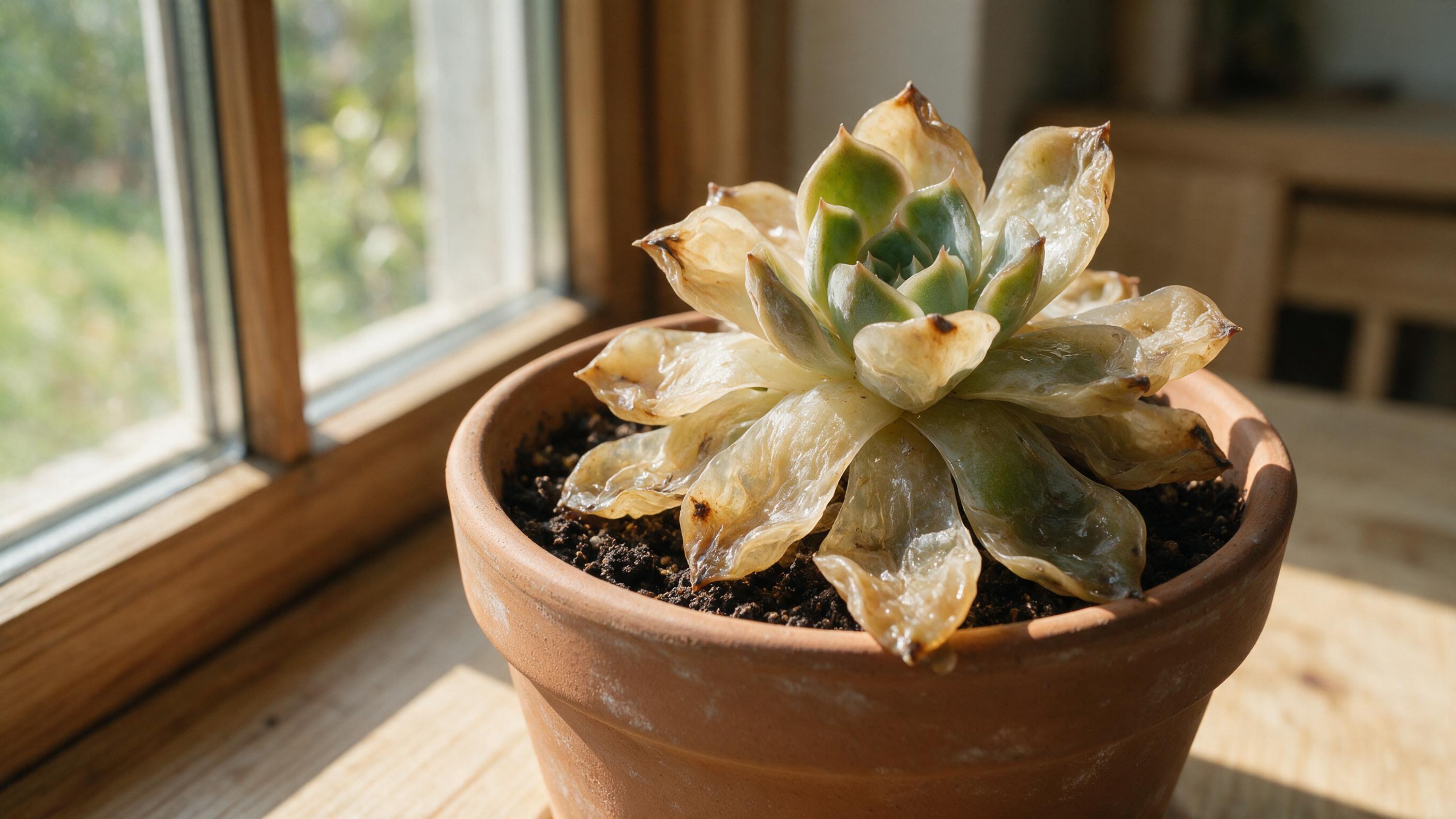
Finding your succulent soft, squishy, or collapsing is one of the most alarming things you can experience as a plant owner — especially when these plants have a reputation for being nearly indestructible. The good news is that a mushy succulent is almost always telling you something specific, and in many cases, you can act fast enough to save it.
Whether you grow a compact Echeveria on a sunny windowsill or a sprawling aloe vera on a back patio, mushiness follows the same set of root causes. This guide walks you through every one of them — and exactly what to do about each.
What Does It Mean When Your Succulent Is Mushy?
Succulents store water inside their leaves and stems as a survival adaptation for arid environments. They store water in their fleshy leaves and stems, so they don’t need frequent watering. When those cells become oversaturated, damaged, or infected, the tissue breaks down and turns soft — what growers call “mushy.”
Mushiness is not a single disease. It is a symptom that can appear in the leaves, the stem, or the root zone, and each location points to a slightly different cause. An overwatered plant will have mushy leaves that feel soft and squishy, and the color of the leaves will appear lighter than a healthy plant, or turn translucent in color.
The location of the mushiness matters a lot. Soft lower leaves alone often signal early overwatering. A mushy stem base signals root rot that has traveled upward. Mushy tissue at a succulent’s core results when its roots sit in water and rot. Knowing where the problem starts helps you choose the right fix.
Pro Tip: Press gently on a suspect leaf or stem with your finger. Healthy succulent tissue should feel firm and plump. If it gives way like a wet sponge, you have a moisture or decay problem that needs attention right away.
Is Mushiness in Succulents Always a Sign of a Problem?
Not every soft leaf means your plant is in crisis. Succulents naturally shed their oldest, lowest leaves as they grow. Yellow, brown, or mushy leaves and leaf drop are usually signs of overwatering, but echeveria plants will naturally lose their lower leaves as they age. If you notice one or two dried, papery leaves at the very base of the rosette pulling away cleanly, that is normal aging — not rot.
True mushiness, by contrast, feels wet and slimy rather than dry and papery. Rotting roots are black and mushy, while healthy roots are usually white, firm, and strong — not mushy, soft to the touch, and dark. The same logic applies above ground: healthy tissue is plump and firm; compromised tissue gives way under light pressure and may smell.
The key question to ask yourself is whether the softness is isolated to the very bottom leaves (likely normal aging or early overwatering) or spreading upward into the stem and newer growth (a more serious problem). When in doubt, check the soil moisture and inspect the roots.
Watering Issues Causing Succulent Mushiness
Overwatering is by far the most common reason a succulent turns mushy in US households. If your succulent plant is suffering from root rot, it is probably a clear indication you are giving too much water. Most people water succulents on the same schedule they use for tropical houseplants — and that is far too often.
Root rot typically develops from too much water in the soil, because oxygen levels in waterlogged soil are lower, causing roots to die. Once the roots die, they cannot deliver water to the plant, and the leaves begin to wilt and soften. These symptoms are often confused for underwatering, and more water is added, further exacerbating the problem.
Underwatering can also produce a form of softness, but it looks different. When underwatered, leaves often turn yellow, shrivel, and brown before dropping off, and stems and leaves may become wrinkled and mottled. If your plant feels limp and wrinkled rather than squishy and wet, it needs more water, not less.
Pro Tip: Use the chopstick test from Iowa State University Extension — insert a chopstick into the soil, and if it comes out with moisture on it, as indicated by a darker color, the plant does not yet need to be irrigated. This takes the guesswork out of watering.
The correct approach for nearly all succulents is the soak-and-dry method. Succulents prefer a “soak and dry” watering method — allow the soil to dry out completely before watering again. You’ll typically get by with giving your succulents a thorough watering once or twice a month, and be sure never to allow them to stand in water.
Pot choice also plays a role. Only use containers with ample drainage holes, and never plant a succulent in a terrarium or a fancy container without drainage. The best container is terra-cotta with a drainage hole in the bottom.
Light Conditions Behind Succulent Mushiness
Light does not directly cause mushiness, but it creates the conditions that lead to it. Succulents in low light dry out more slowly, which means the same amount of water that works for a sunny windowsill plant will sit in the soil far too long for a plant kept in a dim corner.
Low light levels can cause succulents to stretch and produce lanky new growth. Tall, spindly, lanky new growth that is pale in color is an indication that light levels are too low, and those succulents with rosette growth forms often open up and leaves flatten out in an effort to collect more light. A stretched plant is also a stressed plant, and stressed plants are more vulnerable to rot.
On the flip side, moving a plant that has been in low light directly into intense direct sun causes a different kind of damage. Brown or tan patches that form on leaves and stems are common symptoms of sun scald, and the primary cause is when succulents are exposed after a long period of low light to bright or direct sunlight. Sun-scalded tissue can become soft and collapse in severe cases.
Most succulents appreciate protection from the hot afternoon sun and do best in bright, indirect light. For indoor growers in the United States, a south- or east-facing window is ideal. If you’re moving a plant outdoors for the summer, do it gradually over one to two weeks. You can also explore low-light houseplant options if your space simply cannot provide enough natural light for succulents.
Soil, Nutrients, and Root Health Causing Succulent Mushiness
Even perfect watering habits cannot save a succulent planted in the wrong soil. If soil is too organic or fine-textured, it will hold too much water. Standard all-purpose potting mix falls into this category — it is designed to retain moisture for plants that need it, which is the opposite of what a succulent requires.
The right succulent soil mix needs to be well-draining but still provide enough nutrients and aeration for the succulent. A commercial cactus and succulent mix works well for most growers. Mix in a healthy portion of perlite or pumice to help ensure your succulents are healthy. A common starting ratio is 50% cactus mix to 50% perlite for extra drainage.
Nutrients matter too, but in a different way than most people expect. Excessive watering and excessive fertilizing are the main things to cause problems in succulents. Over-fertilizing can burn roots, making them unable to absorb water properly and leading to symptoms that look like rot. If the lower leaves are turning pale, it is probably because of overwatering. However, if the top leaves become yellow, it probably indicates a nutrient deficiency. Use a diluted, balanced fertilizer no more than once a month during the active growing season (spring through early fall), and skip it entirely in winter.
Root health is the foundation of everything. Healthy roots are white or light tan and firm to the touch. If you find roots that are dark brown or black, soft, and mushy, you’re looking at root rot. Check your roots any time your plant shows unexplained symptoms — it takes only a minute to unpot and inspect. For a full walkthrough on getting your succulent into the ground correctly from the start, see our guide on how to plant succulents.
Environmental Stress Triggering Succulent Mushiness
Temperature extremes are a major but often overlooked cause of mushy succulents, particularly for US gardeners who keep plants on porches or patios through seasonal weather changes. Cold damage is especially destructive. When moisture in the cells of a vulnerable plant freezes, it expands, bursts cell walls, and turns leaves to mush.
Depending on the type of succulent, how low the temperatures drop, and how long the frost lasts, plants may show damage only on leaf tips or collapse into mush. Some succulents do have a built-in antifreeze and can survive temperatures well below 32 degrees F. Most tender varieties — including popular echeverias and sedums — cannot. If you live in USDA hardiness zones 9 or below, bring outdoor succulents inside before the first frost.
Heat stress and humidity also play a role. In humid climates across the American South and Southeast, the combination of heat, moisture in the air, and warm soil can create the same waterlogged conditions as overwatering — even when you haven’t watered recently. Outdoor plants usually receive more sunlight and tend to dry out faster, while indoor plants are more protected from the elements and therefore do not dry out as fast and do not need to be watered as much.
Important Note: If you bring outdoor succulents inside for winter, reduce watering significantly. Most succulents are dormant or semi-dormant during the wintertime, so you should reduce watering a great deal during this time.
Pests and Disease Leading to Succulent Mushiness
While overwatering causes the majority of mushy succulent cases, pests and disease are real contributors — especially in plants that are already stressed. Although most problems associated with cacti and succulents grown as houseplants are bacterial or fungal diseases caused by overwatering, the most common pests are scale, mealybugs, and root mealybugs, with less common pests including spider mites and fungus gnats.
Found throughout the United States, mealybugs are some of the most common houseplant pests to watch for. Their soft-bodied insects, covered in a white, cottony substance, make them easily recognizable. These pests feed on plant sap, causing leaf yellowing, wilting, and dropping, and are commonly found in the crevices of succulent leaves and stems, where they can reproduce rapidly.
Root mealybugs live under the soil, sucking plant juices from the plant’s roots, and can make succulents more susceptible to root rot. This is a sneaky combination — the pest damage weakens the roots, and the resulting poor water uptake creates symptoms that look identical to overwatering. Root mealybug infestations often go unnoticed until their hosts exhibit symptoms of stress, such as wilting or yellowing foliage.
Fungus gnats are small black flies that can often be seen hovering around the soil of potted plants, including succulents. They are attracted to moist soil and organic matter, and their larvae feed on the roots of the succulents, which can cause damage and make them more susceptible to other diseases. To prevent fungus gnats, use well-draining soil and avoid overwatering.
Fungal disease is another factor. The reason behind fungal attack is overwatering — the moisture creates the right conditions for fungal growth. Pathogens like Fusarium spp. and Pythium spp. thrive in wet soil and can spread through contaminated gardening tools. If you suspect a fungal or bacterial infection, promptly remove the affected leaves and isolate the plant to prevent further spread. Disinfect your tools before and after pruning, and depending on the severity of the infection, you may need to apply a fungicide or bactericide specifically designed for succulents.
For treatment of above-ground pests, treat with neem oil or insecticidal soap as needed. You can also use isopropyl alcohol applied with a cotton swab directly to mealybug clusters. Identifying the right pest early makes a big difference — consider using one of the best plant identification apps to get a quick second opinion on what you’re dealing with.
How to Diagnose Why Your Succulent Is Mushy
A systematic check takes about five minutes and will tell you exactly what you’re dealing with. Work through the following steps in order before reaching for any treatment.
- Check the leaves first. A lot of times an overwatered succulent will drop leaves easily even when lightly touched, and the bottom leaves are usually the ones affected first. Pale, translucent, or squishy lower leaves point strongly to overwatering.
- Feel the soil. The soil surface will be wet or damp to the touch, and when severe you will see mold or fungus gnats. Dry soil with mushy leaves is a different clue — it may point to pests or disease rather than overwatering.
- Unpot the plant and inspect the roots. Remove your succulent from the pot, shake off the soil, and check the roots’ color. Healthy roots should be white or yellow. If the roots are either dark brown or black and feel slimy and wet when you touch them, that is a root rot sign.
- Smell the roots and soil. A foul odor emanating from the soil or plant base is a dead giveaway of decaying organic matter. A clean, earthy smell means the roots are likely fine.
- Look for pests. Check the leaf axils, stem crevices, and the underside of leaves for cottony white masses (mealybugs), fine webbing (spider mites), or tiny black flies near the soil (fungus gnats).
- Consider recent weather. Did temperatures drop below freezing recently? Was the plant moved into direct sun after a period indoors? Cold or sudden sun exposure can cause mushiness that has nothing to do with water.
Key Insight: The pattern of yellowing tells you a lot. It’s overwatering or root rot if only the lower leaves are turning yellow. If the whole plant is turning yellow, it may be a nutrition deficiency.
How to Fix a Succulent That Is Mushy
The right fix depends on how far along the damage is. Act quickly — the earlier you intervene, the greater the chance that you can save your plant.
Early-Stage Overwatering (Soft Lower Leaves Only)
If the plant is showing early signs of overwatering, such as mushy, soft, and pale bottom leaves, remove the plant from wherever it is and remove all the wet soil from the roots. Let the plant dry out completely for at least three days to a week. Set the plant somewhere bright and dry, but away from direct sunlight to avoid burning the plant and the roots. Once dry, replant in a suitable well-draining potting mix and do not water immediately. Wait about a week before watering.
Root Rot (Mushy Stem Base or Dark, Slimy Roots)
- Remove the plant from its pot and shake off all soil.
- Prune the darkened, mushy roots, and ensure that you remove all the affected parts because even a bit of the rot left can spoil the plant.
- Using clean, sharp scissors or pruning shears, trim away all the damaged roots. Disinfect your tools with rubbing alcohol before and after to prevent spreading disease.
- Change the potting mix entirely — it is better not to take any chances with the current soil as it may contain fungus.
- Let the plant air-dry for two to three days before repotting in fresh, well-draining succulent mix.
- Wait one week after repotting before watering. Do not water until after one week. After one week, you can water, but sparingly to avoid overwatering.
Advanced Rot (Mushy Stem, Collapsed Plant)
If the rot has spread to the whole plant — including the roots, stems, and leaves — beheading your succulent might save it. Beheading is just like propagation and can salvage a part of your plant. Cut above the rot line to find healthy tissue, let the cutting callous for several days, then plant it in fresh dry soil. If the plant has collapsed, or its leaves have fallen off and the core is mushy, it’s not salvageable. At that point, propagating healthy leaves is your best option.
Pest-Related Mushiness
Treat the pest first, then address any secondary root damage. Rub alcohol on infected parts to remove the insects, wash off the pests using water, use insecticidal soap to control infestations, and isolate infested plants to prevent spread. For root mealybugs, unpot the plant, rinse the roots under running water, treat with an appropriate systemic insecticide or beneficial nematodes, and repot in fresh soil.
Cold Damage
If frost caused the mushiness, check the weather report for your area and cover susceptible plants with frost cloth, floating row covers, or bedsheets. Wait until spring to trim damaged tissue — cutting too early can expose healthy tissue to further cold damage.
How to Prevent Succulent Mushiness Going Forward
Prevention is straightforward once you understand what succulents actually need. The following practices eliminate the most common causes of mushiness before they start.
- Water by soil, not by schedule. Setting up a wet-dry cycle where the soil is completely wetted and then allowed to completely dry out is the best way to avoid root rot in succulents.
- Use the right soil. Always use commercially prepared succulent soil, or a cactus mix, and amendments. Add perlite or pumice if the mix feels dense.
- Choose pots with drainage. Make sure the container has a drainage hole that excess water can freely drain from, and ensure that trays or sleeves are not left full of water.
- Reduce watering in winter. Reduce watering by half in winter when most succulents slow their growth significantly.
- Clean your tools. Use alcohol to clean your gardening equipment and the container to remove all signs of fungus before working with a new plant or repotting.
- Remove dead leaves promptly. Inspect your plant’s lower or bottom leaves and the base of the stem on a regular basis. Remove any dead leaves, as they tend to retain a lot of water and may cause rotting.
- Protect from frost. Know your USDA hardiness zone and bring tender succulents indoors when temperatures approach 32°F. Most popular varieties sold in US garden centers are frost-tender.
- Inspect for pests monthly. Pests like mealybugs, spider mites, and fungus gnats will sometimes attack succulents, but this usually occurs when the plants are already stressed. Catching an infestation early keeps it from compounding into rot.
If you’re expanding your plant collection, it helps to understand which species are naturally more drought-tolerant and forgiving. Browsing a broader overview of plant types can help you match the right plant to your environment and care habits. Growers in warmer states may also find useful comparisons in our list of drought-tolerant plants in Florida, many of which share the same low-water needs as succulents.
FAQ
Can a Mushy Succulent Be Saved?
It is possible to save a succulent with a rotting root, but only if you can address it immediately. Depending on the extent of the rot, you can either let it dry naturally, trim the infected parts, or propagate the healthy parts. The sooner you act, the better your odds.
Why Are Only the Bottom Leaves Mushy?
If the rot spreads to stems and leaves, they will become paler and yellow. Over time, the leaves of your succulents will become mushy. If the lower leaves are turning pale, it is probably because of overwatering. This is the most common early-stage sign and is usually fixable if caught quickly.
Why Is My Succulent Mushy After Repotting?
Repotting stresses a plant and temporarily disrupts its roots. If you watered immediately after repotting, the disturbed roots had no chance to adjust before being exposed to moisture again. Always wait at least one week after repotting before giving any water, and make sure the new soil is well-draining.
Can Too Much Sun Make a Succulent Mushy?
Brown or tan patches that form on leaves and stems, especially on new growth, are common symptoms of sun scald. The primary cause is when succulents are exposed for a length of time to low light levels and then suddenly transitioned to bright or direct sunlight. Severe sun scald can cause tissue to collapse and feel soft. Transition plants to new light conditions gradually to avoid this.
How Do I Tell the Difference Between Overwatering and Underwatering?
If your succulent is well-watered but the leaves are turning yellow and feel mushy and swollen, you have overwatered it. But if you haven’t watered the plant for a while and the leaves are turning yellow while also shriveling and wilting, it is underwatered. The texture is the key difference: mushy and swollen means too much water; wrinkled and shrunken means too little.
Should I Remove Mushy Leaves from My Succulent?
Remove all leaves showing signs of problems. All affected leaves and stems must be removed if they show signs of overwatering — any that feel squishy or are changing color. You’ll never be able to return these leaves to health once the process starts. Removing them protects the rest of the plant and improves airflow around the stem.