Why Are My Aloe Vera Leaves Curling? Causes, Fixes, and Prevention

October 1, 2026
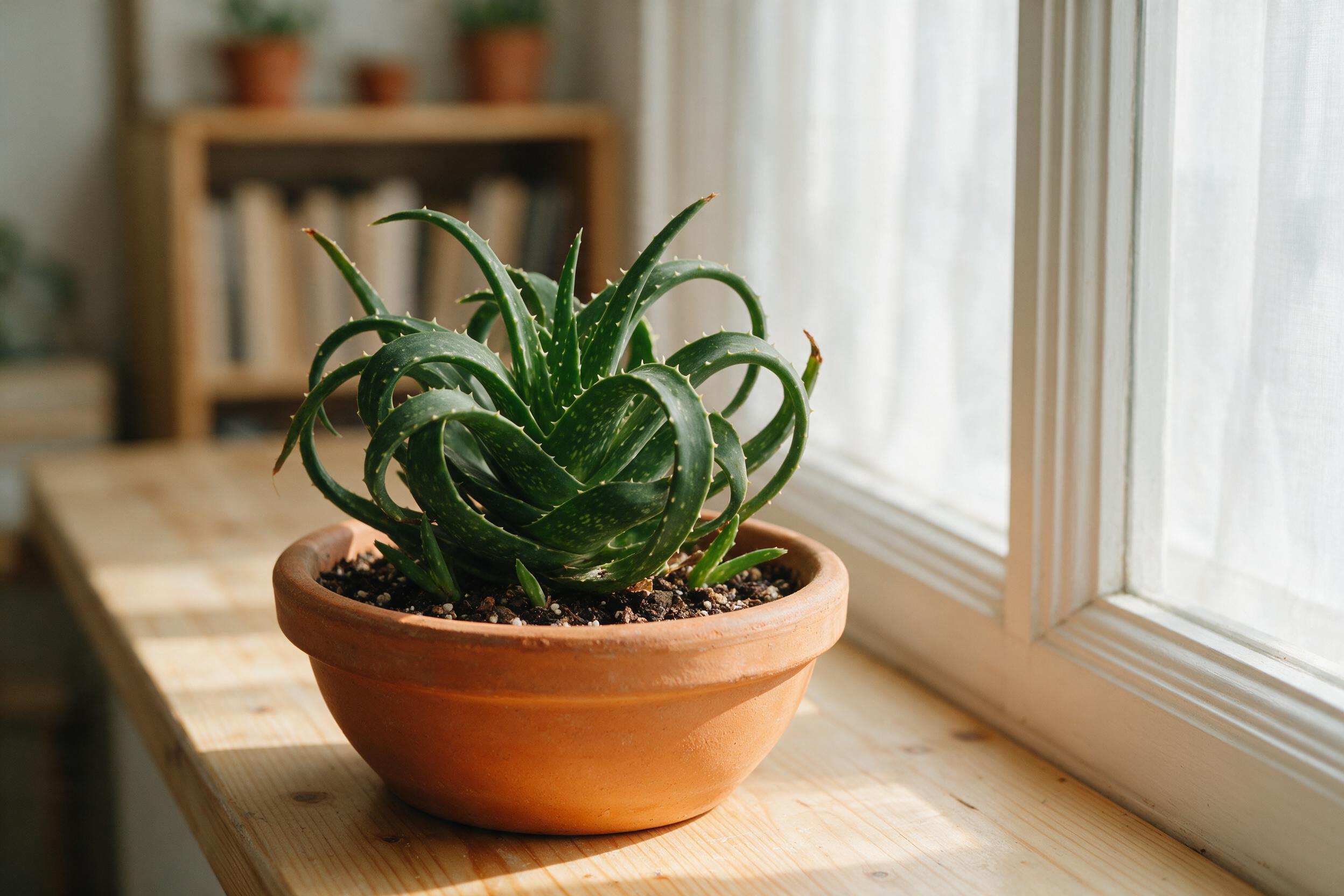
Aloe vera is one of the most popular houseplants in the United States — prized for its low-maintenance reputation and its famously useful gel. So when those thick, fleshy leaves start to curl, it can feel alarming. The good news is that curling leaves are your plant’s way of communicating, and once you understand what the curl is telling you, the fix is usually straightforward.
This guide walks you through every major reason aloe vera leaves curl — from watering missteps and light problems to pests and soil issues — and gives you clear, step-by-step solutions for each one. Whether your plant is curling inward, outward, or drooping at the tips, you’ll find the answer here. For a broader look at keeping your plant in top shape, the complete aloe vera care guide is a great starting point.
What Does It Mean When Your Aloe Vera Is Curling?
Aloe vera (Aloe barbadensis miller) is a succulent native to the Arabian Peninsula, where it evolved to thrive in gritty, fast-draining soils and intense heat. In its healthy state, the leaves grow thick, plump, and relatively flat, fanning outward in a rosette. Aloe vera leaves are designed to be flat; when they start curling — cupping inward along the length, folding at the tips, or drawing tight toward the center stem — the plant is telling you something is wrong.
The direction and texture of the curl are your first diagnostic clues. Inward curling often indicates a lack of moisture or extreme heat stress, as the plant tries to reduce its surface area to conserve water. Signs of root rot, by contrast, include the aloe’s leaves curling outward (downward) and possibly turning yellow. Paying attention to which way the leaves are bending narrows down the cause before you even touch the soil.
The good news is that aloe is unusually communicative. The shape of the curl, combined with the leaf color and texture, usually points to one specific cause. You rarely need to guess — a quick physical inspection of the leaves, soil, and roots will almost always reveal the problem.
Is Curling in Aloe Vera Always a Sign of a Problem?
Not always. Some curling is completely normal and nothing to worry about. Old aloe plant leaves can curl with age, and this is especially true in certain species. If only the oldest, outermost leaves are slightly curved while the rest of the plant looks healthy and green, age-related curling is the likely explanation.
Baby aloe plants also have tender, limp foliage compared to mature plants. Once the plant is producing adult leaves, they will be more rigid and upright. If you recently propagated a pup or brought home a very young plant, give it a few weeks to settle before worrying about leaf shape.
Things like repotting, propagating, or moving your plant to a new spot in your home can cause your aloe vera to get a little shocked, and the leaves may start curling. It is nothing to worry about — it will just take some time for it to return to normal and for the leaves to naturally uncurl. That said, if curling is widespread, affecting multiple leaves, or accompanied by color changes, it almost always signals a care or environmental issue that needs attention.
Pro Tip: Before troubleshooting, check whether the curl is new. Sudden, widespread curling across several leaves at once is a much stronger signal of a problem than a single older leaf that has slowly curved over months.
Watering Issues Causing Aloe Vera Leaf Curling
Watering is the single most common cause of curling in aloe vera, and it works in both directions — too little and too much each produce distinct symptoms.
Underwatering
Too little water is the most common reason why aloe vera plants start to curl their leaves. This is often surprising to plant parents because aloe vera plants are known for needing little water and thriving in dry soil. However, they do need some moisture to survive and thrive, so long dry spells will start to cause real issues.
Aloe vera stores water in its leaves. If the aloe is not watered often enough or watered too lightly, the aloe consumes the moisture stored in its leaves to survive, which causes it to curl inwards. A common misconception is that “low water needs” means a small amount of water each time. Aloe vera requires less frequent watering than most plants but should always be watered with a generous soak, which ensures enough water infiltrates the soil to reach the roots.
An underwatered aloe leaf feels thinner than usual, sometimes slightly wrinkled or hollow rather than the firm, turgid feel of a well-watered plant. If you press gently, there is less resistance than normal. The color is typically still green but may look slightly dull or matte rather than glossy.
Another sneaky underwatering cause: water-repellent soil. If the soil being used is peat-based, it can dry off quickly to form a hard potting mix. This then repels water from the surface, and it runs down the pot without actually reaching the roots.
Overwatering
Overwatering produces a different kind of curl. The leaves look soft rather than thin, often yellowing from the base upward rather than drying from the tips. The curl is less uniform — individual leaves may droop and curl outward or flop sideways rather than drawing tight.
Aloe vera is a succulent adapted to fast-draining desert soils. Its roots are shallow and designed to absorb a quick flush of water and then dry out almost completely between rains. Pot them in standard potting mix or leave them sitting in a saucer of water, and the roots suffocate within weeks.
The fix for underwatering: water deeply until water runs freely from the drainage hole, then empty the saucer and do not water again until the top 2 inches of soil are completely dry. For most indoor conditions in the US, this means watering every 2–3 weeks in summer and once a month or less in winter.
Pro Tip: If you have trouble judging soil moisture by feel, a simple moisture meter from any garden center takes the guesswork out of watering. Insert it into the bottom third of the pot — only water when it reads “dry.”
Light Conditions Behind Aloe Vera Leaf Curling
Light is the second-most-common trigger for curling, and — like watering — both too much and too little cause problems.
Too Much Direct Sun
If your aloe leaves are curling up, it might be because they’re getting too much sun. Aloe plants can get hurt by too much UV light, causing the leaves to curl as the plant tries to protect itself. The upper leaf surfaces develop bleached tan or whitish patches where the cells have been damaged by UV — this is sunburn, and unlike underwatering, the damage is permanent on those leaves. New growth will be healthy, but the scorched patches do not green up.
This is a common mistake for US gardeners who move their aloe outdoors for summer. An aloe grown indoors under moderate light, then placed on a south-facing patio in July without acclimatization, will curl its leaves in defense within days. Always transition your plant gradually — a few hours of morning sun to start, increasing over two to three weeks.
Too Little Light
Low light produces a specific and recognizable curl: the leaves do not draw tight inward but instead open outward and downward, the rosette flattens and spreads loosely, and individual leaves may curl slightly at the edges as they stretch toward any available light source. The plant looks like it is reaching. The color shifts from deep green toward a pale, slightly yellowish green — this is chlorophyll reduction, the plant’s response to low photosynthetic input.
Aloe vera needs a minimum of 4–6 hours of direct sun or 8–10 hours of bright indirect light to maintain compact, upright growth. North-facing windows in the US typically do not deliver this, especially in winter when the sun arc is low. If your plant lives in a dim corner or a north-facing room, moving it to a south- or west-facing window — or adding a grow light — will make a noticeable difference. You can explore houseplants that actually thrive in low-light areas if you have a spot that simply cannot support aloe.
Soil, Nutrients, and Root Health Causing Aloe Vera Leaf Curling
Wrong Soil Mix
Standard potting mix holds too much moisture for aloe vera. Ensure your pot has adequate drainage holes and that the potting mix is well-draining. A mix of potting soil, coarse sand, and perlite usually does the trick. A commercially available cactus and succulent mix also works well and is easy to find at most US garden centers and big-box stores.
Root Rot
Root rot is a significant issue when growing aloe. It often happens because of overwatering, which leaves the roots in water for too long. This cuts off oxygen, making the plant struggle. Signs of root rot include the aloe’s leaves curling outward (downward) and possibly turning yellow. You might also smell something bad coming from the pot.
To treat root rot, take your aloe out of its pot and remove all the soil from the roots. Cut off any dead roots and clean the cuts with hydrogen peroxide. Let the plant dry in the shade for a few hours, then replant the aloe in soil that drains well.
Nutrient Deficiency
Nutrient deficiency is another overlooked cause of aloe vera leaf curling. Although aloe is a low-maintenance plant, it still requires basic nutrients to maintain its structure, color, and overall health. A lack of vital minerals can weaken its growth, causing the leaves to twist, bend, or lose firmness.
When aloe vera is grown in poor or depleted soil, it may lack essential elements such as nitrogen, potassium, or magnesium. Nitrogen deficiency often leads to pale, curling leaves, while potassium shortage can cause leaf tip burn and deformation. Over time, the plant becomes less able to store water and maintain leaf rigidity.
Aloe vera is not a heavy feeder, and over-fertilizing can do more harm than good. Only fertilize during the growing season (spring and summer) and only if your plant shows signs of nutrient deficiency. Use a balanced liquid houseplant fertilizer, diluted to half or even quarter strength. Learn more about the many reasons aloe vera is worth growing and how to keep it producing that famous gel.
Root-Bound Pots
If your plant’s roots are doing the twist in a cramped pot, it’s time to repot. Give it space to grow. When roots circle the bottom of the pot or push through drainage holes, the plant struggles to absorb water and nutrients efficiently, which can trigger leaf curling. Choose a new pot only 1–2 inches wider than the current one — too large a pot holds excess moisture and increases rot risk.
Environmental Stress Triggering Aloe Vera Leaf Curling
Even with perfect watering and light, the wrong environmental conditions can send your aloe into a curling spiral.
Temperature Extremes
If there’s a sudden drop in temperature, aloe plants might curl their leaves. This is common for aloes grown outside. In summer, the days can be hot and sunny, but the temperature might drop below 50°F (10°C) at night. This big change can make the leaves curl and turn red. Aloe vera does best when kept between 60–85°F — a range that suits most US homes year-round.
Heat stress without direct sun is also possible, particularly if the plant sits near a heating vent, above a radiator, or in a room that reaches above 90°F (32°C) in summer. High temperatures accelerate moisture loss from the leaves faster than the roots can replace it, triggering the same curling response as underwatering but without the soil being actually dry.
Air Conditioning, Drafts, and Dry Air
Aloe vera located in the current of air conditioning, forced air, or excess wind can suffer because too much airflow saps the leaves of moisture and dries out the soil quicker. This is a particularly common issue in US homes during summer, when central AC runs constantly. Make sure to draft-proof any windows or doors that are close to your aloe vera, and move it away from any air conditioning vents, as these can be quite damaging to your plants during summer.
Lower humidity can also increase transpiration from the leaves, causing them to dry out and start curling. If your home runs very dry in winter (common with forced-air heating), placing a small humidifier nearby or grouping plants together can help stabilize moisture levels.
Pests and Disease Leading to Aloe Vera Leaf Curling
While aloe vera is generally hardy, it can fall victim to pests and diseases that cause the leaves to curl. Common pests include mealybugs, spider mites, and aphids, all of which can sap the plant’s vitality. Diseases, particularly fungal infections, can also lead to leaf curling.
Common Pests
Pests like aphids, mealybugs, and spider mites are the most frequent offenders. These tiny insects suck sap from the leaves, robbing the plant of nutrients and hydration. As a result, the leaves begin to curl and may develop yellow spots or a sticky residue. Mealybugs and aphids often hide in crevices, making them difficult to spot without close inspection.
- Mealybugs: Look for small, white, cottony masses in leaf crevices. Treat by dabbing them with a cotton swab dipped in rubbing alcohol.
- Spider mites: Tiny red or black dots, often accompanied by fine webbing. Increase humidity and use insecticidal soap.
- Scale insects: These appear as small, brown, limpet-like bumps on stems and leaves. Scrape them off gently or treat with insecticidal soap.
- Aphids: Small, pear-shaped insects that can be green, black, or brown. They cause curling leaves and leave behind a sticky residue.
For a broader treatment approach, neem oil or insecticidal soap effectively treats most common pests. Always isolate an affected plant from your other houseplants before treating it to prevent the spread of an infestation. If you share your home with cats, check out tips on keeping cats away from your houseplants — curious pets can spread pests from plant to plant.
Fungal Disease
Fungal and bacterial infections can also trigger leaf curling. Root rot, typically caused by overwatering, often leads to curling accompanied by mushy leaves and foul odors. Leaf spot diseases can also distort the foliage and cause it to twist unnaturally. First, check your plant for any damaged parts and cut off any rotten areas. Then spray the aloe with a fungicide to treat the infection. Remember to water your aloe just enough, not too much.
How to Diagnose Why Your Aloe Vera Is Curling
Work through this checklist in order. The most common causes are at the top, so you can often identify the problem within a few minutes.
- Check the soil moisture. Push your finger 2 inches into the soil. Bone dry = likely underwatering. Wet or soggy = likely overwatering or poor drainage.
- Feel the leaves. An underwatered aloe leaf feels thinner than usual, sometimes slightly wrinkled or hollow. A soft, mushy leaf points to overwatering or rot.
- Note the curl direction. Inward curling often indicates a lack of moisture or extreme heat stress. Downward bending or drooping can signal overwatering, nutrient deficiency, or insufficient light.
- Assess the light. Count how many hours of direct or bright indirect light the plant receives. Less than 4 hours of direct sun indoors is often insufficient.
- Check the temperature and airflow. Is the plant near an AC vent, a heating register, or a drafty window? Even brief daily exposure to cold drafts causes cumulative stress.
- Inspect for pests. Use a magnifying glass and check the undersides of leaves, the base of the rosette, and any crevices between leaves. Look for webbing, sticky residue, or tiny moving dots.
- Examine the roots. If all else fails, gently remove the plant from its pot. Healthy roots are white or light tan and firm. Brown, mushy, or foul-smelling roots confirm root rot.
A plant identification app can also help you confirm your aloe variety and rule out species that naturally curl. Check out the best iPhone apps for identifying plants for some reliable options. You might also find it useful to review the different types of aloe vera plants — some varieties have naturally more curved leaves than others.
How to Fix an Aloe Vera That Is Curling
Once you’ve identified the cause, apply the matching fix. The table below summarizes the most common scenarios and their solutions at a glance.
| Cause | Key Symptom | Fix |
|---|---|---|
| Underwatering | Inward curl, thin/hollow leaves, dry soil | Water deeply until it drains; repeat every 2–3 weeks in summer |
| Overwatering / root rot | Outward/downward curl, soft yellow leaves, foul smell | Unpot, trim rotted roots, repot in fast-draining mix, reduce watering |
| Too much direct sun | Inward curl, tan/bleached patches, color fading | Move to bright indirect light; acclimatize before outdoor placement |
| Too little light | Outward/downward spread, pale yellowish-green color | Move to south- or west-facing window, or add a grow light |
| Temperature stress / drafts | Curling with reddish tint or sudden onset | Move away from vents, AC, drafty windows; keep 60–85°F |
| Nutrient deficiency | Pale color, tip curl, slow growth | Apply half-strength balanced fertilizer once in spring, once in summer |
| Pests | Sticky residue, webbing, visible insects | Treat with neem oil or insecticidal soap; isolate the plant |
| Root-bound pot | Roots circling base, slow water absorption | Repot into a container 1–2 inches wider with fresh succulent mix |
New growth is the first sign that your aloe vera is on the mend. If you spot fresh, plump leaves unfurling, you’re on the right track. Leaves should gradually uncurl and return to their natural, flat form. Be patient — it can take two to four weeks for the plant to visibly recover after the underlying problem is corrected. Once your plant is thriving again, explore the many ways to use its gel, from making aloe vera gel at home to preparing aloe vera juice.
Important Note: Sunburn damage — the bleached or tan patches that appear after too much direct UV exposure — does not reverse on the affected leaves. Those leaves will remain discolored, but healthy new growth will replace them once conditions improve. Do not remove the damaged leaves unless they are fully brown and dead, as they still contribute some photosynthesis.
How to Prevent Aloe Vera Leaf Curling Going Forward
Prevention comes down to building consistent habits around the four pillars of aloe care: water, light, soil, and environment.
Watering Habits
- Always water deeply — soak until water flows freely from the drainage hole, then empty the saucer.
- For most indoor conditions in the US, water every 2–3 weeks in summer and once a month or less in winter. The seasonal shift matters more than a fixed schedule: aloe vera goes partially dormant when temperatures drop and light shortens, and its water needs fall sharply.
- Never let the plant sit in standing water in a saucer or cache pot.
Light and Placement
- Position your aloe in a south- or west-facing window for the best indoor light in the US.
- Ensure your aloe vera gets bright, indirect light — avoid direct harsh sunlight that can scorch leaves.
- If moving the plant outdoors for summer, acclimatize it over two to three weeks, starting with morning sun only.
- Move the plant away from any air conditioning vents, as these can be quite damaging during summer.
Soil and Pot Selection
- Use a cactus and succulent potting mix, or blend standard potting soil with coarse perlite at a roughly 1:1 ratio.
- Always choose a pot with drainage holes — no exceptions.
- Repot when roots become crowded or soil becomes depleted. For most aloes, this means repotting every two to three years.
Routine Monitoring
- Regularly inspect your plant, especially the undersides of leaves, to catch pests early.
- Check the soil before every watering — not on a fixed schedule, but based on actual dryness.
- Keep the plant in a well-ventilated area to prevent pests and diseases.
- Fertilize sparingly — once in spring and once in early summer at half strength is enough for most US growing conditions.
Taking good care of your aloe vera pays off in more ways than one. From the benefits of aloe vera water to eating aloe vera, a healthy plant gives you access to one of nature’s most versatile ingredients. You can also explore the broader world of plant types to find companion plants that thrive in similar conditions.
FAQ
Why Are My Aloe Vera Leaves Curling Inward?
Before underwatering causes dry, crispy brown leaves, it will usually start off by showing itself as curling leaves. This is a mechanism that aloe vera plants use to reduce the loss of moisture. Inward curling can also result from too much direct sun or extreme heat, which triggers the same moisture-conservation response. Check the soil first — if it’s dry more than 2 inches down, water deeply and see if the leaves recover over the next week or two.
Why Are My Aloe Vera Leaves Curling Outward or Drooping?
Overwatering produces a different kind of curl. The leaves look soft rather than thin, often yellowing from the base upward rather than drying from the tips. The curl is less uniform — individual leaves may droop and curl outward or flop sideways rather than drawing tight. Low light can also cause outward spreading as the plant reaches for more sun. Check both the soil moisture and your light levels before deciding on a fix.
Can Aloe Vera Leaves Uncurl on Their Own?
Yes, in most cases — but only after the underlying problem is corrected. New growth is the first sign that your aloe vera is on the mend. If you spot fresh, plump leaves unfurling, you’re making progress. Leaves should gradually uncurl and return to their natural, flat form. Sunburned leaves are the exception — the bleached damage is permanent, though new healthy growth will replace them over time.
How Often Should I Water My Aloe Vera to Prevent Curling?
There is no universal advice for how often to water aloe, as it depends on many variables such as climate, sunlight, and humidity. The most important thing is that how often you should water your aloe vera is dependent on the rate at which the soil dries out. Rather than following a fixed schedule, check the top 2 inches of soil before every watering and only water when that layer is completely dry.
Could My Aloe Vera Variety Naturally Have Curved Leaves?
The varieties of aloe with naturally curling leaves will never stand upright. If you are unsure whether your plant is a standard aloe vera or another species with naturally curved foliage, compare it against the different types of aloe vera plants or use a plant identification app to confirm the variety before making care changes.
Is Curling Aloe Vera Dangerous to Pets or Children?
Aloe vera gel is widely used by humans, but the plant’s latex layer — the yellowish substance just beneath the skin — can cause digestive upset in cats, dogs, and small children if ingested. If you share your home with curious pets, review tips on keeping cats out of houseplants and place your aloe on a high shelf or in a room pets cannot access.