Why Are Your Zucchini Flowers Falling Off? Causes and Fixes

September 25, 2026
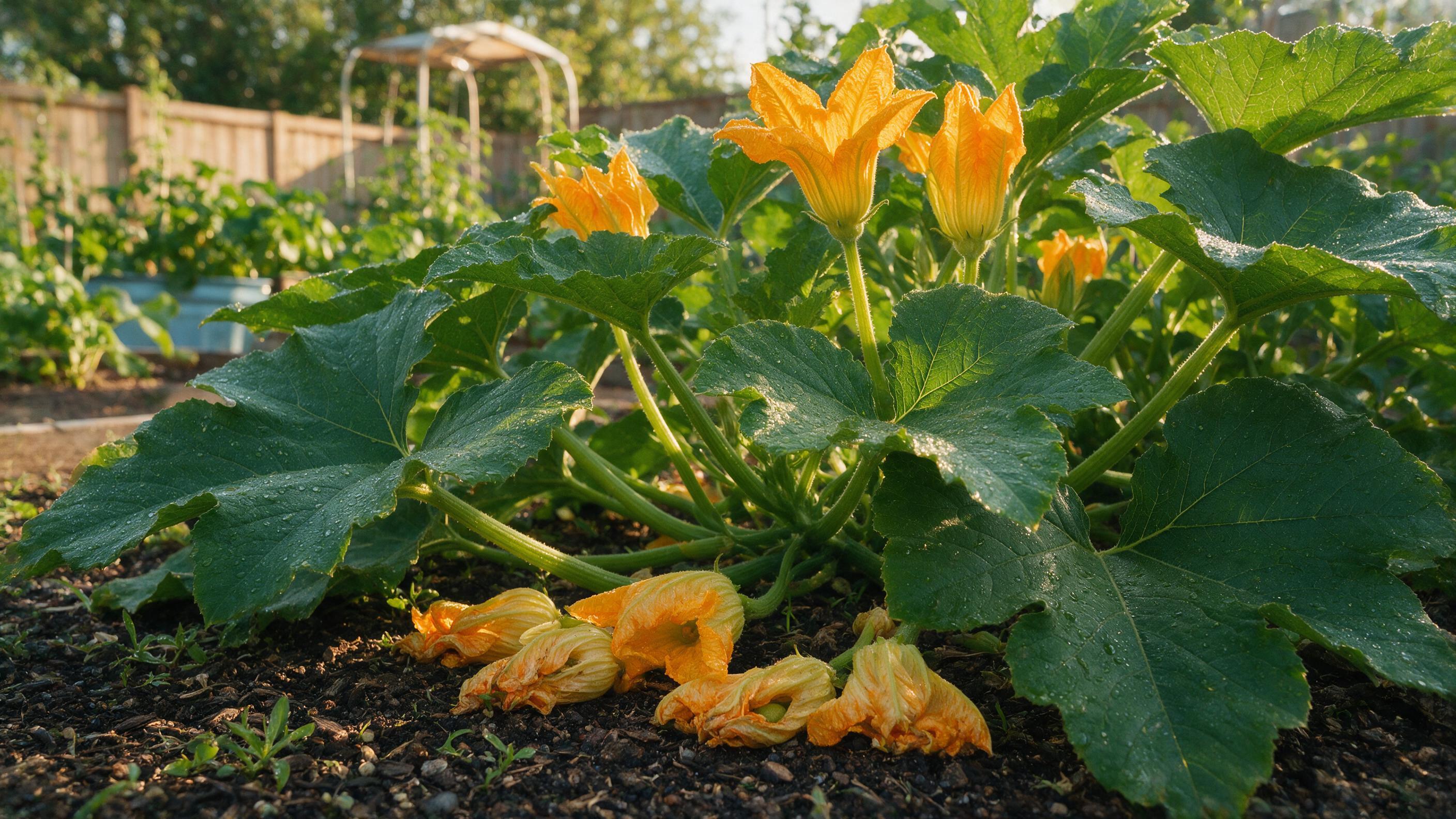
You step outside one morning, coffee in hand, and notice your zucchini plant has dropped every single flower overnight. The stems are still there, but the blooms are on the ground. It looks like something went very wrong — but the truth is, it may not be a problem at all.
Zucchini flower drop is one of the most common concerns among home vegetable gardeners across the United States, and the causes range from completely normal plant behavior to fixable growing conditions. This guide walks you through every reason your zucchini flowers might be falling off and exactly what to do about each one.
What Does It Mean When Your Zucchini Flowers Are Falling Off?
Zucchini (Cucurbita pepo) is a monoecious plant, meaning each plant grows both male and female flowers on the same vine. These two flower types look different, behave differently, and fall off for different reasons — so the first step is figuring out which ones you’re losing.
As a monoecious plant, each zucchini produces both male and female blossoms. Male blooms form on a narrow stem, are more narrow at their base than female flowers, and don’t have a stigma in the center. Female flowers, in contrast, have a distinct miniature, unpollinated fruit — a swollen, bulbous ovary — located directly behind the petals. This small swelling is the zucchini itself, which will only grow if the flower is successfully pollinated.
Once the male flower opens and sheds its pollen, it completes its function and naturally withers and drops off the plant. This is normal and should not be confused with a problem. Female flowers dropping, on the other hand, usually signal that something needs your attention.
Pro Tip: Before you worry, check whether the fallen flowers have a small swollen base (female) or a plain thin stem (male). Male flower drop is completely natural and expected.
Is Flower Drop in Zucchini Always a Sign of a Problem?
No — and this is the reassurance most gardeners need to hear first. Zucchini flower drop is a very common issue that many gardeners encounter, especially during the early stages of plant growth. In many cases, falling flowers are simply male blossoms completing their natural life cycle and do not indicate any problem.
Many times, a zucchini plant will produce only male blossoms when first in bloom to ensure that pollen will be available when the female blossoms open. The male blossoms will all fall off, making it seem as though the zucchini plant is losing all of its flowers. Don’t worry — female blossoms will open soon and you will get zucchini squash.
However, when female flowers drop with tiny fruits attached, the cause is usually poor pollination, environmental stress, inconsistent watering, or nutrient imbalance. That’s when it’s worth investigating further. You can also check out types of incomplete flowers to better understand how plant reproduction works across different species.
Watering Issues Causing Zucchini Flower Drop
Water stress — both too much and too little — is one of the most direct triggers for blossom drop. Inconsistent watering is a common stressor, as both underwatering and overwatering can cause the plant to drop its fruit. When the soil is too dry, the plant conserves moisture by sacrificing the flowers, and excessively wet soil can lead to root issues that limit nutrient uptake.
An overwatered plant can look droopy but remain green, or entire leaves will start to yellow. Some yellowing and dying back of older leaves on squash plants is natural and normal. If your newer leaves are yellowing or wilting, you could be overwatering. An underwatered plant can look similar to an overwatered one. However, underwatering results in limp, wilting leaves that feel weak or soft to the touch, and when they turn yellow, they get crispy or brown along the edges.
Watering swings cause young fruit to abort. Keep moisture even — deep, consistent watering beats frequent shallow sprinkles. Aim to water at the base of the plant in the morning, keeping foliage as dry as possible to reduce disease risk.
Pro Tip: Check soil moisture by pressing a finger 2 inches into the ground near the base of the plant. If it feels dry at that depth, it’s time to water. If it feels soggy, hold off and improve drainage before the next watering.
Light Conditions Behind Zucchini Flower Drop
Zucchini should be grown in full sun, and insufficient light can quietly undermine the entire flowering process. When a zucchini plant doesn’t receive enough direct sunlight — ideally six to eight hours per day — it struggles to produce the energy needed to sustain flowers through to pollination and fruit set.
Shaded plants tend to produce fewer flowers overall, and the ones they do produce are weaker and more likely to abort before pollination occurs. If your plant is growing in a spot that gets morning shade from a fence, tree, or nearby structure, that may be contributing to blossom drop even when all other conditions seem fine.
On the other end of the spectrum, intense afternoon sun during a heat wave can scorch flowers and reduce pollen viability. Temperature plays a major role in flower retention and pollination success. Zucchini plants thrive in moderate warmth, but extreme heat or cold can cause blossom drop. High temperatures above about 85–90°F (29–32°C) can damage pollen and make it sterile. Heat stress also causes the plant to conserve energy by dropping flowers. If you’re gardening in a hot-summer region like the Southwest or Southeast, afternoon shade cloth can help protect blooms during peak heat.
For more on how light affects different plant types, see this overview of best houseplants for low-light areas — the same principles of light requirements apply across plant families.
Soil, Nutrients, and Root Health Causing Zucchini Flower Drop
What’s happening underground has a direct impact on what falls off above it. Nutrient imbalances are a surprisingly common cause of blossom drop that gardeners often overlook in favor of pollination fixes.
Too much nitrogen grows leaves, not fruit. Excess nitrogen pushes lush vines at the expense of flowering. If your zucchini plant looks incredibly healthy and green but keeps dropping flowers without producing fruit, a nitrogen-heavy fertilizer may be the culprit. Switch to a balanced fertilizer or one with a higher phosphorus ratio to encourage blooming and fruiting.
Calcium deficiency is another issue worth knowing about. Blossom end rot is a widespread condition that is not actually a disease at all. You will see the blossoms turning black, rotting, and not turning into fruits. Or, if they do turn into fruits, the end of the squash with the flower will start to rot. A nutrient deficiency of calcium causes this. If you catch it early in the season, a calcium supplement or soil amendment carefully mixed with water can help limit its perpetuation.
Root health matters just as much as nutrient content. If your plant is wilting and the soil is constantly wet, the roots are likely suffocating and rotting away. Improving drainage by amending heavy clay soil with compost is the best long-term solution. Adding a 2-inch layer of compost to your beds each season builds soil structure and provides a slow-release source of nutrients that supports consistent flowering.
Environmental Stress Triggering Zucchini Flower Drop
Beyond watering and light, broader environmental conditions can push your plant into survival mode — and when a zucchini plant is stressed, flowers are the first thing it sacrifices. The zucchini plant prioritizes its survival, and when resources are limited, it drops blossoms to conserve energy.
Temperature swings are among the most common environmental stressors in US home gardens. Daytime highs above about 90°F (32°C) or nighttime lows above about 75°F (24°C) interfere with pollen viability and fruit development. Cold temperatures slow plant metabolism and reduce pollinator activity. If nights become too cold, flowers may fall before pollination occurs.
Overcrowding can also cause flower drop. Insufficient room will prevent zucchini plants from growing properly, which will cause them to become stressed and lose their blooms. Planting your zucchini seedlings at least 2–3 feet apart will ensure that they have enough space to develop.
High humidity is another environmental factor that directly interferes with pollination. High humidity can cause the pollen to clump. Rainy weather or a lack of male blossoms can also cause zucchini flowers to fall off. During prolonged wet spells, bees are more active in dry weather. If the blossoms all drop after days or weeks of rain, the plants may just be reacting to a temporary lag in pollination. In this case, the situation may correct itself without assistance when the garden patch dries up.
Pests and Disease Leading to Zucchini Flower Drop
When growing conditions are good but flowers keep dropping, pests and disease deserve a closer look. Several common culprits specifically target zucchini and other cucurbits.
The most common squash plant pests are aphids, squash bugs, spider mites, and squash vine borers. Aphids are one of the most common plant pests in gardening. They are tiny sap-sucking bugs that can be green, red, black, and other colors, yet the body shape is always the same. They are tiny (1–3mm), have tear-shaped bodies, and reproduce quickly. They are often found on the undersides of leaves, new growth, and flower buds.
Squash bugs are shield-shaped, brownish-gray insects that overwinter under garden debris and emerge in spring. The key to control is catching them early — once you have a full adult population in August, chemical and mechanical control both become difficult. Check the undersides of large leaves and the base of the plant regularly for clusters of bronze-colored eggs.
Squash vine borers deserve special attention because their damage is so fast and severe. Vine borers lay eggs at the plant’s crown, where the main stem meets the soil’s surface. When the larvae hatch, they tunnel into the stem to feed, wrecking the plant’s vascular system. Once these caterpillars get established, the plant is doomed, with the main stem weakening until it collapses. You’ll know they’re the ones wreaking havoc if you spot little blobs that look like yellow sawdust — these are actually vine borer frass (excrement).
On the disease side, zucchini plants can succumb to diseases such as powdery mildew and bacterial wilt, which can prematurely cause flowers to fall off. Identifying these diseases early is key to managing them. At the first sign of white, powdery spots on leaves, apply a mixture of baking soda and water or neem oil to inhibit the spread.
For companion planting strategies that can help deter pests naturally, take a look at plants to grow with tomatoes — many of the same pest-deterring companions work equally well alongside zucchini. You can also explore edible flowers like marigolds and nasturtiums that double as pollinator attractors.
How to Diagnose Why Your Zucchini Flowers Are Falling Off
Diagnosing blossom drop accurately saves you from wasting time on the wrong fix. Work through this checklist systematically before taking action.
| What You Observe | Most Likely Cause | Next Step |
|---|---|---|
| Only male flowers dropping, no fruit forming yet | Natural early-season male flower drop | Wait for female flowers to appear |
| Female flowers dropping with tiny fruit attached | Poor pollination | Hand-pollinate or attract more bees |
| Flowers dropping during a heat wave (above 90°F) | Heat stress / sterile pollen | Provide afternoon shade, water deeply |
| Flowers dropping after several rainy days | Humidity clumping pollen, low bee activity | Hand-pollinate; wait for dry weather |
| Lush green plant, no flowers or dropping flowers | Excess nitrogen | Switch to low-nitrogen, phosphorus-rich fertilizer |
| Yellowing new leaves + flower drop | Overwatering or root rot | Check drainage; reduce watering frequency |
| Black, rotting flower ends on tiny fruits | Calcium deficiency / blossom end rot | Add calcium amendment to soil |
| Sawdust-like frass at stem base + sudden wilting | Squash vine borer | Inspect stem, remove larvae, mound soil |
| White powder on leaves + flower drop | Powdery mildew | Apply neem oil or baking soda spray |
First, check soil moisture 2–3 inches deep: if dry, underwatering is likely; if soggy, overwatering or poor drainage is the culprit. Then inspect stems for frass or entry holes (squash vine borer), yellowing vein patterns (viral infection), or milky sap when snapped (bacterial wilt).
If you want a reliable plant identification tool to help confirm what you’re seeing in the garden, the best iPhone apps for identifying plants can help you cross-reference pest and disease symptoms quickly.
How to Fix a Zucchini Plant That Is Dropping Flowers
Once you’ve identified the cause, most cases of zucchini flower drop are fixable. Here are the most effective solutions, organized by cause.
Fix Poor Pollination with Hand Pollination
The most common reason zucchini flowers fall off is poor pollination. Female flowers must receive pollen from male flowers within a short time window — usually the same day they open. If pollination does not occur, the plant aborts the developing fruit and the flower drops off.
Hand pollination is the fastest and most reliable fix. If natural pollination is unreliable, you can hand-pollinate zucchini flowers. Identify a male flower, remove the petals, expose the pollen-covered stamen, and gently rub it onto the center of a female flower. This simple method often dramatically improves zucchini production. Do this in the morning, when flowers are freshly open and pollen is most viable.
Attract More Pollinators to Your Garden
Along with manually pollinating the flowers as needed, your plants will benefit when you encourage bees and other pollinators in your yard and vegetable patch. You can start by situating your vegetable garden only in an area where chemical pesticides have not been applied nearby. Broad-spectrum pesticides coating the grass or landscape ornamentals can kill all the pollinators in the vicinity.
Make sure to grow organically, never use pesticides, and plant lots of flowers like marigolds, lavender, nasturtium, or native flowers like echinacea, borage, calendula, bee balm, and sunflowers to attract bees and other pollinators so they transport pollen from male to female flowers. You can learn more about attracting pollinators to prevent blossom drop at Gardener’s Path.
Correct Watering Habits
Water your zucchini deeply and consistently rather than in short, frequent bursts. A drip irrigation system or soaker hose delivers moisture directly to the root zone without wetting foliage, which reduces disease pressure. If your soil is heavy clay, amend it with compost to improve drainage and prevent the waterlogging that triggers root rot and flower abortion.
Address Nutrient Imbalances
If excess nitrogen is the problem, stop fertilizing for two to three weeks and let the plant redirect its energy from foliage to flowers. When you resume, use a fertilizer with a higher middle number (phosphorus), such as a 5-10-5 formula, which supports root development and flowering. Add compost and organic fertilizer regularly as a long-term soil health strategy rather than relying on high-nitrogen synthetic feeds.
Manage Pests Promptly
Using floating row covers can help ward off cucumber beetles and squash vine borers. Interplanting with plants like marigolds or nasturtiums can deter pests due to their repellant properties. Regularly inspecting plants and manually removing pests like squash bugs helps prevent infestation. Dislodging pests with a sharp spray of water disrupts their lifecycle and decreases populations.
For squash vine borers already inside the stem, slit the stem lengthwise with a clean knife at the entry point, remove the larva, bury the cut section under 2 inches of soil, and water deeply — stems can re-root above the damage zone.
For additional ideas on what to do with the zucchini you do harvest, see what to serve with zucchini and what to serve with zucchini noodles for inspiration.
How to Prevent Zucchini Flower Drop Going Forward
Prevention is far easier than fixing an established problem mid-season. These practices address the root causes of most blossom drop issues before they start.
- Space plants correctly. Space plants 36 inches apart. Crowding drives powdery mildew, reduces airflow for pest inspection, and makes early diagnosis harder when plants overlap.
- Use row covers at transplanting. Use floating row covers from transplanting until first female flowers open. This single intervention blocks squash vine borers, squash bugs, cucumber beetles, and aphids during the highest-risk establishment period. Remove covers once female flowers appear so pollinators can reach them.
- Plant multiple zucchini plants. Planting several zucchini plants increases the chances of pollination because you’re more likely to have male and female flowers open simultaneously across the group.
- Rotate crops annually. Avoid planting zucchini or other squash in the same spot for at least two to three years. This helps prevent soil-borne diseases and pests from building up.
- Mulch around the base. A 2–3 inch layer of straw or wood chip mulch conserves soil moisture, moderates root temperature during heat waves, and reduces the splash-back that spreads soil-borne fungal diseases to lower leaves and flowers.
- Harvest regularly. Frequent harvesting encourages the plant to produce more fruit throughout the season. Leaving oversized zucchini on the vine signals the plant to slow production and can trigger flower drop on new buds.
- Consider parthenocarpic varieties. It’s possible to minimize pollination issues by growing ‘Dunja,’ a cultivar bred to set fruit with minimal assistance from pollinators. They’ll still need some pollination, but far less than other types. They also mature in a mere 47 days and are resistant to several common diseases, including powdery mildew.
Understanding how different plants flower can make you a more confident gardener overall. Browse the types of plants guide or explore garlic flowers to see how other edible plants manage their reproductive cycles. For more on edible blooms, the edible flowers for cakes guide is a great read — zucchini blossoms are actually a popular choice for both decoration and cooking. According to Gardening Know How , after male flowers have completed their duty, they fall off the plant — but note that if you catch them before they drop, they’re edible blooms.
Key Insight: The single most impactful prevention habit is hand pollination during the first two weeks of flowering. It takes less than two minutes each morning and eliminates the most common cause of blossom drop entirely.
FAQ
Why Do My Zucchini Flowers Keep Falling Off Without Producing Fruit?
A zucchini plant covered in blossoms that never become fruit is one of the most common — and most fixable — summer garden frustrations. In most cases the problem is pollination, temperature, watering, or nutrient balance, not a sick plant. Start by identifying whether you’re losing male or female flowers, then work through the diagnostic checklist above.
Is It Normal for Zucchini Flowers to Fall Off Every Day?
Once male zucchini blossoms have opened to release their pollen, they simply fall off the plant. Many times, a zucchini plant will produce only male blossoms when first in bloom to ensure that pollen will be available when the female blossoms open. Daily male flower drop is perfectly normal and not a cause for concern.
How Do I Tell Male and Female Zucchini Flowers Apart?
Zucchini and other summer squash are monoecious: each plant carries separate male and female flowers. Male flowers sit on a plain, slender stem; female flowers have a small immature fruit at their base. That tiny bump behind the petals is the future zucchini — it only develops if the flower gets pollinated.
Can I Eat Zucchini Flowers That Have Fallen Off?
Yes — zucchini blossoms are entirely edible and are a popular ingredient in American and Italian cooking. They’re often stuffed with ricotta and fried, or used as a garnish. The male flowers are useless until the females arrive, but they are delicious stuffed with ricotta cheese and fried in batter. Harvest them just before they drop for the best texture and flavor.
How Long Does It Take for Zucchini to Produce Female Flowers?
During the early stages of growth, zucchini plants often produce only male flowers for the first week or two. These flowers bloom, release pollen, and then drop from the plant. This process is completely normal because the plant is preparing for future pollination. Female flowers typically follow within one to two weeks of the first male blooms.
What Time of Day Should I Hand-Pollinate Zucchini?
Zucchini flowers are typically open for one day, and during that time, they are ready for pollination. The flowers will open in the morning and close in the late afternoon or evening. Hand-pollinate as early in the morning as possible, ideally between 7 and 10 a.m., when pollen is fresh and flowers are fully open. Learn more about hand-pollinating zucchini from HGTV’s gardening experts.
Can Too Much Water Cause Zucchini Flowers to Drop?
Yes. Overwatering can lead to root rot. This is where the soil and roots have become too saturated for too long, which leads to fungus entering the soil and attacking the roots. The leaves of your zucchini will then begin to wilt, as the roots are no longer able to take in the nutrients for your plant to thrive. When roots can’t absorb nutrients, flower production and retention suffer as a direct result.
Do Squash Vine Borers Cause Flower Drop?
When squash vine borer larvae hatch, they tunnel into the stem to feed, wrecking the plant’s vascular system. Once these caterpillars get established, the plant is doomed, with the main stem weakening until it collapses. A plant under severe vine borer attack will drop flowers as part of its overall decline. Prevention with row covers early in the season is the most reliable defense. You can read more about common squash pests and diseases at True Leaf Market.