Why Are My Fiddle Leaf Fig Leaves Turning Yellow? Causes and Fixes

September 29, 2026
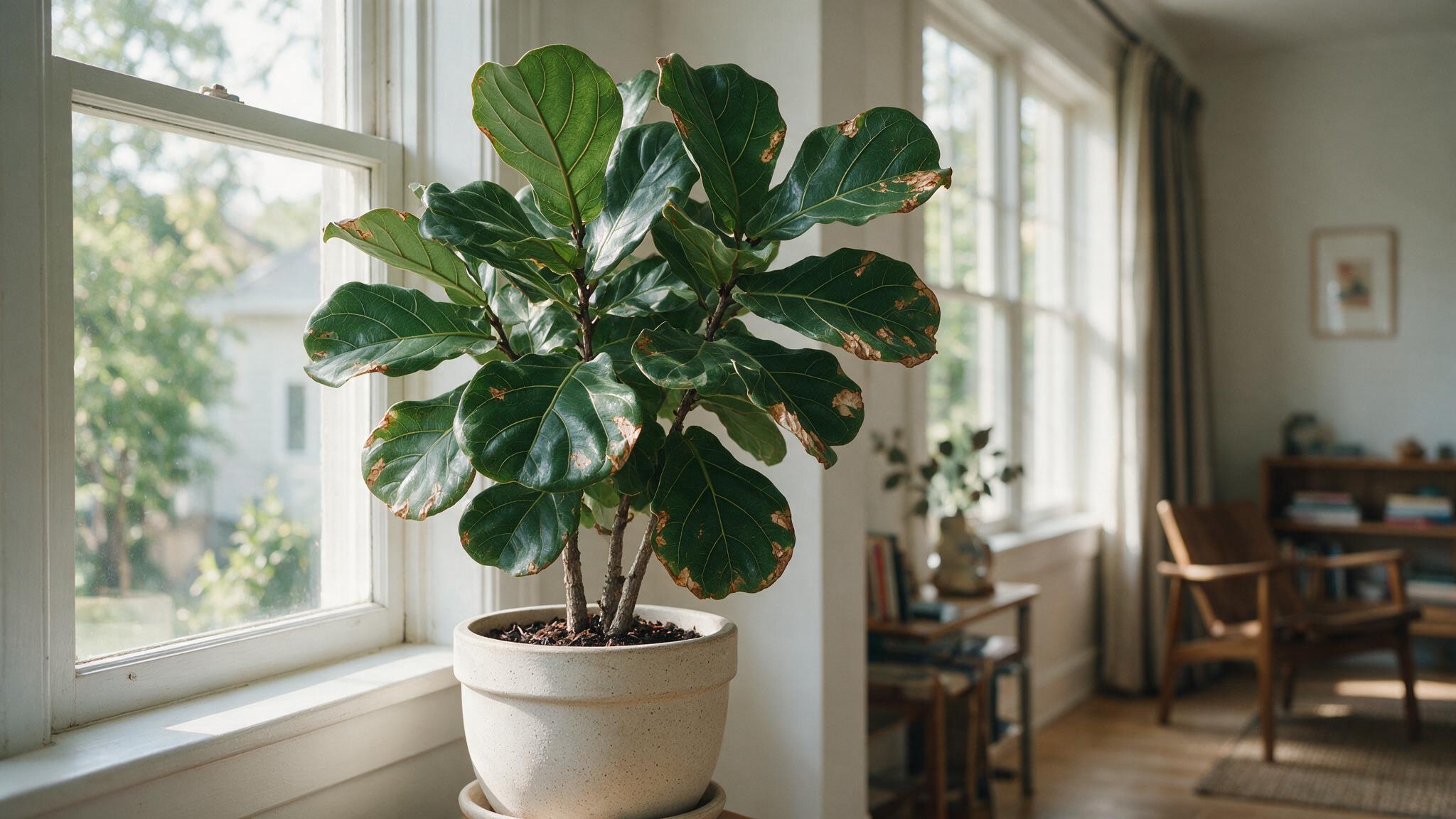
You walk past your fiddle leaf fig and notice it — a leaf that was deep green yesterday now has a pale, washed-out yellow tint. Then you spot another. Few things unsettle a plant parent quite like watching those gorgeous, oversized leaves lose their color.
Fiddle leaf figs are some of the most dramatic, beautiful houseplants you can own, but they’re also prone to several potentially puzzling problems. Yellow leaves are one of the most common complaints, and the good news is that most causes are fixable once you know what you’re looking for. This guide walks you through every reason your fiddle leaf fig leaves might be turning yellow — and exactly what to do about it.
What Does It Mean When Your Fiddle Leaf Fig Has Yellow Leaves?
Yellow leaves on your fiddle leaf fig are the plant’s way of waving a flag. Yellowing leaves usually point to stress, and similar symptoms such as browning or drooping can signal the same underlying issues. The key is figuring out which type of stress you’re dealing with.
Yellow leaves on any plant, including your fiddle leaf fig, can be a natural sign of aging. Other causes include lack of water, overwatering, nutritional deficiency, poor soil drainage, overfertilization, and root rot. That wide range of possibilities is exactly why a methodical approach to diagnosis pays off.
A healthy plant tells its own story. A healthy fiddle leaf fig typically looks vibrant and bushy, with dark-green, leathery, and lustrous foliage. It should show no signs of yellowing, browning, blemishes, or spots. Any departure from that baseline is worth investigating.
Pro Tip: Pay attention to where on the plant the yellowing starts. Yellowing on lower, older leaves often points to natural aging or a nitrogen shortage, while yellowing spread across multiple leaf levels usually signals a watering or root problem.
Is Yellow on a Fiddle Leaf Fig Always a Sign of a Problem?
Not always. Yellow leaves on a fiddle leaf fig are quite often normal. Yellow leaves are more likely to be natural aging — most serious problems with these plants cause rapid leaf shedding, so there is not enough time to go yellow before dropping off.
As part of normal aging, older lower leaves toward the bottom of your plant will naturally yellow up before falling off. If you see one or two bottom leaves go yellow while the rest of the plant looks lush and is pushing out new growth, you can breathe easy. That’s just your plant cycling out its oldest foliage.
The situation calls for attention when yellowing appears on mid-canopy or upper leaves, when multiple leaves yellow at once, or when the color change is paired with soft spots, brown edges, or leaf drop. In those cases, something in your care routine or environment needs to change. Check out our guide to big-leaf indoor plants to see how fiddle leaf figs compare to other large-leaved species and their care needs.
Watering Issues Causing Fiddle Leaf Fig Yellow Leaves
Water is the single most common driver of yellow leaves on a fiddle leaf fig, and the problem can run in both directions.
Yellow, discolored leaves are among the most common problems among fiddle leaf figs, and it’s often caused by a well-meaning carer who has simply gone overboard with watering. Fiddles thrive in soil that is kept relatively moist, but it should not be consistently waterlogged or soggy. Too much water — especially combined with insufficient drainage — can cause the roots to rot, leading to dull-looking leaves.
Overwatering can cause the roots to drown, leading to a condition called root anoxia. When the roots are waterlogged, they can’t get enough oxygen, which can lead to root rot — a condition that causes your plant’s leaves to turn yellow. If you pull the plant from its pot and find brown, mushy roots rather than firm white ones, root rot is almost certainly the culprit.
Underwatering is less common but still possible. Underwatering can also cause yellow leaves. If the soil is too dry, your plant is probably thirsty. In this case, leaves may feel papery and the yellowing often starts at the tips or edges rather than spreading across the whole leaf.
For indoor fiddle leaf fig care, water your plant when the top inch of soil feels dry. Check the soil daily with your finger and water again once the soil is dry up to your second knuckle. A simple moisture meter takes the guesswork out of the equation entirely — yellowing leaves are largely a sign of too much water, and a moisture meter probe is an inexpensive tool that removes the guesswork from soil moisture monitoring.
Pro Tip: Always make sure your pot has drainage holes. Inspect your fiddle leaf fig’s pot — blocked drainage holes, or even a lack of drainage holes, may be causing the problem. Water that has nowhere to go will saturate the root zone and trigger yellowing fast.
Light Conditions Behind Fiddle Leaf Fig Yellow Leaves
Light is one of the most underrated causes of yellowing — and one of the easiest to fix without spending a dime.
Fiddle leaf figs need bright, indirect light. Insufficient light leads to yellowing, especially in lower leaves. Indoor positioning or winter light changes can make the problem worse. In the United States, this is especially relevant during the shorter days of fall and winter, when natural light levels drop significantly even in south-facing rooms.
Fiddle leaf figs love light and thrive near a bright window where they can get lots of indirect sunlight. If your plant is too deep in a room, adjust its location so that it gets the best light possible. A south- or east-facing window is ideal for most American homes.
Too much direct sun creates a different problem. If your plant gets too much direct sunlight, it can get a sunburn, which presents as light brown spots that may look bleached. The spots will be predominantly on the top leaves and can sometimes show some red or yellow coloring. Sheer curtains can filter harsh afternoon sun while still letting plenty of light through.
Fiddles are a bit particular about lighting — they need plenty of bright indirect light. They do well when they’re near a bright light source but aren’t in the direct path of intense rays. If your home has a location that receives indirect light from two windows, such as a south-facing and east-facing combination, it might just be the perfect spot. If natural light is limited in your space, see our roundup of the best houseplants for low-light areas for alternatives — or consider a quality grow light to supplement.
Soil, Nutrients, and Root Health Causing Fiddle Leaf Fig Yellow Leaves
Even when your watering and light are dialed in, the soil itself can work against you.
Fiddle leaf fig trees like neutral pH soil conditions — slightly acidic or slightly alkaline. If the pH falls out of this range, the fiddle leaf fig may have difficulty absorbing nutrients from the soil. The ideal pH for fiddle leaf fig trees is 6.5 to 7. Anything under 6 will be too acidic, and your plant’s roots will be unable to absorb the nutrients in the soil — yellow leaves, stunted growth, and an unhappy plant are the general symptoms.
Nutrient deficiencies are a common trigger. Nutrient deficiencies can turn your fiddle leaf fig’s leaves yellow. The plant might be lacking nitrogen, iron, or magnesium, which are all important for its health. The green color of leaves comes from chlorophyll, which the plant can only produce with enough energy and nutrients. If the plant lacks these, the leaves may start to lighten and turn yellow.
If you notice that the yellowing starts strictly on the older, lower leaves while the new growth at the tips remains green, you are likely looking at a nitrogen deficiency. Nitrogen moves around in plants — when supplies drop, the plant steals nitrogen from old leaves to feed new growth. Old leaves turn yellow and fall while new growth stays greenish, resulting in a progressive yellowing from the bottom up.
Magnesium is another essential nutrient. It is the heart of the chlorophyll molecule. Without enough magnesium, the edges of the leaves can start to yellow.
Fiddle leaf figs grow during the spring and summer months, so it is especially important to fertilize them then. If your plant gets yellow leaves during this time of year, it probably needs more fertilizer, especially if you haven’t noticed any new growth. Use a balanced fertilizer formulated for houseplants, and hold off on fertilizing during the winter rest period. Learn more about different types of plants and their specific nutrient needs to better understand how feeding requirements vary across species.
Pro Tip: Check the pH of your soil at least twice a year. A basic soil pH meter — widely available at garden centers across the US — makes this a two-minute task that can save your plant months of stress.
Environmental Stress Triggering Fiddle Leaf Fig Yellow Leaves
Your fiddle leaf fig is a tropical plant, and it reacts strongly to the conditions inside your home — especially in the United States, where central heating and air conditioning create environments far drier and more variable than its native West African rainforest.
Fiddle leaf figs are tropical plants that thrive in warm conditions and are sensitive to cold weather or extended freezes. Ideal conditions include a humidity level between 25% and 49%, temperatures ranging from 65°F to 75°F (18°C to 24°C), and exposure to bright, indirect sunlight.
Drafts from chilly air conditioning or too much hot air can stress out your plant, causing it to drop leaves quickly. If necessary, move your fiddle to a bright location with consistent temperatures. In American homes, common culprits include HVAC vents directly above or below the pot, cold drafts near single-pane windows in winter, and the dry air that comes with forced-air heating.
Dry indoor air can cause browning edges. Maintaining moderate humidity of 40 to 60% is essential. You can try misting every one to three days or using a humidifier near your plant. A small humidifier placed nearby is one of the most effective upgrades you can make for a fiddle leaf fig in a dry climate or during winter months.
Repotting shock is another environmental stressor worth mentioning. Moving your plant to a new pot — especially if done at the wrong time — can trigger temporary yellowing as the root system adjusts. Repotting in winter isn’t usually recommended, as plants are resting. Stick to spring or early summer whenever possible.
Pests and Disease Leading to Fiddle Leaf Fig Yellow Leaves
Pest problems are less common than watering or light issues, but they do happen — and they can escalate fast if left unchecked.
Spider mites, mealybugs, or scale can stress your plant and lead to yellowing or brown leaves. Inspect leaves regularly and treat infestations promptly. The tricky part is that many of these pests are small and hide well.
Here are the most common pests to watch for on a fiddle leaf fig:
- Thrips: Thrips are very small and can blend into the leaves so they can be easily missed — they can look like specks of dust.
- Scale: Scale insects can be mistaken for natural blemishes on the leaves since they sort of hide, stick to the leaves, and don’t move. If you start to notice a lot of sticky sap or blemishes mainly on the leaf veins, take time to eliminate the possibility of scale insects.
- Mealybugs and Whiteflies: Both are sap-sucking pests that cause leaves to curl and yellow, and both are masters of stealth, hitching rides indoors on fresh-cut flowers, produce, or plants kept outside in summer.
Inspect your fiddle leaf fig regularly, especially on the undersides of the foliage, to catch insect problems early. If you notice obvious signs of bugs — webbing, small holes, discolored dots, or the actual insects themselves — act quickly. The sooner you treat the issue, the easier it will be.
Disease is another factor. The telltale sign of bacterial leaf spot in your fiddle leaf fig is yellowing of the leaves in addition to the brown spots. With root rot, the leaves will typically remain dark green with brown spots, but with bacterial leaf spot, the leaf will show yellowing. When bacteria or fungus are at fault, only parts of the leaf will go yellow and there could be brown marks and spots. Use our guide to iPhone apps for identifying plants to help you photograph and identify unusual spots or pest damage quickly. You can also find similar tools in our list of Android apps for identifying plants.
How to Diagnose Why Your Fiddle Leaf Fig Is Turning Yellow
An easy way to determine the cause of your yellowing leaves is simply a process of elimination, making the changes that carry the least risk. Start with light and regular watering, then move on to fertilizer if necessary.
Work through this diagnostic checklist in order:
- Check the location of yellow leaves. Bottom leaves only? Likely natural aging or nitrogen deficiency. Mid-canopy or top leaves? Likely light, water, or environmental stress.
- Feel the soil. Soggy or compacted? Overwatering or drainage problem. Bone dry and pulling away from the pot edges? Underwatering.
- Inspect the roots. Check the soil and the roots. If the roots are brown and mushy, your plant might be waterlogged. Healthy roots should look firm and white.
- Assess the light. Count how many hours of bright, indirect light the plant receives. Less than four to six hours daily is a problem.
- Look for pests. Use a magnifying glass on both sides of the leaves and along the stems. Check for webbing, sticky residue, or tiny moving specks.
- Review your fertilizing history. If it’s spring or summer and you haven’t fertilized in months, nutrient deficiency is a strong candidate.
- Check the environment. Is the plant near a vent, radiator, or drafty window? Is the air unusually dry?
Pro Tip: Take a photo of the yellow leaves and note which part of the leaf is affected — edges, center, entire leaf, or in patches. The pattern often points directly to the cause and makes it much easier to confirm your diagnosis.
How to Fix a Fiddle Leaf Fig That Is Turning Yellow
Once you’ve identified the cause, the fix becomes straightforward. Here’s how to address each scenario:
| Cause | Fix |
|---|---|
| Overwatering / Root Rot | Let soil dry out fully between waterings; check drainage holes; repot into fresh well-draining mix if roots are mushy |
| Underwatering | Water thoroughly until it flows from drainage holes; then allow top inch of soil to dry before the next watering |
| Insufficient Light | Move to a bright south- or east-facing window; add a grow light in winter if needed |
| Nutrient Deficiency | Feed with a balanced liquid fertilizer every two to four weeks during spring and summer |
| Wrong Soil pH | Test soil pH; repot with fresh mix targeting 6.5–7.0; use a balanced fertilizer to correct |
| Environmental Stress | Move away from vents and drafts; use a humidifier; maintain 65°F–75°F consistently |
| Pest Infestation | Treat with neem oil or insecticidal soap; repeat every two weeks until clear |
| Bacterial Leaf Spot | Remove affected leaves; improve air circulation; reduce humidity around the plant; avoid wetting leaves when watering |
For pest treatment specifically, most houseplant pests can be managed with a natural pesticide like insecticidal soap, neem oil, antiseptic, or pyrethrin spray. Always follow the package instructions, and reapply regularly for several weeks to ensure you’ve fully eradicated your uninvited guests.
Remove sunburned or severely affected leaves with sharp scissors or pruning shears and relocate your plant to an area protected from the direct rays of the sun. Removing damaged leaves helps the plant redirect energy toward healthy new growth. Once you address the root cause, you should begin seeing new life come to your plant. The current leaves may start turning green again depending on how bad they were, and you’ll probably get new leaves soon after your plant recovers.
If you’re dealing with a severe root rot situation, you may need to trim away all mushy roots, treat with a diluted hydrogen peroxide solution, and repot entirely. It’s stressful for the plant, but it’s often the only path to recovery. Explore our article on different types of rubber plants if you’re looking for a similarly dramatic statement plant with a bit more tolerance for neglect.
How to Prevent Fiddle Leaf Fig Yellow Leaves Going Forward
Prevention is far easier than recovery. Once your plant is stable and healthy, these habits will keep yellow leaves from returning.
- Water on a schedule based on soil, not the calendar. Water regularly when the soil is 50–75% dry and monitor your plant to make sure it’s getting enough moisture.
- Fertilize through the growing season. Using a balanced fertilizer during the growing season helps maintain leaf health. Stop fertilizing in late fall and winter when the plant slows down.
- Rotate the plant periodically. Rotate the plant periodically to ensure even light exposure. This prevents one side from growing vigorously while the other yellows from low light.
- Keep it away from temperature extremes. Check its location to see if it’s too close to an A/C vent, heater, or draft and move it if necessary. Fiddle leaf figs are native to warm, humid, tropical places where they get consistent moisture and even temperatures.
- Inspect regularly for pests. A quick monthly check — especially under the leaves — catches infestations before they spiral. Regularly inspect for pests and take action promptly.
- Refresh the soil every one to two years. As soil breaks down, it results in excess acidity. There’s always a tendency for potted soil to become more acidic over time. Fresh potting mix resets the pH and restores drainage.
- Keep pets away from the plant. Curious cats can damage leaves and disturb the root system. See our guide on how to keep cats out of houseplants for practical solutions.
A healthy fiddle leaf fig tree should be putting out new leaves every four to six weeks during the growing season. That’s your benchmark. If your plant is hitting that mark and the existing leaves are deep green, you’re doing everything right. For more inspiration on large-leaved tropical varieties that pair well with fiddle leaf figs in a home collection, browse our list of types of leaves and explore the variety of leaf shapes and structures found across the plant world.
FAQ
Can Yellow Fiddle Leaf Fig Leaves Turn Green Again?
Once you fix the underlying problem, you should begin seeing new life come to your plant. The current leaves may start turning green again depending on how bad they were, and you’ll probably get new leaves soon after your plant recovers. Mildly yellowed leaves have the best chance of recovering; leaves that are mostly yellow or have gone papery usually won’t fully revert and are best removed.
How Often Should I Water My Fiddle Leaf Fig?
There’s no universal schedule — it depends on your pot size, soil type, humidity, and season. For indoor fiddle leaf fig care, water your plant when the top inch of soil feels dry. In summer, that might mean watering every seven to ten days; in winter, you may only need to water every two to three weeks.
Should I Remove Yellow Leaves From My Fiddle Leaf Fig?
Yes. You should always prune your fiddle leaf fig and remove damaged leaves and stems. Removing yellow leaves redirects the plant’s energy toward healthy growth and reduces the risk of fungal issues developing on dying foliage. Use clean, sharp scissors and cut at the base of the stem.
What Is the Best Fertilizer for a Fiddle Leaf Fig?
Use a gentle plant food specifically formulated for fiddle leaf figs. Fertilize at least every other week during the growing season. Look for a formula with a higher nitrogen ratio (the first number in the N-P-K sequence) to support the plant’s large leaf surface area and promote deep green color.
Can Low Humidity Cause Yellow Leaves on a Fiddle Leaf Fig?
Low humidity more commonly causes brown, crispy leaf edges rather than full yellowing. However, fiddle leaf figs are tropical plants that thrive in warm conditions and are sensitive to cold weather or extended freezes. Consistently dry indoor air — common in American homes during winter — adds stress that can compound other issues and contribute to overall leaf decline, including yellowing. A humidifier or pebble tray with water nearby helps buffer the effect.
Is My Fiddle Leaf Fig the Right Plant for My Home?
Fiddle leaf figs reward attentive care but aren’t the most forgiving houseplants. This plant from tropical Western Africa can be a bit fussy, reacting to even the slightest change in its surroundings. If you find you’re constantly battling yellow leaves despite your best efforts, you might enjoy exploring other types of plants that better match your home’s conditions. Our guide to best houseplants for low-light areas is a great place to start if your space doesn’t get much natural light.