Why Are My Tomato Leaves Rolling Up? Causes and Fixes

September 3, 2026
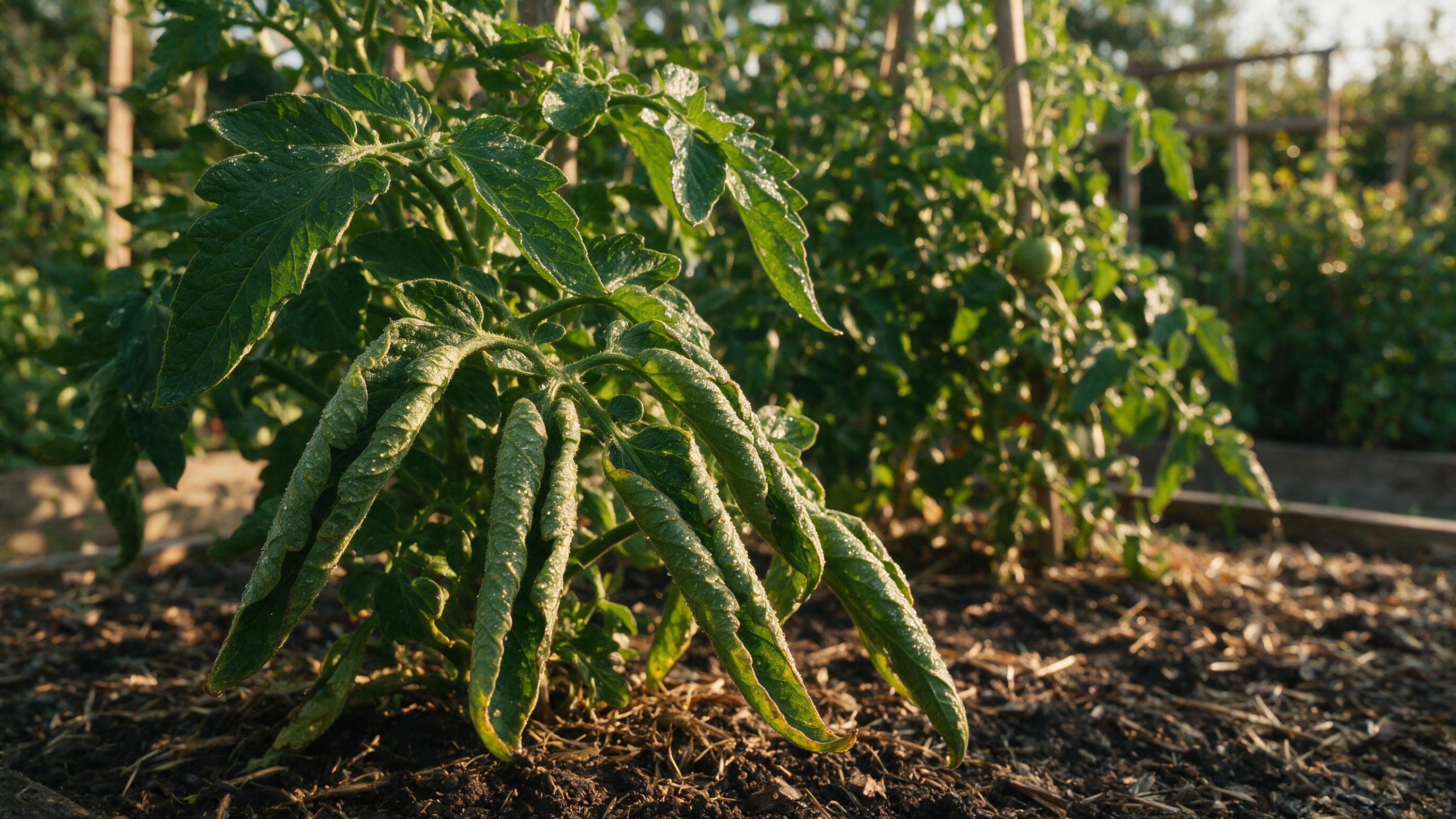
Stepping out to your garden and finding your tomato leaves curled into tight tubes is one of those moments that sends a gardener’s heart racing. Are the plants dying? Is the harvest ruined? Should you be doing something right now? Take a breath — in most cases, the answer is simpler than you think.
Tomato leaves rolling up is one of the most common complaints among home gardeners across the United States, and it happens to beginners and experienced growers alike. The good news is that understanding the cause puts you firmly back in control. This guide walks you through every reason your tomato leaves might be rolling, how to tell them apart, and exactly what to do about each one.
What Does It Mean When Your Tomato Leaves Are Rolling Up?
When tomato leaves roll or curl, the plant is communicating. Curling tomato leaves are your plant’s way of telling you something is wrong. When you notice the foliage starting to curl, roll, or twist, it’s tempting to panic — but understanding what causes tomato leaves to curl is important because different problems require different solutions.
The rolling motion itself is usually a protective response. Physiological leaf curl is a defense mechanism that tomato plants use to prevent moisture loss through the leaves — it’s a way for the plant to conserve energy. That said, not all rolling is physiological. A number of factors can cause curling tomato leaves, some more serious than others. The issue may be environmental, chemical, biological, or even a combination.
The direction of the curl is one of your first diagnostic clues. Leaves rolling upward along their length are usually responding to heat, drought, or normal stress. Tomatoes are very sensitive to herbicides — if certain weed killers are applied nearby and some drift onto the leaves, the leaves will often roll downwards. Keeping that distinction in mind will help you narrow things down quickly.
Pro Tip: Before you diagnose anything, check which leaves are affected. Lower, older leaves curling upward is almost always a benign stress response. New growth curling or twisting downward points to something more serious, like herbicide exposure or a viral infection.
Is Rolling Up in Tomatoes Always a Sign of a Problem?
Not at all. Curled leaves aren’t always cause for concern. Leaf curling in tomato plants can be caused by a wide array of factors, many of which can be corrected. Some rolling is entirely normal and requires zero intervention on your part.
Physiological leaf curl is the most common reason for your tomato to roll up its leaves. It’s a defense mechanism that plants use to prevent moisture loss — a way to conserve energy. It’s often the first line of defense when your tomato feels stressed, and because of this, it will usually show up on the lower, older leaves at the bottom of the plant first.
Unless there is a serious issue, most causes of physiological leaf curl do no lasting damage. The plant continues to grow normally and produce fruit, and usually you only need to adjust one or two minor things to fix the issue. You may also notice that some varieties are more prone to this than others. Curling leaves occur more frequently on indeterminate tomatoes rather than determinate plants. Heirloom tomatoes also have this problem more often than hybrid cultivars.
The moment to act is when rolling is accompanied by color changes, distorted new growth, visible insects, or a plant that stops producing fruit. That’s when the rolling has crossed from “normal stress signal” into “something needs to change.”
Watering Issues Causing Tomato Leaves to Roll Up
Water is the most frequent trigger for tomato leaf roll, and both too little and too much can cause it — though they look and behave differently.
Underwatering
If there is not enough water in the soil due to high temperatures or too much sun, the leaves will curl in an attempt to retain water and survive. Plants in pots are the most vulnerable to underwatering because they typically dry out faster. Soil in the ground can retain water for longer, but that doesn’t mean in-ground tomatoes can’t become water-deprived.
Water at the right time — early in the morning when it’s cooler — to reduce the amount of water that evaporates before it benefits the plant. Even though it’s cooler at night, don’t wait until nighttime to water, as this can lead to fungus, rot, and less fruit on your tomato plant. Setting up a drip irrigation system is one of the most reliable ways to keep moisture consistent without the guesswork.
Overwatering and Root Rot
Tomatoes prefer well-draining soil. When soil becomes saturated and excess moisture surrounds the root system, air pockets are eliminated, creating favorable conditions for infection and root rot. Root rot can cause tomato leaves to roll, shift from green to brown, and droop.
Use a moisture meter or your fingers to check how wet the soil is, and allow it to drain fully before watering again. If your container lacks drainage holes, that’s the first thing to fix. For in-ground beds, amending heavy clay soil with compost or perlite significantly improves drainage. You can read more about companion plants that support tomato health and help regulate soil moisture through mulching and ground cover.
Pro Tip: Stick your finger two inches into the soil near the base of your tomato plant. If it feels dry, water deeply. If it feels wet and the leaves are still rolling, overwatering or poor drainage is the more likely culprit.
Light Conditions Behind Tomato Leaf Rolling
Tomatoes love sun, but there is such a thing as too much of a good thing — especially during peak summer heat in warmer US states.
If your tomato leaves are starting to curl and heat doesn’t seem to be an issue, it could be the amount of sun the plants are getting. Excessive sun, especially on high UV days, can burn the leaves, causing them to yellow and dry up. Protecting your tomato plants with a shade net may help.
Direct sun is typically beneficial for tomato plants, but sometimes the sun can be too intense if UV rays are high. Check the UV index in your area. When UV rays are exceptionally high, you may notice your tomato plants getting sunburned (turning yellow) and drying up. The plant’s leaves also curl to reduce the amount of surface area exposed to the hot rays.
If you’re growing tomatoes in containers on a patio, deck, or balcony, afternoon shade from a fence, umbrella, or shade cloth can make a meaningful difference during July and August. If excessive sunlight is a prolonged issue, consider moving your tomatoes to another location — it’s easy enough if they’re growing in containers, but transplanting in-ground plants can be a little trickier. For indoor growers or those experimenting with low-light setups, check out the best houseplants for low-light areas to understand how light needs vary across plant types.
Soil, Nutrients, and Root Health Causing Tomato Leaf Rolling
What’s happening underground has a direct effect on what you see above it. Nutrient imbalances — particularly involving nitrogen, phosphorus, and potassium — are a well-documented cause of tomato leaf curl.
Too Much Nitrogen
When first planting your tomatoes, a balanced fertilizer is the ideal choice. But once the plant has reached maturity, starts flowering, and producing fruit, a fertilizer higher in phosphorus and potassium is recommended. Too much nitrogen at this stage will cause your plant to be overly bushy and can cause leaves to curl.
The continued absorption of leaf-focused macronutrients causes leaves to become very dark green, thickened, and rolled. Problems with excessive nitrogen typically resolve over time if you just stop adding fertilizer. Along with curling up, excess nitrogen causes leaves to look dark green and have a thick, leathery appearance. If you see this pattern, skip the next feeding cycle and reassess.
Potassium and Phosphorus Deficiency
If your soil does not have enough potassium or phosphorus, it can stunt the growth of your plants, leading to less fruit production and causing leaves to turn yellow and curl. Some gardeners have success adding missing nutrients with fertilizer, but make sure you’re using the right type.
To check the nutrition content of your soil, get an at-home soil testing kit that you can use to test the pH, nitrogen, phosphorus, and potassium levels in your soil and determine what it needs. Many county cooperative extension offices across the US also offer affordable soil testing services — a worthwhile investment before each growing season.
Soil Preparation and Root Damage
Excessive moisture and nitrogen, insufficient phosphorus, heat, drought, severe pruning, root damage from tilling or hoeing, early planting, and transplant shock are some of the cultural and environmental factors that can cause physiological leaf roll in tomatoes.
The best strategy for preventing curled leaves in the future is to amend your soil before planting tomatoes. For soil that’s lacking in nutrients, add compost — either homemade or organic compost purchased from a garden center. Understanding how different leaf types respond to nutrient stress can also help you read your garden more accurately over time.
Environmental Stress Triggering Tomato Leaf Rolling
Beyond watering and light, several broader environmental conditions can push your tomato into a defensive curl. These are especially common in the US South, Southwest, and anywhere that experiences dramatic temperature swings.
Heat Stress
Consistently hot temperatures that reach 90°F (32°C) and above will cause your tomato leaves to curl. Extreme heat stresses the plant and curling leaves are the plant’s attempt to conserve water and continue fruiting. Tomato plants thrive in warm daytime temperatures ranging from 70–85°F and slightly cooler nighttime temperatures of 55–75°F. Periods of extreme heat can cause the plant to dehydrate more quickly.
Depending on where your tomatoes are planted and how much direct afternoon sun they get, you may even notice curled leaves during the hottest part of the day — leaves that always unfurl again once the sun goes down. If this is the pattern you’re seeing, your plants are likely fine. Mulching is an important measure for growing tomatoes, keeping the soil cool and moist. Mulch can be the difference between happy, healthy tomatoes during a heat wave and dropped blossoms and wilting plants.
Wind Stress
Indeterminate tomato plants can grow quite tall and are especially vulnerable to wind stress. If plants are not adequately staked or supported, strong winds can cause twisting, leaf curl, and dieback at the leaf tips. This type of damage can resemble herbicide injury, but it is often linked to recent high wind events.
Transplant Shock and Pruning Stress
Moving seedlings into the garden disrupts roots and exposes plants to temperature fluctuations. Some tomato varieties respond by curling their leaves as they acclimate to outdoor conditions. This stress is temporary but worth preventing when possible.
Pruning tomato plants encourages fruit production, but removing too much foliage at once creates shock. When you strip away energy-generating leaves suddenly, the remaining foliage curls as the plant struggles to cope with the stress and loss of photosynthetic capacity. Prune gradually, removing no more than one-third of the foliage at a time.
Herbicide Drift
Herbicide damage happens when you or your neighbor sprays herbicides and some of the chemicals drift into your garden. It can happen when there is a breeze or if the plants are close together. Chemicals can drift as far as one mile, so be wary if fields are being sprayed nearby. Common products that cause damage include 2,4-D, dicamba, or contaminated compost that contains herbicides.
The leaf curl resulting from herbicide exposure looks quite different from other natural stress factors. When exposed to herbicides, tomato leaves tend to curl downwards and twist quite dramatically around the stem. You will see this first in new leaf growth, but eventually other leaves will start to twist as well. According to Texas A&M AgriLife Extension Service, “physical herbicide drifts are often limited to a few yards,” but “vapor drifts that can occur with certain herbicides and environmental conditions can travel for miles.” Wind speeds as low as 5 mph can result in considerable herbicide drift that can be damaging to tomatoes, especially when applied nearby.
Important Note: If you recently used composted manure from cows or horses, herbicide residue in that compost may be the culprit. According to Texas A&M AgriLife, chicken litter is generally not a problem, but cow and horse manure from animals that grazed on herbicide-treated pastures can carry residues that harm tomatoes.
Pests and Disease Leading to Tomato Leaf Rolling
When environmental causes have been ruled out, pests and disease move to the top of the suspect list. Aphids, whiteflies, thrips, and other sap-sucking insects can cause leaves to curl by sucking plant juices out of the leaves. Check the undersides of leaves to look for these insects.
Common Pest Culprits
- Aphids: Small, pear-shaped, soft-bodied insects that range in color from yellow, brown, and green to black and even red. Look for them clustered on new growth and leaf undersides.
- Broad mites: Broad mites are so small that you need a microscope to identify them, but they can do significant damage. They attack a variety of vegetable plants and prefer to feed on young leaves and flowers. The toxins they inject into the leaves make them distort and curl.
- Whiteflies: The disease spread by whiteflies can carry tomato yellow leaf curl virus to all your tomato plants and other nightshades in your garden.
You can use UC ANR’s pest identification resources to help match what you’re seeing to a specific insect. Many natural enemies will feed on pest insects, so keep an eye out for lady beetles, lacewings, and minute pirate bugs. Also look for signs of parasitization from parasitoid wasps. Apps designed for plant identification on iPhone or Android can also help you identify pest damage patterns.
Viral Diseases
Several viruses cause tomato leaf rolling, and they’re worth knowing by name since the symptoms differ. Tomato plants (Solanum lycopersicum) are susceptible to a range of viral pathogens, most of which are spread by insects.
Tomato yellow leaf curl virus causes the leaves to turn yellow at the edges and curl upward. Unlike stress-related leaf curl where the leaf rolls completely inward, leaves affected by this virus almost look like they form a shallow bowl. You may also notice spotted patterns on the leaves and a slight browning on the inside of fruits.
Tomato mosaic virus causes rolling of leaves, but other symptoms — including mottled coloring of leaves, small leaflets, and internal browning of infected fruit — distinguish it from physiological or herbicide-induced leaf roll. Curly top virus causes leaves to cup downward, become thick and brittle, and stunts plant growth. Tobacco mosaic virus results in mottled leaves that appear stringy and distorted. Tomato spotted wilt virus causes downward-cupped leaves and necrotic spots.
Viral infections in your plants are rarely treatable, and the plant is usually a total loss by the time you see the external symptoms. Once you have identified that your tomato plant is suffering from a virus, remove it from your garden immediately and dispose of it. Never compost virus-infected plant material.
Fungal Disease: Blight
Tomato blight appears as brown or dark spots on leaves that rapidly expand and kill foliage. Early blight shows up after plants have set fruit and appears as concentric rings on lower leaves first. Late blight is more severe — it spreads quickly in cool, wet conditions and can destroy an entire plant in days. Blight-infected leaves curl, yellow, and drop, leaving fruit exposed to sunscald.
How to Diagnose Why Your Tomato Is Rolling Its Leaves
Curling or rolling of tomato leaves may be caused by various factors, including environmental stresses, viral infection, and herbicide damage. To determine which factor is the culprit, it pays to take a close look at the plant. Which leaves are rolling — old leaves, new leaves, or all leaves? What direction do the leaves roll — upward or downward? Are any other parts of the plant, including fruit, exhibiting symptoms?
Use this step-by-step approach to narrow it down:
- Check the direction of curl. Upward roll = likely heat, drought, or physiological stress. Downward twisting = likely herbicide exposure or virus.
- Identify which leaves are affected. Physiological leaf roll typically begins at the bottom of the plant, affecting older, lower leaves first, and then progresses upward along the stem. New growth curling points to pests, virus, or herbicide damage.
- Check leaf color and texture. Often the affected leaves thicken and develop a leathery texture, even while retaining their normal green coloration — a sign of physiological stress rather than disease. Yellow edges or mottled patterns suggest viral infection.
- Inspect leaf undersides. Use a magnifying glass to look for aphids, whitefly eggs, or spider mites. Broad mites cannot be seen with the naked eye or a magnifying lens — you will need a microscope to confirm their presence, or send a sample to a plant disease diagnostic lab.
- Think about recent activity. It’s important to keep in mind what you’ve been doing to or near your tomato plant recently — doing so will offer further clues. Did you fertilize, prune, transplant, or apply any sprays? Did a neighbor spray their lawn?
- Look at the whole plant. Is fruit affected? Are stems twisting? Is new growth distorted? Widespread distortion across all growth stages points to something systemic.
Your local cooperative extension office is an excellent resource for US gardeners. Your local extension office may be able to positively identify which virus is impacting your plants through a diagnostic lab. The Texas A&M AgriLife Extension Service and the Clemson University Home & Garden Information Center both offer free diagnostic guidance online.
How to Fix a Tomato Plant That Is Rolling Its Leaves
The fix depends entirely on the cause, so use your diagnosis from above to match the right solution. Here’s what works for each scenario:
| Cause | Fix | Expected Recovery |
|---|---|---|
| Underwatering / heat stress | Water deeply in the morning; add 2–3 inches of mulch around the base | Leaves often unfurl within 24–48 hours |
| Overwatering / root rot | Stop watering; improve drainage; remove affected roots if severe | 1–2 weeks if caught early |
| Too much nitrogen | Stop fertilizing; switch to a low-nitrogen, high-phosphorus formula at next feeding | Resolves gradually over several weeks |
| Nutrient deficiency | Soil test; amend with compost or targeted fertilizer based on results | 2–4 weeks depending on severity |
| Excessive sun / UV | Install a 30–50% shade cloth during peak afternoon hours | Improvement within days |
| Transplant shock / pruning shock | Water well; give the plant time; avoid further pruning until recovery | 1–2 weeks |
| Aphids / whiteflies | Spray undersides of leaves with insecticidal soap; introduce ladybugs | Improvement within 1 week |
| Broad mites | Apply miticide; spray twice, one week apart; remove damaged leaves | New growth should emerge normal |
| Viral infection | Remove and discard plant; do not compost; treat for whiteflies or leafhoppers | No recovery — prevent spread |
| Herbicide damage | Remove contaminated soil or add activated charcoal; remove plant if severe | No recovery if severe; minor cases may improve |
| Blight (fungal) | Remove affected leaves; apply copper-based fungicide; improve air circulation | Depends on severity and timing |
For mite infestations specifically, the best solution is to spray a miticide. New growth will then be normal and plants will be fine. However, the damaged leaves will remain damaged and should be removed. Spray at least two times about one week apart.
For viral infections, there is no cure for tomato viruses. The best way to prevent their spread is to pull up and discard the affected plants in the trash. Avoid adding them to your compost pile, as some viruses can persist in decomposing plant matter. You can also explore tomato substitutes if your crop is lost and you need alternatives for cooking.
How to Prevent Tomato Leaf Rolling Going Forward
Prevention is always easier than treatment. Once you’ve resolved the current issue, a few consistent habits will dramatically reduce the chances of seeing rolled leaves again next season.
Water and Soil Management
Make sure you water your tomato plants regularly and evenly, avoiding overwatering and preventing the soil from drying out. Consistent watering means less stress for the plants, which in turn prevents leaf curl. Drip irrigation is the gold standard for tomatoes — it delivers water directly to the root zone without wetting foliage, reducing both stress and disease risk.
The best strategy for preventing curled leaves in the future is to amend your soil before planting tomatoes. For soil that’s lacking in nutrients, add compost. A soil test every one to two years keeps you ahead of nutrient imbalances before they show up as rolling leaves.
Smart Fertilizing
When it comes to fertilizing, slow and steady is the way to go. You want the entire plant to grow together. Avoid high-nitrogen fertilizers once flowers appear, and switch to a tomato-specific formula that emphasizes phosphorus and potassium to support fruit development. Pairing tomatoes with the right companion plants can also naturally support soil health.
Pest and Disease Prevention
Choose pathogen-resistant tomato varieties. Harden off plants or wait for the weather to warm up before planting outside. Resistant varieties are labeled with codes like “V,” “F,” “N,” and “T” on seed packets, indicating resistance to verticillium wilt, fusarium wilt, nematodes, and tobacco mosaic virus respectively.
Since weeds often act as hosts to the viruses, controlling weeds around the garden can reduce virus transmission by insects. As some viruses are transmitted mechanically on garden tools, it also helps to disinfect any tools, such as pruners, that were used on diseased plants.
Environmental Protection
Use mulch every season without exception. Mulching is an important measure for growing tomatoes and keeps the soil cool and moist. Mulch can be the difference between happy, healthy tomatoes during a heat wave and dropped blossoms and wilting plants. A 2–3 inch layer of straw, shredded leaves, or wood chips around the base of each plant goes a long way.
Avoid spraying any herbicide products near your tomato garden, and check with neighbors if your plants are close to a property line. Weed killers for lawns and landscapes often contain growth regulator herbicides such as 2,4-D and dicamba, to which tomatoes are highly sensitive. If you grow tomatoes in a region prone to drought, exploring drought-tolerant companion plants can help buffer your garden’s microclimate.
Pro Tip: Keep a simple garden journal. Note when you water, fertilize, prune, and observe any changes in your plants. When leaves start rolling, that record will help you pinpoint the cause in minutes rather than spending days guessing.
FAQ
Why are my tomato leaves rolling up but still green?
Physiological leaf roll typically begins at the bottom of the plant, affecting older, lower leaves first, and then progresses upward along the stem. The tomato leaves cup inward and may take on a leathery texture, but they usually remain green. With proper cultural care and reduced environmental stress, plants often recover, and fruit yield is generally not affected. This is the most common and least serious form of leaf rolling.
Can overwatering cause tomato leaves to roll up?
Yes. Leaf curl on tomato is often caused by environmental stress. Too much or too little water or nutrients can make leaves curl. Overwatered tomatoes often show rolling combined with yellowing and a generally droopy appearance, while underwatered plants tend to roll but stay green and recover quickly once watered.
Why are only the bottom leaves on my tomato rolling up?
When a plant is hot and unable to take up enough water for the foliage to use, leaves start to roll inward lengthwise. This usually begins in the lower, older leaves first. Bottom-only rolling is almost always a sign of heat or moisture stress and is rarely cause for alarm. Monitor the plant and adjust watering if needed.
Can tomato leaf rolling spread to other plants?
Physiological leaf roll does not spread — it’s a response to conditions, not a pathogen. However, if the rolling is caused by a viral infection like tomato yellow leaf curl virus, the disease is spread by whiteflies that can carry it to all your tomato plants and other nightshades in your garden. Tomato yellow leaf curl virus will severely stunt the growth of your tomato plants and will dramatically lessen the amount of fruit production.
Should I remove leaves that have rolled up on my tomato plant?
For physiological leaf roll, removal is usually unnecessary — the leaves will often unfurl on their own once conditions improve. For virus-infected or mite-damaged leaves, the damaged leaves will remain damaged and should be removed. If the whole plant is infected with a virus, remove the entire plant rather than just the leaves. For more on caring for different plant types, explore our guide to types of plants.
What is the fastest way to stop tomato leaves from curling?
If heat and drought are the cause — which they are in the majority of cases — hot, dry conditions are the most common culprit behind curling tomato leaves. When temperatures spike and moisture becomes scarce, tomato plants face an impossible choice: they’re losing water through evaporation faster than their roots can absorb it. The plant responds by curling leaf margins upward as a survival strategy that reduces sun exposure and water loss. A deep, thorough watering in the morning combined with a fresh layer of mulch is the fastest response you can take.