Traditional Yorkshire Breakfast Dishes: Yorkshire Pudding, Eggy Puds, and Toad-in-the-Hole

November 23, 2026
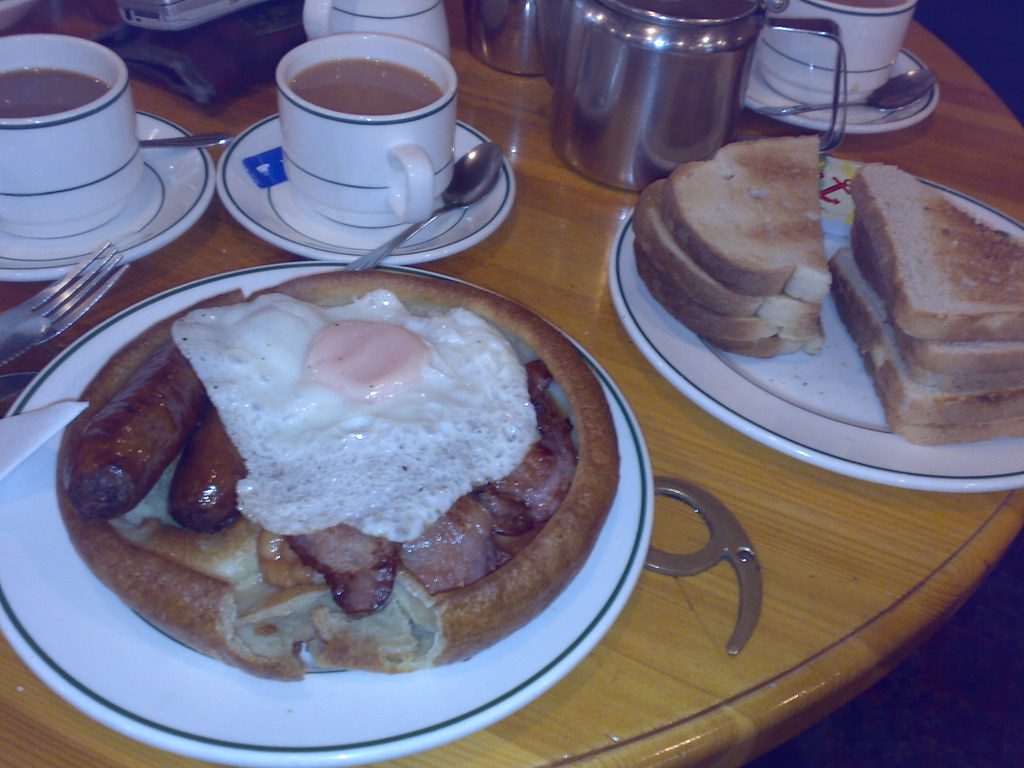
Ask someone from Yorkshire what belongs on a proper breakfast plate, and the conversation almost always circles back to batter. A traditional Yorkshire breakfast isn’t just bacon, eggs, and beans on toast — it leans on the same simple mix of flour, eggs, and milk that built the county’s reputation for hearty, no-nonsense cooking.
That batter shows up in three distinct forms on Yorkshire tables: as crisp little puddings, as individual breakfast cups stuffed with egg and bacon, and as a sausage-studded bake that’s confused visitors for over two hundred years. Each dish carries its own history, and together they explain why Yorkshire’s breakfast culture feels so different from the rest of Britain’s.
| Dish | Main Ingredients | Typical Role at Breakfast | Earliest Known Reference |
|---|---|---|---|
| Yorkshire Pudding | Flour, eggs, milk or water, dripping | Side dish or gravy vessel alongside a fry-up | 1737, as “dripping pudding” |
| Eggy Puds | Yorkshire pudding batter, bacon, fried or baked egg | Individual handheld breakfast cup | Modern variation on the classic batter |
| Toad-in-the-Hole | Pork sausages, flour, eggs, milk | Hearty weekend brunch bake | 1787, named in print |
1. Yorkshire Pudding
At its core, Yorkshire pudding is a baked batter dish made from eggs, flour, and milk or water, and it has become one of Britain’s most recognizable side dishes . Before it had a county name attached to it, the dish went by a far less glamorous title.
Cooks in northern England simply called it a “batter” or “dripping pudding” long before it carried any regional branding. It earned that description honestly: the batter was cooked over an open fire with a joint of meat roasting above it, so the fats and juices would drip down and give the pudding its flavor and golden color.
The name change came in 1747, when the dish was first dubbed Yorkshire pudding in The Art of Cookery Made Plain and Easy by Hannah Glasse , one of the most influential cookbooks of that era. The timing mattered less for taste and more for economics. Meat was expensive, so a filling batter pudding served before the main course meant diners ate less of the costly joint that followed.
That frugal logic translated just as naturally to breakfast as it did to Sunday dinner. A traditional Yorkshire breakfast often leans on the same crisp puddings to soak up gravy, bacon fat, or baked beans, turning a humble batter into the plate’s most filling element. The approach isn’t unlike how other regional breakfast traditions around the world stretch modest ingredients into a satisfying morning meal.
Pro Tip: A properly crisp Yorkshire pudding depends on steam, which is why a hot oven and sizzling-hot fat in the tin before the batter goes in make all the difference.
Yorkshire locals tend to insist on beef dripping rather than vegetable oil for the most authentic result, a preference tied to the region’s long history of coal-fired ovens reaching higher, more consistent heat than wood fires elsewhere in the country. That higher heat is part of why a true Yorkshire pudding puffs up lighter and crispier than dripping puddings made in other regions.
2. Eggy Puds
If Yorkshire pudding is the foundation, eggy puds are the breakfast-table reinvention. The idea takes the same crisp batter cup used at Sunday dinner and fills it with breakfast staples instead of gravy — typically crispy bacon and a soft fried or baked egg nestled right in the well of the pudding.
The result is a single-serve dish that’s part Yorkshire pudding, part breakfast sandwich. Because the batter bakes up with a deep, bowl-like center, it naturally cradles the egg and bacon without any extra assembly, which makes eggy puds popular on cafe and bed-and-breakfast menus across the Yorkshire Dales. It’s a practical solution as much as a tasty one: rather than serving eggs and puddings as separate components, cooks consolidate both into one dish that’s easy to plate and even easier to eat.
Eggy puds also highlight something true of Yorkshire cooking more broadly — a willingness to repurpose a classic rather than retire it. The same batter that anchors a roast dinner becomes something entirely different with a change of filling, a flexibility shared by egg-based breakfasts in other food cultures, from the layered egg dishes found in traditional Egyptian cooking to the spiced egg preparations common in traditional Indian breakfasts.
Important Note: Because eggy puds are a newer spin on an old recipe, there isn’t one fixed version. Some cooks bake the egg directly into the batter before it rises; others crack a soft egg into the finished pudding at the last moment, so texture can vary noticeably from one kitchen to the next.
Either method keeps the dish firmly in the same family as its parent recipe, which is part of why eggy puds read as unmistakably Yorkshire even without a long written history behind them. They’re proof that the region’s signature batter still has room to evolve, much like the egg-forward brunch dishes featured in festive breakfast spreads built around a similar one-dish mentality.
3. Toad-in-the-Hole
Toad-in-the-hole takes the Yorkshire pudding concept in a heartier direction, baking pork sausages directly into the batter rather than serving the pudding on the side. It’s a dish that has confused visitors for generations, largely because of its name — there’s no toad involved, and there never was.
The dish’s written history is tangled. Dishes resembling toad-in-the-hole appeared in print as early as 1762 , described at the time as a “vulgar” name for a small piece of beef baked into a large pudding. Some food historians trace it back even further, pointing to Hannah Glasse’s 1747 recipe for “pigeon in a hole,” which called for pigeon rather than sausage but used the identical batter technique.
The name itself only entered the written record in 1787, when Francis Grose’s A Provincial Glossary described the dish simply as meat cooked inside a crust. It wasn’t until 1861, when Mrs Beeton included a version using beef steak and kidney in her Book of Household Management, that the dish started resembling the sausage-and-batter bake recognized today.
You might wonder why sausages specifically became the standard filling. The honest answer is economics again: toad-in-the-hole, like toad in the hole became an iconic English breakfast precisely because it was a cost-effective way to stretch a small amount of meat across a large, filling family meal, using whatever cheap cuts or offal a household had on hand before sausages became the default.
Important Note: One popular story claims the dish was named after a golfer’s ball disturbing a toad at a Northumberland golf course, with the sausage supposedly resembling the toad’s head poking out of a hole. It’s a charming tale, but there’s no confirmed heritage behind it, and food historians treat it as folklore rather than fact.
Whatever the true origin of the name, the dish has stayed remarkably consistent in form: a savory batter, a protein baked into the center, and a result that’s crisp on top and soft underneath. That same batter-and-protein pairing shows up in other hearty, working-class European dishes, including the slow-cooked German stews built around similarly humble, stretch-the-meat logic.
Bringing the Three Dishes Together
What ties Yorkshire pudding, eggy puds, and toad-in-the-hole together isn’t just the shared batter — it’s the shared instinct behind them. Each dish started as a practical answer to the same problem: how to make a little meat, or none at all, feel like a complete meal. That thinking shaped a traditional Yorkshire breakfast into something distinct from the standard full English, built less around a fixed list of items and more around one flexible, endlessly adaptable batter.
Travelers curious about how other regions solve the same problem of stretching simple ingredients into a satisfying morning meal can find similar ingenuity in South African food traditions, Malaysian breakfast cooking, and French culinary staples, each shaped by its own history of scarcity, climate, and local produce. Yorkshire’s version just happens to come with a particularly good story — and a particularly good crust.
For readers building out a wider picture of how breakfast varies across cultures, it’s worth comparing Yorkshire’s batter-based approach with the rice- and fish-centered meals typical of a traditional Japanese breakfast, or the bread-and-legume spreads found in Venezuelan cooking and Pakistani breakfast dishes. The contrast says as much about regional history as the dishes themselves.