Traditional Irish Breakfast: Every Component of the Full Irish Fry Explained

November 22, 2026
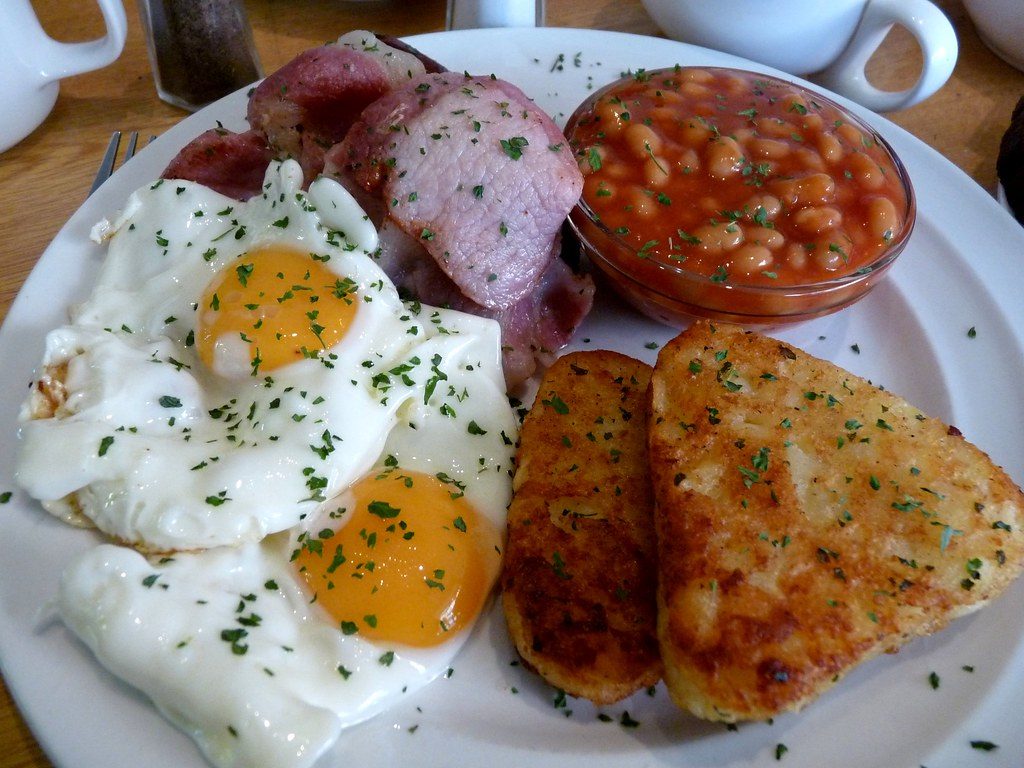
A traditional Irish breakfast was never meant to be an everyday meal. For most of the twentieth century, the full fry-up was reserved for Sundays, holidays, or farm mornings that demanded serious fuel before a day of physical labor. Today the plate has become shorthand for Irish hospitality itself, and understanding what belongs on it, and why, says a lot about the island’s farming history, its relationship with the pig, and its long love affair with the potato.
This breakdown walks through twelve components that make up a classic fry, from the rashers sizzling in the pan to the lesser-known Ulster Scotch pancake that rounds out a Northern Irish spread. Breakfast traditions like this exist all over the world, whether it is a savory Balkan table loaded with cheese and olives or a lighter traditional Japanese breakfast built around rice and fish, but few are as hearty or as regionally debated as the Irish version. For a broader look at how other cultures start the day, the breakfast archive covers dozens of regional breakfast traditions worth comparing.
1. Back Bacon
Back bacon, commonly called a “rasher” in Ireland, comes from the loin rather than the belly, which makes it leaner and meatier than the streaky bacon most American readers picture. It is usually sold unsmoked or lightly smoked and fried in its own fat until the edges crisp while the center stays tender. This cut is the backbone of the plate; everything else, including the mushrooms and tomatoes, is traditionally fried in the fat it leaves behind.
Butchers across Ireland and Northern Ireland cure back bacon slightly differently, so the saltiness and smokiness can shift from county to county. What stays constant is the cooking method: a hot pan, minimal oil, and just enough time to render the fat without drying out the meat.
Pro Tip: Cook the back bacon first and leave the rendered fat in the pan. Frying the mushrooms, tomatoes, and even the eggs in that fat is what gives a traditional Irish breakfast its signature savory depth.
2. Pork Sausages
Irish breakfast sausages are coarser and less sweet than many American versions, built mainly from pork, breadcrumbs or rusk, and a simple blend of pepper and herbs. They are usually linked rather than loose patties, and they go into the pan whole, turned regularly until the skins are deeply browned. Good butchers still hand-make them in small batches, and regional differences in the rusk-to-meat ratio can change the texture from dense to almost bread-like.
Sausages are one of the few items on the plate that show up in nearly every variation of a fry, whether it is served in Dublin, Belfast, or rural Donegal. Hearty, sausage-centered spreads are not unique to Ireland either; many traditional South African food traditions build their own morning plates around grilled sausage and bread.
3. Fried Eggs
Fried eggs with a soft, runny yolk are close to non-negotiable on a proper Irish breakfast. They are typically fried rather than scrambled or poached, cooked in the same pan as the bacon so the whites pick up a faint smokiness. A good fry cook times the eggs last, sliding them straight onto the plate while everything else stays warm.
The emphasis on a single, well-executed fried egg rather than an elaborate preparation reflects the practical, no-fuss character of the whole meal. Other cultures build entire breakfast identities around eggs too; a traditional Japanese breakfast often pairs a soft-cooked egg with rice and miso soup, showing how one humble ingredient can anchor very different morning tables.
4. Mushrooms
Whole or sliced button mushrooms, sautéed in the leftover bacon and pork fat, add an earthy counterweight to all the cured meat on the plate. They are rarely seasoned beyond salt and pepper, since the fat they cook in already carries plenty of flavor. Some households toss in a splash of butter toward the end for extra richness.
Mushrooms are one of the more flexible items on a traditional Irish breakfast; some cooks leave them out entirely, while others treat them as essential as the eggs. Earthy, foraged ingredients play a similar supporting role in traditional French food, where mushrooms are prized for the same ability to round out a richer dish.
5. Grilled Tomatoes
Tomato halves, grilled or lightly pan-fried until the edges caramelize, bring acidity to a plate that is otherwise dominated by fat and starch. Fresh tomatoes are more common in summer, while canned or tinned tomato halves fill in during the colder months when good fresh produce is harder to find. Either way, they are cooked just long enough to soften without turning to mush.
This small addition of brightness matters more than its size on the plate suggests. Without it, a full Irish breakfast can feel one-note; with it, the meal balances rich, salty, and starchy elements against something closer to fresh.
6. Black Pudding
Black pudding is a blood sausage made from pork blood, fat, and oatmeal, sliced into rounds and fried until the outside turns crisp. According to Dr. Máirtín Mac Con Iomaire of Technological University Dublin, an Irish breakfast is difficult to picture without black and white pudding served alongside the sausages, rashers, and eggs, and the dish is far older than most diners assume. Literary references to similar puddings go back to Homer’s Odyssey in the 8th century BC, and the 1st-century Roman cookbook Apicius describes a blood pudding called botellum made with onions and leeks.
In Ireland specifically, the dish grew out of necessity on small farms. The pudding, made from pork fat and blood and sometimes oatmeal or barley, was originally sold at local markets to supplement farm income, and it also fed the family as part of a traditional breakfast alongside home-produced rashers and sausages. County Cork’s Clonakilty has become particularly associated with the dish; its black and white puddings carry a distinctly peppery taste and have been made since the 1880s using an unchanged recipe.
Blood sausage is not unique to Ireland. Versions of it show up across Europe, including in the hearty one-pot cooking traditions behind German eintopf, where preserved and cured meats play a similarly central role in a working-class, nothing-wasted approach to cooking.
Important Note: Black pudding contains pork blood, so it is not suitable for anyone avoiding blood products for religious, dietary, or personal reasons. White pudding, described below, offers a blood-free alternative with a similar texture.
7. White Pudding
White pudding looks similar to black pudding but skips the blood entirely. It is made instead from pork, oatmeal or breadcrumbs, and a warm spice blend, which gives it a milder, slightly sweeter flavor than its darker counterpart. As one longtime chronicler of Irish home cooking puts it, white pudding is similar to black pudding, but it contains no blood, only pork, spices, and usually oatmeal.
White pudding tends to be the less famous of the two, but it holds its own place on the plate. Black pudding may be more popular worldwide, yet white pudding remains very popular in Ireland and an important part of an Irish breakfast. Clonakilty’s version is a relatively recent addition to the lineup; it has only been sold since 1986, decades after the town’s black pudding recipe was established.
8. Soda Bread
Soda bread is a quick bread leavened with baking soda and buttermilk rather than yeast, which means it can go from mixing bowl to oven in a fraction of the time a traditional loaf needs. Buttermilk’s acidity reacts with the soda to create lift, giving the bread a dense, slightly tangy crumb that holds up well to butter and jam, or a swipe of egg yolk at breakfast. Bakers traditionally cut a cross into the top before baking, partly for superstition and partly to help the loaf bake evenly.
Soda bread is often baked as a round loaf and then cut into wedges called farls. According to Wikipedia’s catalog of Irish dishes, a farl, or soda farl, is a traditional quick bread roughly triangular in shape, and it is particularly associated with Ulster. The same source notes that a full breakfast, also known as a full Irish, Irish fry, or Ulster fry, traditionally pairs rashers, sausages, and eggs with sides such as fried mushrooms, soda bread, and puddings.
| Bread or Pancake | Main Ingredient | Typical Region |
|---|---|---|
| Soda bread | Flour, buttermilk, baking soda | All of Ireland |
| Potato bread | Mashed potato, flour | Ulster |
| Potato farls | Mashed potato, flour | Ulster, Northern Ireland |
| Boxty | Grated and mashed raw potato | North midlands, north Connacht, south Ulster |
| Ulster Scotch pancake | Flour, buttermilk, griddle-cooked | Ulster |
9. Potato Bread
Potato bread blends mashed potato with flour and a little fat, rolled thin and fried in triangles or rounds until the outside turns golden and slightly crisp. It is denser than ordinary bread and carries a mild, almost buttery potato flavor that pairs well with the saltiness of bacon and sausage. In Northern Ireland, it is one of the defining elements that separates an Ulster fry from a Full Irish served further south.
Potato-based breads and flatbreads show up across many food cultures for the same practical reason: potatoes stretch flour further and add moisture to a dough. The idea echoes in dishes like the potato-stuffed parathas found in traditional Indian foods, where potato and dough are combined for a similarly filling, griddle-cooked result.
10. Potato Farls
Potato farls are cut into the same triangular shape as a soda farl, but the dough is made almost entirely from mashed potato, flour, and butter rather than wheat flour and buttermilk. They are fried on a hot griddle or pan until each side develops a light golden crust, then served warm alongside the rest of the fry. Many Irish households make a batch specifically to use up leftover mashed potato from the night before.
Because they rely on mash rather than raw grated potato, farls have a softer, more cake-like texture than some of the other potato-based items on this list. Flatbreads built around a starchy filler rather than pure wheat flour are common elsewhere too, including the parathas found across traditional Pakistani food, where stuffed and griddle-cooked breads serve a similar role at the breakfast table.
Pro Tip: Potato farls are one of the few fry components that genuinely improve with leftover mash from the day before. Freshly boiled potato often holds too much moisture and can make the farl fall apart in the pan.
11. Boxty
Boxty is a potato pancake built from a mix of raw grated potato and mashed potato, bound with flour and sometimes a little buttermilk, then fried until crisp outside and soft in the middle. Its name points to its origins; the word comes from the Irish arán bocht tí, meaning “poorhouse bread,” though it may also derive from bácús, meaning “bakehouse”. Geographically, the dish stays close to home. According to Wikipedia, boxty is a traditional Irish potato pancake mostly associated with the north midlands, north Connacht, and southern Ulster, particularly the counties of Leitrim, Mayo, Sligo, Fermanagh, Longford, and Cavan.
Boxty is often linked to the Great Famine in popular retellings, but the timeline does not quite hold up. The dish has its own feast-day tradition too; it is traditionally served on St. Brigid’s Day, February 1st, the patron saint of dairy, suggesting a history tied to seasonal farming rhythms rather than famine-era scarcity alone.
Key Insight: Boxty is frequently described as “famine food,” but written references to the dish predate the Great Famine of the 1840s. It is better understood as a long-standing regional specialty of Ireland’s border counties than a dish invented purely out of crisis.
Boxty shares a family resemblance with other starchy, pan-fried cakes eaten around the world, from potato-based fritters to the corn-and-plantain cakes found in parts of South America, including some traditional Venezuelan food built around a similarly dense, griddle-cooked base.
12. Ulster Scotch Pancake
The Ulster Scotch pancake, sometimes called a griddle scone, is a small, thick pancake made from flour, buttermilk, and a raising agent, cooked on a dry griddle rather than fried in fat. It is softer and more bread-like than a thin American-style pancake, with a slightly tangy flavor from the buttermilk that balances the richness of everything else on the plate. In Northern Ireland, it often appears as one more starch on an already crowded Ulster fry, usually buttered and eaten warm.
This pancake’s role on the plate is closer to a side bread than a dessert course, which sets it apart from how pancakes are treated in many other food cultures. For readers looking for pancake-centered breakfast ideas outside the Irish tradition, the Valentine’s Day breakfast guide covers a lighter, sweeter approach to the same basic format.
Taken together, these twelve components explain why a traditional Irish breakfast rarely appears on a weekday table. It takes multiple pans, careful timing, and a genuine appetite to do it justice. Regional breakfast traditions everywhere reflect this same logic, where local geography and history decide what lands on the plate, whether that is a Balkan spread built around cheese and bread or an Irish fry built around the pig and the potato. Readers curious about the names behind the culture can also browse this list of Irish boy names for more context on Irish heritage beyond the breakfast table.