Traditional Oaxacan Clothing: 11 Garments That Define Oaxaca’s Culture

November 19, 2026
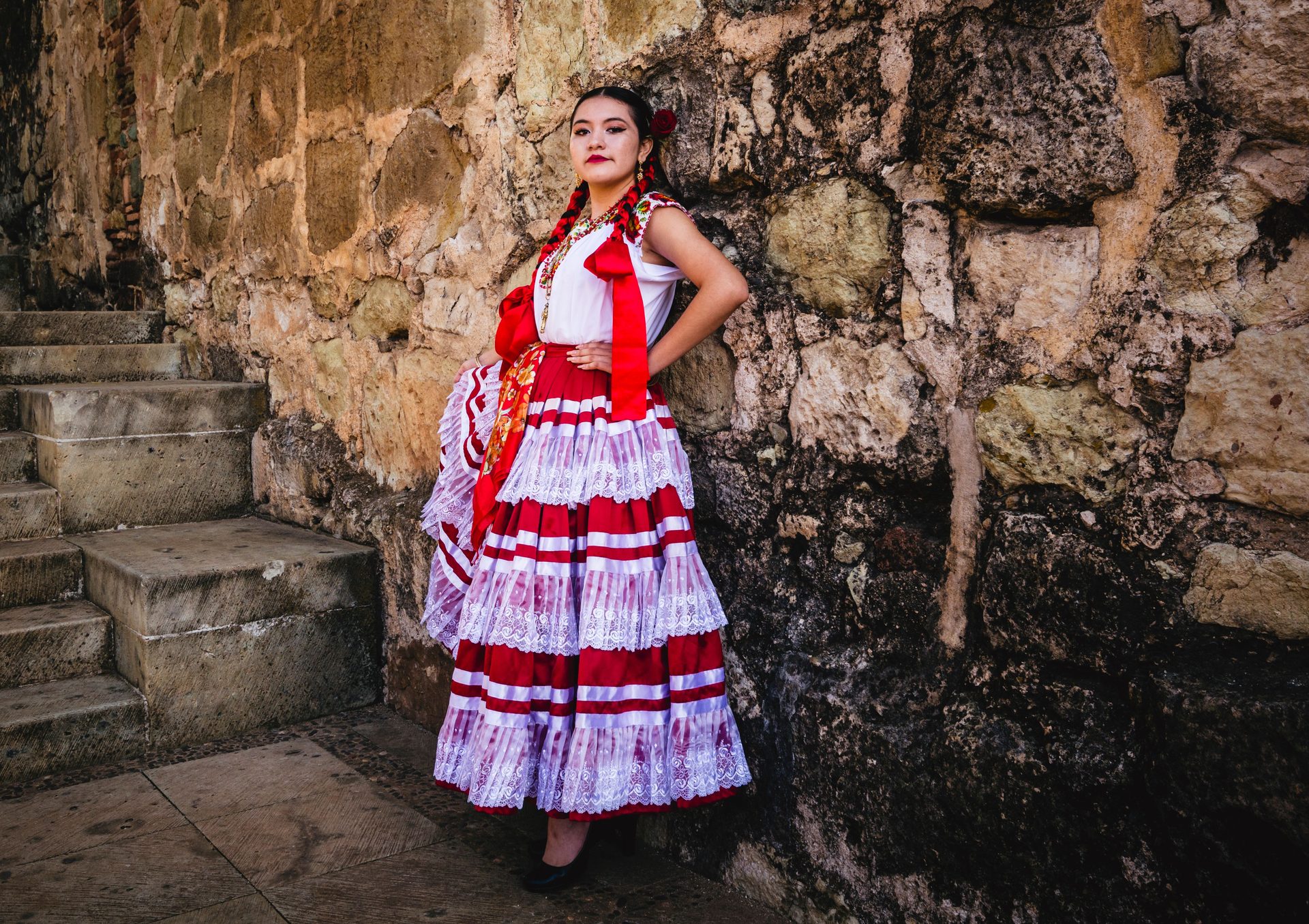
Oaxaca is home to 16 indigenous groups spread across eight distinct regions, and nowhere is that diversity more visible than in what people wear. Research on Oaxacan dress shows that traditional Oaxacan clothing is not costume reserved for festivals but a living language woven into daily life, one that communicates identity, marital status, and community belonging.
Each of the 11 garments covered here, from the rectangular huipil tunic to the red bandana tied at a dancer’s neck, carries its own regional history and craft tradition. Readers curious about how other cultures encode meaning into everyday clothing will find similar threads running through Oaxaca’s textile heritage.
1. Huipil
The huipil is the most recognizable garment in Oaxacan dress. According to a regional textile guide , it is a rectangular tunic made from one to three panels of cloth, sewn together and folded with an opening left for the head. Huipiles range from plain, everyday garments to elaborate ceremonial pieces covered in hand embroidery or brocade weaving.
In Huautla de Jiménez, women have embroidered their huipiles with birds and flowers since childhood. A Bullock Texas State History Museum record describes how girls begin stitching cotton squares in brilliant colors, later joining them with ribbons to form the complete adult huipil. The technique illustrates why a single garment can take months to finish by hand, a craft tradition shared with other handwoven textile cultures around the world.
Pro Tip: Look at the embroidery pattern, not just the color, to identify a huipil’s home village. Geometric motifs in red and black thread typically point to the Sierra Norte, while floral chain-stitch designs usually come from the Isthmus of Tehuantepec.
2. Huipil Grande
The huipil grande is not worn as a blouse at all. Textile historians describe it as having the form of a lace blouse with sleeves, a peplum, and a ruffle around the neck, but the sleeves go unused since the garment is reserved for the head and shoulders rather than the torso. It is worn differently depending on the occasion, framing the face for religious events or tossed back dramatically during Assumption festivities.
The garment’s history stretches back nearly two centuries. The Victoria and Albert Museum notes that in 1828 the Italian artist Claudio Linati documented a young Tehuantepec woman covering her head and torso with a white gauze-like garment already known locally as the huipil grande. By 1859, explorer Desiré Charnay photographed the same frill framing a wearer’s face after the everyday huipil had grown shorter.
Some communities on the Isthmus call it bidaani huiini, a name tied to its origin as a repurposed christening gown turned into an elaborate headdress. The piece remains a formal counterpart to the everyday huipil rather than a replacement for it.
3. Enagua De Holán
The enagua de holán is a long, formal skirt built from two distinct parts. Fashion historian Chloë Sayer explains that the enagua, meaning petticoat, is not actually worn under a larger skirt; it stands as its own article of clothing, fastened at the side with fabric ties and finished with a detachable lace flounce called the holán.
This flounce is central to the garment’s identity. The Royal Ontario Museum’s collection notes that the holán forms part of a complete Tehuana gala ensemble, paired with a short embroidered huipil and matching enagua decorated with floral or geometric designs. Factory-made lace has largely replaced the hand-made lace once used for the starched flounce, though the silhouette has stayed consistent across generations.
4. Rabona
The rabona is the everyday counterpart to the formal enagua. Sayer draws a clear line between the two, noting that the enagua remains reserved for formal occasions while the rabona, a lighter style finished with a pleated flounce of printed cotton, stays in regular rotation as popular everyday wear on the Isthmus.
Zapotec women across the Isthmus region wear the rabona for ordinary daily tasks rather than ceremonial display. A regional overview of Oaxacan garments confirms that long rabona skirts are standard daily wear among Zapotec communities in the isthmus of Tehuantepec, reserving embroidered dresses for festivals and main celebrations. The practical, printed-cotton construction makes it far more affordable to produce than its formal counterpart, a distinction that echoes how everyday versus ceremonial dress is separated in many other textile traditions.
5. Quexquémitl
The quexquémitl is a diamond-shaped cape worn draped over the shoulders, with one point typically falling toward the front and another toward the back. Unlike a tailored garment, it is woven as a single rectangular piece and folded diagonally, then worn over a huipil or blouse rather than in place of one. The shape traces back to pre-Hispanic Mesoamerica and appears across several indigenous groups in central and southern Mexico, including some Mixtec and Trique communities in Oaxaca.
Construction varies by village, with some versions woven on a backstrap loom and finished with long fringe, while others carry embroidered borders instead. The draped, unstitched design places it in the same broad family as other wrapped garments worn across Asia, a loose parallel to how draped clothing traditions developed independently in different parts of the world.
Important Note: The quexquémitl is far more associated with central Mexican states such as Puebla and Hidalgo than with Oaxaca as a whole. Within the state, it survives mainly in specific Mixtec and Trique villages rather than as a garment worn broadly across the region.
6. Rebozo
The rebozo is a long rectangular shawl, and like the huipil, it is never just decoration. A regional textile guide notes that every rebozo carries encoded meaning, with colors drawn from insects, plants, and minerals found in the surrounding landscape, and patterns that reference creation stories and agricultural cycles passed down over centuries. A finely woven piece sold in an Oaxacan market may represent three to eight months of hand weaving.
Beyond its symbolic weight, the rebozo serves practical purposes: carrying infants, wrapping against cold mountain air, or draping over the shoulders for formal occasions. The long fringe at each end, often hand-knotted into decorative patterns, is considered as much a mark of skill as the weaving itself, a craft emphasis shared with shawl-making traditions in South Asia.
7. Faja
The faja is a woven sash used to secure the enredo, Oaxaca’s wrap-around skirt made from a single piece of cloth wound around the waist. Textile researchers describe the enredo as typically woven on a backstrap loom and dyed with natural pigments, with the faja holding the folds in place at the waist. The number of folds and the exact positioning of the sash vary from one community to the next, making the faja as much a marker of local identity as the skirt it secures.
Fajas are usually woven with bold geometric or striped patterns that stand out against the plainer enredo fabric. Men in some Oaxacan communities wear a simpler version of the sash as well, a functional role comparable to the woven belts found in European folk costume.
8. Ceñidor
The ceñidor is a narrow woven sash associated with Mazatec communities in Oaxaca’s highlands. It functions much like the faja, binding a skirt or huipil at the waist, but is generally woven more tightly and worn wrapped several times around the body rather than tied once and left to hang. Because Mazatec textile traditions are less documented in English-language sources than those of the Isthmus, regional variation in color and pattern is harder to track outside the communities that weave it.
What is consistent across accounts is its function: a practical fastening device that doubles as a visible marker of regional dress, worn alongside the huipil rather than replacing any single piece of the outfit.
9. Paño
The paño is a head covering worn by Chinantec women in Oaxaca, typically a rectangular woven or embroidered cloth folded or draped over the hair. Unlike the elaborate huipil grande of the Isthmus, the paño tends to be simpler in construction, serving a more everyday purpose rather than a ceremonial one.
Color and embroidery density vary from village to village within Chinantec territory, following the same pattern of hyper-local variation seen throughout Oaxaca’s textile map. A woman’s choice of paño, like her huipil, can signal which specific community she belongs to long before she speaks a word.
10. Guayabera
The guayabera is a lightweight men’s shirt, generally traced to Caribbean and Yucatán tailoring traditions, built around vertical pleats called alforzas and two or four patch pockets stitched onto the front. Though it did not originate in Oaxaca, the shirt has become common across the state’s hotter coastal and Isthmus regions, where its open weave and loose cut suit the humid climate far better than heavier, fitted shirts.
Men often pair the guayabera with a straw hat for both daily wear and festive occasions, including Guelaguetza performances where male dancers need breathable clothing for hours of movement. Its spread through southern Mexico and into broader Latin American and American fashion circles mirrors how practical garments often outgrow their place of origin once their functional advantages become obvious.
11. Red Bandana
The red bandana, known locally as a paliacate, is a fixture of men’s Isthmus dress, tied at the neck or knotted around the head during Guelaguetza performances and regional dances. It typically appears alongside a plain white shirt, white trousers, and a straw hat, forming the male counterpart to the elaborately embroidered Tehuana outfit worn by women dancers.
The color carries its own regional association, echoing the red tones found in huipil ribbons and embroidery across the Isthmus. As a functional piece of neckwear tied to rural and working dress, it shares a loose kinship with the bandanas worn in outback work wear traditions, where a simple cloth square serves practical and symbolic purposes at once.
| Garment | Primary Region | Typically Worn By |
|---|---|---|
| Huipil | Statewide | Women, daily and ceremonial |
| Huipil Grande | Isthmus of Tehuantepec | Women, formal and religious occasions |
| Enagua de Holán | Isthmus of Tehuantepec | Women, gala and festival wear |
| Rabona | Isthmus of Tehuantepec | Women, everyday wear |
| Quexquémitl | Mixteca, Trique villages | Women, worn over huipil |
| Rebozo | Statewide | Women, daily and ceremonial |
| Faja | Statewide | Men and women, securing skirts |
| Ceñidor | Mazatec highlands | Women, securing skirts |
| Paño | Chinantec territory | Women, head covering |
| Guayabera | Coastal and Isthmus areas | Men, daily and festive wear |
| Red Bandana | Isthmus of Tehuantepec | Men, Guelaguetza dances |
Together, these 11 garments show how traditional Oaxacan clothing functions less like a fixed costume and more like a regional dialect, with each community adding its own vocabulary of color, weave, and silhouette. The Guelaguetza festival remains one of the few settings where visitors can see most of these pieces worn together in a single afternoon, from the lace-framed huipil grande to the simple red bandana tied at a dancer’s neck.
Anyone buying an authentic piece, whether a hand-embroidered huipil or a woven faja, supports artisans who often spend months on a single garment. That investment of time is part of what separates a genuine regional textile from a mass-produced version, and it is worth keeping in mind before treating any of these garments as simply decorative.