Traditional Serbian Clothing: 17 Garments That Shaped a Nation’s Heritage

November 19, 2026
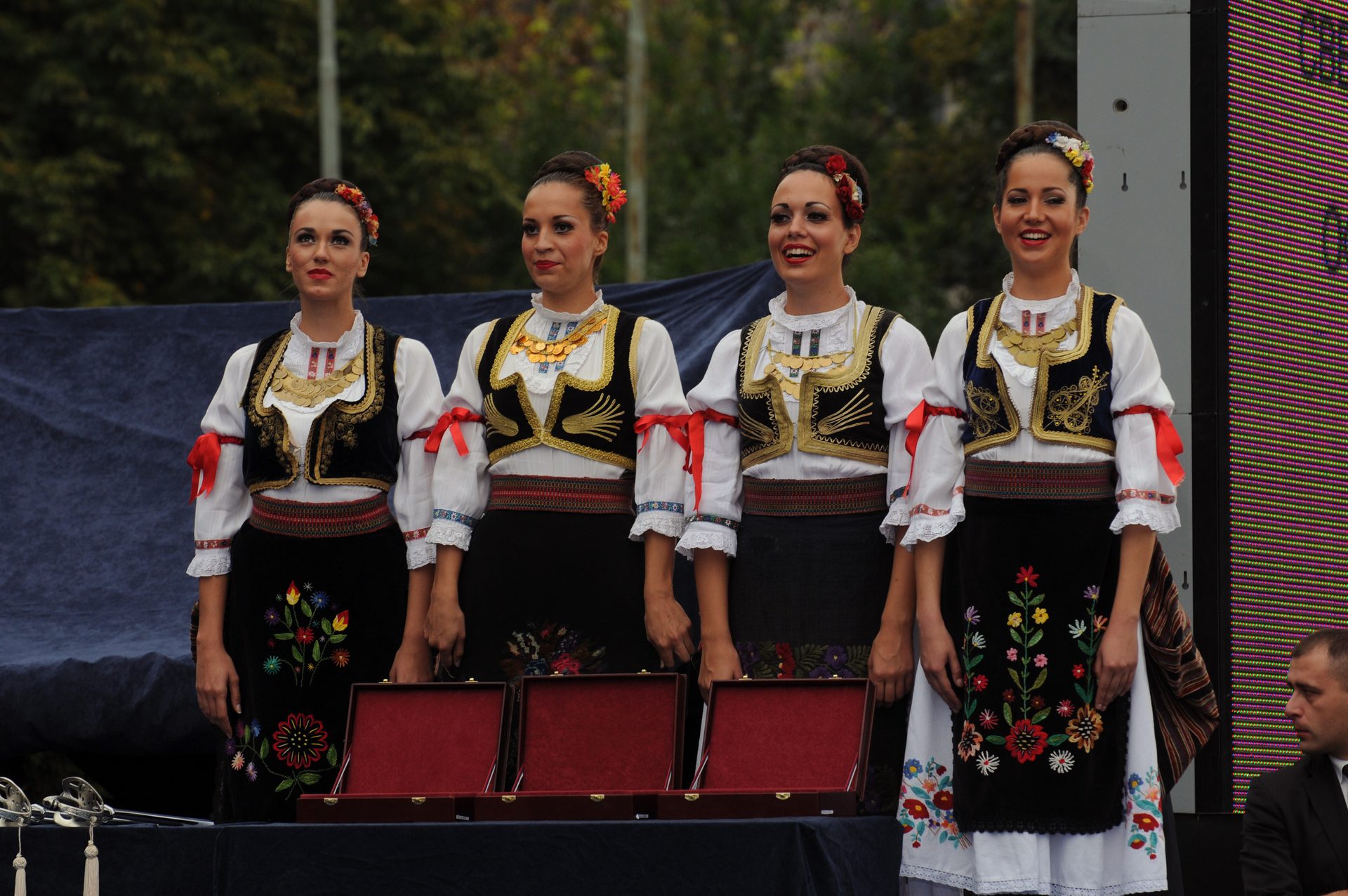
Long before factory-made fabric reached the Balkans, Serbian villagers were weaving, dyeing, and stitching garments that told strangers exactly where a person came from, how old they were, and whether they were married. Traditional Serbian clothing carries centuries of Byzantine, Slavic, and Ottoman influence stitched into wool, leather, and hand-spun linen. Each piece below, from the curled-toe opanci shoe to the coin-heavy đerdan necklace, still appears today at weddings, folklore festivals, and village celebrations across Serbia.
This piece walks through 17 garments and accessories that made up the traditional Serbian wardrobe, explaining what each one was made from, who wore it, and why it mattered. Readers interested in how neighboring cultures developed their own distinct silhouettes can also compare notes with other traditional clothing traditions from around the world.
| Garment | Typically Worn By | Primary Material |
|---|---|---|
| Opanci | Men and women | Leather |
| Šajkača | Men | Wool cloth (šajak) |
| Šubara | Men | Lambskin or sheepskin |
| Jelek | Women | Wool or velvet, embroidered |
| Zubun | Women and men | Wool broadcloth |
| Dimije | Women | Cotton or silk blend |
| Kožuh | Men and women | Sheepskin |
1. Opanci
Opanci are the laceless leather peasant shoes that, for centuries, were the only footwear most Serbian villagers owned. According to Wikipedia’s entry on the opanak , these shoes are built from leather with no laces and feature a distinctive horn-like curl at the toe. That curled tip was not decorative alone; its shape signaled which region a wearer came from, since villages from Šabac, Valjevo, Užice, and Šumadija each developed their own point and weave pattern.
Making a pair was once a household skill rather than a specialized trade. Reporting from Belgrade, Balkan Insight describes opanci as peasant leather shoes fastened around the leg with a strap, still handmade by a shrinking number of craftsmen in suburban workshops. The trade became so specialized in some families that it produced the surname Opančar, meaning “opanak maker.”
Today opanci survive mainly as folklore costume pieces and souvenirs rather than daily footwear. The style has close cousins elsewhere in the region: similar handcrafted, strap-fastened footwear traditions appear in traditional Pakistani clothing, where leather khussa shoes serve a comparable role as a marker of rural identity.
Pro Tip: If you ever see opanci for sale while traveling in Serbia, check the toe shape first. A tall, hooked point usually points to a Šumadija or Kačer-region design, while a lower, broader curl often traces back to Šabac.
2. Šajkača
The šajkača is the soft, gray wool cap folded into a shape resembling an overturned boat, and it remains Serbia’s most recognized piece of men’s headwear. Its name comes from the šajkaši, river troops who patrolled the Danube and Sava for the Habsburg Monarchy during the 18th century in small boats called šajke. According to Wikipedia , the cap is traditionally black, grey, or green and made of soft, homemade cloth.
The hat’s path from riverboat gear to national symbol ran through Serbia’s military history. Serbia.com notes that the country officially introduced the “šajkaška cap” into its army in 1870, and regulations fixed its color as dark blue in 1896 before the olive-gray field uniform era began in 1908. It accompanied soldiers through the Balkan Wars and the First World War before settling into its modern role as rural and ceremonial wear.
Military-inspired folk headwear is not unique to Serbia. Comparable caps tied to regional militias and frontier guards show up in traditional German clothing, where Alpine and Bavarian hats trace similar roots to local defense forces and farming communities.
3. Šubara
Where the šajkača is light wool, the šubara is heavy fur. This tall, conical hat is made from lambskin or sheepskin and was designed to keep peasants and soldiers warm through brutal Balkan winters. A Serbian retailer specializing in folk costume pieces describes it as a shield from harsh winter , noting its practical, conical shape protected wearers both on the front lines and in peacetime village life.
Unlike the šajkača, which softened into a civilian symbol, the šubara kept a stronger connection to formality and rank in some regions, often appearing in wealthier households or among older men at festive gatherings. It typically comes in black or white depending on the sheep breed used. Fur-trimmed winter headwear built for extreme cold shows up across many cultures with harsh climates, including parts of traditional Chinese clothing from the country’s northern regions.
4. Jelek
The jelek is a short, sleeveless vest worn by women over a blouse or dress, almost always richly embroidered along the edges and front opening. Depending on the region and the family’s means, the embroidery ranged from simple wool thread to gold or silver metallic stitching reserved for weddings and major feast days. Because the vest left the sleeves and much of the blouse visible, the jelek functioned as a frame for the garments underneath rather than a garment meant to cover the body.
Decoration on a jelek often doubled as a form of visual biography. Floral motifs, geometric borders, and metallic coin-like appliqués could hint at a woman’s village, her marital status, or her family’s standing. Richly embroidered vests worn over looser garments appear in many regional dress traditions, including parts of traditional Indian clothing, where embellished blouses and bodices serve a similarly decorative, status-signaling role.
Key Insight: A jelek was rarely worn alone. It sat at the top of a layered outfit that could include a zubun, a pregača apron, and a tkanica sash, so the vest’s embroidery had to visually balance several other patterned pieces at once.
5. Zubun
The zubun is a longer, sleeveless or short-sleeved outer tunic worn over the linen shirt, typically reaching the hip or knee. Made from thick wool broadcloth, it was heavier and more structural than the jelek, often trimmed with colorful cord known as gajtan and finished with wool tassels or metal buttons along the front. Both men and women wore versions of the zubun, though cut, length, and decoration varied sharply between the two.
In many parts of Serbia, the zubun doubled as outerwear for working in the fields, which meant everyday versions were plainer than the ones reserved for church and festivals. Families often kept a festive zubun stored away, pulled out only for weddings, slava celebrations, or seasonal gatherings. Layered outer garments built for both labor and ceremony recur across cold-climate wardrobes, including the structured overcoats found in traditional Japanese clothing, where seasonal layering follows a similarly practical logic.
6. Gunj
The gunj is a heavier outer jacket or short coat made from thick wool cloth, usually dark or black, worn by men over the shirt and vest for warmth and protection from wind. Its cut is simple and boxy compared to the more tailored ćurdija, reflecting its role as everyday working wear rather than status clothing. Braided trim along the edges and cuffs was common, giving even a plain wool coat a bit of visual rhythm.
Because the gunj had to survive long days of farm labor, herding, or travel, durability mattered more than ornamentation in most village versions. Wealthier households sometimes commissioned a dressier gunj with finer wool and more elaborate braiding for holidays. The garment’s straightforward construction made it one of the more practical pieces in the traditional male wardrobe.
7. Čakšire
Čakšire are traditional men’s trousers, cut narrow through the leg and often made from heavy wool broadcloth dyed black, dark blue, or brown. Many regional versions featured decorative black cord stitched down the outer seam of each leg, a detail that echoes the braided trim seen on the gunj and other wool garments. The snug fit distinguished čakšire from the looser trousers worn in some neighboring Ottoman-influenced wardrobes.
Tailoring čakšire well took real skill, since the narrow leg had to allow freedom of movement for farm work, horseback riding, or dancing at a village celebration. Regional variation showed up mainly in the color of the wool and the density of the cord trim rather than the basic cut. The garment paired naturally with a wide tkanica sash, a long shirt, and either a gunj or ćurdija on top, forming the backbone of traditional men’s dress across much of rural Serbia.
8. Dimije
Dimije are wide, baggy trousers gathered tightly at the ankle, worn by women primarily in southern Serbia and other areas shaped by centuries of Ottoman administration. Made from lightweight cotton or silk-blend fabric, often in bold floral prints, dimije allowed far more ease of movement than the fitted skirts worn in other Serbian regions. The style sits within a broader family of baggy, ankle-gathered trousers found across the former Ottoman world.
Because dimije billow out from the waist and narrow sharply at the ankle, they share an obvious visual relationship with the shalwar found in South Asian dress. That kinship is easy to see when comparing them with the wide-legged trousers common in traditional Pakistani clothing, where a similar gathered-ankle silhouette developed along separate but related trade and cultural routes. In Serbia, dimije were usually paired with a fitted vest or blouse on top, creating a clear contrast between the loose lower half and the more tailored upper garment.
9. Ćurdija
The ćurdija is a fitted short jacket, often fur-trimmed or fully fur-lined, that signaled a step up in formality and wealth compared to the everyday gunj. Popular in 19th-century Serbian urban (gradska) dress, it was frequently finished with gold or silver thread embroidery along the collar, cuffs, and front edges. Both men and women wore versions of the ćurdija, though women’s styles tended toward more elaborate decoration.
Because the fur lining and metallic embroidery were expensive, owning a well-made ćurdija often marked a family as merchant-class or otherwise prosperous rather than purely agricultural. The jacket’s short, structured cut made it practical to layer over a shirt and vest without restricting movement. Fur-lined short jackets built as a visible marker of status appear in several East Asian wardrobes as well, including the formal outer layers seen in traditional Japanese clothing.
10. Pregača
A pregača is a traditional apron worn over a skirt or dress, and far from being a purely functional kitchen garment, it was often one of the most heavily decorated pieces in a woman’s wardrobe. Handwoven from wool on a traditional loom, a festive pregača could carry geometric bands, stripes, or floral motifs unique to a particular village or family. Everyday versions were plainer, reserved for housework and field labor rather than celebration.
The apron typically tied at the waist and hung to roughly knee length, worn over the zubun or directly over a skirt depending on the region. A woman’s pregača pattern could often be read at a glance by neighbors familiar with local weaving traditions, much the way a tartan pattern identifies a Scottish clan. Decorative woven aprons worn as a visible, patterned layer over the main garment show up in several European folk traditions, including those documented alongside traditional German clothing, where the dirndl apron plays a comparable role.
11. Libada
The libada is a long, open-front outer robe worn by women, most closely associated with 18th- and 19th-century urban Serbian dress rather than rural village costume. Cut from fine fabric, sometimes silk, and often left open to reveal the garments underneath, the libada reflected Ottoman-influenced fashion that filtered into wealthier Serbian households through trade routes and urban centers like Belgrade and Novi Pazar. Its loose, flowing cut distinguished it sharply from the fitted vests and tunics worn in rural areas.
Because the libada required substantial fabric and often elaborate trim, it functioned as a visible marker of urban sophistication rather than everyday practicality. Women wearing a libada typically layered it over a fitted blouse and skirt, letting the open front show off the garments and jewelry beneath. The style has largely disappeared from modern wear, surviving mainly in museum collections and historical costume reconstructions.
12. Kožuh
A kožuh is a sheepskin coat or jacket, worn by both men and women, built with the wool turned inward against the body and the smooth leather side facing outward. This construction trapped body heat effectively, making the kožuh one of the most practical cold-weather garments in the traditional Serbian wardrobe. Many examples feature decorative stitching or appliqué directly on the outer leather surface, often in geometric or floral patterns.
Because sheep farming was common across rural Serbia, a kožuh was relatively accessible compared to garments requiring imported fabric or metallic thread. Families often decorated their own coats at home, meaning no two kožuh were ever quite identical. Fur-lined coats built on this inside-out construction principle appear in cold-climate wardrobes well beyond the Balkans, including garments found in traditional Chinese clothing from Manchuria and other northern regions.
13. Tkanica
The tkanica is a long, handwoven belt or sash wrapped several times around the waist, worn by both men and women as part of a complete traditional outfit. Woven on narrow looms, tkanica designs varied by village and often incorporated bright reds, blacks, and whites in tight geometric bands. The sash did more than hold clothing in place; its pattern functioned as a kind of regional signature, much like the opanci toe shape.
Men typically wore a wider, plainer tkanica to secure the čakšire and shirt, while women’s versions tended toward narrower widths with more intricate patterning, worn over the pregača or zubun. A complete festive outfit was often assembled in a specific order: shirt first, then zubun or jelek, followed by the pregača apron, and finally the tkanica wrapped around the waist to hold everything together. Woven waist sashes carrying this kind of regional identity also appear in traditional Indian clothing, where handwoven belts and cummerbunds serve a similar structural and decorative purpose.
14. Đerdan
A đerdan is a necklace, most commonly strung from old silver or gold coins, beads, or ducats, worn by women as both adornment and a visible display of family wealth. In many villages, a young woman’s đerdan grew over time as relatives gifted coins at christenings, weddings, and other milestones, turning the necklace into something close to a wearable family record. The heavier and more elaborate the đerdan, the more clearly it signaled prosperity to the rest of the village.
Beyond decoration, the đerdan sometimes functioned as portable savings, since coins could be removed and spent in difficult times. This dual role as jewelry and informal currency reserve is not unique to Serbia; coin-based necklaces carrying similar dowry and savings functions appear in other regional dress traditions, including pieces found alongside traditional Pakistani clothing, where coin jewelry has historically served a comparable purpose.
Important Note: Antique đerdan necklaces made with genuine old silver or gold coins are considered valuable heirlooms in Serbia today, and many families still pass them down rather than selling them, even when modern reproductions use base metal instead.
15. Seferine
Seferine refers to a fitted women’s outer garment found in parts of southern Serbia’s traditional costume, reflecting the Ottoman-era urban fashion that shaped much of the region’s historical dress. Typically short and close-cut, it was often finished with decorative braid or embroidery along the edges, placing it stylistically closer to the ćurdija than to the looser libada. Because regional terminology for Ottoman-influenced garments varies considerably across southern Serbia, the seferine is sometimes described under slightly different names depending on the specific village or costume collection.
Like many urban-influenced pieces in the traditional wardrobe, the seferine marked a departure from purely agricultural dress, pointing instead toward the blended Balkan-Ottoman fashion that flourished in trading towns. Its fitted cut required more tailoring than the straightforward gunj or zubun, making it a garment typically reserved for women whose families could afford a skilled tailor. Few examples survive outside ethnographic museum collections today.
16. Pafta
A pafta is a decorative metal belt buckle, usually crafted from silver or gilded silver using filigree techniques, worn as the centerpiece of the tkanica sash or a separate leather belt. Skilled silversmiths produced pafta in matched pairs or single ornate pieces, often engraving them with floral, geometric, or symbolic motifs specific to a region or workshop. Because the metalwork required genuine craftsmanship, a fine pafta was frequently treated as a family heirloom passed down through generations.
Wearing an elaborate pafta signaled both taste and financial standing, since the best examples used substantial amounts of silver and hours of detailed filigree work. The buckle sat prominently at the front of the waist, making it one of the most visible accessories in the entire traditional outfit. Ornate metal belt buckles serving a similar combined function as jewelry and status marker appear in several European folk costume traditions, including decorative belts documented in traditional German clothing.
17. Čarapci
Čarapci are traditional knitted wool socks or stockings, hand-knit using techniques passed down through generations of village women. Unlike plain utilitarian socks, čarapci often featured colorful geometric patterns knit directly into the wool, turning a practical cold-weather item into a decorative part of the overall costume. They were worn with opanci, since the sturdy wool provided both warmth and cushioning against the leather shoe’s simple construction.
Pattern and color in čarapci could vary by region much like the opanci toe shape and the tkanica weave, giving careful observers another clue about a wearer’s home village. Knitting a full set of patterned čarapci took considerable time and skill, making finely made pairs a point of quiet pride for the women who produced them. Today, hand-knit čarapci survive mainly among folklore ensembles and craft preservation groups working to keep the technique alive.
Taken together, these 17 garments form a wardrobe built almost entirely by hand, shaped by climate, regional identity, and centuries of cultural exchange between Slavic, Byzantine, and Ottoman influences. Few countries preserve this much detail in folk dress terminology, and comparing Serbian pieces against other national costumes, from traditional American clothing to Balkan neighbors, highlights just how specific and regionally coded traditional dress can become. Most of these garments now live on mainly through folklore ensembles, museum collections, and festival wear rather than daily use, but their craftsmanship still shapes how Serbia presents its cultural identity to the world.