Traditional Kyrgyz Clothing: 18 Garments, Hats, and Accessories of a Nomadic Heritage

November 19, 2026
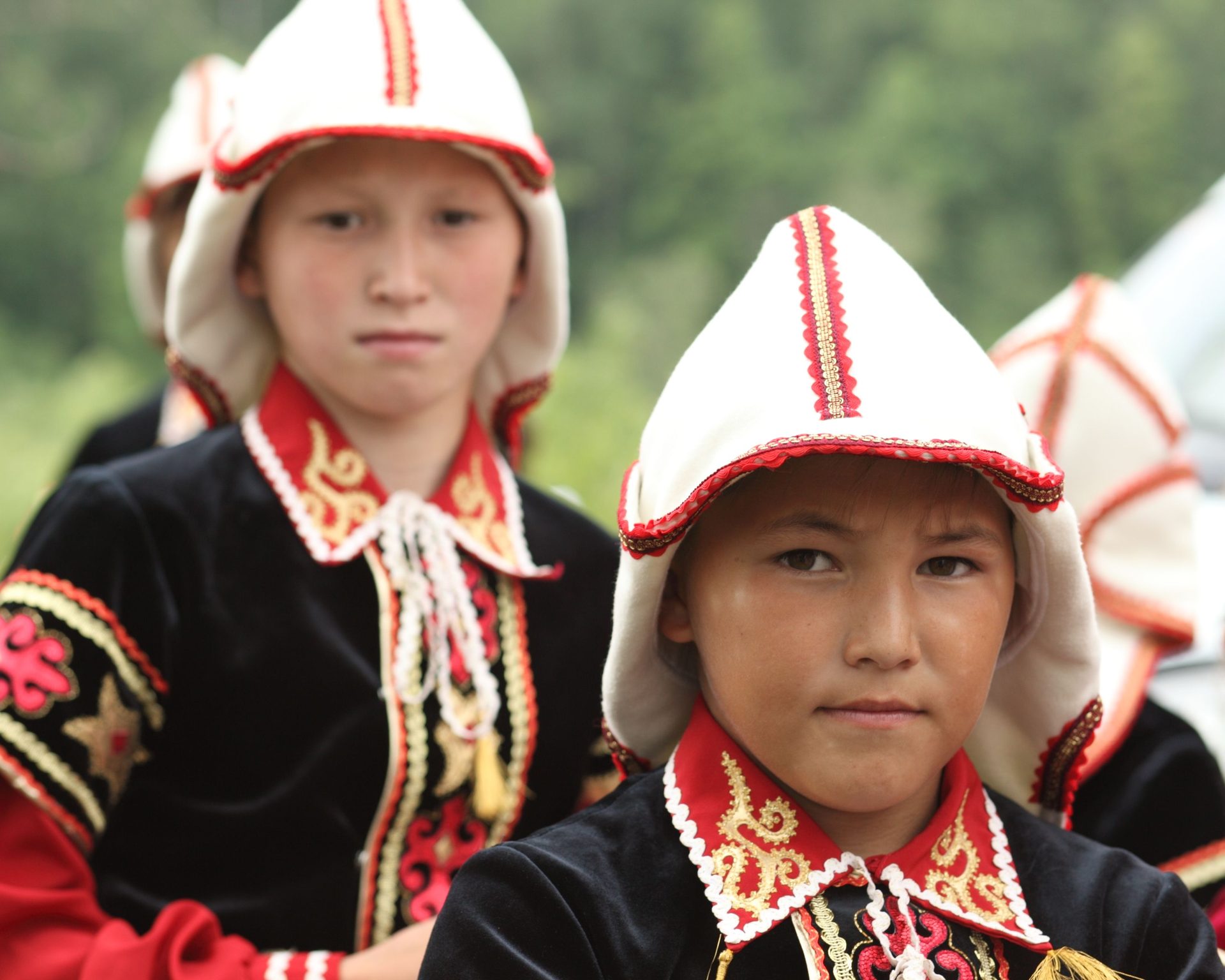
High in the Tian Shan mountains, centuries of nomadic herding shaped a wardrobe built for survival as much as style. Traditional Kyrgyz clothing was stitched from felt, wool, leather, and silk, with every seam, color, and headpiece carrying a message about a wearer’s age, marital status, or standing in the community. Even today, pieces once reserved for the steppe reappear at weddings, festivals, and national holidays across Kyrgyzstan.
This guide walks through 18 garments and accessories that make up that wardrobe, from the felt hats recognized around the world to the coral beads sewn into a child’s collar. Each one reflects a practical answer to mountain weather and a visual record of Kyrgyz nomadic life.
- Felt, wool, and leather for structure and warmth
- Silk, velvet, and cotton for festive and ceremonial pieces
- Silver, coral, and semi-precious stones for jewelry and trim
1. Ak Kalpak
The ak-kalpak is the white felt hat most people picture when they think of Kyrgyz dress, and it remains the single garment still worn daily by men of nearly every age. According to Wikipedia’s entry on the ak-kalpak , the hat is formed from four pieces of white wool felt sewn together and worn rolled up to form a small rim, usually finished with black embroidery along the brim.
The hat’s cultural weight goes beyond fashion. Kyrgyzstan has marked March 5 as National Ak-kalpak Day since 2017, and in 2019 the craftsmanship behind making and wearing the hat was added to UNESCO’s Intangible Cultural Heritage list, according to the Complete Guide to Kyrgyzstan Clothing . Unlike many other traditional garments that have faded from everyday use, the ak-kalpak is still worn in both Bishkek and the mountains.
Pro Tip: Kyrgyz custom treats the kalpak with the same respect given to a flag; setting it on the ground or handling it carelessly is considered disrespectful.
Other nations carry similar symbolism in a single headwear item. Readers curious how hats function as national emblems elsewhere might compare this to the broader traditional Australian clothing tradition, where the wide-brimmed hat plays a comparable role.
2. Elechek
The elechek is the elaborate white headdress worn by married women, built from a long strip of fine cloth wound around the head in careful layers. Sources describing the garment note it could use up to 30 meters, or roughly 100 feet, of fabric once fully wrapped, according to Advantour’s overview of Kyrgyz national clothing .
The elechek is closely related to the kimeshek worn across Kazakhstan and Karakalpakstan. Wikipedia’s entry on the kimeshek notes that this type of headgear is traditionally worn by married women with children across several Central Asian cultures. The elechek gained renewed public attention after it featured prominently in the 2014 film Kurmanjan Datka, which depicted the garment as a central part of a 19th-century Kyrgyz woman’s daily life.
Ceremonial headwear carrying this kind of layered meaning is not unique to Kyrgyzstan. Readers interested in how other cultures build symbolism into formal dress may find useful parallels in traditional Japanese clothing, where headpieces and hair ornaments likewise signal status during ceremonies.
3. Shokulo
The shokulo is a tall, conical headdress trimmed with feathers, traditionally worn by brides for ceremonial occasions rather than daily wear. Advantour describes it as part of a bridal ensemble that also includes ruffled sleeves and embroidered vests, worn specifically for ceremonial occasions alongside dresses with ruffles on the sleeves and skirt .
Unlike the everyday ak-kalpak or the married woman’s elechek, the shokulo marks a specific life stage: the wedding itself. Its height and feather ornamentation were meant to draw attention during the ceremony, distinguishing the bride from other women present.
| Headwear | Worn By | Occasion |
|---|---|---|
| Ak kalpak | Men | Everyday and ceremonial |
| Elechek | Married women | Daily life, festivals |
| Shokulo | Brides | Weddings |
| Topu | Children, young men and women | Everyday, worn under other headwear |
| Tebetei | Men and women | Winter |
4. Chapan
The chapan is a long robe-style coat worn by both men and women, typically with a high collar and made from wool, cotton, velvet, or silk depending on the wearer’s wealth and the season. The Textile Value Chain’s profile of Kyrgyzstan’s culture notes that men traditionally wore a chapan with a high collar paired with suede or leather trousers, and that honored guests were sometimes presented with an intricately embroidered version.
Women’s chapans tend to feature brighter colors and more elaborate embroidery than the men’s versions, worn over a koinok dress-shirt for both daily errands and festive gatherings. The robe’s loose, open cut made it practical for riding and working outdoors while still allowing layers underneath for warmth.
Long robe-style coats appear across much of Central and South Asia in similar form. The traditional Pakistani clothing tradition includes comparable long coats worn over inner layers, reflecting shared climate and trade history across the region.
5. Chepken
The chepken is a quilted robe or felt coat, generally lighter than the chapan and often worn as a layer between the koinok shirt and an outer coat. According to a detailed overview of Kyrgyz traditional dress , the kementai and chepken were among the main traditional types of men’s top clothing, suited to the practical demands of herding and riding.
Women also wore their own version of the chepken, sometimes described as a quilted robe worn over the dress-shirt. Because it was warmer than a simple shirt but lighter than a full fur coat, the chepken worked well as a transitional garment during the cooler months of spring and autumn.
6. Beldemchi
The beldemchi is a swing skirt or wrap-around apron with a front slit, one of the most distinctive pieces of women’s traditional Kyrgyz clothing. DocTour Kyrgyz’s guide to Kyrgyzstan’s national dress describes it as a decorative apron worn over dresses, signifying femininity and tradition, typically worn by married women over a base dress or robe.
Some regional accounts note that the beldemchi carried specific timing in a woman’s life, worn especially after the birth of a child rather than from the time of marriage onward. The skirt’s flaps, often trimmed with fur and patterned embroidery, converge at the front rather than closing at the side, and the accompanying belt was sometimes covered in black velvet over a felt base.
Wrap skirts with symbolic timing tied to life stages show up in other traditional wardrobes as well. The traditional Indian clothing tradition includes similarly wrapped garments, such as the sari, that carry their own regional and life-stage significance.
7. Koinok
The koinok is the basic dress-shirt worn under nearly every other layer in the traditional Kyrgyz wardrobe, for both men and women. Trip to Kyrgyzstan’s overview of traditional clothes describes the women’s version as a long white shirt or dress, often paired with long pantaloons underneath.
Men’s koinok shirts were typically simpler and looser, sewn from cotton or linen for daily wear, while women’s versions sometimes featured embroidery across the chest or a separate embroidered bib when the shirt itself was left plain. Because it sat closest to the skin, the koinok was usually made from the softest fabric a family could afford.
Long tunic-style shirts worn as a base layer are common across Asia. Those comparing silhouettes may notice similarities with traditional Chinese clothing, where long tunics likewise serve as a foundational piece beneath outer robes.
8. Shym
Shym refers to the wide trousers worn by Kyrgyz men, cut loose enough to tuck a robe or coat into without restricting movement on horseback. According to a profile of Kyrgyz national clothing , there were several varieties made from leather or suede, including zhargak shym, kandagai, and chalbar, each sewn wide enough that a dressing gown could be freely tucked inside.
Wealthier and noble men wore suede versions embroidered with wool or silk thread, while working herders relied on simpler cloth or leather pairs suited to daily riding. The cut of the trousers made them practical for the long hours Kyrgyz herders spent in the saddle moving livestock between seasonal pastures.
9. Chyptama
The chyptama is a sleeveless jacket, typically made of colored velvet, worn by young women over the koinok dress-shirt. Kyrgyzstan Tourism’s guide to traditional clothing describes it as a short or long sleeveless jacket put on over a shirt dress, often appearing alongside other light layers like the kemelsel camisole.
Because it had no sleeves, the chyptama worked as a flexible mid-layer that could be added or removed depending on the weather, without the bulk of a full coat. Black embroidered patterns along the edges were a common decorative touch, distinguishing a finer chyptama from a plainer, everyday version.
10. Kemelsel
The kemelsel is a short-sleeved camisole, worn by women as an additional layer between the koinok shirt and an outer jacket or robe. The same Kyrgyzstan Tourism guide lists the kemelsel alongside the chyptama and chepken as part of the layered outfit women wore over a base dress.
Because mountain weather could shift quickly between seasons, this kind of light, short-sleeved layer gave women a way to adjust warmth without changing their entire outfit, adding or removing the camisole as temperatures rose and fell during the day.
11. Ichik
The ichik is a full fur coat, historically reserved for wealthier families because of the cost of the pelts involved. Multiple sources note that ichik coats were made from the skins of predatory animals such as fox, wolf, or snow leopard, with the encyclopedic overview of Kyrgyz traditional dress noting that wealthy people wore ichik, a fur coat made from the skins of predatory animals .
Both men and women wore ichik coats in winter, and the quality of the fur signaled a family’s standing within the community. A coat lined with wolf or snow leopard fur represented significant resources, since hunting and trading for such pelts required both skill and wealth.
Fur-lined winter coats carrying social meaning are a recurring theme across cold-climate cultures. Similar status markers can be found in traditional German clothing, where regional winter garments historically signaled a wearer’s background and means as well.
12. Ton
The ton is a sheepskin coat, a more widely accessible alternative to the costly ichik and the standard winter garment for most Kyrgyz herders. The same traditional dress overview notes plainly that in winter, the Kirghiz wore ton, a sheepskin coat, reflecting how common sheep farming made this particular fur practical and affordable.
Where the ichik marked wealth through rare pelts, the ton relied on sheepskin that nearly every herding family could produce themselves. This made it the everyday winter coat across the mountains, worn for herding, traveling, and outdoor chores through the coldest months.
13. Topu
The topu is a simple skullcap worn by children, young women, and men alike, often as a base layer underneath a larger hat or on its own during warmer months. According to the Complete Guide to Kyrgyzstan Clothing , the topu and tebetei were common choices for young girls and daily use, alongside skullcaps worn by men under the category of takya.
Because it covered only the crown of the head, the topu was lightweight and easy to wear all day, making it a practical everyday piece rather than a ceremonial one. Girls’ versions were sometimes decorated with feathers or small silver ornaments sewn directly onto the cap.
14. Tebetei
The tebetei is a fur hat worn by both men and women for warmth during Kyrgyzstan’s cold winters, often made from sheep, fox, or other locally available pelts. DocTour Kyrgyz’s guide notes it is commonly worn by women in winter, providing warmth while adding elegance , though men’s versions appear just as frequently in descriptions of traditional male headwear alongside the kalpak and malakai.
Unlike the felt ak-kalpak, which suits both summer and winter wear, the tebetei was built specifically for cold-weather insulation, with the fur worn facing inward or outward depending on regional preference. Its rounded shape and ear coverage made it well suited to the high-altitude winters herders faced while moving between pastures.
15. Chachkap
The chachkap is a decorative covering, typically a long velvet tube, used to encase a woman’s braids and protect them while adding ornamentation. A description of Kyrgyzstan’s clothing traditions notes that women styled their hair in two or more long braids affixed with silver ornaments, with braids decorated and secured using silver ornaments sewn onto the fabric casing .
Various decorations, including small silver pieces, buttons, and beads, were sewn along the length of the chachkap, turning a practical hair covering into a visible marker of a family’s craftsmanship and wealth. The longer and more elaborately decorated the chachkap, the more striking the overall effect when braids were worn loose or styled for a festival.
16. Otyuk
Otyuk sits within the broader category of traditional Kyrgyz leg and foot coverings worn alongside wide trousers and robes. Footwear from this nomadic wardrobe generally took the form of leather ankle boots, with one profile of Kyrgyz culture describing felt and leather used across clothing, including footwear suited to riding and herding rather than farm work on foot.
Important Note: Detailed historical documentation specifically naming the otyuk is limited in available sources, though it is generally associated with the wider Kyrgyz tradition of leather and felt leg coverings, such as the chokoy ankle boot, worn for riding and herding across the mountains.
Because herders spent long hours in the saddle, footwear in this tradition prioritized a snug fit and durable leather over decoration, leaving most of the visual detail in this wardrobe to hats, coats, and jewelry instead.
17. Kemer
The kemer is a wide leather belt worn by men, often decorated with cut silver plates, engraving, or niello work to display wealth and status. Facts and Details’ overview of Kyrgyz clothes notes that silversmiths used embossing, cutting, and engraving to make men’s belts known as kemer kur , decorating the leather with metal plates, niello patterns, and colorful stones.
A kemer worn over a chapan or chepken instantly signaled a man’s standing, since only wealthier households could commission the level of silverwork seen on the finest belts. A smaller companion pouch belt, sometimes called ilgich, was often worn alongside the kemer to carry small tools or personal items.
Key Insight: Silver belt-making was historically one of the most respected crafts in Kyrgyz society, with silversmiths known as kumush usta holding significant social standing for their skill.
18. Shuru
Shuru refers to coral beads sewn onto children’s and women’s garments, valued both as decoration and as protection in the form of an amulet. Nomad Lodge’s guide to traditional Kyrgyz clothing lists corals among the types of silver jewelry and ornamentation worn alongside bracelets, rings, and earrings , often paired with silver buttons and small charms on children’s clothing specifically.
Coral’s deep red-orange color made it a popular accent against the white felt, dark velvet, and polished silver that dominated the rest of the wardrobe. Combined with silver rings, earrings, and bracelets crafted by local silversmiths, shuru beads completed a layered jewelry tradition passed down through generations of women.
Beadwork carrying protective or ceremonial meaning appears across many traditional wardrobes. Readers interested in comparable traditions might look at traditional American clothing, where beadwork likewise carries deep cultural and symbolic significance among various communities.
Together, these 18 garments and accessories show how thoroughly Kyrgyz nomadic life shaped everyday dress, from the felt hat worn by nearly every man to the coral beads sewn into a child’s collar for protection. Many of these pieces have faded from daily wear, but the ak-kalpak, elechek, and chapan remain visible at weddings, festivals, and national celebrations across Kyrgyzstan today. For readers interested in how other cultures built similar meaning into cloth and color, the clothing and style section covers traditional dress from around the world.