17 Types of Traditional Okinawan Clothing: From Ryusou to Kasuri

November 19, 2026
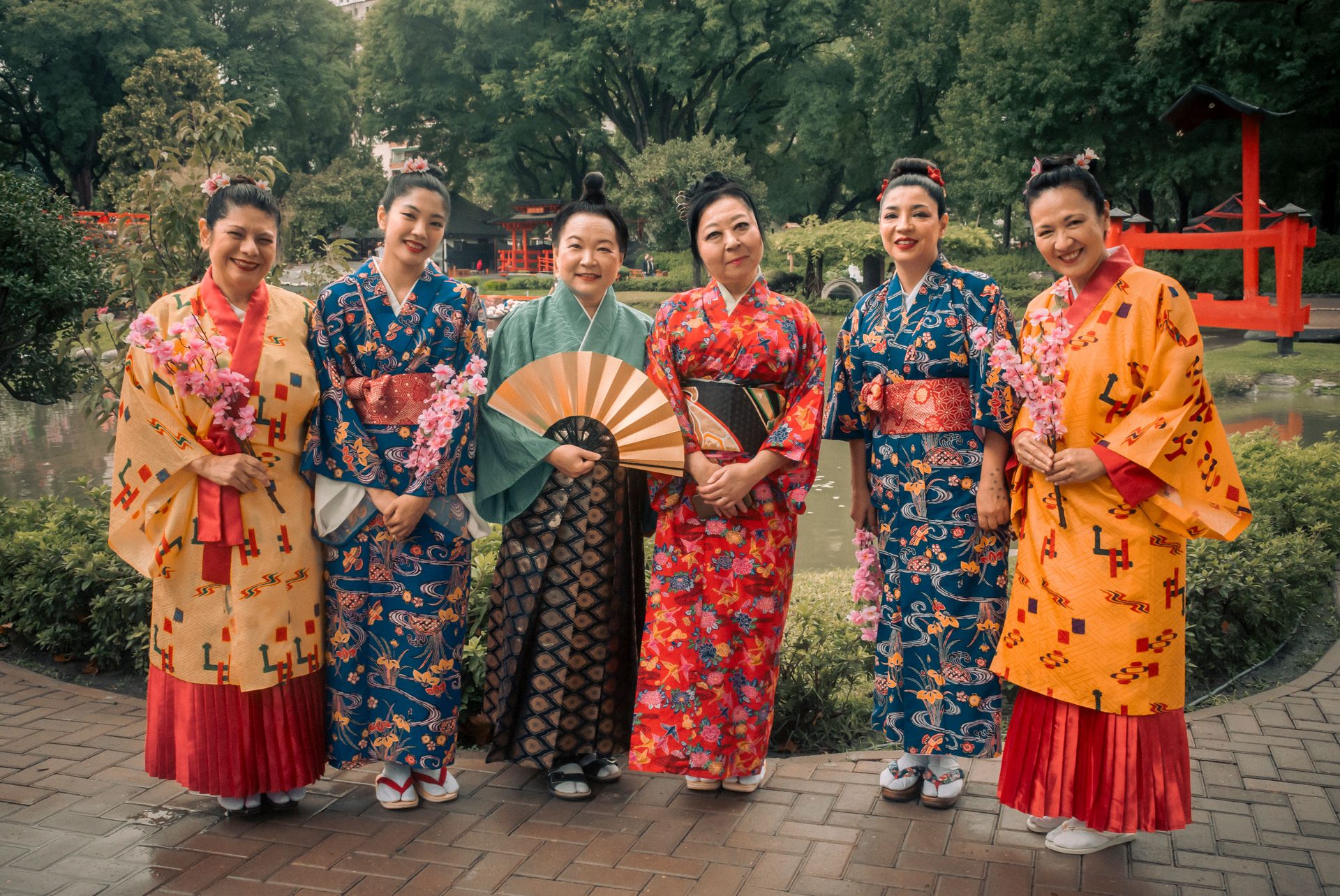
Long before Okinawa became a Japanese prefecture, the islands were ruled by the independent Ryukyu Kingdom, and that history is woven directly into traditional Okinawan clothing. The ryusou ensemble still worn at weddings and coming-of-age ceremonies today reflects centuries of trade with China and Japan, filtered through a tropical climate that demanded looser, breezier garments than the mainland kimono.
Each piece of this wardrobe, from the cross-collar dujin top to the banana-fiber bashofu cloth, carries its own name, material, and social history. This guide walks through 17 garments, textiles, and accessories that make up Ryukyuan dress, explaining how they were worn, who wore them, and what they’re made from. Readers interested in how other cultures built their own distinctive wardrobes may also want to compare notes with traditional clothing traditions from around the world.
1. Ryusou
Ryusou, also called Ucinaasugai in the Okinawan language, is the folk costume of the Ryukyuan people . It functions as formal attire, customarily worn on occasions such as wedding ceremonies and coming-of-age ceremonies, and it rose to prominence during the Ryukyu Kingdom period.
Unlike the Japanese kimono it’s often compared to, ryusou has its own silhouette and fabric choices. As one Okinawa-focused travel publication puts it, ryusou “is the Okinawan equivalent and has some key differences from the mainland Japanese version” , particularly in how it handles sleeves, layering, and dye work. Readers who want a side-by-side look at the mainland garment can see traditional Japanese clothing for comparison.
Historic ryusou made for Ryukyuan royalty survives in museum collections today, including a ryusou robe dyed with bingata textile featuring phoenix and mist patterns, held among the Ryukyu King Sho Family’s National Treasure documents . That single surviving piece shows how dye work, silhouette, and royal status were tied together in Ryukyuan fashion.
Pro Tip: Visitors to Naha’s Kokusai Street can rent a full ryusou set, complete with dujin, kakan, and bingata overgarment, for studio photography or a walk through the old quarter.
2. Dujin
The dujin is the fitted, cross-collar upper-body piece that anchors the women’s ryusou ensemble. According to the Wikipedia entry on ryusou, the women’s version of the garment “is a two-piece garment attire which consists of dujin (cross-collar upper body garment) and kakan (a pleated skirt)”, worn shorter overall than a standard kimono.
Court-era accounts describe it slightly differently depending on the source. One Ryukyu-focused costume guide notes that court women wore a dujin as an undergarment, paired with a kakan and an outer garment layered on top . That layering logic, base top, pleated skirt, then an overgarment, runs through most formal Ryukyuan dress.
Access to the dujin wasn’t universal. Only men of royalty and the warring class were permitted to wear dujin along with trousers as an undergarment, which marked the piece as a quiet signal of rank as much as a practical layer.
3. Kakan
The kakan is the finely pleated skirt paired with the dujin to form the base of women’s ryusou. Sources describe it as “a pleated skirt” worn directly beneath any outer robe, and one costume researcher who has studied Ryukyuan dress closely suggests the design has deeper regional roots, noting the kakan may be inspired by the Hanfu and the mamianqun , a pleated wrap skirt long associated with Chinese dress.
That Chinese connection isn’t surprising given the Ryukyu Kingdom’s position as a maritime trading hub between China, Japan, and Southeast Asia. Readers curious about that broader lineage of pleated and wrapped skirts can see traditional Chinese clothing for more on the mamianqun’s own history.
In court settings, the kakan was worn with fine pleats, and the ensemble notably skipped the obi belt that mainland Japanese kimono rely on . Commoners wore a looser version of the same basic idea, tucking a cloth strip between an under-belt instead of using a formal sash.
4. Hooikakan
The hooikakan sits within the same family of layered skirts as the standard kakan, generally understood as a more elaborate or formally finished variant worn for ceremonial occasions rather than everyday wear. It follows the same basic logic documented across Ryukyuan dress: a pleated base skirt meant to be seen beneath a bingata or watansu overgarment during weddings and other milestone events.
Because ryusou terminology varies between regional dance traditions, costume rental houses, and Okinawan-language sources, some of these more specific garment names are harder to pin down in English-language references than the core dujin-and-kakan pairing.
Important Note: A few rarer Ryusou component names, including hooikakan, touishou, hibekan, and nagasaji, are documented mainly in Okinawan-language costume and dance sources rather than widely translated English references. They’re described here within the broader, well-documented structure of layered Ryukyuan dress rather than as standalone, independently sourced definitions.
5. Watansu
The watansu is an overgarment worn loosely atop the dujin-and-kakan base, adding a finishing layer to formal ryusou. Per the Wikipedia entry on the ensemble, “a woven or bingata garment, called watansu, can also be worn loosely over the dujin and kakan”.
Because it sits as the outermost, most visible layer, the watansu was often the piece that carried a family’s or wearer’s most elaborate dye work. A watansu made from bingata-dyed silk would display the stenciled florals, phoenixes, or seasonal motifs that distinguished a wearer’s rank, while a plainer woven version served more everyday or lower-status occasions.
6. Tanashi
Tanashi refers to the summer-weight version of the outer uchikake robe worn over the dujin and kakan. One Ryukyuan costume reference explains that in traditional women’s dance performances, “they also put on an uchikake (long overgarment): the summer-type is called tanashi, and the winter-type watajin”.
The construction matches the season it’s meant for. Historical surveys of Ryukyuan textiles confirm that basic forms of Ryukyuan garments include the unlined, single-layer tanashi worn in the summer , a practical choice given Okinawa’s heat and humidity for most of the year.
7. Touishou
Touishou is another named layer within the broader Ryukyuan court wardrobe, generally associated with more formal or ceremonial dress rather than daily wear. Like several of the rarer garment terms in this list, it reflects the strong Chinese influence running through Ryukyuan fashion, a connection scholars trace in part to dyeing and motif techniques imported from Fujian, including bird-and-flower patterns associated with the reign of King Shō Kei.
That Chinese thread runs through Ryukyuan court dress more broadly, shaping everything from motif choices to garment construction over centuries of tribute trade and cultural exchange.
8. Watajin
Watajin is the cotton-wadded, cold-weather counterpart to the tanashi, worn as the winter version of the long uchikake overgarment. The same costume reference that describes the tanashi notes that the winter-type overgarment is called watajin, literally a “cotton garment”, built with extra padding to handle Okinawa’s cooler months.
Even in Okinawa’s relatively mild winters, the watajin gave the ryusou ensemble enough warmth for outdoor ceremonies and travel, while keeping the same basic cut and layering order used in the summer tanashi.
9. Hakama
Hakama in the Ryukyuan context refers to trousers worn as an undergarment beneath the dujin, rather than the wide pleated trousers more commonly associated with mainland Japanese martial arts attire. Access to this piece was tightly restricted: only men of royalty and the warring class were allowed to wear dujin and trousers as an undergarment, making hakama a marker of status rather than a universal garment.
Trouser-based layering under a longer robe or tunic shows up in traditional dress well beyond Okinawa. Readers interested in how other regions solved the same climate and modesty problems with trousers can compare notes with traditional Pakistani clothing, where the shalwar plays a similar structural role beneath a longer tunic.
10. Hibekan
Hibekan is another of the more specialized names attached to Ryukyuan court garments, generally grouped with the robe- and overgarment-type pieces layered atop the dujin and kakan for formal occasions. As with hooikakan and touishou, detailed English-language descriptions of this specific piece are limited, and it’s best understood as part of the same layered, rank-conscious wardrobe system documented throughout Ryukyuan dress.
What is well established is the overall logic of that system: a fitted base layer, a pleated skirt, and one or more named overgarments chosen by season, rank, and occasion.
11. Hachimaki
Hachimaki is the headband worn by men as part of formal Ryukyuan dress, and it has a direct line to one of the most recognizable pieces of Ryukyuan royal headwear. According to a Ryukyu costume reference, men wore a formal crown called hachi-machi, which derives its name from hachi-maki, or “headband”.
In everyday or lower-formality settings, the hachimaki stayed a simple cloth band, often worn by farmers, dancers, and tradesmen as a practical accessory. In court settings, that same basic concept was elevated into stiffened, decorated crown-like headwear reserved for men of rank.
12. Hanagasa
The hanagasa is a decorated hat worn by women performing traditional Ryukyuan dance, most associated with the dance known as Yotsudake. Surveys of Ryukyuan textile and costume traditions place the hanagasa squarely within the bingata world, noting dancers wearing hanagasa alongside bingata robes during performances.
Because the hanagasa is primarily a performance accessory rather than everyday or even formal ceremonial wear, it tends to be more colorful and theatrical than the headwear worn in court or wedding contexts, built to be seen from a distance during a dance.
13. Nagasaji
Nagasaji translates roughly to “long sash” or “long cloth,” and it belongs to the broader family of handwoven sashes and towels documented in Ryukyuan textile records. The official Japanese kimono reference guide lists a related woven cloth type, Itabana Teori Tesaji , among Okinawa’s catalogued dyeing and weaving traditions, pointing to a long history of narrow, handwoven cloth accessories across the islands.
Like the hachimaki, these woven sash-and-cloth accessories bridged everyday and ceremonial use, serving as practical ties, carrying cloths, or decorative finishing touches depending on who wore them and for what occasion.
14. Bingata
Bingata is the resist-dyeing technique responsible for the vivid, multicolored patterns seen on the most recognizable ryusou robes, watansu overgarments, and dance costumes. The name itself breaks down descriptively: “bin” refers to colors and “gata” means patterns , and the technique is widely considered Okinawa’s signature textile art.
Classic bingata motifs lean heavily on imagery imported from China. Patterns such as dragons and phoenixes were used as symbols of royal authority in the Ryukyu Kingdom , and over time local artisans folded in Okinawan flora and fauna alongside those imported motifs, including the deigo flower and local fish species.
The dyeing process itself is a stencil-and-paste technique. Historical surveys of Ryukyuan textiles describe bingata, sometimes called katachiki, as “a form of resist dyeing in which a paste-like material is used with a stencil to control which areas would be dyed”, typically producing bold patterns against a yellow or pink ground and strongly associated with the aristocracy.
Key Insight: Bingata’s color coding wasn’t just decorative. Specific grounds and motifs were historically tied to rank, meaning a glance at a ryusou robe’s dye work could tell an observer roughly where its wearer stood in Ryukyuan society.
15. Bashofu
Bashofu is a lightweight woven cloth made from the fibers of the Musa basjoo plant, a banana relative distinct from the edible fruiting variety grown for food. The textile artist most responsible for keeping the craft alive in the modern era was Toshiko Taira, who created kijōka-bashōfu, a cloth made from the fibre of the Musa basjoo plant, and became a designated Living National Treasure of Japan in 2000 .
Unlike bingata and fine jofu, bashofu wasn’t reserved for the elite. Historical accounts of Ryukyuan textiles note that people of all ranks and classes wore bashofu garments, though peasants’ bashofu tended to be much coarser than that worn by the aristocracy.
The production process is slow and entirely done by hand, which is part of why genuine Kijoka bashofu remains rare. One textile guide to the region notes that Kijoka bashofu is considered one of the oldest textiles in Okinawa, produced from the fibers of Japanese banana plants and processed by hand into threads before weaving . The result is a fabric long favored for summer kimono, since, like linen and ramie, it doesn’t cling to the skin in heat and humidity.
16. Jofu
Jofu is a fine ramie textile woven from the fibers of the Boehmeria nivea plant, long reserved for Okinawa’s royalty and aristocracy because of its exceptional quality. Historical textile surveys describe ramie, known as karamushi in Japanese, as “prized for its strength, high luster, remarkable resistance to bacteria and mildew”, along with being absorbent yet quick-drying, qualities that made it ideal for Okinawa’s climate.
Two regional varieties dominate the craft today. Miyako jofu, the better documented of the two, is a traditional Japanese textile made from the ramie plant, produced in Miyakojima, Okinawa, often featuring a kasuri design with a glossy finish and high breathability ; it was formally recognized as a traditional craft by the Ministry of Economy, Trade and Industry in 1975.
Yaeyama jofu, produced further south, carried similar prestige under Ryukyuan rule. A regional textile guide notes that Yaeyama jofu was a tribute textile during the Ryukyu Kingdom, woven from ramie plants into a lightweight, breathable fabric with simple red-brown ikat patterns on a white base.
17. Kasuri
Kasuri is Okinawa’s ikat weaving tradition, built around pre-dyeing bundled threads before weaving them into stylized patterns. The official kimono reference guide describes Ryukyu Gasuri as “cotton fabric dyed in indigo with ‘Kasuri’ design,” tough and resistant to fading, with designs drawn from everyday articles, stars, clouds, and birds, all stylized .
Okinawa’s claim to the craft runs deep, with some historians tracing it back centuries. The same source notes that kasuri designs were already being woven into basho-fu by the 14th century, developing further within Okinawa’s own climate and way of life, regardless of whether the technique itself arrived from Southeast Asia or China. Many cultures developed their own ikat traditions along similar lines; readers can see how that plays out in traditional Indian clothing, home to some of the world’s other major ikat-weaving regions.
| Textile | Primary Material | Traditional Region | Signature Trait |
|---|---|---|---|
| Bashofu | Banana plant fiber | Kijoka, Ogimi Village | Airy, crisp cloth favored for summer wear |
| Jofu | Ramie fiber | Miyako and Yaeyama Islands | Glossy finish, fine ikat patterns |
| Kasuri | Indigo-dyed cotton | Naha, Yaese, Haebaru | Stylized nature and everyday motifs |
Together, bashofu, jofu, and kasuri represent the three pillars of Okinawa’s woven textile heritage, each tied to a specific region, material, and social role within the old Ryukyu Kingdom. Paired with the dyed brilliance of bingata and the layered construction of ryusou, dujin, and kakan, these fabrics explain why traditional Okinawan clothing still reads as unmistakably its own tradition, shaped by trade routes and climate rather than by either of its larger neighbors. Readers building out a broader picture of world dress may also enjoy comparing these island textiles with traditional German clothing, traditional American clothing, or traditional Australian clothing, each shaped by its own distinct history and climate.