Traditional Chinese Clothing for Men: 7 Iconic Styles and Their History

November 18, 2026
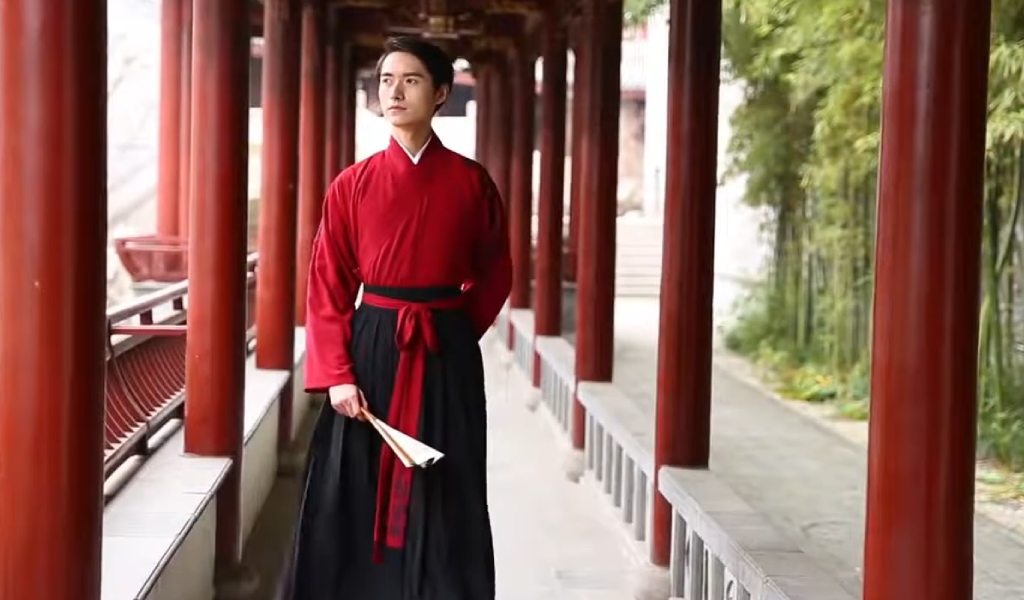
Traditional Chinese clothing for men tells a story that spans more than two thousand years of dynastic rule, foreign conquest, revolution, and cultural revival. Each garment on this list marks a distinct chapter in that history, from the cross-collared robes of the Han Dynasty to the structured jacket that Sun Yat-sen designed as a symbol of a modern republic. Understanding these seven styles offers a window into how Chinese men’s fashion absorbed outside influence while holding onto its own visual language.
This guide walks through the garments most commonly recognized as traditional Chinese clothing for men, explaining where each one came from, who wore it, and where it survives today. Readers interested in how other cultures approach heritage dress can also compare these styles against broader clothing traditions from around the world.
1. Hanfu
Hanfu is the oldest and most foundational of all Chinese menswear styles, predating every other garment on this list by centuries. Hanfu features a loose upper garment with a cross collar, wide sleeves, and ankle-length skirts or trousers , with the right lapel wrapping over the left and the whole ensemble cinched with a sash. This asymmetrical closure was never just decorative; it followed ritual conventions that governed how clothing should be worn across Chinese dynasties.
What qualifies as true Hanfu is narrower than many shoppers assume. According to China-Cart , Hanfu specifically denotes pre-Qing Dynasty Han ethnic clothing with its distinctive construction methods, which is why later garments like the Tang suit and Mao suit are excluded from the category even though they’re all traditional Chinese dress. The style fell out of daily use once the Qing Dynasty mandated Manchu clothing, but a grassroots revival took hold in the early 2000s after a man named Wang LeTian was photographed wearing a homemade shenyi robe in public, sparking renewed interest in historical dress.
Hanfu’s reach extended well past China’s own borders. The garment had a far-reaching influence on neighboring Asian countries, such as Korea, Japan, and Vietnam , shaping regional dress in ways still visible in formalwear today. Readers curious about that cross-cultural exchange may find it useful to compare Hanfu’s draped silhouette against traditional Japanese clothing, which developed its own wrapped-robe conventions along a parallel historical track.
Pro Tip: If shopping for Hanfu, check the collar construction first. A true cross-collar wrap (right over left) signals historical accuracy, while a front-button closure usually indicates a Tangzhuang or Mao suit-inspired hybrid instead.
2. Changshan (Changpao)
The changshan, also called changpao, is a long robe that became the standard formal dress for Chinese men before Western tailoring took hold in the country. Unlike Hanfu, the changshan traces its lineage to Manchu dress rather than Han tradition; as Han men gradually adopted it, commoner Han men adopted the changshan while Han women continued to wear the hanfu predominantly in the style of aoqun . This shift meant men’s and women’s traditional wardrobes diverged along different historical paths for roughly three centuries.
By the early twentieth century, the changshan had become a marker of modern respectability rather than old-world formality. It was common practice for the garment to be layered with Western pieces, since the male changshan could be worn under a western overcoat, and topped with a fedora and scarf , a combination that signaled a cosmopolitan identity straddling East and West. That blended aesthetic disappeared from everyday use after 1949, when the Communist Revolution replaced the wearing of changshan and other traditional clothing with the Zhongshan suit.
The style didn’t vanish entirely. Shanghainese emigrants carried the changshan tradition to Hong Kong, where it stayed in circulation even as mainland fashion moved on. Today, changshan are traditionally worn for formal pictures, weddings, and other formal Chinese events, and in some communities a black version still serves as traditional burial attire. Those planning a wedding with cultural elements might also look at how traditional American clothing approaches formalwear for a useful East-West contrast.
3. Tang Suit (Tangzhuang)
Despite its name, the Tang suit has nothing to do with the Tang Dynasty. The name actually comes from a term overseas communities used for Chinese heritage generally, since foreigners called the overseas Chinese people “the Tang people” and the clothes they wore were called “Tang suits” . The garment’s real design roots trace back only to the Qing Dynasty.
Structurally, the Tangzhuang is a close cousin of the Magua jacket discussed later in this guide. It is a kind of Chinese jacket with Manchu origins and Han influences, characterized with a mandarin collar closing at the front with frog buttons , and it originally served as a protective apron layered over the changshan before evolving into a standalone fashion item. The jacket gained major international visibility when world leaders wore it at a high-profile diplomatic event, since leaders at the 2001 APEC summit donned tangzhuang jackets , putting the style in front of a global audience.
Modern use leans heavily toward celebration and ceremony. The Tang suit is considered formal dress for events like Chinese New Year celebrations, wedding banquets, or important gatherings , making it one of the few traditional garments still worn without irony by younger generations. Anyone planning a Lunar New Year celebration might pair the outfit with research into traditional Chinese desserts commonly served during the holiday.
| Garment | Era of Origin | Primary Use Today |
|---|---|---|
| Hanfu | Pre-Qing (before 1644) | Cultural festivals, photoshoots, revival wear |
| Changshan | Qing Dynasty / early Republic | Weddings, formal portraits |
| Tang Suit | Qing Dynasty (via Magua) | Lunar New Year, banquets |
4. Zhongshan Suit (Mao Suit)
The Zhongshan suit occupies a unique place in Chinese fashion history as a garment engineered with political intent. Sun Yat-sen introduced the style shortly after the founding of the Republic of China (1912–1949) as a form of national dress with distinct political overtones . The Chinese name even honors him directly, since the suit is called Zhongshan zhuang after Sun Zhongshan, his name in Mandarin.
The design deliberately fused two tailoring traditions rather than choosing one. The jacket combines a high, closed collar with a front-buttoned coat and four patch pockets, and the design carried symbolic meanings: the four pockets were said to represent the Four Virtues (propriety, justice, integrity, honour). That symbolic weight helped the suit outlast the political movement that produced it, and it became the default menswear of Communist China after 1949, overtaking the changshan and Magua almost entirely.
Western audiences often know this garment by a different name tied to its most famous wearer. The style is also called the Mao suit overseas, reflecting how deeply the look became associated with Chairman Mao’s public image during the mid-twentieth century. For a sense of how other nations blended domestic and Western tailoring into a single formal uniform, the evolution of traditional German clothing offers a useful parallel.
Important Note: Sources occasionally use “Tang suit” and “Mao suit” loosely to describe any mandarin-collar jacket. The two garments have separate origins and separate collar styles, so treat the terms as distinct rather than interchangeable.
5. Shenyi
The shenyi is one of the two fundamental one-piece forms within the broader Hanfu tradition, and its history runs deeper than almost any other garment on this list. The style was widely adopted by various dynasties throughout the history of China , with roots reaching back to the late Zhou Dynasty roughly three thousand years ago.
What distinguished the shenyi structurally was its construction method rather than its silhouette alone. The upper and lower halves of the garment were cut as separate pieces, the yi and the shang, but then sewn together permanently so the finished robe reads as a single continuous piece rather than a jacket-and-skirt combination. This one-piece design was considered to be formal dress in the Han Dynasty (206 BC – 220 AD), and it still has a great influence on modern-day one-piece clothing.
Because the shenyi was tied closely to ritual and scholarly status, it functioned less like everyday wear and more like ceremonial dress reserved for officials and the educated class. Readers comparing draped, sewn-together robe traditions across Asia may also want to look at traditional Indian clothing, where similarly wrapped and layered garments carry comparable ceremonial weight.
6. Kung Fu Suit
The kung fu suit is less a single historical garment than a practical uniform built from design elements borrowed across Chinese menswear history. Its mandarin collar and frog-button closures echo the same construction found in the Tang suit and Magua, and that lineage isn’t a coincidence. The Magua jacket in particular has long carried a martial association, since it is commonly associated with martial arts culture and has a distinctive style that reflects traditional Chinese fashion .
Modern kung fu suits typically favor loose-fitting cotton or linen construction, prioritizing range of motion over tailored shaping. This differs sharply from the fitted cut of a Tang suit jacket, since a kung fu uniform is built around repeated bending, kicking, and striking rather than standing formality. The mandarin collar remains, but buttons are often simplified into ties or snaps to reduce the chance of snagging during practice.
- Lightweight cotton or linen fabric for breathability during training
- Loose cut through the shoulders and torso for unrestricted movement
- Mandarin collar with simplified frog-style closures
- Matching wide-leg trousers, often paired with cloth training shoes
Outside the training hall, the kung fu suit has also become a popular choice for cultural performances and martial arts demonstrations, largely because its silhouette is instantly recognizable even to audiences unfamiliar with Chinese dress history.
7. Magua
The Magua is a short, boxy jacket that was purpose-built for an entirely practical reason: riding. The garment is a kind of Chinese traditional jacket that was popular in the Qing Dynasty (1636 – 1912) , and it was designed as a short-sleeved, loose outer layer worn over a longer robe. Specifically, it functioned as an overcoat layered over a Changshan, or a gown, protecting the wearer’s main robe while riding on horseback.
The jacket’s social status shifted considerably over its three-century run. It began as functional military gear, since in the early Qing Dynasty, Magua was only worn by soldiers, before working its way up the social ladder. Wealthy households and aristocrats eventually adopted it for its clean lines, and Magua was worn by aristocrats and wealthy people and gradually became popular because of its elegant and generous style.
The Magua’s formal standing peaked just as the dynasty it came from was ending. During the Republic of China, Magua was listed as one of the ceremonial attire, even as the political system that produced it collapsed. That ceremonial status didn’t last, though, and after the founding of the Republic of China, Magua was gradually out of fashion, eventually giving way to the Zhongshan suit covered earlier in this guide. Readers interested in how outerwear layering traditions developed elsewhere can compare this riding-jacket history against traditional Pakistani clothing, which also developed distinct layered outer garments for climate and status reasons.
Seven garments, seven different reasons for existing: ritual status, horseback practicality, political messaging, martial function, ceremonial formality. Traditional Chinese clothing for men never settled into one fixed look because China itself never stood still across the dynasties, revolutions, and revivals that shaped it. For readers building out a broader picture of Chinese heritage beyond clothing, exploring traditional Chinese drinks or browsing more Chinese culture coverage rounds out the context behind these garments.