From Hanfu to Qipao: 10 Traditional Styles of Chinese Clothing for Women

November 19, 2026
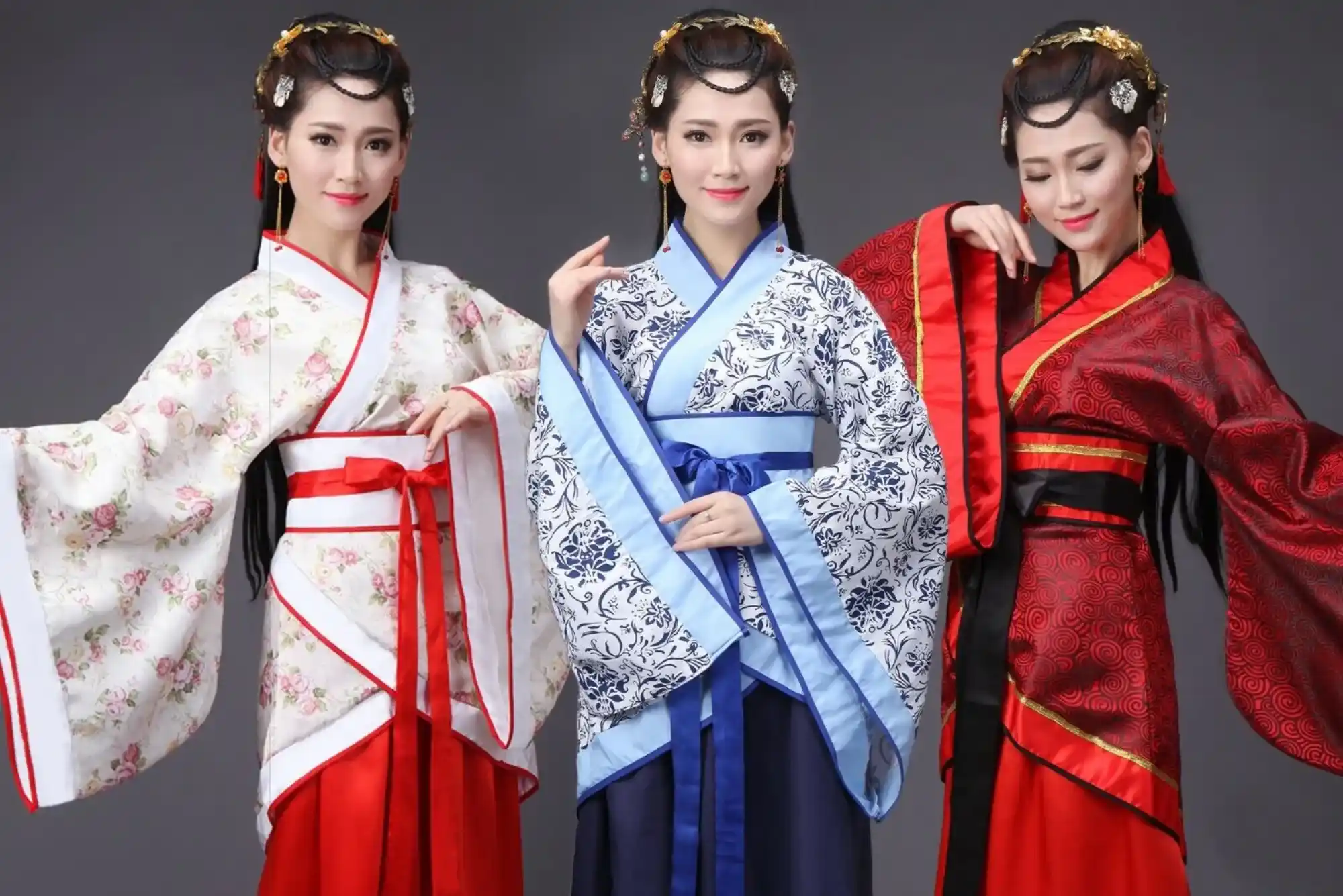
Long before the qipao became a red-carpet staple, Chinese women were already using clothing to signal rank, marital status, and even the season through dozens of distinct silhouettes. Traditional Chinese clothing for women spans more than three thousand years of dynastic change, and no single garment tells the whole story. Each style below reflects a different moment in that history, from flowing Han dynasty robes to the structured skirts reappearing on city streets today.
This guide walks through ten garments that defined women’s dress across China’s major dynasties, explaining where each one came from and why it still matters. For a broader look at the category, the traditional Chinese clothing overview covers additional context on how these pieces fit together as a wardrobe system.
1. Hanfu
Hanfu is not one garment but an entire clothing system, the umbrella term for historical Han Chinese attire. It served as the characteristic clothing for the Han ethnic group for more than three millennia and was outlawed at the beginning of the Qing Dynasty (1644–1912). That ban, and the later Hanfu revival movement, is why the garment still carries political and cultural weight for many wearers today.
Early versions of the style were simple by design. These early outfits were usually wrapped right-over-left and secured with sashes, since buttons were not common. Cut and proportion changed constantly across dynasties, but the cross-collar wrap and sash closure remained a constant thread running through nearly every hanfu variation, including several garments covered later in this list.
Readers curious about the broader revival trend can find more dynasty-specific context in the China Highlights hanfu guide , and the collection of Chinese culture articles on this site covers related topics for anyone building out a fuller picture of Han heritage.
2. Ruqun
Ruqun is one of the oldest and most recognizable hanfu combinations, and arguably the most practical. It is a combination of a blouse (ru) and a wrap-around skirt (qun), and it has been a common style for women throughout history, known for its simplicity and elegance. The two-piece structure meant it could be adapted for climate, class, and occasion without losing its basic identity.
By the height of the Tang dynasty, the style had shifted toward a higher waistline. These qíxiōng rúqún (齐胸襦裙) paired with a short jacket, a style that influenced the Korean hanbok, a detail that shows how regional dress traditions borrowed from one another across East Asia rather than developing in isolation.
Pro Tip: If you are trying to identify a hanfu photo online, check the waistline first. A skirt tied above the natural waist (qixiong) usually points to Tang dynasty styling, while a lower waistline suggests Han, Wei, or Ming influence.
Ruqun remains one of the easiest entry points for anyone exploring Chinese dress for the first time, and comparisons with other blouse-and-skirt traditions are covered in the clothing and style section of this site.
3. Qipao (Cheongsam)
The qipao, known in English as cheongsam, is probably the most internationally recognized item of traditional Chinese clothing for women. It is a close-fitting, one-piece dress with a mandarin collar and a side slit, and it traces its roots to the loose Manchu robe worn by men. Cheongsam, also known as qipao, is a body-hugging one-piece dress for women, distinct from the looser changpao that men historically wore.
Unlike the other garments on this list, the qipao did not emerge from an imperial court. It was shaped in 1920s Shanghai, where tailors reworked the Manchu robe into a fitted silhouette that suited the era’s modern, cosmopolitan women. From flowing Hanfu robes in ancient dynasties to the sleek cheongsam (qipao) of the 20th century and modern Tang suits, each era brought its own style, and the qipao marks the point where Chinese fashion visibly intersected with Western tailoring.
Its global profile has only grown since then, helped along by film and celebrity culture; a wider look at how public figures have shaped fashion trends is available on the beautiful celebrity women page. Today’s qipao ranges from everyday cotton versions to heavily embroidered silk pieces reserved for weddings and formal events.
4. Beizi
The beizi is a long, open-front jacket worn over a skirt or trousers, and it belongs firmly to the Song dynasty’s more restrained aesthetic. The Song Dynasty (960–1279 AD) emphasised simplicity and elegance, introducing garments such as the beizi, a long jacket worn over a skirt or trousers. Where Tang dynasty fashion favored bold color and volume, Song dress pulled back toward quieter lines.
Women in the Song Dynasty wore beizi (褙子), similar to capes, and the garment’s straight, unfastened front made it easy to layer over almost any underlayer. That versatility is part of why the beizi persisted into the Ming dynasty in modified form, long after other Song-era styles had faded.
The layering logic behind the beizi has parallels elsewhere in Asia; readers comparing regional approaches to outer robes may find the traditional Japanese clothing guide useful for spotting similarities and differences in how layered dress developed.
5. Banbi
The banbi is a short-sleeved, sometimes sleeveless overjacket worn above a ruqun or other base layer, and it is closely tied to Tang dynasty fashion. During the Early Tang, slimmer pòqún (破裙) paired with short tops called bànbì (半臂) were a common outfit. The cropped cut left the sleeves of the layer underneath visible, creating a deliberate contrast in color and texture.
Because it sat above the main garment rather than replacing it, the banbi functioned more like a modern cardigan or vest than a complete outfit on its own. That same short-jacket logic shows up in other traditional wardrobes around the world, including the cropped blouses detailed in the traditional Indian clothing overview.
6. Daxiushan
Daxiushan translates roughly to “large sleeve robe,” and the name describes the garment well. It is a wide-sleeved, formal outer robe historically worn by noblewomen for ceremonial occasions, and its exaggerated sleeves made it impractical for everyday labor, which is precisely the point: this was clothing meant to display status rather than serve utility.
The style reached its most elaborate form during the Ming dynasty, when the appearance of Hanfu stabilised, featuring straight collars and wide sleeves, often with intricate embroidery. Daxiushan was typically paired with a decorative sash or outer vest, and the combination signaled both wealth and formality at court functions, weddings, and official ceremonies.
7. Diyi
The diyi sits at the top of the historical hanfu hierarchy. It was the ceremonial robe reserved for empresses and the highest-ranking consorts, decorated with repeating pheasant motifs that symbolized imperial rank and were not permitted on garments worn by lower-status women.
Unlike everyday hanfu, the diyi was rule-bound in nearly every detail, from the number of pheasant rows to the specific colors permitted for each occasion. It was worn almost exclusively for state ceremonies such as imperial weddings and investitures, which makes surviving examples and accurate reconstructions genuinely rare compared with more commonly worn styles like the ruqun or beizi.
Important Note: Because diyi were produced in extremely limited numbers and almost entirely for palace use, most modern reconstructions are based on textual records and court paintings rather than surviving physical garments.
8. Tangzhuang (Tang Suit)
Despite its name, the tangzhuang is not a Tang dynasty garment. It is a modern jacket style, derived from the Qing-era magua riding jacket, that was popularized in the early 2000s after being worn by international leaders at a major summit hosted in China. The “Tang” in the name refers to the global diaspora term for Chinese communities (Tangren), not the dynasty.
For women, the tangzhuang typically appears as a fitted jacket with a mandarin collar, frog-knot buttons, and brocade fabric in bold colors like red or gold. It occupies a different cultural space than hanfu or qipao: rather than being tied to a single historical era, it functions as a modern symbol of Chinese identity worn at weddings, Lunar New Year gatherings, and diplomatic events. The style’s modern reinvention of older tailoring echoes patterns seen in the traditional American clothing guide, where historical workwear has similarly been reshaped into contemporary fashion statements.
9. Dudou
The dudou is a backless, halter-style undergarment that has been part of Chinese women’s wardrobes across most of recorded history, typically tied at the neck and waist with fabric ties or ribbons. Historically it functioned as a bodice worn against the skin, often embroidered with protective or auspicious symbols, and red fabric was favored for its association with good fortune and protection, especially on garments made for children.
In recent decades, the dudou has moved from strictly private underclothing into visible fashion, appearing as an outer layer under sheer blouses or structured jackets in modern reinterpretations of traditional dress. This shift from hidden undergarment to styled outerwear is not unique to Chinese fashion; similar reinventions of traditional underlayers are discussed in the traditional Pakistani clothing guide, which covers comparable layering customs in South Asian dress.
10. Mamianqun (Horse-Face Skirt)
The mamianqun, or horse-face skirt, is currently one of the most visible traditional Chinese garments outside of China, thanks to a steady revival over the past several years. The mamianqun has its origins in the Song dynasty (960–1279) and was known to be worn by higher-class courtesans at the time, and it became popular during the Ming dynasty (1368 to 1644), continuing to thrive under Manchurian rule in the Qing dynasty (1644 to 1911).
Structurally, the skirt is built for both movement and display. A horse-face skirt consists of two main pieces that overlap at the front, creating four skirt doors, two on each side. The name itself comes from architecture rather than animals: “Ma Mian” is an architectural term for a tower-like structure protruding from a city wall, and the flat front panel of the skirt was thought to resemble that fortified shape.
The garment made international headlines in 2022 after a luxury fashion house released a skirt widely seen as resembling the mamianqun without acknowledging its origin. Critics argued this was a clear case of cultural appropriation, where a luxury brand profited from a traditional design without crediting its Chinese origins. That controversy accelerated interest in the garment both inside and outside China, and detailed construction notes are available on the Wikipedia entry on mamianqun .
Structured, pleated skirts with cultural significance are not exclusive to China; the traditional German clothing overview covers the dirndl, a similarly structured skirt tradition that developed independently in the Bavarian Alps.
| Garment | Era Most Associated With | Defining Feature |
|---|---|---|
| Hanfu | Han dynasty onward | Cross-collar wrap, sash closure |
| Ruqun | Han through Tang | Blouse paired with wrap skirt |
| Qipao / Cheongsam | 1920s Shanghai | Fitted silhouette, mandarin collar |
| Beizi | Song dynasty | Long open-front jacket |
| Banbi | Tang dynasty | Short-sleeved overjacket |
| Daxiushan | Ming dynasty | Wide ceremonial sleeves |
| Diyi | Imperial court | Pheasant-motif ceremonial robe |
| Tangzhuang | Modern (2000s) | Mandarin collar, frog buttons |
| Dudou | Ongoing through history | Backless halter bodice |
| Mamianqun | Song through Qing, revived today | Pleated sides, flat front panel |
Key Insight: Most of these garments were never meant to be worn in isolation. A complete historical outfit often combined several items on this list, such as a ruqun base layered under a banbi and finished with a beizi for warmth.
Traditional dress as a marker of identity is a pattern that repeats across cultures far beyond China. Traditional Albanian clothing follows a similarly layered logic, where Albanian national dress is really an assortment of regional garments rather than one fixed costume. Just as mamianqun construction varies by region and class in China, regional Albanian garments differ sharply from one area to the next, and Albanian folk attire still appears at weddings and national celebrations much the way qipao and tangzhuang do in Chinese communities today.
Readers who want to extend their cultural exploration beyond clothing can pair this history with traditional Chinese desserts, which developed alongside many of these dynastic fashion changes and reflect similar regional variation. Understanding hanfu, qipao, and mamianqun side by side gives a clearer sense of how Chinese women’s fashion evolved in response to politics, trade, and shifting ideas about status, rather than changing at random from one dynasty to the next.