8 Traditional Karnataka Breakfast Dishes That Define South Indian Mornings

November 22, 2026
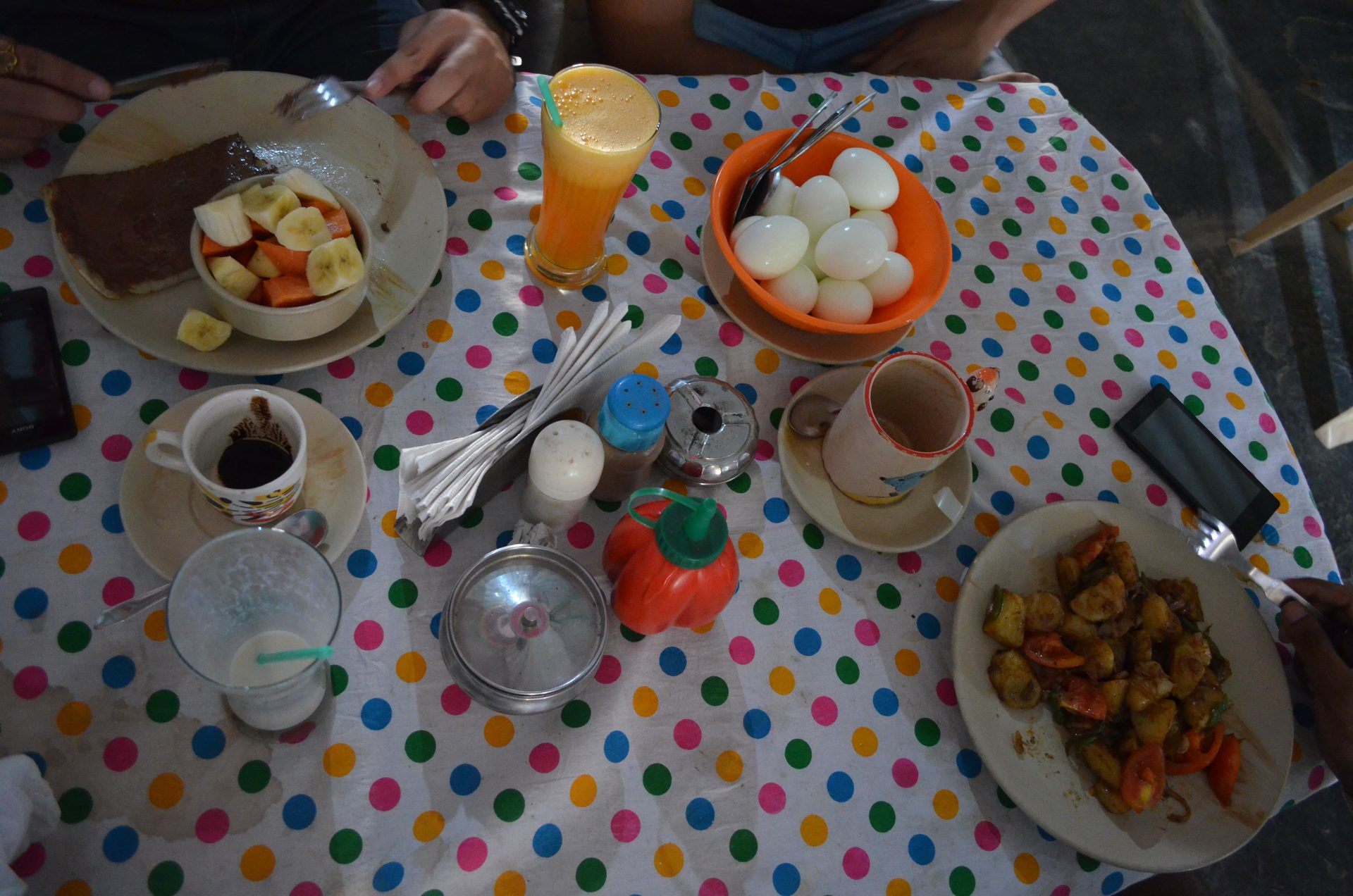
A traditional Karnataka breakfast rarely stops at one dish. Across the state’s kitchens, mornings move through crisp dosas, steamed buns, and a tumbler of filter coffee poured high enough to froth, with each item shaped by local grain, coastline, and temple cooking habits that date back generations. Coastal towns near Mangalore lean on rice and coconut, while the inland Deccan plateau favors wheat, millet, and drier spice blends.
This spread of regional Indian cooking styles is exactly what makes a Karnataka breakfast table interesting to outsiders and comforting to locals. Below are eight dishes that show up again and again, from home kitchens to Bangalore’s self-service darshinis, along with the regional habits and pairings behind each one.
1. Puri
Puri is a disc of wheat dough rolled thin, then dropped into hot oil until it puffs into a golden, air-filled ball. The technique is shared with flatbreads across South Asia, but Karnataka’s version is almost never served with the potato curry common further north. Instead, it is paired with a coconut-based vegetable stew, which locals consider the only correct match.
In Bangalore, puri shows up most often as a weekend treat rather than an everyday item, since the deep-frying takes more time than steaming or griddling a dosa. Street-side darshinis and small hotels still sell it hot through the morning rush, stacked two or three to a plate. The bread deflates within minutes of cooling, so it is meant to be eaten fast, straight from the fryer.
2. Sagu
Sagu is the mixed-vegetable stew that gives puri its purpose. Carrots, green peas, beans, and potato simmer in a coconut and spice base built around cloves, cinnamon, and green chilies, producing a mild, slightly sweet gravy rather than a fiery one. Some cooks thicken it further with roasted chana dal or poppy seeds, depending on family habit.
The dish has deep roots in Udupi-region cooking, where seasonal dietary rules shaped how vegetables were used. Wikipedia’s entry on Udupi cuisine notes that following the tradition of chaaturmasa vrata, which is a restriction of certain food ingredients in a certain period or season, may have led to the innovation of a variety of dishes in Udupi cuisine. Sagu is a good example of that restraint turned into variety, and it carries a loose kinship with other all-in-one vegetable preparations, such as the layered German one-pot stew built from whatever vegetables are on hand.
Pro Tip: Sagu tastes better the next day once the spices settle, so Karnataka households often make a double batch for leftover dosa or chapati breakfasts.
3. Filter Coffee
No discussion of a traditional Karnataka breakfast is complete without filter coffee, locally called kaapi. According to legend recorded on Wikipedia’s page on Indian filter coffee , Indian Sufi Baba Budan discovered coffee on a pilgrimage to Mecca, and smuggled seven raw coffee beans back to India and planted them in the hills of Chikmagalur in present-day Karnataka. Those hills still grow coffee today, and the state remains one of India’s largest producers.
The drink itself took its current shape much later, once home cooks began stretching expensive beans with chicory root. Research from The Better India explains that chicory was added to stretch coffee during shortages, and its earthy depth eventually became part of filter kaapi’s distinctive taste. The same decoction method, poured back and forth between a steel tumbler and a wide dish called a davara, is still how most households brew it.
Making a cup the traditional way follows a fairly consistent sequence:
- Pack finely ground coffee-chicory blend into the upper chamber of a two-part steel filter.
- Pour hot water over it and let the decoction drip slowly into the lower chamber, usually over 15-20 minutes.
- Heat milk until frothy, then mix in a spoonful or two of the dark decoction.
- Add sugar to taste and pour the coffee back and forth between tumbler and davara until a light foam forms on top.
Regional versions carry their own names and reputations. Mysore’s take is known for a milder, more rounded cup, which, as Roastopedia describes, tends toward “a milder, more balanced cup shaped by the coffee grown in the” surrounding hills. Compared with the stronger brewed spiced beverages of Egypt, Karnataka’s filter coffee leans on dairy and slow dripping rather than heavy spicing.
4. Masala Dosa
Masala dosa is arguably Karnataka’s most famous export: a thin, crisp rice-and-lentil crepe folded around a turmeric-yellow potato filling. The crepe itself traces back further than the filling. Per Wikipedia’s entry on dosa , the Tamil Nadu dosa is traditionally softer and thicker, while the thinner and crispier version that became popular across India was first made in present-day Karnataka.
The potato filling is the Udupi contribution. Coverage from NewsBytes notes that the masala dosa originated in Udupi, Karnataka, where it was traditionally made with fermented rice and lentil batter, with a filling that usually consisted of potatoes cooked with mustard seeds, turmeric, and curry leaves. The dosa batter needs an overnight ferment, which gives the finished crepe its faint sourness and the golden-brown crackle along the edges.
Key Insight: Despite its global fame, masala dosa stayed a temple-town specialty for decades before Udupi-style hotels carried the recipe across India in the twentieth century.
It is usually served with coconut chutney and sambar, sometimes dusted inside with dry chutney powder and a smear of ghee, a style closer to what travelers encounter outside rice-and-fish breakfast traditions in East Asia, where rice is also the anchor ingredient but the accompaniments run savory and umami rather than tangy and spiced.
5. Neer Dosa
Neer dosa comes from coastal Karnataka and skips fermentation altogether. The batter is just rice, soaked for a few hours, ground until smooth, and thinned with enough water to pour like a crepe batter rather than a thick one. Cooked fast on a hot tawa, it turns out lacy, soft, and nearly translucent at the edges.
Coastal kitchens treat it as an everyday staple rather than an occasion dish. A piece on South Canara cooking from Slurrp notes that most dosas on the coast use this batter to make paper dosas of varying sizes, which may be eaten as is with chutney and sambar, or used as the base of a dish like the masala dosa. The texture difference from a masala dosa is significant enough that the two rarely get confused once you’ve had both.
| Feature | Masala Dosa | Neer Dosa |
|---|---|---|
| Batter | Fermented rice and urad dal | Plain soaked rice, no fermentation |
| Texture | Crisp, golden-brown | Soft, lacy, pale |
| Typical Pairing | Potato filling, coconut chutney, sambar | Coconut milk, chutney, or jaggery |
| Origin Area | Udupi, inland Karnataka | Coastal Karnataka, South Canara |
Neer dosa also travels well across other rice-centered Southeast Asian cuisines, where thin, quickly cooked rice pancakes play a similar everyday role.
6. Mangalore Buns
Despite the name, Mangalore buns are not bread in the Western sense. They are small, deep-fried discs made from a sweetened, slightly fermented dough built around mashed ripe bananas, giving them a dense, faintly tangy interior and a puffed golden crust. The banana also keeps them soft for hours after frying, unlike puri.
Cafes in Udupi and Mangalore serve them alongside coconut chutney, which sounds like an odd match for a sweet bread but works because the chutney’s sharpness cuts through the sugar. They occupy a similar weekend-treat slot to a sweet, celebratory breakfast spread elsewhere, something made for a slower morning rather than a rushed one.
7. Akki Roti
Akki roti is a rice-flour flatbread, patted directly by hand onto a hot griddle rather than rolled with a pin, which gives it a slightly uneven, rustic shape. The dough usually includes grated vegetables, so the roti cooks and seasons itself at the same time rather than needing a separate side dish.
Variations depend heavily on region and season:
- Plain akki roti, made with just rice flour, water, and salt
- Menthya (fenugreek leaf) akki roti, common in North Karnataka
- Onion and green chili akki roti, a popular everyday version
- Carrot or mixed-vegetable akki roti, often packed for school or work lunches
It is typically served with a dollop of butter, coconut chutney, or a simple pickle, and shares a flatbread logic with maize-based breads found in other traditional cuisines, where a starch is folded directly into a single griddled piece instead of being paired with separate sides.
8. Molga Podi
Molga podi, often called gunpowder outside Karnataka, is a dry spice-and-lentil powder rather than a standalone dish, but it shows up on nearly every breakfast table in some form. The base mix usually combines roasted urad dal, chana dal, dried red chilies, and sesame seeds, ground coarse rather than fine, then mixed with sesame oil or ghee right before eating.
Every household keeps its own ratio, and the color ranges from brick red to deep brown depending on the chili variety used. It is scooped alongside idli, dosa, or even plain rice, giving a quick hit of heat and umami without needing a separately cooked side dish.
Important Note: Recipes for molga podi vary widely by family and sub-region, so there is no single “correct” ratio of lentils to chilies — treat any recipe as a starting point rather than a fixed standard.
Because it keeps for weeks in a sealed jar, podi functions as Karnataka’s answer to the shelf-stable condiments found in many traditional regional food cultures, where a single spice blend does the work of several fresh sauces.
Bringing It All Together
These eight dishes rarely appear in isolation on an actual Karnataka breakfast table. A typical spread might pair puri with sagu, follow it with a plate of masala dosa dusted in molga podi, and close with filter coffee poured hot enough to fog a window. The combination changes by coast, season, and household, which is part of what keeps a traditional Karnataka breakfast interesting even to people who grew up eating it.
For readers curious how these dishes compare with other morning meals around the world, the broader collection of traditional breakfast guides covers everything from rice-based spreads to bread-and-cheese tables on other continents.