
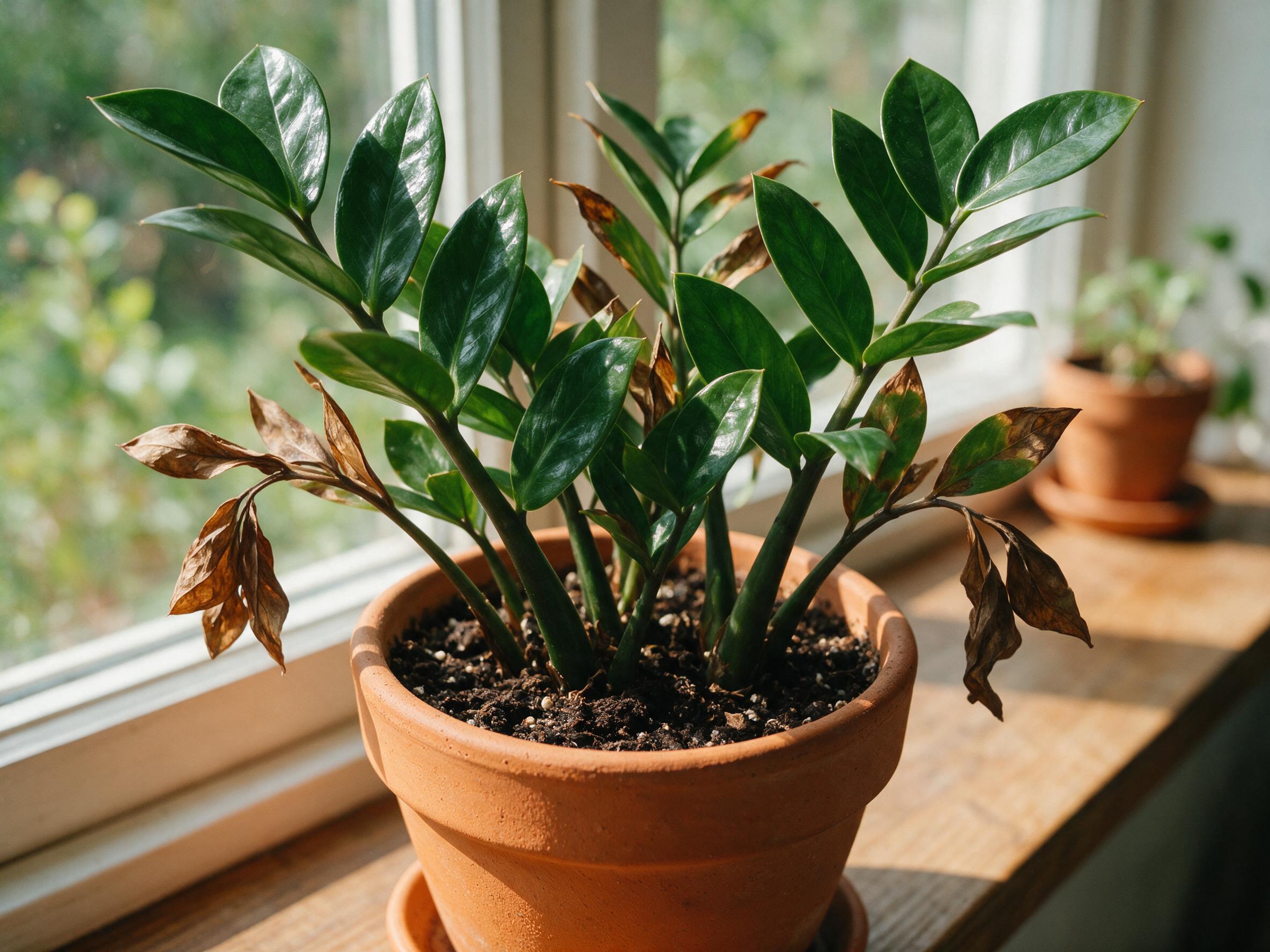
You bought a ZZ plant precisely because it has a reputation for being nearly indestructible — and now you’re staring at brown leaves wondering where you went wrong. The good news is that browning is one of the most common and most fixable problems ZZ plant owners face.
The ZZ plant (Zamioculcas zamiifolia) is native to eastern Africa, primarily Tanzania and Zanzibar — which is where its nickname “Zanzibar Gem” comes from. As an aroid with thick rhizomes that store water, it has drought-tolerant qualities similar to succulents and cacti. That built-in resilience is exactly what makes browning so puzzling: if this plant can survive neglect, why are the leaves going brown?
The answer usually comes down to one of several specific care conditions — watering habits, light exposure, soil health, humidity, or pests. This guide walks you through every possible cause and gives you clear, actionable steps to diagnose and fix the problem, then keep it from coming back.
What Does It Mean When Your ZZ Plant Is Turning Brown?
Brown leaves on a ZZ plant are a signal, not a sentence. If you catch the problem early and fix whatever is causing the brown leaves, your ZZ plant should return to full health pretty quickly. The challenge is that browning can look different depending on its cause, and reading those visual clues correctly is the first step toward a real fix.
There are two distinct types of browning to watch for, and they point in opposite directions:
- Crispy, dry brown tips or edges — the leaf tissue has dried out. This typically points to underwatering, low humidity, too much direct light, or heat stress.
- Soft, mushy, dark brown patches — the tissue is waterlogged or rotting. Mushy leaves indicate that your plant is overwatered. They will often turn very dark brown, almost black, and are essentially rotten.
The texture and location of the browning are your most reliable diagnostic clues. Brown tips only? That’s a different story than brown spreading across entire leaves. Keep that distinction in mind as you work through the causes below.
Is Browning in a ZZ Plant Always a Sign of a Problem?
Not always. Sometimes brown leaves are just a natural part of your plant’s lifecycle. The older leaves that have been on the plant for years won’t last forever. If older leaves have turned yellow or brown and the newer ones look healthy, it’s probably just normal aging.
Similarly, if you recently moved, repotted, or brought home a new ZZ plant, some browning during the adjustment period is normal. When you move or repot your ZZ, don’t panic if it looks stressed. They don’t like when things change. All you need to do is give them time to get used to the new conditions — just care for them normally and they should bounce back within a few weeks.
The real concern is when browning is widespread, spreading to new growth, or accompanied by soft stems, a foul smell, or visible pests. Those signs point to an active problem that needs your attention.
Pro Tip: Before troubleshooting, check whether the newest leaves are affected or only the older ones. If only older leaves are browning and new growth looks healthy and green, you likely have natural leaf aging — not a care problem.
Watering Issues Causing ZZ Plant Browning
Watering is the single most common cause of browning in ZZ plants, and it can go wrong in two opposite directions. Knowing which one you’re dealing with changes everything about how you respond.
Overwatering
If your ZZ plant has brown tips that are soft and almost mushy, the issue is likely overwatering. Overwatering can turn into a larger issue — root rot — which could result in plant death. Overwatered ZZ plants develop brown, mushy leaves that may feel soft to the touch. The stems might become squishy and unstable. Yellow leaves often appear before turning brown. In severe cases, root rot develops, causing a foul smell from the soil.
A pot that is too large for your plant makes overwatering even more likely. A pot that’s too large may hold excess water around the roots without enough root mass to absorb it. If you suspect overwatering, check the drainage holes — if roots look dark and mushy, act fast.
Underwatering
If the ZZ plant is turning brown and the tips are dry and crispy, the issue is likely underwatering. Underwatered plants show crispy, dry brown tips and edges on leaves. The soil pulls away from the pot sides and becomes hard and compacted. If underwatering continues, leaves may curl and eventually drop.
The right watering rhythm for most US homes: water your ZZ plant only when the top 2–3 inches of soil are completely dry — depending on your home conditions, this usually means watering once every 2–3 weeks.
Water Quality
One reason your ZZ plant’s leaves are turning brown on the edges could be due to your tap water. Tap water contains salts, chlorine, minerals, and fluoride — all of which can build up in the soil of your plant, causing the tips of the leaves to burn and turn brown. This is especially common in areas with hard municipal water, which is widespread across much of the American Southwest and Midwest.
To remedy this, you can use a water filtration system, rainwater, or leave the tap water out overnight in an open container. Letting water sit overnight allows chlorine to dissipate, which is a free and easy fix for most households.
Pro Tip: When in doubt about overwatering vs. underwatering, squeeze a leaf. Firm and crispy = too dry. Soft and mushy = too wet. This simple test takes two seconds and gives you a clear answer.
Light Conditions Behind ZZ Plant Browning
Lighting is important for ZZ plants. Too much direct light can cause sunburn, making leaves turn brown and crispy. Not enough light can lead to lack of growth and leaf loss. ZZ plants thrive in bright but indirect light.
When a ZZ plant gets too much direct sun — especially the harsh afternoon sun common in US homes during summer — the leaflets scorch. Too much sunlight causes leaves to fade or turn brown. Direct rays sunburn the leaflets and the scorch damages their tissues. You’ll typically see this as brown patches on the side of the plant facing the window, often with a bleached or faded look around the edges.
On the flip side, very low light won’t cause brown tips directly, but it weakens the plant over time. ZZ plants are known for being able to survive in low light, but they still need some. If they’re leggy and the stems are stretching toward a window, that’s a sign they need more light. If the leaves start turning yellow before they turn brown, especially on one side, try moving your plant to where it can get more indirect light. A north-facing window or a few feet away from an east-facing one is usually the perfect mix of brightness without the harsh direct sun.
The ideal placement in most American homes is near a bright east- or north-facing window, or a few feet back from a south- or west-facing window with a sheer curtain to filter the light. You can also check out our guide to the best houseplants for low-light areas to see how ZZ plants compare to other options when natural light is limited.
Soil, Nutrients, and Root Health Causing ZZ Plant Browning
The soil your ZZ plant lives in directly affects whether its roots stay healthy — and healthy roots are the only path to healthy, green leaves.
Poor Drainage and Wrong Soil Mix
Using the right soil mix is important. Choose a well-draining soil to prevent root rot and stunted growth. A cactus or succulent mix works well. Standard potting soil tends to hold too much moisture for a ZZ plant’s rhizome-based root system, especially in ceramic or non-porous pots.
Poor drainage is another common issue that can contribute to brown ZZ plant leaves. If your plant is sitting in a pot without drainage holes, excess water can accumulate at the bottom and lead to root rot. Ensure that your plant’s pot has adequate drainage, and consider repotting it in a new pot with drainage holes if necessary.
Root Rot
Root rot is a fungal disease that develops during prolonged saturation. Rot causes the roots to turn brown and mushy. As they decay, they can’t function to support growth. When roots have been soaking in water for an extended period, they become overly saturated and drown, meaning they can no longer absorb oxygen, nutrients, or ironically, water. When they cannot absorb what they need from the soil, the whole plant suffers, resulting in yellow or brown leaves and stems and eventually rotten roots and rhizomes.
Over-Fertilizing
If it’s only the edges or the tips of the leaves that are burned, your ZZ plant may be suffering from over-fertilization. The best thing to do is hold off fertilizing for a few months and reduce the frequency when you resume. If the issue continues to get worse, replace the potting mix and wash down the root system, as excess fertilizer in the soil can cause burned leaves.
ZZ plants are light feeders. A balanced liquid fertilizer applied once or twice during the growing season (spring through early fall) is plenty for most US households.
Environmental Stress Triggering ZZ Plant Browning
Your home’s environment — especially in climates with forced heating or air conditioning — can stress a ZZ plant even when your watering and light are dialed in.
Low Humidity
Our homes can have quite dry air, especially in the winter months when heating runs for several hours a day. A lack of humidity in the air can cause your ZZ plant’s leaves to be a little limp, droop down, and turn dry, brown, and crispy from the tips up.
To raise humidity without over-misting (which can promote fungal issues), try these approaches:
- Getting a humidifier is the most reliable option. If you don’t have a humidifier, you can put your plant on a pebble tray of water, or group your plants together. The bathroom is also an excellent place to keep your ZZ plant if it needs humidity.
Temperature Extremes and Drafts
Evaluate the plant’s surroundings for any environmental stressors. Factors such as extreme temperatures, drafts, or exposure to air conditioning or heating vents can cause leaf damage. ZZ plants prefer temperatures between 65–75°F. In US homes, the biggest culprits are HVAC vents blowing directly on the plant and cold drafts from windows in winter.
Make sure your plant is in bright, indirect light, and be sure it is not directly in front of a vent blowing heat or air conditioning, which can dry out the soil very quickly. Moving the plant even a few feet away from a vent can make a significant difference.
Pro Tip: In winter, check your plant’s proximity to exterior windows. Cold glass radiates chill that can damage leaves touching or very close to the pane — even if the room itself feels warm.
Pests and Disease Leading to ZZ Plant Browning
ZZ plants are naturally pest-resistant thanks to their thick, waxy leaves — but they’re not immune. The plant is resistant due to its thick, waxy leaves. If you encounter ZZ plant pests, it is usually a rare event caused by a “hitchhiker” from a new plant or extreme environmental stress that has weakened the plant’s natural armor.
Common Pests
Common pests that can infest ZZ plants include spider mites, aphids, thrips, scale insects, mealybugs, and fungus gnats, which can be identified by specific symptoms on the plant’s foliage.
- Spider mites: You won’t see the mites themselves — they are nearly microscopic. Look for fine, silky webbing on the underside of leaves or between stems. You may also see the leaves looking “dusty” or “stippled” with tiny yellow dots.
- Mealybugs: These small, white, cotton-like insects love to hide in the nooks and crannies of your plant, sucking the sap and leaving behind a sticky residue known as honeydew. This can lead to sooty mold, which further affects the plant’s health.
- Scale insects: These look like small brown bumps and are often mistaken for growths on the plant. They suck sap and form protective shells that resist sprays.
- Fungus gnats: Fungus gnats are more of a nuisance than a direct threat to the plant. These tiny, mosquito-like insects are often found hovering around the soil surface. While adult gnats don’t harm the plant, their larvae can damage the roots, especially in young or overwatered plants.
Treatment
Effective treatments for ZZ plant pests include neem oil, insecticidal soap, rubbing alcohol, and hydrogen peroxide, along with preventative measures like pruning damaged stems and leaves and using flying insect traps. For spider mites and mealybugs, you must spray the tops of the leaves, the stems, and — most importantly — the undersides of the leaves. You will need to repeat this process every 5–7 days for a few weeks to kill the pests as they hatch.
Fungal Disease
ZZ plants can be affected by a few diseases including root rot, leaf spot disease, and fungal infections. Root rot is one of the most common diseases and is caused by overwatering and poor drainage. Leaf spot disease is characterized by small brown spots on leaves and is usually caused by fungal infection. For fungal infections causing brown spots, remove affected leaves with clean scissors and apply a fungicide designed for houseplants.
If you suspect pests are spreading from other plants in your home, our guide on keeping pets away from houseplants covers some strategies for managing your plant environment. You can also use a plant identification app or one of the best Android plant apps to help confirm what you’re seeing on your leaves.
How to Diagnose Why Your ZZ Plant Is Turning Brown
Rather than guessing, use the texture and pattern of the browning to narrow down the cause. The table below maps the most common visual symptoms to their likely causes.
| What You See | Texture | Most Likely Cause |
|---|---|---|
| Brown tips only, lower leaves | Dry and crispy | Underwatering or low humidity |
| Brown tips only, newer growth | Soft or mushy | Overwatering / early root rot |
| Brown patches on sun-facing side | Dry, bleached edges | Direct sunlight / sunscorch |
| Brown spreading across whole leaves | Mushy, dark brown or black | Severe overwatering / root rot |
| Small brown spots scattered on leaves | Dry, sometimes with yellow halo | Fungal leaf spot or pest damage |
| Brown tips with white crust on soil | Dry and crispy | Mineral buildup from tap water |
| Brown tips with fine webbing visible | Dry, stippled surface | Spider mites |
| Older leaves only turning brown | Dry, plant otherwise healthy | Natural aging — normal |
After matching your symptoms to the table, check the soil moisture by pressing your finger 2–3 inches deep. Then inspect the undersides of leaves for webbing or pests. Finally, check whether the plant is near a vent, a sunny window, or recently moved. Those three checks will confirm your diagnosis in most cases.
How to Fix a ZZ Plant That Is Turning Brown
Once you’ve identified the cause, here’s how to act on it. Work through only one change at a time — as your plant recovers, try not to make a lot of changes all at once. If you’ve worked out what’s causing the problem, address that and then let your plant react. Too many changes at once can stress the plant further and make it harder to determine exactly what’s helping.
Step 1: Prune the Damaged Leaves
Remove entire brown leaves (they will not turn green again) or the affected portion with a pair of sharp scissors or pruning shears. Wipe the blades of your scissors with rubbing alcohol between each snip. You may need to trim your plant in stages because you never want to remove more than 20% of the affected leaves at one time — this could shock your plant.
Step 2: Fix Overwatering or Root Rot
If you suspect root rot, act quickly. Inspect the rhizomes and cut away any brown, damaged portions. Replant in fresh potting media and water thoroughly to initiate a new regimen. If caught early, you may see growth revive. When repotting, choose a pot only 1–2 inches larger in diameter than the root ball, and always use one with drainage holes.
Step 3: Fix Underwatering
If you accidentally let your ZZ plant’s soil dry out completely, a thorough soak is in order. Place your plant in your sink or tub without the saucer. Fill your basin with about 3–4 inches of water — make sure the water isn’t hot. Allow your plant to soak up water through the drainage hole in the bottom of the pot for at least 45 minutes. After soaking, drain completely and return it to its spot.
Step 4: Adjust Light and Environment
Move the plant away from direct sun or a blasting HVAC vent. Position it with a few hours of morning sun exposure and protection from afternoon sun in dappled light or high shade. Indoors, situate it near a bright window but out of the direct sun, or filter it with a curtain.
Step 5: Treat Pests
If pests are confirmed, isolate the plant immediately from your other houseplants. Neem oil and horticultural oils are effective against a wide range of soft-bodied insects like spider mites, mealybugs, and scale — they work by suffocating the pests. Always follow product instructions carefully, as some oils can cause leaf burn if applied in direct sun or to stressed plants. For mealybugs, use a cotton swab dipped in alcohol to remove them from the plant — the alcohol dissolves their protective coating, killing them on contact.
How to Prevent ZZ Plant Browning Going Forward
Good habits are far easier than emergency fixes. These preventive steps cover the most common causes of browning before they start.
- Water on a soil-check schedule, not a calendar. Water your ZZ plant only when the top 2–3 inches of soil are completely dry. Depending on your home conditions, this usually means watering once every 2–3 weeks.
- Switch to filtered or pre-treated water. Use filtered water or let tap water sit out overnight to reduce chlorine and fluoride that can cause brown tips.
- Use the right soil and pot. A cactus/succulent mix with added perlite and a pot with drainage holes prevents waterlogging at the root level.
- Keep it away from vents and direct sun. Keep your plant away from direct sunlight and cold drafts. A sheer curtain over a south-facing window in summer does a lot of work.
- Wipe the leaves monthly. Your ZZ plant’s waxy leaves are dust magnets. This dust blocks light and provides cover for pests. About once a month, take a damp cloth and gently wipe down every single leaf. This also doubles as a pest inspection.
- Quarantine new plants. Inspect every new plant thoroughly every few days for 2–3 weeks. Only after it has passed this inspection should it join your other plants.
- Fertilize lightly. Feed once in spring and once in midsummer with a balanced liquid fertilizer. Skip fall and winter feeding entirely.
If you’re building out your indoor plant collection, you might also want to explore different types of houseplants or compare your ZZ to other low-maintenance options like rubber plants and spider plants — both of which share some of the ZZ’s tolerance for indoor conditions.
Pro Tip: Recovery takes time. Keep in mind that recovery doesn’t happen instantly. Depending on what has caused the brown leaves, you might have to wait a few weeks to see improvement. Resist the urge to overwater or move the plant repeatedly while it heals.
FAQ
Can Brown ZZ Plant Leaves Turn Green Again?
Remove leaves that have been entirely browned — they will not turn green again. If the leaves aren’t entirely brown, you can remove the affected area with pruning shears or scissors. New growth that emerges after you fix the underlying problem will be healthy and green.
Why Are Only the Tips of My ZZ Plant’s Leaves Turning Brown?
Brown tips specifically — rather than whole leaves — usually point to one of three causes: underwatering, low humidity, or tap water mineral buildup. The most common causes of brown leaves in ZZ plants are overwatering, underwatering, chemical sensitivity, and a lack of humidity. Check your watering frequency first, then consider switching to filtered water if the tips keep browning even after correcting moisture levels.
Should I Mist My ZZ Plant to Prevent Browning?
Misting can help in very dry environments, but it’s not the most reliable method. Getting a humidifier is the best way to increase humidity for your ZZ plant. Misting directly on the leaves can sometimes promote fungal issues if the leaves stay wet for extended periods, especially in low-airflow rooms.
How Do I Know If My ZZ Plant Has Root Rot?
Look for other signs of overwatering — early signs include leaf yellowing and edema. As root rot sets in, you may see drooping stems, brown leaf tips especially on younger leaves, wrinkled leaves, and you may smell the offensive odor of rotting roots. Pull the plant from its pot and check the rhizomes directly — healthy ZZ plant roots are firm and white or tan. Soft, brown, or mushy roots confirm root rot.
How Often Should I Water My ZZ Plant in Summer vs. Winter?
ZZ plants require different watering frequencies based on environmental conditions. During hot summer months, they may need water every 2–3 weeks. In winter, when growth slows and your home’s heating reduces ambient humidity, you can stretch that interval even further — sometimes to once a month or less. Always let the soil guide you, not the calendar.
Can I Save a ZZ Plant With Severe Root Rot?
While you can fix a ZZ plant experiencing the early signs of root rot, a more severe case is often fatal for your plant. If you catch it early, remove all mushy roots, let the rhizomes air-dry for a day, then repot in fresh, well-draining mix. If the rhizomes are entirely soft and smell foul, the plant may be beyond saving — but you can try propagating healthy leaf cuttings to start fresh.
Are ZZ Plants Toxic to Pets?
Yes — ZZ plants contain calcium oxalate crystals, which are toxic to cats and dogs if ingested. If you have curious pets at home, you may want to read up on plants that naturally deter cats or check our guide on keeping cats out of houseplants for practical strategies to protect both your plant and your pet.