Why Are My Roses Losing Leaves? Causes, Diagnosis, and Fixes

September 8, 2026
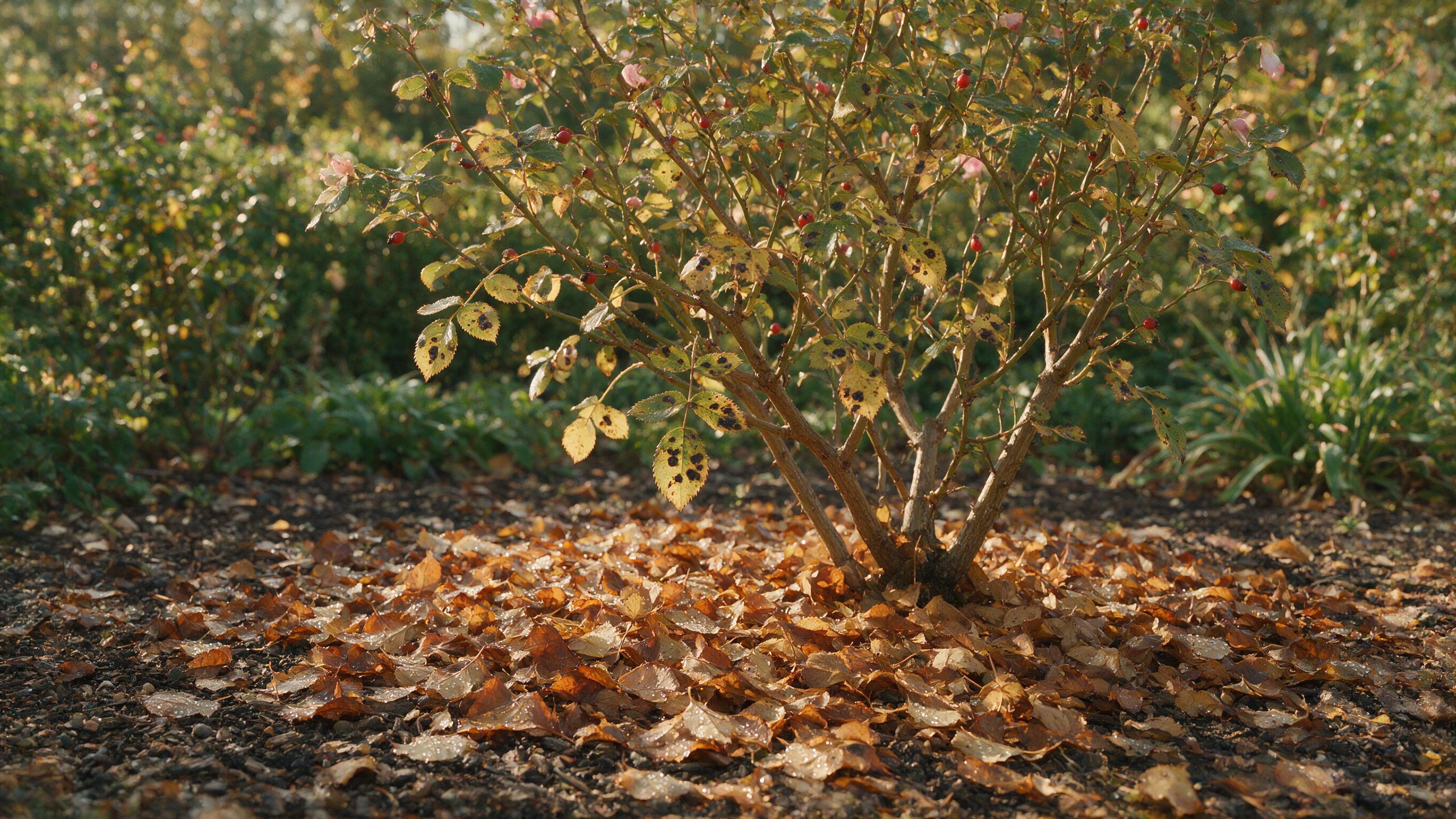
Finding a carpet of rose leaves on the ground is one of those garden moments that stops you in your tracks. Whether it’s a handful of yellowed leaves near the base or a sudden wave of defoliation across the whole shrub, your first instinct is probably to worry — and sometimes that worry is warranted.
The good news is that roses (Rosa spp.) shed leaves for a surprisingly wide range of reasons, and many of them are completely manageable once you know what you’re looking for. Some are even natural. This guide walks you through every major cause, shows you how to tell them apart, and gives you clear, practical steps to fix the problem and keep it from coming back.
What Does It Mean When Your Roses Are Losing Leaves?
Leaves falling off rose bushes can be caused by different things — some natural and some due to fungal attacks. The key is reading the clues the plant leaves behind: which leaves are dropping, what they look like, and when the shedding started.
If your roses are losing their leaves, it’s usually due to one or more conditions causing stress. This could come from the environment, the weather, pests and diseases, or how you’re caring for the plants. On the other hand, roses losing their leaves could simply be part of their natural life cycle.
A few leaves fluttering to the ground in midsummer is rarely cause for alarm. A few leaves dropping is no big deal — many plants shrug off a bit of greenery to adapt to a changing environment. But more than a handful, and it’s time to pay closer attention.
Pro Tip: Before diagnosing your rose, note three things: the appearance of the dropped leaves (spots, color, texture), where on the plant the drop is occurring (lower, upper, or all over), and when it started relative to the season or any recent care changes.
Is Losing Leaves in Roses Always a Sign of a Problem?
Not at all. Roses are deciduous plants, and in their normal life cycle, they drop all their leaves in autumn and winter. If you’re heading into fall and your roses are shedding, that’s nature doing exactly what it should.
Summer leaf drop on roses is also perfectly normal in many parts of the United States. During heat dormancy, the plant is doing something physiologically sensible: reducing its leaf surface area to slow water loss and conserve energy. The distinguishing features of harmless heat dormancy are what is absent — no spots, no discoloration patterns on dropped leaves, no webbing, no mushy tissue. The dropped leaves may appear slightly pale or simply aged, but otherwise undamaged.
Many rose bushes lose lower leaves that appear to be turning yellow and falling off, causing concern. Often it’s just the lower leaves, with no mid- or upper-level leaves affected. Many rose bushes get so full of mid and upper foliage that it shades the lower leaves, which are no longer needed and get dropped. This is a normal self-pruning response, not a sign of disease.
The situations that do need attention are leaf drop accompanied by spots, discoloration, webbing, wilting despite moist soil, or rapid widespread defoliation outside of the fall season. Those are the scenarios this guide focuses on.
Watering Issues Causing Rose Leaf Loss
Watering problems are probably the most common reason roses lose their leaves. A lack of water causes rose leaves to fall off after they’ve turned yellow — but this may not only be because you’ve been under-watering. Over-watering also results in the same yellow, falling leaves.
Overwatering and Root Rot
One of the most significant reasons for rose bush leaf drop is overwatering. When plants receive too much water, their roots can become waterlogged, leading to root rot. This prevents them from getting the oxygen they need to thrive. Signs of overwatering include yellowing leaves that eventually drop.
Symptoms to look for include soggy soil that stays wet for days after the last watering, yellow leaves starting at the base of the plant, soft or discolored stem tissue at soil level, and a faintly sour or rotting smell from around the roots. If you see those signs together, overwatering or poor drainage is almost certainly the culprit.
To fix it: stop watering immediately and allow the soil to dry down. Improve drainage by incorporating coarse grit or perlite into clay-heavy soil, or by building up a raised planting mound. Resume watering only when the top 2 inches of soil are fully dry. If root rot has already set in, remove the rose from the ground or container, trim all brown mushy roots back to white firm tissue with clean shears, and replant in fresh well-draining soil with added horticultural grit. If more than 60% of the root system is brown and soft, recovery is unlikely.
Underwatering
Underwatering can also lead to leaf drop. Roses need consistent moisture, especially during hot weather. If you notice brown, crispy edges on the leaves, your rose bush may be suffering from a lack of water.
When plants are water stressed, the first thing they do is drop their leaves so as not to spend the energy to support them. Roses prefer the cool weather of spring and fall to thrive and bloom. In summer, make sure to water the rose bush at least once a week with a 5-gallon bucket of water — more if it doesn’t rain.
Pro Tip: Check soil moisture before every watering. Push a finger 2 inches into the soil near the base of the plant. If it’s dry, water deeply. If it’s still damp, wait. This single habit eliminates both overwatering and underwatering.
Light Conditions Behind Rose Leaf Loss
Light plays a bigger role in rose leaf drop than most gardeners realize. Both too much intense sun and too little light can trigger shedding, though for different reasons.
A location with a minimum of six hours of direct sunlight daily is ideal for most types of roses. Morning sun is preferable, as it helps to dry out foliage quickly. Minimizing leaf wetness helps in the management of diseases.
A lack of direct sunlight can cause rose foliage to turn yellow and fall off. This often happens to the lower, older leaves when they’re shaded by bushy foliage in the middle and upper sections of the plant. The sunlight doesn’t reach the lower branches and leaves, so they can’t produce chlorophyll to maintain their green color. The rose directs all its energy to the upper growth, and the lower leaves die and fall off.
On the other end, intense afternoon sun — especially in the South and Southwest — can scorch leaves and push roses into heat dormancy. Radiant heat redirected upward from dark mulch or paving underneath the plant can compound the problem. If direct sunlight is the issue, create a temporary sunshade to shelter the rose from midday sun. If your rose is in a pot, move it to a shaded location during those hours.
According to Illinois Extension , if all-day sun is not available, a location where roses get only morning sun is preferred to one where they get only afternoon sun. Morning sun helps to dry the leaves quicker, reducing the potential for disease. Shade in the afternoon is a plus, as it helps to prolong flower quality.
Soil, Nutrients, and Root Health Causing Rose Leaf Loss
What’s happening underground has a direct impact on what you see above it. Poor soil chemistry and nutrient imbalances are a frequently overlooked cause of leaf drop in US rose gardens.
Soil pH and Nutrient Availability
Roses prefer a slightly acidic soil pH, ideally ranging from 6.0 to 6.8, which maximizes nutrient availability. If the pH is too high or too low, elements like iron or magnesium become chemically locked in the soil, leading to deficiency symptoms. According to Illinois Extension , a soil pH of 6.0 to 7.0 is preferred by roses.
If soil pH drops below 6, the roots of roses find it difficult to absorb potassium, phosphorus, and nitrogen, while a pH level above 7 also makes it hard to get enough phosphorus, iron, and manganese. Without sufficient quantities of these nutrients, roses will be less equipped to fight off diseases and pests and will display signs of ill health, such as stunted growth and yellowed leaves.
The American Rose Society provides a helpful breakdown of nutrient deficiency symptoms: nitrogen deficiency causes leaves to have a uniform, light green to yellow-green color starting from the bottom of the plant, with leaves turning progressively more yellow and a reduction in leaf size and spindly stems. Potassium deficiency shows in the older leaves first, with a yellowing and browning along the leaf margins. Chlorosis symptoms caused by iron deficiency appear as yellow leaves with prominent green veins, usually caused by high soil pH.
Root Health and Drainage
Roses prefer a rich loamy soil that drains well. They do not like to have their root systems in soggy wet soil, but cannot be allowed to dry out either. According to UC Master Gardeners of Ventura County , proper soil drainage is important because it helps prevent root rot and other diseases. If you have heavy clay soil that drains slowly, you might want to move your roses to a raised bed.
A simple drainage test: dig an 18-inch-deep hole, fill it with water, and see how long it takes to drain. If an 18-inch-deep hole filled with water drains in 5 to 6 hours, drainage is satisfactory. Anything slower signals a problem worth addressing before your next growing season.
Key Insight: A soil test is the most reliable way to diagnose both pH and nutrient issues at once. Many US county cooperative extension offices offer low-cost soil testing. Your local extension service can also recommend region-specific amendments based on your results.
Environmental Stress Triggering Rose Leaf Loss
Roses respond physically to their environment, and several common US conditions — summer heat, transplanting, wind, and cold snaps — can all trigger leaf drop that looks alarming but may not need treatment.
Summer Heat Dormancy
In the midst of a string of intensely hot days, some rose bushes become very stressed even with the best attempt to keep them comfortable and well-watered. These rose bushes start dropping leaves for no apparent reason. It is actually the rose bush trying to create better cooling airflow for itself — by dropping some foliage, it increases the open area for air to circulate around its canes in an effort to cool down.
The timing is mid-to-late summer, coinciding with the hottest sustained weeks. No treatment is needed. Water normally — do not overwater a semi-dormant plant, as this risks root rot. When evening temperatures drop back below 65°F (18°C), the rose resumes active growth and typically produces a flush of new foliage and flowers.
Transplant Shock
If your rose is dropping leaves within 2 to 6 weeks of being planted or moved, transplant shock is almost certainly the cause. Purdue Extension defines transplant shock as stresses occurring in recently transplanted trees and shrubs that involve failure to root well, resulting in poor establishment. The mechanism is root disruption: a transplanted rose loses a significant portion of its functioning root system during the move, and the reduced root capacity cannot support the existing leaf area.
Unlike disease-related drop, transplant shock produces no spots, no discoloration patterns, and no webbing. Newly planted roses are susceptible to transplant shock, where damaged feeder roots cannot supply enough water to the foliage. Mitigate this by keeping the soil consistently moist but not soaking wet, and temporarily shield the plant from harsh direct sunlight until it establishes itself.
Temperature Extremes and Humidity
Temperature fluctuations can significantly impact your roses. They thrive in temperatures ranging from 59°F to 77°F (15°C to 25°C). Temperature and humidity extremes can cause real problems. Too much heat can scorch the leaves, while too little light leaves them lackluster. High humidity might invite fungal diseases, and low humidity can desiccate the leaves.
Pests and Disease Leading to Rose Leaf Loss
When leaf drop is accompanied by visible symptoms on the leaves themselves — spots, webbing, powdery coatings, or orange dust — you’re almost certainly dealing with a pest or disease. These require active treatment, not just waiting it out.
Black Spot
Black spot is the most widespread disease cause of rose leaf drop in North America. The pathogen is the fungus Diplocarpon rosae, and it has specific infection requirements that explain both why it arrives when it does and how to stop it. Iowa State Extension documents the threshold precisely: leaves must remain continuously wet for at least 7 hours, with temperatures between 75 and 85°F. These conditions arrive most reliably in late spring and early summer, which is when black spot first appears.
The initial signs are small black spots on the lower leaves, surrounded by a yellow area; finally, the leaves fall off. Eventually, black spot will spread to higher leaves and defoliate the plant. According to the Old Farmer’s Almanac , you can avoid the spread by keeping leaves dry, always watering roses at ground level and never from overhead. During winter, prune back all infected canes within 1 to 2 inches of the bud union. Spores can overwinter in fallen leaves, so make sure to clean them up.
For active infections, remove any infected leaves and stems — look for red lesions on the canes — then treat every two weeks with a copper fungicide. Make sure you’re watering the soil around plants and not the crowns or foliage.
Powdery Mildew
Powdery mildew (caused by the fungus Sphaerotheca pannosa var. rosae) makes leaves, shoots, and buds look like they have been dusted with talcum powder. The leaves may look dry and curl up. The flower buds are also affected and some blossoms may look distorted. Powdery mildew occurs when temperatures are cool or mild yet very humid through the night; it’s more severe in shady areas.
Spider Mites
The presence of very fine silk webbing on leaves and stems is a sign of spider mites. Very small yellow or white dots (stippling) are a symptom of spider mite feeding. Most adult spider mites are about half a millimeter long and are typically found on the undersides of leaves — a hand lens may be needed to see them. They use piercing mouthparts to feed on cellular contents including chlorophyll.
Spider mites won’t cause leaf drop immediately — it takes time for them to cause enough damage that the foliage gives up. At first, you’ll just see a little bit of stippling and maybe fine webbing. Left unchecked, especially if their natural enemies have been killed off with broad-spectrum pesticides, the damage increases. The leaves start to turn brown, dry up, and then fall to the ground.
Note that spider mites are arachnids, not insects, which matters for treatment: most standard insecticides are ineffective against them. Use a miticide or insecticidal soap specifically labeled for mites.
Aphids
A handful of aphids are no big deal. Many types of plants will inevitably be visited by aphids at some point and it usually doesn’t cause serious trouble. But when an infestation becomes truly horrendous, serious problems such as yellowing and leaf drop occur. If you examine your roses often, it will go a long way toward helping you find the tiny insects before the problem becomes worse. In addition to clusters of aphids, look for the sticky substance they leave behind, called honeydew. This will make your plant almost look wet and debris will stick to it. It also attracts ants, as well as sooty mold.
Rose Rosette Disease
Rose Rosette Disease causes new shoots to be bright red and deformed, with leaves that are obviously abnormal and very narrow. The virus is transmitted by the eriophyid mite. Plants suspected of Rose Rosette Disease must be removed, including roots, and destroyed. This disease has become increasingly common across the United States in recent years, particularly in the Midwest and Southeast.
| Symptom on Leaves | Most Likely Cause | Action Needed |
|---|---|---|
| Black spots with yellow halos, lower leaves first | Black spot fungus | Remove infected leaves, apply copper fungicide, water at soil level |
| White powdery coating, curling leaves | Powdery mildew | Remove affected growth, apply fungicide, improve air circulation |
| Fine webbing, tiny stippled dots | Spider mites | Apply miticide or insecticidal soap, increase humidity around plant |
| Sticky residue, curled new growth | Aphids | Blast with water, apply insecticidal soap or neem oil |
| Orange dust on leaf undersides | Rose rust | Remove infected leaves, apply fungicide, avoid overhead watering |
| Deformed red new shoots, narrow leaves | Rose Rosette Disease | Remove and destroy entire plant including roots |
| Yellow leaves, no spots, mid-to-late summer | Heat dormancy (natural) | No treatment needed; water normally and wait for cooler weather |
| Yellowing lower leaves only, no other symptoms | Natural self-shading drop | No treatment needed; prune to open up airflow if desired |
How to Diagnose Why Your Roses Are Losing Leaves
A systematic look at your plant takes about five minutes and will point you toward the right answer in almost every case. Work through these steps before reaching for any treatment.
- Check the timing. Is it fall or early winter? Natural dormancy. Is it mid-to-late summer during a heat wave? Likely heat dormancy. Is it spring or early summer with no extreme temperatures? Investigate further.
- Look at the dropped leaves. Finding rose leaves on the ground can mean a dozen different things — a harmless summer nap, a spider mite infestation, a black spot outbreak, or soil that has been waterlogged for weeks. The problem with most guidance on this topic is that it lists possible causes without giving you a way to tell which one applies to your plant right now. Match what you see to the symptom table above.
- Check the soil. Push a finger 2 inches deep. Bone dry = underwatering. Soggy days after watering = overwatering or drainage problem.
- Inspect the undersides of leaves. Monitor rose plants throughout the growing season by inspecting leaves, buds, and stems for symptoms such as spotting, blackening, sticky residue, holes in leaves, and leaf yellowing or distortion. Problems are easier to manage if detected and addressed early.
- Scratch a cane. Scratch a cane: green tissue beneath the bark means the plant is alive. Water normally and wait for nighttime temperatures to drop below 65°F (18°C).
- Consider recent changes. Did you just transplant, fertilize heavily, or change the watering schedule? Transplant shock, fertilizer burn, and watering shifts all show up as leaf drop within a few weeks of the change.
Plant identification apps can also help you confirm what you’re seeing. Check out the best iPhone apps for identifying plants or the best Android apps for identifying plants for tools that can match leaf symptoms to specific diseases and pests.
How to Fix a Rose That Is Losing Leaves
The right fix depends entirely on the cause you identified above. Here’s what to do for each scenario.
Fix Watering Problems First
Ensure your rose bush is planted in well-draining soil. Allow the top inch of soil to dry out before watering again. For underwatered roses, water deeply and slowly at the soil line — aim for 1 to 2 inches per week. Deep watering is essential; it encourages roots to grow deeper, while surface watering can lead to shallow root systems.
Treat Fungal Diseases
For black spot: remove every infected leaf you can find, including those already on the ground. Black spot rarely kills an otherwise healthy rose, but repeated severe defoliation across multiple seasons weakens it significantly. A defoliated rose can push entirely new foliage within 3 to 4 weeks if infection pressure is removed — which means removing all fallen leaves, stopping overhead watering, and applying fungicide preventively to protect new growth as it emerges.
According to the Old Farmer’s Almanac , water thoroughly so soil is kept moist, but keep the leaves dry and water only at the base of the plant. Drip irrigation or soaker hoses are preferable to overhead sprinklers. During dry weather, water roses about every 7 to 10 days, watering slowly but deeply at soil level.
Control Pests
Using organic pest control methods is an effective way to protect your roses. Neem oil is a popular choice; apply it every 7 to 14 days, ensuring you cover both the tops and undersides of leaves for maximum impact. Insecticidal soap is another excellent option. Spray it directly on pests, focusing on areas where you notice infestations. This method is safe and can be used frequently without harming beneficial insects.
For spider mites specifically, a blast from the hose directed to the underside of the leaves every couple of days can manage mites, or use insecticidal soap.
Correct Soil and Nutrient Issues
If a soil test confirms pH problems, to make the soil less acidic, the common practice is to add some form of lime — typically ground agricultural limestone, and the finer the particles the more rapidly it becomes effective. To lower pH, aluminum sulfate or elemental sulfur are the standard options, though both require several months to take full effect.
Avoid over-fertilizing roses with high nitrogen fertilizers, as these can over-stimulate plant growth and encourage aphids and diseases. Organic or natural fertilizers help avoid the problem of over-fertilizing because they release nutrients to your roses slowly.
Support a Stressed or Newly Transplanted Rose
If transplant shock is the cause, keep watering consistent, provide temporary afternoon shade, and resist the urge to fertilize. If the heat subsides, the plant will recover and send out new growth. Since roses generally have a good store of food available, they can last a while in dormancy. Keep them watered throughout the heat wave and wait for nature to do its thing.
For more on the different types of roses and how their care needs vary — especially regarding heat tolerance and disease resistance — knowing your variety makes diagnosis much easier.
How to Prevent Rose Leaf Loss Going Forward
Prevention is far easier than treatment, and most of it comes down to consistent habits rather than complicated interventions.
Water and Mulch Correctly
Water at the base of the plant, never overhead. Drip irrigation or soaker hoses are preferable to overhead sprinklers. Apply 2 to 3 inches of organic mulch around the base — mulch helps control weeds and protects roots in hot summer months. Apply 2 to 3 inches of organic materials like shredded leaves, compost, or fine wood chips, and keep mulch several inches from the plant trunk.
Plant in the Right Spot
Roses need rich, loamy, well-drained soil. Before planting, amend the planting site with organic matter. Roses do not grow well in wet, poorly drained soils. Space them to allow for good air movement around plants to reduce localized high humidity, which helps in the prevention of diseases. Avoid crowding plants closely together to reduce competition for water, nutrients, and sunlight.
Practice Good Garden Hygiene
Rake up and remove all dropped leaves, hips, and broken or pruned branches. Don’t add them to your compost pile. When using garden tools with roses to plant or prune, always clean them afterward to prevent disease — use a 9:1 water to bleach solution.
Choose Disease-Resistant Varieties
You can best prevent rose problems by recognizing what conditions they need to thrive and practicing good sanitation. Purchase disease-resistant cultivars and certified disease-free plants. Space plants several feet apart so they get good air circulation. Knock Out® roses, for example, are widely available across the US and bred specifically for black spot resistance — a meaningful advantage in humid climates.
Monitor Consistently
Timing is important when treating any disease or pest: apply treatments at the first sign of trouble. Early intervention can prevent further damage and keep your plants healthy. A quick weekly walk-around — checking both the tops and undersides of leaves — catches most problems before they escalate.
If you’re growing roses alongside other plants, understanding which companions work well together can also reduce pest pressure. See companion planting ideas for inspiration on using plant diversity to support garden health, a strategy that attracting beneficial insects and reducing the risk of pests and diseases.
Important Note: Fertilizing correctly matters as much as watering. According to the Old Farmer’s Almanac , hybrid tea roses should be fertilized three times a year — in early spring after pruning, during the first bloom, and in mid-July — and you should not fertilize after late July. Over-feeding stresses the plant and can make it more susceptible to pests and leaf drop.
Frequently Asked Questions
Why are my rose leaves turning yellow and falling off?
Yellow leaves that drop are most commonly caused by overwatering, black spot fungus, or nutrient deficiency. Yellow leaves that drop can be a sign that there is not enough oxygen in the soil, often caused by overwatering or inadequate drainage. Check the soil moisture first, then inspect the leaves for black spots or other markings before treating.
Is it normal for roses to lose leaves in summer?
Yes, in many cases. When it gets very hot, roses enter a semi-dormant state not unlike when winter comes around, and they do so even more when nighttime temperatures are also hot. If there are no spots, webbing, or other disease signs, summer leaf drop during a heat wave is a normal survival response.
Should I remove fallen rose leaves?
Always. Spores can overwinter in fallen leaves, so make sure to clean them up. This is one of the single most effective things you can do to prevent black spot from returning the following season. Do not compost fallen rose leaves — bag and discard them.
Why are only the lower leaves on my rose falling off?
Many rose bushes get so full of mid and upper bush foliage that it shades the lower foliage. The lower foliage is not really needed to maintain the rose bush any longer, and the bush starts dropping it, focusing on the growth that is producing more of the good for the overall bush’s health and wellbeing. This is normal and does not require treatment.
Can a rose recover from total leaf loss?
Often yes, depending on the cause. A defoliated rose can push entirely new foliage within 3 to 4 weeks if infection pressure is removed. Scratch a cane: green tissue beneath the bark means the plant is alive. If the canes are green and pliable, your rose has a strong chance of recovery with the right care.
What is the best fungicide for rose black spot?
Copper-based fungicides are a widely used organic option and are effective when applied preventively. Treat every two weeks with a copper fungicide. Synthetic fungicides containing myclobutanil or propiconazole are also effective for severe infections. Always follow label directions and begin treatment at the first sign of spots, not after widespread defoliation has already occurred.
Do roses lose leaves in winter?
Roses are deciduous and they drop all of their leaves in the fall or early winter as part of their normal life cycle. This is completely expected. Use the dormant season to prune out any canes with dark lesions, clean up fallen debris, and prepare the bed for spring. For more about caring for different types of roses through the seasons, variety-specific guidance can make a real difference in your results.