Why Are My Corn Leaves Turning Yellow? Causes, Fixes, and Prevention

August 25, 2026
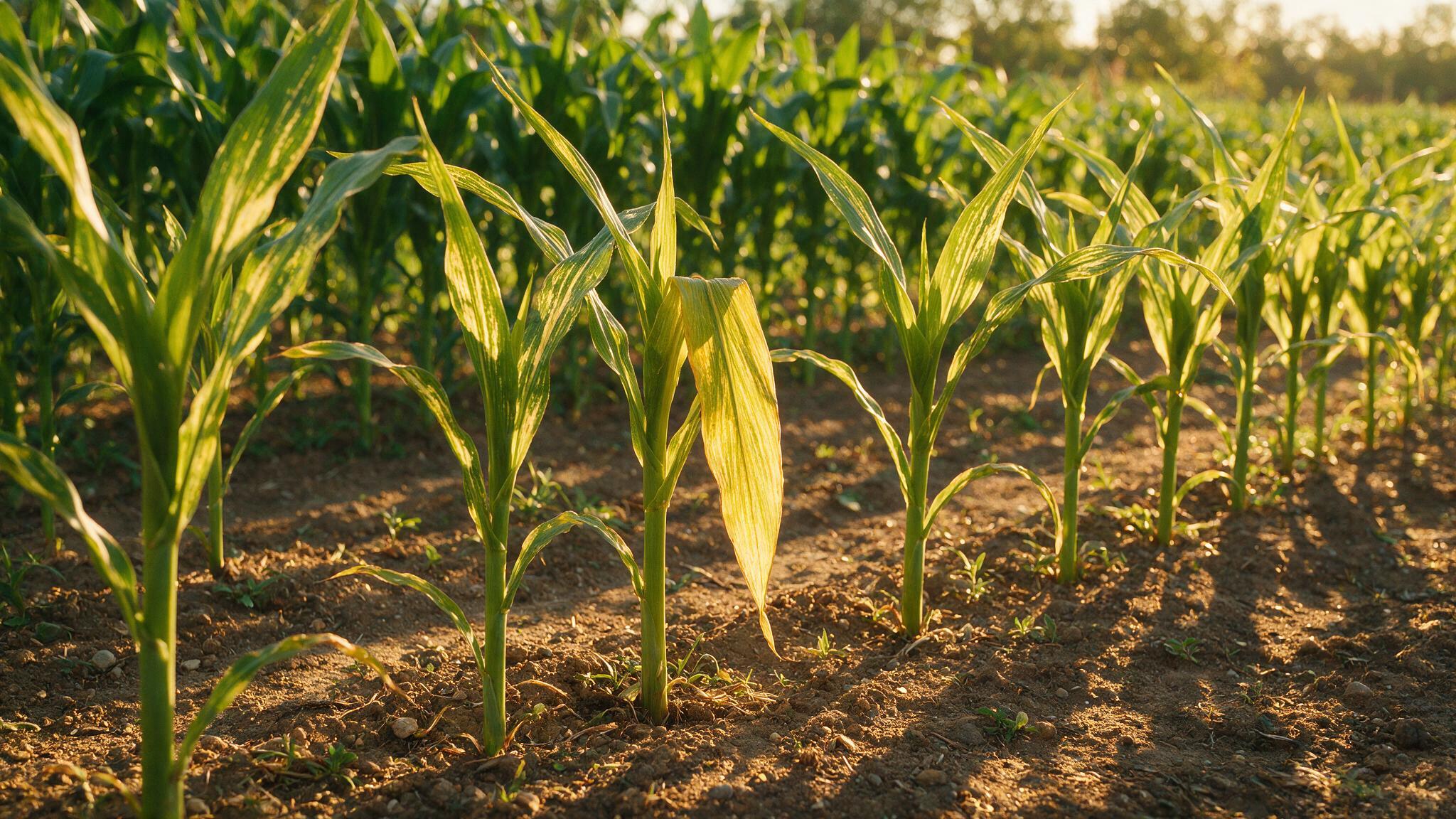
Noticing yellow leaves on your corn plants can feel alarming, especially when everything looked healthy just days before. Whether you’re growing sweet corn in a backyard garden or tending a Dracaena fragrans corn plant indoors, yellowing leaves are one of the most common signals that something in your plant’s environment is off.
The good news is that most cases of yellowing corn leaves are correctable once you know what you’re looking for. This guide walks you through every major cause — from watering mistakes and nutrient gaps to pests and disease — and gives you clear, actionable steps to diagnose and fix the problem before it gets worse.
What Does It Mean When Your Corn Leaves Are Turning Yellow?
Yellow leaves on a corn plant are a form of communication. Corn is one of the heaviest feeders in the garden, and yellowing leaves are most probably an indicator that the crop is deficient in some nutrient, usually nitrogen. But nutrient deficiency is only one piece of the puzzle.
The technical term for leaf yellowing is chlorosis — a reduction in chlorophyll that strips the leaf of its green color. Injured roots, regardless of cause, can reduce the plant’s ability to uptake nutrients such as nitrogen, potassium, iron, zinc, and sulfur, resulting in a chlorotic (yellowing) condition.
The location and pattern of the yellowing gives you the most useful clues. Yellowing from the bottom up often means nitrogen deficiency, pale streaks on new leaves point to iron or zinc issues, and blotchy yellowing with spots can signal pests or disease. Paying attention to where on the plant the yellow appears — and how it spreads — is your first step toward an accurate diagnosis.
If you grow multiple plant varieties, it also helps to understand the different types of plants in your garden, since care requirements and yellowing triggers can vary significantly from one species to the next.
Is Yellowing in Corn Always a Sign of a Problem?
Not always. Some yellowing is completely normal and not a cause for concern. Yellowing from natural aging affects only lower leaves; widespread yellowing signals urgent care needs. As corn plants mature, the oldest lower leaves naturally senesce and yellow — this is a routine part of the plant’s growth cycle.
Yellowing during the V3 and V5 growth stages is usually temporary as the plant switches from using nutrients from the seed and seminal roots to the nodal root system. If your seedlings show some yellowing early in the season, wait and watch before intervening.
As the seedling transitions from the kernel reserves to the nodal roots, the plants can appear yellow and in some cases appear to have poor vigor. Seedling appearance should begin to improve by the four- to five-leaf stage when nodal roots begin absorbing soil nutrients.
Pro Tip: If only the lowest one or two leaves are yellow and the rest of the plant looks healthy and vigorous, you likely have normal leaf senescence — not a problem that needs fixing.
Watering Issues Causing Corn Leaf Yellowing
Water is one of the most common culprits behind yellow corn leaves, and the tricky part is that both too much and too little water produce similar symptoms.
When soil is oversaturated, the plants can appear pale greenish yellow because the plants are unable to absorb the oxygen needed to properly develop the root system and leaf area. This leads to a lack of photosynthetic activity, which in turn causes the lack of green color.
On the other side of the equation, insufficient water will also result in yellow leaves. Corn needs a lot of water — at least once weekly and depending upon the weather up to every day. Container-grown corn is especially vulnerable to underwatering because pots dry out much faster than in-ground beds.
For indoor corn plants (Dracaena fragrans), the dynamic is slightly different. Overwatering is the top reason for corn plant yellow leaves. When soil stays constantly moist, roots suffocate and rot, blocking water and nutrient uptake. Lower leaves turn yellow first, then become mushy.
- Signs of overwatering: Soggy soil, mushy lower leaves, fungus gnats around the pot, yellowing that starts at the base
- Signs of underwatering: Dry, crispy leaf edges, wilting, bone-dry soil more than 2 inches down
- Fix for overwatering: Let soil dry out completely before watering again; check that containers have drainage holes
- Fix for underwatering: Water deeply and consistently; for garden corn, aim for at least 1 inch of water per week
Light Conditions Behind Corn Leaf Yellowing
Corn is a sun-hungry crop. Garden corn (Zea mays) needs full sun to thrive, and shading from nearby trees, fences, or taller plants is a surprisingly common cause of pale, yellowing foliage. Corn needs six to eight hours of sunlight; if shaded by taller plants or structures, move or thin nearby vegetation.
For indoor corn plants, the light requirements are actually the opposite. Corn plants thrive in bright, indirect light. Positioning them in such conditions promotes optimal growth and vibrant foliage. Avoid direct sunlight, as it can scorch the leaves.
Uneven light exposure can also cause one side of an indoor plant to yellow faster than the other. Rotating your plant periodically ensures even light exposure, preventing one side from becoming leggy or weak.
If you’re unsure whether your indoor plants are getting the right amount of light, check out our guide to the best houseplants for low-light areas to better understand light thresholds for common varieties.
Pro Tip: For outdoor corn, shade from a neighboring structure is easy to overlook. Walk your garden at midday to see exactly how much direct sun your rows are actually receiving.
Soil, Nutrients, and Root Health Causing Corn Leaf Yellowing
Nutrient deficiency is the most frequently cited cause of yellow corn leaves, and each deficiency leaves a slightly different pattern on the plant. Learning to read those patterns saves you time and money.
Nitrogen Deficiency
Corn is a grass, and grass thrives on nitrogen. The plant moves nitrogen up the stalk, so a nitrogen deficiency manifests as corn leaves turning yellow at the base of the plant. Early season nitrogen deficiency appears as yellowish to light green plants with a later developing yellowish “V”-shaped stripe down the midrib of the corn leaf.
Potassium Deficiency
Potassium deficiency exhibits at first as yellowing of the leaf tips on lower leaves as it is mobile in the crop. Light green or streaked-with-yellow leaves can indicate a potassium deficiency. This yellowing or “scorching” of the leaf margins, more common on the lower leaves, turns to necrosis, and in older plants, leaf tips and margins turn brown.
Sulfur, Zinc, and Iron Deficiencies
A deficiency in sulfur can also cause plants to be yellow. In recent years, sulfur in the air has decreased because of environmentally favorable industrial practices. Sulfur deficiency can be visualized by yellow striping on the corn leaves.
Zinc-deficient plants exhibit interveinal chlorosis on the upper leaves. The veins, midrib, and leaf margin remain green. As the deficiency intensifies, bands or “stripes” develop on either side of the midrib and the leaves may turn almost white. If corn plant growth is reduced and there is a characteristic chlorosis between the veins of the younger, upper leaves, the plant most probably has an iron deficiency.
Over-Fertilization and Root Burn
More fertilizer is not always better. Too much fertilizer leads to fertilizer burn where the corn plant’s roots literally get burned. This means the roots cannot absorb the required nutrients and moisture from the soil, which shows up as yellowing leaves and stem.
| Deficiency | Which Leaves Yellow First | Key Visual Clue |
|---|---|---|
| Nitrogen | Older, lower leaves | V-shaped yellow stripe down midrib |
| Potassium | Lower leaf tips and margins | Scorched-looking edges turning brown |
| Sulfur | Younger, upper leaves | Yellow striping with pale veins |
| Zinc | Upper leaves | Interveinal chlorosis, green veins remain |
| Iron | Young, new leaves | Pale green between veins on upper growth |
| Magnesium | Older leaves | Yellow-white interveinal chlorosis |
For a deeper look at how leaf structure relates to plant health, our overview of types of leaves covers the anatomy that makes these visual patterns possible.
Environmental Stress Triggering Corn Leaf Yellowing
Temperature swings and soil conditions both play a significant role in whether your corn stays green or fades to yellow. Cool weather can also make corn plant leaves turn yellow. Again, this is due to a lack of nitrogen — when soil is cool and wet, the corn has trouble absorbing nitrogen from the soil.
Cold temperatures cause stress on the plant and it becomes unable to absorb the required nutrients from the soil. If the temperature drop is only for a few days, the corn plant will recover and get back to growing green and healthy. But if it’s for many days, the leaves will turn yellow, wilt, and fall off.
Soil compaction is another environmental factor that often goes unnoticed. If the ground was a little too wet at planting time, compaction could be an issue. When this occurs, the ground is like a wall and the roots are unable to branch out. Restricted root growth can result from cool air and soil temperatures, saturated or compacted soils, and root damage.
For indoor corn plants, air conditioning and heating vents create a similar kind of environmental stress. If your corn plant is in a room where you have an air conditioner, it is very likely causing the leaves to turn yellow. If your corn plant is placed outside, make sure you bring it inside when the temperature drops below 55°F (12°C), especially in the evenings.
Key Insight: If yellowing appears across many plants in the same area of your garden simultaneously, environmental stress — not individual plant disease — is likely the cause. Check recent weather conditions and soil drainage before reaching for fertilizer.
Pests and Disease Leading to Corn Leaf Yellowing
Insects and pathogens can cause yellow leaves that mimic nutrient deficiencies, making them easy to misdiagnose. Catching them early makes a significant difference in recovery.
Common Pests
Some insects such as aphids and thrips suck the sap out of the leaves, causing deficiencies and turning them yellow. Other insects chew on leaves and stems, causing nutrient deficiencies in the plant.
Nematodes can also contribute to yellowing corn leaves. The nematodes — microscopic roundworms — live in the soil and attach themselves to the plant’s roots, preventing it from absorbing enough nutrients.
For indoor corn plants, spider mites are a particularly sneaky threat. Pests like spider mites, mealybugs, and scale insects love corn plants and can cause yellow speckling or overall yellowing as they suck sap. Spider mites are especially sneaky, leaving fine webs on leaf undersides.
Common Diseases
Disease such as maize dwarf mosaic virus can cause yellowing of leaves combined with stunted growth. This disease is spread by aphids lurking in nearby weeds such as Johnson grass. Once the plants are infected, it’s over.
There are several different diseases that can affect a corn plant, including fungal, bacterial, and viral infections. Some diseases include Bacterial Leaf Streak, Bacterial Stalk Rot, Common Rust, Fusarium Stalk Rot, and Fusarium Root Rot.
If you grow corn near tomatoes or other vegetables, knowing which plants to grow with tomatoes can help you plan pest-deterring companion plantings that reduce aphid pressure across your whole garden.
How to Diagnose Why Your Corn Leaves Are Turning Yellow
A systematic approach saves you from treating the wrong problem. Work through these steps before applying any fertilizer or pesticide.
- Check soil moisture first. Stick your finger 2 to 3 inches into the soil — soggy and smelly means root rot, bone dry means it needs watering now.
- Identify which leaves are yellowing. Older leaf yellowing points to a nitrogen shortage; new leaf yellowing suggests iron or zinc problems.
- Look at the yellowing pattern. General yellowing affects the entire leaf, while localized yellowing may indicate specific issues.
- Check leaf texture. Leaves that are crispy, mushy, or droopy can signal different problems that need addressing.
- Inspect for pests. Pest damage is a critical factor to consider — look for visible pests, webbing, or sticky residue on the leaves, which can indicate an infestation.
- Review recent weather and planting conditions. Has it been unusually cool, wet, or dry? Were there temperature drops below 55°F recently?
- Run a soil test. Soil testing reveals the nutrient profile of your soil, pinpointing deficiencies and excesses.
If you want a quick digital assist in the field, plant identification apps can help you cross-reference symptoms. Our roundups of the best iPhone apps for identifying plants and best Android apps for identifying plants cover tools that can help narrow down what you’re seeing.
Important Note: Nutrient deficiency symptoms and pest damage can look nearly identical. Always inspect the undersides of leaves for insects or webbing before applying fertilizer — adding nutrients to a pest-stressed plant rarely helps and can make things worse.
How to Fix a Corn Plant That Is Turning Yellow
Once you’ve identified the cause, here are the targeted fixes to apply.
Fix Watering Problems
If overwatering is the issue, stop watering immediately and let the soil dry out. Gently remove the plant from its pot and inspect the roots — healthy roots are white and firm while rotten ones are brown and mushy. Trim them with sterilized scissors and repot in fresh, well-draining soil mixed with perlite and a pot with drainage holes.
For garden corn that’s been waterlogged, as soils dry out from saturation, oxygen content can increase and allow for better plant growth. Improve drainage in low-lying beds by adding compost or raised beds.
Correct Nutrient Deficiencies
If your soil test indicates a lack of nitrogen, side dress with a high nitrogen fertilizer when the plants have 8 to 10 leaves and again when the first silk appears. For a faster response, a foliar spray of fish emulsion or blood meal at about 1/4 cup per plant can deliver nitrogen quickly.
For indoor corn plants, using a balanced fertilizer rich in nitrogen and iron can make a significant difference. Stick to a fertilization schedule of every 4 to 6 weeks during the growing season. In winter, reduce fertilization — your plant enters a dormant phase, requiring less nutrient input during this time.
Yellow leaves won’t revert to green, but new growth will recover. Never fertilize during active yellowing — this stresses compromised roots.
Address Temperature and Environmental Stress
If temperatures are going to drop, you can protect the corn plant with a row cover at least during the night. It will help keep the plant warm and survive short-term cold weather. For container plants, move them to a garage or basement when frost threatens.
Treat Pests and Disease
For light pest infestations, wipe leaves with a damp cloth or spray with a neem oil solution (1 tsp neem + 1 tsp dish soap in 1 quart water). For heavier cases, use insecticidal soap or horticultural oil, repeating every 5 to 7 days for 3 weeks.
For nematode problems in the soil, rotate your corn crop if nematodes seem to be the problem. If they seem to be in all areas of the garden, you may need to solarize by covering the garden with clear plastic during the 4 to 8 hottest weeks of summer.
For disease-related yellowing, if it’s a fungal or bacterial disease at the initial stages, you may prevent further infection by cutting off the infected parts of the corn plant. Remove and destroy affected plant material; never compost diseased leaves.
You can find more guidance on managing plant health in our article on how to keep cats out of houseplants, which also covers physical barriers useful for protecting indoor plants from environmental disturbance.
How to Prevent Corn Leaf Yellowing Going Forward
Prevention is far easier than recovery. Building good habits into your regular care routine keeps yellow leaves from becoming a recurring problem.
- Amend soil before planting. Prior to planting, amend the soil with plenty of compost and peat moss. This improves drainage, nutrient availability, and root health from day one.
- Test your soil annually. A basic soil test from your local cooperative extension office tells you exactly what nutrients are present and what’s missing before deficiency symptoms appear.
- Water consistently, not excessively. Keep the corn watered on a regular basis — at least once a week and up to once per day to keep the soil moist one inch below the surface.
- Control weeds around your corn. Keeping the area around the corn free of weeds deters insects and disease. Weeds like Johnson grass are known hosts for aphids that spread mosaic virus.
- Rotate your crops. Rotate your corn crop if nematodes seem to be the problem. Rotation also reduces the buildup of soil-borne pathogens from season to season.
- Inspect plants regularly. Monitor your corn plants every morning as part of your daily routine. It is a lot easier to take care of disease problems as soon as they appear on the plant.
- Use the right pot and soil for indoor plants. Using pots with drainage holes is essential — this helps avoid water accumulation, which can lead to root rot and yellowing leaves.
- Protect from temperature extremes. Keep indoor corn plants at 65 to 75°F (18 to 24°C) and avoid drafts or HVAC vents.
If you enjoy growing a variety of plants alongside your corn, check out our guide to drought-tolerant plants in Florida for companion options that won’t compete heavily for water in warm-climate gardens.
Pro Tip: The single best investment you can make in corn health is a soil test before the season starts. It costs less than a bag of fertilizer and tells you exactly what to apply — so you’re not guessing.
FAQ
Can Yellow Corn Leaves Turn Green Again?
No — once leaves turn yellow from stress, they won’t revert to green. Focus on saving the plant by correcting care issues. New growth will be green if problems are resolved. Removing severely yellowed leaves redirects the plant’s energy toward healthy new growth.
What Is the Most Common Cause of Yellow Corn Leaves?
Corn leaves can turn yellow for several reasons, but nitrogen deficiency is the most common cause. For indoor corn plants (Dracaena fragrans), overwatering takes that top spot. In either case, checking soil moisture and running a soil test will point you toward the right answer quickly.
How Do I Tell the Difference Between Overwatering and Nutrient Deficiency?
Nutrient deficiencies typically show yellowing primarily in older leaves, indicating a lack of essential nutrients. In contrast, overwatering often presents yellowing accompanied by wilting and root issues. If the soil feels soggy and the lower leaves are mushy rather than dry, overwatering is almost certainly the cause.
Should I Remove Yellow Leaves from My Corn Plant?
Only remove leaves that are 75% or more yellowed. Partially yellow leaves still provide energy to the plant. Use clean, sterilized scissors to avoid spreading any disease, and dispose of removed leaves rather than composting them if disease is suspected.
How Much Sun Does Corn Need to Prevent Yellowing?
Garden corn needs full sun — a minimum of 6 to 8 hours of direct sunlight per day. Shading from nearby structures or taller plants is a common and overlooked cause of pale, yellowing foliage. Indoor corn plants (Dracaena fragrans) are the exception: they prefer bright, indirect light and will scorch in direct sun.
Can I Use Neem Oil on Corn Plants?
Yes. Neem oil is an excellent option as a foliar spray to deter pests. Both neem oil and insecticidal soap are safe and can help restore your plant’s health. Apply in the early morning or evening to avoid leaf scorch, and repeat every 5 to 7 days until the infestation clears. Always follow label directions for mixing ratios.
Does Cool Weather Cause Yellow Corn Leaves?
Yes, and it’s more common than many gardeners realize. Cool weather can make corn plant leaves turn yellow due to a lack of nitrogen. When soil is cool and wet, the corn has trouble absorbing nitrogen from the soil — this doesn’t mean there is no nitrogen present, simply that the plants are too chilled to efficiently take it up. The good news is that if cool weather is the culprit, the plants will grow out of this yellowing as the weather warms up.