Why Are My Boxwood Leaves Turning Brown? Causes and Fixes

August 26, 2026
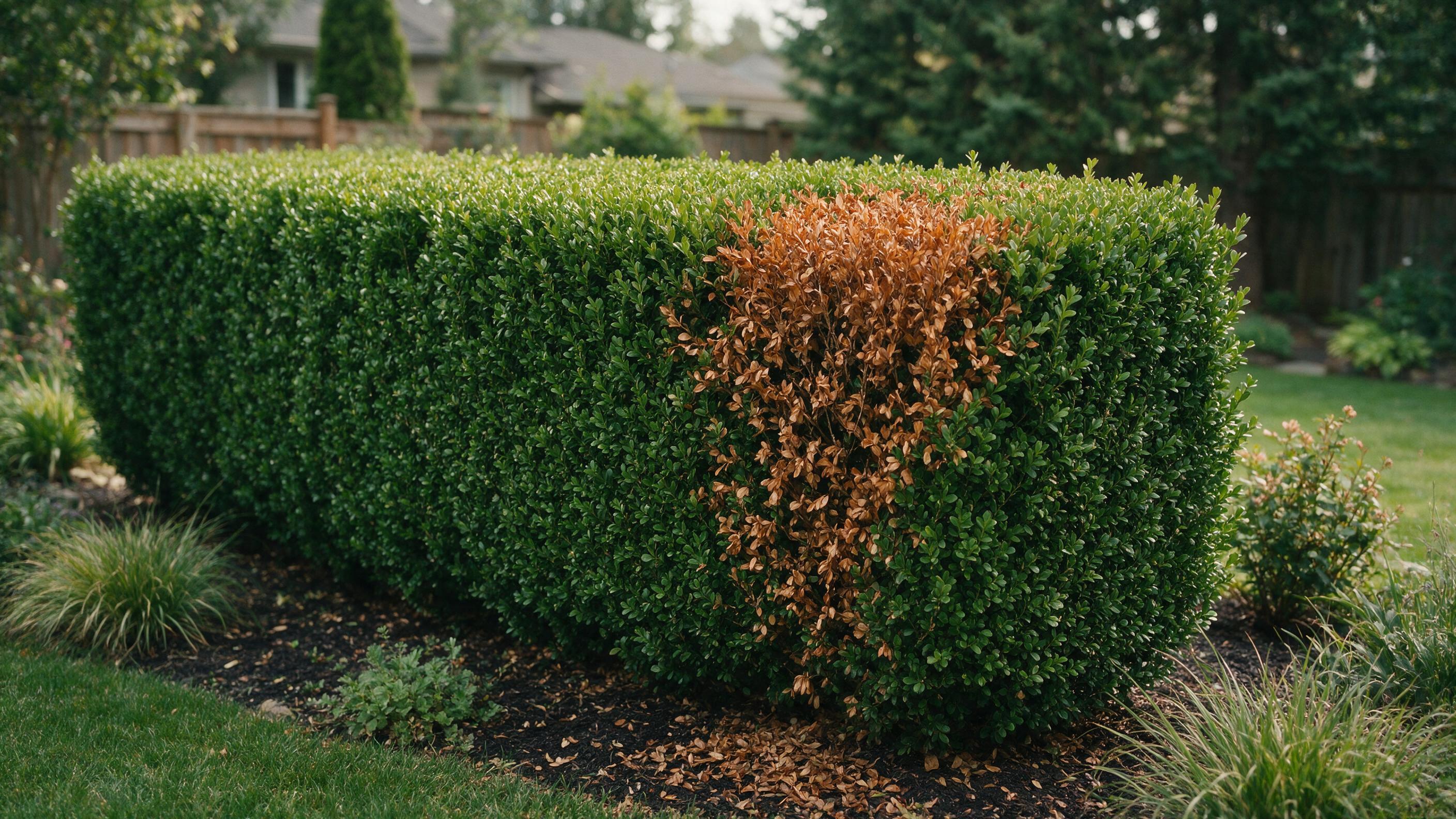
Few sights are more frustrating for a gardener than stepping outside to find a once-lush boxwood hedge fading to an unsettling shade of brown. Whether the color shift appeared overnight or crept in gradually over a season, it signals that something in your plant’s environment or health has gone wrong — and the sooner you identify it, the better your chances of saving the shrub.
Boxwoods (Buxus spp.) are beloved across the United States for their dense, evergreen foliage and their ability to hold a tidy shape year-round. But that same reliability can lull gardeners into a false sense of security. When browning hits, it can stem from a surprisingly wide range of causes — from routine winter stress to serious fungal disease — and each one calls for a different response.
This guide walks you through every major reason boxwood leaves turn brown, how to accurately diagnose the problem in your own yard, and what you can do to restore your plant’s health and keep it looking its best going forward. Whether you’re dealing with a single discolored branch or an entire hedge in decline, you’ll find clear, actionable answers here.
What Does It Mean When Your Boxwood Leaves Are Turning Brown?
Brown leaves on a boxwood are a distress signal, not a diagnosis. Browning in boxwood is never a single-symptom disease — it’s a visible distress signal reflecting an underlying physiological imbalance. As a slow-growing, evergreen shrub with shallow, fibrous roots, boxwood tolerates pruning well but has narrow thresholds for moisture, temperature, oxygen, and pathogen exposure.
The color, pattern, and timing of the browning are your most important clues. Browning that appears on the outermost leaves after a hard winter points to a very different problem than browning that starts at leaf tips in midsummer or spreads rapidly from the bottom of the plant upward. There are numerous reasons for defoliation and browning of boxwood plants, and there are at least seven common ailments that can cause this symptom.
The good news is that most causes are treatable when caught early. Even severe cases of environmental stress can often be reversed with the right adjustments to watering, siting, and soil management. Understanding what the browning looks like — and where it appears first — puts you well ahead of the problem.
Is Browning in Boxwood Always a Sign of a Problem?
Not always. One of the most common sources of alarm for boxwood growers in the US is seasonal bronzing, which is a completely normal response to cold weather. Some boxwood varieties naturally bronze or brown in cold weather without permanent damage. As one lawn care professional puts it, “Boxwoods turning brown at the end of winter is not at all uncommon. It’s usually not even a sign of anything bad happening to them. More often than not, it’s just winter bronzing, which can happen to any evergreen plant.”
Browning and bronzing can be a normal shade on specific varieties, especially in full sun, and that color eventually goes away in the spring when the plant turns green again. If your boxwood greens back up reliably each spring without any new dieback, you can breathe easy.
There is also a fungal condition called Macrophoma leaf spot that looks alarming at first glance. This common fungus produces yellow or tan-colored leaves sporting black fungal fruiting bodies. Fortunately, even though it looks horrible, it’s nothing to worry about. If your plant is completely covered in those black fruiting bodies, consider treating it with neem oil; otherwise, the disease will clear on its own.
That said, browning that spreads, persists through spring, or is accompanied by leaf drop, stem lesions, or wilting is always worth investigating further.
Pro Tip: Before panicking about disease, check whether the browning is limited to the outermost or topmost growth and whether the foliage below the former snowline is still green. Winter damage is especially distinctive in that the growth below the former snowline is still green. That pattern almost always points to winter injury rather than a pathogen.
Watering Issues Causing Boxwood Browning
Water — too much or too little — is one of the most frequent triggers of brown boxwood leaves, and the two problems can look deceptively similar. Getting the diagnosis right before you act is essential.
Underwatering and Drought Stress
Boxwoods, like other plants, can show drought stress by the browning of foliage. Drought stress is the most severe in newly-planted landscapes where the plants are suffering from transplant shock, those without irrigation or rainfall for a long period of time, or those grown in very warm temperatures. The symptoms of drought stress are typically browning of the center of leaves and chlorotic foliage.
Drought stress is most commonly spotted in newly planted or young boxwood shrubs. Boxwoods are slow growers and take time to get established in the ground. Even when they do get established, their roots cannot grow deep into the ground in search of water, which means they must be supplied with adequate soil moisture at all times. Keep the soil well-irrigated until plants are at least two years old. Older plants can tolerate long dry spells but still need to be watered if it hasn’t rained in a long while.
Overwatering and Poor Drainage
Overwatering is actually the more common culprit. Boxwood will not tolerate constantly soggy or wet soil conditions, which can lead to root rot and other harmful plant diseases, so be careful to avoid overwatering them. The tricky part is that an overwatered boxwood often looks exactly like an underwatered one — leaves curl, crisp, and turn brown — because waterlogged roots can no longer deliver moisture to the foliage.
Water only when the top two inches of soil feel dry to the touch, and then water slowly until runoff occurs once. For in-ground plants, deep soaking less frequently, allowing the soil to dry out somewhat before watering again, is much better than splashing just a little water on the plants every day.
Important Note: A common mistake is assuming that brown leaves mean you need to water more. In reality, over 60% of emergency calls to cooperative extensions involve boxwood drowning. Soggy soil kills faster than drought.
Light Conditions Behind Boxwood Browning
Where you’ve placed your boxwood in the landscape plays a bigger role in browning than most gardeners realize. Boxwood grow best in part shade. They can tolerate morning sun so long as they have afternoon shade. Korean boxwood is the most sun-tolerant boxwood. Boxwood grown in full sun are more likely to have cold damage in the winter.
Boxwoods generally prefer partial shade or filtered sunlight, as intense and direct sunlight can lead to leaf burn or scorching. While boxwoods are relatively tolerant of various light conditions, prolonged exposure to intense sunlight during hot summer months can cause stress and damage to the foliage. Over time, this can result in browning or discoloration of leaves, giving the appearance of an unhealthy plant.
If your boxwood sits in a south- or west-facing location with no shade relief, summer browning is almost inevitable. To prevent sunburn and maintain optimal health for your boxwood plants, consider providing them with partial shade or filtered sunlight. You can use taller neighboring plants, a fence, or a shade cloth during the hottest weeks of summer to protect vulnerable plants.
Choosing a position with some shade, up to about 20 percent, will reduce both summer scald and winter injury risk. This is worth keeping in mind when you’re planning a new planting or considering whether to relocate an established shrub that keeps struggling.
Soil, Nutrients, and Root Health Causing Boxwood Browning
Soil conditions are often the invisible driver behind chronic browning that doesn’t respond to watering adjustments. Three factors deserve close attention: pH, nutrient levels, and drainage.
Soil pH and Nutrient Deficiencies
The optimum soil pH for boxwood is between 6.8 and 7.5. When pH drifts outside this range, the plant can’t absorb nutrients that are physically present in the soil. Keeping the pH near the correct range is important because nutrients in the soil are only available to the plant under those conditions.
Magnesium deficiency shows as interveinal yellowing progressing to tan-brown; iron deficiency causes chlorosis on new growth, especially in alkaline soils with a pH above 7.2. Early symptoms of nutrient deficiency include yellowing of the lower leaves, which is more pronounced on older foliage. Leaves may develop yellow edges and often grow smaller and thinner than usual. Nutrient-deficient boxwoods are also more susceptible to bronzing in winter.
A common mistake is reaching for fertilizer the moment you see brown or yellow leaves. Fertilizing stressed plants forces growth without functional roots, burning foliage and inviting pests. Always get a soil test first. Your local cooperative extension office can point you toward soil testing resources in your state.
When fertilization is warranted, timing matters. When a soil test confirms that boxwood do require fertilization, do so in the early spring. Do not fertilize in summer or fall. Slow-release, balanced fertilizers are best for boxwood, and a granular form of urea fertilizer 10-6-4 is recommended. One important note for US gardeners: all too often, people believe that Holly-tone fertilizer is the feeding solution for boxwoods, just like they do with other evergreens. But that’s not the case. While boxwood is part of the evergreen family, most evergreens need to be fed Holly-tone, an organic fertilizer for acid-loving plants — but boxwood is not an acid-loving plant.
Root Rot from Poor Drainage
Several Phytophthora species cause root rots in boxwoods. Symptoms include poor growth, loss of healthy foliage color (leaves eventually turn from green to yellow-green to purplish-brown or straw color), upward turning and inward rolling of leaf margins, and dark brown discolored wood at the base of the stem for two or three inches above the soil line.
The fungi causing root rot thrive in waterlogged soils. To prevent this disease, boxwoods should be planted in well-draining soil and watered carefully to avoid waterlogging. Never plant boxwood near downspouts or in any area that stays wet. They require well-drained soil. You can learn more about how different leaf structures respond to root stress and what other foliage symptoms tell you about plant health.
Pro Tip: To maintain vigorous plants, add two to three inches of organic mulch over the soil surface yearly. Mulching keeps the shallow roots cool and conserves water by minimizing moisture evaporation from the soil. Mulch also reduces weed problems and, most importantly, reduces the likelihood of the plants getting boxwood blight and other fungal diseases. Keep mulch pulled back about six inches from the stem to prevent crown rot.
Environmental Stress Triggering Boxwood Browning
Beyond watering and light, several environmental factors unique to US landscapes can push boxwoods into a browning spiral — especially during winter and early spring.
Winter Burn and Desiccation
Winter burn occurs when boxwood shrubs are exposed to dry winter winds and bright sun while their roots are frozen, preventing the leaves from getting enough moisture. As a result, the plant dries out and turns brown. Leaves turn from bronze to reddish-brown as a result of exposure to cold, dry winter winds. Tissue death is caused by the removal of water in the leaves faster than the plant can replace it through root uptake from frozen water in the soil.
Boxwood browning can also be linked to root stress from sudden temperature changes. Late winter warm spells followed by sudden freezes can shock foliage and cause patchy browning. This freeze-thaw cycle is a well-known problem across much of the Midwest and Northeast.
Salt Damage
Boxwoods planted near sidewalks and roads are most affected by salt damage. The salt used for roads and sidewalks, when sprayed onto a boxwood shrub, has a drastic impact on the foliage. Most foliage on one side of the plant turns brown and is killed. Salt damage can be identified by noticing that only one side of the plant has turned brown, or the pattern that boxwoods planted near sidewalks or roads are most affected. If you live in a northern US state where winter road salt is heavy, consider relocating vulnerable plants or installing a physical barrier before winter arrives.
Over-Fertilization and Chemical Injury
Chemical injury from herbicide drift (especially glyphosate or dicamba), excessive salt accumulation from de-icing products, or phytotoxicity from misapplied horticultural oils can all cause rapid browning that mimics disease. If the fertilizer is over-applied, this will cause the foliage to brown and may even result in branches dying. Always apply fertilizer on top of mulch when the soil has adequate moisture, and never let granules contact roots or foliage directly.
Pests and Disease Leading to Boxwood Browning
When environmental causes have been ruled out, pests and disease move to the top of the suspect list. Several pathogens and insects specifically target boxwood, and some are serious enough to kill an entire planting if left unchecked. Using a plant identification app or a plant ID tool for Android can help you document symptoms for a more accurate diagnosis.
Boxwood Blight
Boxwood blight is a fungal pathogen of species in the plant family Buxaceae, which includes the popular boxwood, sweetbox, and Pachysandra spp. The first symptoms begin as leaf spots followed by rapid browning and leaf drop starting on the lower branches and moving upward in the canopy. A key symptom that differentiates boxwood blight from other boxwood diseases, such as volutella blight and macrophoma leaf spot, are numerous narrow black cankers (black streaks) that develop on the green stems.
If the weather is humid, the underside of the leaf will have a white, frosty appearance caused by the formation of upright bundles of fungal spores. Repeated defoliation and dieback from stem cankers will kill entire plants. The fungus can remain alive in fallen leaves, which can then serve as the source of infection for subsequent years.
Volutella Blight
Volutella blight, also known as boxwood dieback, is a less severe but more common disease. Its symptoms include browning of leaves and stems, pinkish spore masses on the underside of leaves, and eventually defoliation. The disease spreads in wet conditions and is often associated with plant stress or physical damage.
Boxwood Leafminer
Boxwood leaves can turn brown from the boxwood leafminer. The adult leafminer — a mosquito-like fly — lays its eggs between the layers of the leaf and the developing larvae feeds on the tissue. The adults emerge from the leaves, leaving an emergence hole where they exited. The infested leaves will develop brown patches as the larvae grow, and heavily infested leaves will defoliate in the late fall and early spring.
Spider Mites and Boxwood Mites
Mite damage appears as tiny pale dots, termed “stipples,” on leaves. Despite the name, spider mite webbing is apparent only during heavy infestations. Heavy feeding can also cause leaf yellowing and death. Organic insecticidal soaps or horticultural oils can often be effective in controlling these pests.
Nematodes
The tiny roundworms known as nematodes are no strangers to boxwoods. These microscopic pests feed from plant roots, causing symptoms of general decline. Plants will yellow and wilt, or even die back, if root damage is extensive. When they do cause severe damage, consider replacing affected plants with nematode-resistant American boxwoods, yaupon holly, or Buford holly.
How to Diagnose Why Your Boxwood Is Turning Brown
Accurate diagnosis is the difference between a treatment that works and one that makes things worse. Work through the following steps before applying any product or making major changes to your care routine.
- Note the pattern of browning. Is it on one side of the plant only (likely salt or wind exposure)? Starting at the bottom and moving up (possible blight)? Uniform across the outer canopy after winter (likely winter burn)? Centered on individual leaves (drought stress)?
- Check the stems. A key symptom that differentiates boxwood blight from other boxwood diseases are numerous narrow black cankers (black streaks) that develop on the green stems. Healthy stems should be green under the bark when you scratch them lightly.
- Examine the roots and soil. Use your thumbnail or a clean pocket knife to gently scrape a one-inch section of bark from a brown branch near the base to check whether the cambium beneath is green (alive) or brown (dead).
- Check soil moisture. Push a finger or a screwdriver two inches into the soil. If it comes out muddy, overwatering is likely. If the soil is bone dry and powdery, drought stress is the culprit.
- Look for insects. Inspect the undersides of leaves for stippling from mites, blister-like swellings from leafminer larvae, or cottony deposits from psyllids.
- Consider the timing. Initial symptoms of boxwood blight are generally first observed in late spring or early summer when close examination of boxwood leaves may reveal round, dark or light brown leaf spots with darker borders and potentially a yellow halo. Browning that appears only in late winter or early spring is far more likely to be environmental.
- Get a soil test. The most reliable guide to applying fertilizer is by testing the soil. Soil sample analysis by the Cooperative Extension Service will provide appropriate fertilizer recommendations for a specific site.
If you’re still unsure after working through these steps, examine whether there are any patterns to the damage and consider sending in a sample to get a confirmation by a diagnostic lab. These problems are often confused due to their similar symptomology, and diagnosticians will be able to help identify which of these common problems could be causing the plant damage.
How to Fix a Boxwood That Is Turning Brown
Once you’ve identified the cause, the fix becomes much more straightforward. Here’s how to address each major scenario.
Fixing Winter Burn
If your plant has already turned brown from winter burn, prune any affected foliage in mid-spring, cutting back all the way to new, healthy growth. You should also water and fertilize the plant regularly to make sure it has the resources it needs to recover. Do not prune brown foliage in late winter — wait until new growth emerges in mid-spring. Then cut back only dead wood, leaving any stem with green cambium.
Fixing Overwatering and Root Rot
Stop irrigation immediately. Remove mulch piled against the trunk (a common error). Install a French drain or raised bed if planting is in clay-heavy or low-lying soil. Treating root rot is all about increasing the drainage around the plant’s roots, so if it’s potted, make sure to reduce watering frequency. A landscape boxwood may have to be dug and the soil around it amended to give it a fighting chance. Unfortunately, there’s no chemical intervention available for root rot.
Fixing Drought Stress
Increase watering frequency gradually and apply a two- to three-inch layer of organic mulch around the base of the plant to retain soil moisture. Avoid wetting the foliage — water at the base. For newly planted shrubs, keep the soil consistently moist for at least the first two growing seasons.
Fixing Boxwood Blight
There is no cure for boxwood blight. You might, however, prevent it from spreading to other plants. Remove the infected plant entirely. Thoroughly rake up all fallen leaves and twigs. Throw this debris away, burn it if legal, or bury it as far from other boxwoods as possible. Wash dirt off tools, then disinfect with 70% ethanol, bleach, or hydrogen peroxide.
Fungicide sprays have shown some disease suppression in limited situations. However, these treatments do not eradicate boxwood blight and must be repeated throughout the growing season. Consider replacement of boxwoods with non-susceptible plants such as hollies and conifers. If you’re exploring alternatives, take a look at these types of ivy plants or deer-tolerant plants that can fill a similar landscape role.
Fixing Leafminer Infestations
Preventing a leafminer infestation involves regular monitoring, releasing beneficial insects that prey on leafminers, and pruning and destroying infested leaves. If necessary, systemic insecticides can be applied in early spring to control the pest.
Fixing Nutrient Deficiencies
Have your soil tested before adding any amendments. If a deficiency is confirmed, fertilize in spring with a slow-release shrub and tree food, preferably one that contains sulfur and/or iron for deep greening. Alternatively, you can feed with a natural organic plant food. Do not use fertilizers formulated for acid-loving plants like azaleas or rhododendrons, as they tend to drive down pH.
How to Prevent Boxwood Browning Going Forward
Prevention is far easier than recovery. The following practices address the most common causes of browning before they can take hold.
- Choose the right site. Hardy in USDA zones 6 to 9 (occasionally colder), boxwood will grow in full sun but prefers a slightly shaded location. Keep in mind that the shrubs will also need some shade in winter, when the leaves have fallen off deciduous trees and taller shrubs. Choosing a position with some shade, up to about 20 percent, will reduce both summer scald and winter injury risk.
- Water deeply and infrequently. Establish a consistent watering schedule that lets the top two inches of soil dry between waterings. Never let the root zone stay soggy.
- Protect plants from winter wind. Physical barriers made from materials such as burlap or plastic, placed about 18 inches from the plants on the windward side, can lessen winter wind damage by reducing wind velocity. Maintain adequate soil moisture in the fall to prevent winter desiccation.
- Prune at the right time. Prune only in late spring (after frost danger passes) or early fall (six weeks before first frost). Never shear boxwood in summer — it stimulates tender growth vulnerable to blight and sun scald. Use hand pruners for selective thinning to improve interior airflow.
- Sanitize your tools. Boxwood blight can spread if a landscape contractor prunes a boxwood on another property that has the disease and does not sanitize their equipment. Good practices to avoid the spread of boxwood blight include cleaning up clippings after pruning and disinfecting pruning equipment.
- Mulch properly. Apply two to three inches of organic mulch over the root zone annually, keeping it pulled back from the stem. Boxwood roots tend to like cool soil conditions. Spread a one- to two-inch layer of chopped leaves or wood chips around the base. Keep it about six inches from the stem of the bush to avoid stem rot — this mulch will keep the soil moist and should help with weeding.
- Test your soil regularly. The best way to determine fertilizer needs is to conduct a soil test. Your local county extension office will have instructions on how to collect soil for testing and will send your sample to a soil lab for analysis.
- Buy certified disease-free plants. The best defense against boxwood blight is prevention. Purchase plants from reputable sources, regularly clean gardening tools, and isolate new plants before introducing them to the garden.
If you’re gardening in a region prone to drought, it’s also worth exploring drought-tolerant plant options that can complement your boxwood plantings without competing for water. For gardeners in exposed locations, pairing boxwoods with wind-tolerant plants can create a natural buffer that reduces winter stress across the whole bed. You can also browse a broader range of plant types to find companions that thrive under similar conditions.
FAQ
Can Brown Boxwood Leaves Turn Green Again?
It depends on the cause. Leaves damaged by winter burn, drought, or minor nutrient stress may not recover, but the plant itself can push out healthy new green growth once conditions improve. Leaves killed by blight or severe root rot will not recover, and the affected branches should be pruned away. The key is addressing the underlying cause quickly so healthy tissue can regenerate.
How Do I Tell the Difference Between Winter Burn and Boxwood Blight?
While the browning and defoliation of boxwood is a key symptom of boxwood blight, there are a number of other look-alike plant problems. Winter damage on boxwood is often confused with boxwood blight. The clearest differentiator is the presence of black stem streaks — a key symptom that differentiates boxwood blight from other boxwood diseases are numerous narrow black cankers (black streaks) that develop on the green stems. Winter burn does not produce stem lesions. Also, winter burn browning appears after cold weather, while blight typically progresses during warm, humid conditions.
Should I Cut Off Brown Branches Right Away?
Do not prune brown foliage in late winter — wait until new growth emerges in mid-spring. Then cut back only dead wood, leaving any stem with green cambium. Pruning too early can remove branches that might still recover, and pruning at the wrong time of year can stimulate tender new growth that’s vulnerable to late frosts or disease.
What Is the Best Fertilizer for Browning Boxwood?
Do not fertilize a boxwood that is actively stressed or browning without first testing your soil. If a soil test confirms a deficiency, slow-release, balanced fertilizers are best for boxwood, and a granular form of urea fertilizer 10-6-4 is recommended. Apply in early spring on top of mulch, never directly on roots or foliage.
Are There Boxwood Varieties That Are More Resistant to Browning?
Yes. Several newer cultivars have been bred specifically for improved disease resistance, particularly against boxwood blight. When plants succumb to nematode damage or severe disease, consider replacing them with nematode-resistant American boxwoods, yaupon holly, or Buford holly. Check with your local nursery or Michigan State University Extension for cultivar recommendations suited to your USDA zone.
How Do I Know If My Boxwood Has Root Rot?
Symptoms of Phytophthora root rot include poor growth, loss of healthy foliage color (leaves eventually turn from green to yellow-green to purplish-brown or straw color), upward turning and inward rolling of leaf margins, and dark brown discolored wood at the base of the stem for two or three inches above the soil line. If you see these signs together, especially in a plant growing in poorly drained soil, root rot is a strong possibility. Consult your local cooperative extension service for confirmation and next steps.
Can I Save a Boxwood with Boxwood Blight?
There is no cure for boxwood blight, but you might prevent it from spreading to other plants. For smaller plants with localized infection, aggressive removal of all affected material, thorough cleanup of fallen debris, and repeated fungicide applications through the growing season may slow progression. Larger, heavily infected plants are best removed entirely to protect surrounding shrubs. The Piedmont Master Gardeners and the American Boxwood Society both offer detailed guidance on managing this disease.