
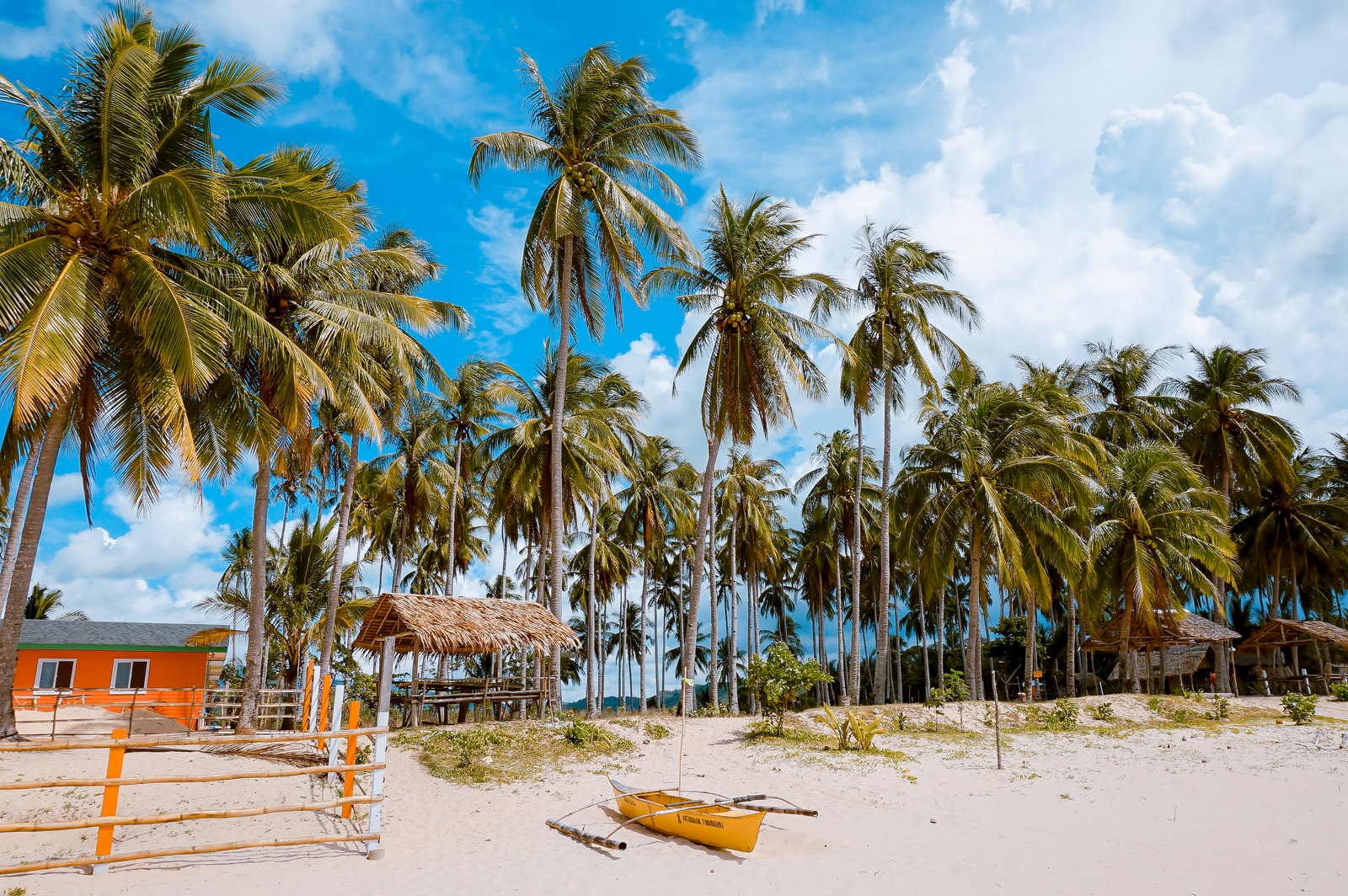
Tropical beaches, warm sunny climes, and attractively designed gardens are all associated with the different types of palm trees.
Also, Fan-shaped or feather-like fronds (leaves) and fiber-covered trunks or stems distinguish palms. For example, date palms and coconut palms thrive well in warm climates.
On the other hand, some palm species can tolerate temperate conditions and cold temperatures. In some cases, palm trees can also be grown as houseplants.
How do scientists classify the thousands of different palm tree species? They usually examine the form of the leaves.
This is the most fundamental way to tell them apart because some palm trees have feather-like leaves called innately, and others have fan-like leaves called palmates.
The trunks are also used to distinguish between different types of palms. Some trees have more fascinating trunks than others, while others don’t.
Also, Some trunks will be smooth, while others will be lumpy or have bark rings around them. Some trunks may even have husks or fiber coverings.
These give the trunks a shaggy, spiky appearance. Let’s discuss some of the different palm tree types without further ado.
1. Mazari Palm
The Mazari Palm tree is a shrub-like tree found in southwestern Asia. Its leaf clusters resemble fans along the stems, and the leaves can grow as large as 1-4 feet (0.3 – 1.2 meters) in length.
The colors of these palms’ leaves are probably the most remarkable feature. The colors are either silvery green or blue. Also, It has a silky appearance due to the length and taper of the leaves.
Like many other palm species, this Mazari Palm type can withstand temperatures as low as 10 degrees Fahrenheit (-12.22 degrees Celsius). They do, however, develop best in hotter settings.
2. Cat Palm
This palm tree is so small that it seems like a shrub. The trunk is entirely missing. On the other hand, the tree is densely clothed with broad leaves. The leaves are attached to slender stalks that stretch down to the ground.
The Cat Palm will only reach about 6 feet (2 meters). As it ages, the thick tree will have a dense brush of lustrous, thin leaves. Yellow, spherical flowers will also bloom on the tree.
You will produce small green palm fruits after pollination. They will develop into black drupes approximately half an inch long as they ripen.
Furthermore, Warmer climates are better for these trees, but they can still live in cooler climates. This is one of the different types of palm trees.
3. Triangle Palm
These palm trees are particularly striking because they resemble a triangle. The trunk is thick and not particularly long. The main attraction is the leaves, which grow on the trunk with thick roots.
The tree’s long leaves fan out to the sides, forming a broad, triangular-fanned shape. The leaves can reach up to 8 feet (2.4 meters).
The leaves are triangular because the leaflets point out at a 120-degree angle. These Palm trees thrive in tropical and subtropical climates.
4. Pygmy Date Palm
The pygmy date palm, as its name implies, is a little palm tree. This genuine palm in the Arecaceae family doesn’t get much taller than 10 feet (3 m).
This little palm tree is distinguished by its single stem and tall, bushy pinnate fronds, which measure roughly 3 ft. (1 m) long.
This palm species makes a beautiful flowering ornamental tree for subtropical gardens. The pygmy date palm’s arching-drooping fronds are vast and spectacular, concealing the spiky-looking trunk. These short palms also do nicely in containers.
Although pygmy palm trees produce dates, the fruit is not as sweet as those of larger date palms. This is one of the different types of palm trees.
5. Pindo Palm
Pindo palm trees, sometimes called jelly palms, are a cold-hardy palm species. The mature palms can reach 15 to 20 feet (4.5–6 meters).
However, they are a slow-growing palm species, which makes them perfect for gardens with many small palm trees.
These short palm trees may grow in full sun or moderate shade and tolerate various soil conditions.
The fruit of palm trees ranges from bright orange to brown and is used to make jelly, hence the term ‘jelly palm.’ It is lovely when the palm blooms with red, yellow, or white blossoms.
6. Mediterranean Dwarf Palm
These palm trees have a distinct appearance. Several trunks emerge from the base at various heights but remain relatively short. The trunks also have many light-colored, spiky protrusions.
The tree’s top sprouts thick, fan-like leaves, giving it a bushy, disorderly appearance. Furthermore, The Mediterranean Dwarf Palm is a little tree that reaches only 10-20 feet (3-6 meters).
It can also produce blooms and tolerate extreme cold. It can survive in temperatures as low as 10 degrees Fahrenheit, but it thrives in the sun.
7. European Fan Palm
The Mediterranean Fan Palm is another common name for this palm species. It’s a tree that only grows up to 10 feet (3 meters) tall. The tree has several trunks and leaves that are semi-circular in shape.
The leaves are various shades of green, ranging from olive to blue-green. Some of the leaves even appear to be silvery.
Furthermore, because it is native to the Mediterranean, it is flexible and may thrive in various environments.
Also, it can adapt to practically any soil type and is quite resilient. It doesn’t take much to keep it alive once it’s established.
In addition, this tree is extremely tough, with a high drought tolerance and the ability to withstand temperatures as low as 10 degrees Fahrenheit (-12.22 degrees Celsius).
8. Bottle Palm
The Mascarene Islands are home to these palm plants. It gets its name from its unusually shaped trunk. It is wide at the bottom and narrows towards the top like a bottle.
This tree grows slowly and only reaches a height of 12 feet (4 meters). At the summit, large, arching leaves grow. The glossiness of the leaves adds to the green hue of the foliage.
However, these palm plants prefer full sunlight and can withstand a lot of salt. They cannot tolerate extreme cold, and if exposed to it, they will suffer damage.
9. Lipstick Palm
This palm tree, endemic to Southeast Asia, is also known as the Sealing Wax Palm. Because of the tree shaft that runs through the leaf stem, it was dubbed the “lipstick” palm. The shaft is a brilliant red color, similar to a lipstick tube.
Furthermore, these trees remain tiny, reaching just 15 feet (4.5 meters). Nevertheless, they are incredibly flexible and may thrive in a variety of temperatures.
10. Pindo Palm
The Pindo Palm, sometimes known as the Jelly Palm, is Brazilian. The jelly palm gets its name because its fruit is so delicious that it practically tastes like jelly.
These trees are also highly cold-hardy, surviving in temperatures as low as 10 degrees Fahrenheit (-12.22 degrees Celsius). They can also withstand drought and adapt well to their surroundings.
This tree’s trunk develops to be quite thick, having a diameter of 18 inches (0.46 meters). The base of ancient leaves surrounds the trunk, giving it a spiky appearance. The leaves on the tree’s summit are blue-green.
11. Carpentaria Palm
These trees can only be found in Australia. Each tree has a single, long, and narrow trunk. The bark is smooth, and the upper leaves are enormous and arch down to the ground.
Moreover, these trees can grow up to three feet (0.9 meters) per year. When fully grown, they can grow as tall as 30-40 feet (9-12 meters).
These trees aren’t as tough as others we’ve discussed. However, they’re susceptible to cold and can’t cope with the demands of a drought. This is one of the different types of trees.
12. Foxtail Palm
The leaves of the foxtail palm give it its name. The foliage looks spiky and hangs in bunches from the tree. Due to the business of the leaves, the palm resembles a foxtail.
You can only find these trees in Australia. It grows swiftly but only reaches a height of about 20 feet (6 meters). Some of the tallest trees might exceed 30 feet (9 meters).
It grows quickly and can live in a variety of situations. It thrives in practically any type of soil and withstands colder temperatures.
Furthermore, It is finicky about how much light it receives and prefers to be in the sunlight all the time.
13. Majesty Palm
Unsurprisingly, this palm is known as the “majesty” palm. Its broad base and sweeping foliage give it a regal appearance.
These trees grow pretty quickly, up to a foot per year. They will continue to grow at this rate for the next ten years before slowing down.
The palm tree can grow up to 35 feet (11 meters) in height, but most stay around 20 feet (6 meters). They prefer to be in the shade rather than in direct sunlight. To thrive, they also require fertile soil conditions.
14. Dwarf Majesty Palm
The Dwarf Majesty palm tree (Ravenea hildebrandtii) is one of the most popular short palm trees for gardening and landscaping. This palm has only one trunk and dark green pinnate leaves.
The palm tree’s trunk is thin and barely 3″ (7 cm) thick, and it doesn’t grow much taller than 8 feet (2.4 m). The enormous, broad arching leaves look as regal as the center point of any subtropical decorative garden.
The brilliantly green leaves can reach a length of 3 feet (100 cm) and have up to 100 leaflets along the stem. However, the thin trunk and broad crown of foliage contrast beautifully in any garden. This palm can also be grown in containers.
The Majesty palm is one of the most excellent potted palm plants to cultivate outside. This is one of the different types of palm.
15. Christmas Palm Tree
The Christmas palm (Adonidia merrillii) is a fantastic alternative if you are looking for a tiny palm tree for your garden. This ornamental palm tree is relatively modest compared to other towering coconut or date palms.
According to some sources, the Christmas tree is one of the most popular ornamental palm trees. This little palm tree rarely grows taller than 25 feet (7.6 meters).
However, some lower types only reach 15 feet (4.5 m). Large pinnate palm leaves arch up from the top of the stalk to form a lovely crown of green foliage.
16. Mexican Fan Palm
The “skyduster” is another name for this tree. This is likely due to the leaves clustering to resemble a feather duster.
This tree is also a fast-growing palm, but it is endemic to Mexico, as the name suggests. Under ideal conditions, it can grow up to 2 feet (0.6 meters) every year, which is an incredible feat.
It can also reach a height of 70 feet at its tallest point (21 meters). Not unexpectedly, these trees are highly adaptive, which helps them grow to such heights.
They may grow in a variety of soils and can withstand droughts and frigid temperatures as low as 20 degrees Fahrenheit (-6.67 degrees Celsius).
17. Sago Palm
Although it is known as the Sago’s palm, the Cycas revoluta is not a real palm tree. The Sago’s palm is a member of the Cycadaceae family, which resembles palms but is botanically distinct. The slender trunk and fern-like new leaves distinguish this ‘palm.’
18. Arikury Palm
The Arikury palm is a tiny ornamental palm with arching olive to dark-green fronds that form a spreading crown.
This popular accent palm is ideal for small gardens because it doesn’t become much taller than 6 feet (1.8 m). The evergreen palmate leaves grow to 4 to 6 feet (1.2–1.8 meters).
Furthermore, The Arikury palm has arching, flat leaflets growing on exceptionally long jagged petioles and is suitable for subtropical environments in USDA zones 9 to 11.
The palm also produces pale yellow flowers on broad arching, pendulous stalks that can reach 3 feet (1 meter) in length.
The serrated leaf stems of the Arikury palm are a distinguishing trait that only a few palm species in the Syagrus genus have. This is one of the different types of palm trees.
19. Bismarck Palm
These palm trees have one of the most striking appearances. Their relatively small stature distinguishes them from “typical” palms.
It is surrounded by broad, extending leaves surrounding the base and its stubby heights. The dense foliage almost makes it seem like a bush.
Furthermore, the temperatures it can bear are much more impressive than its appearance. It can withstand even the coldest temperatures of 15 degrees Fahrenheit (-9.5 degrees Celsius).
20. Chinese Fan Palm
Having an intriguing appearance is a trend among these cold-tolerant palms. The Chinese palm’s leaves resemble those of the California fan palm.
They are crown-shaped leaves that are wide and prickly. On the other hand, the tips of their leaves point downwards, suggesting curled fingers.
Furthermore, these trees can resist droughts and withstand temperatures as low as 15 degrees Fahrenheit (-9.5 degrees Celsius). They can also grow in a variety of soil types.
21. Needle Palm
Because of its low stature, this palm tree is also known as the Porcupine Palm. It nearly doesn’t look like it has a trunk. Instead, it’s encircled by a ring of long, pointed leaves.
These trees are even more resistant to the cold, surviving in temperatures as low as 10 degrees Fahrenheit (-12.23 degrees Celsius). It can also withstand droughts and a variety of soil types. This is one of the different types of palm trees.
22. Windmill Palm
The trunks of these trees are also reasonably prickly, and they stay on the shorter side.
These are some of the world’s most rigid palms, especially when it comes to temperature tolerance. They can withstand temperatures as low as 5 degrees Fahrenheit (-15 degrees Celsius).
Furthermore, although most palm trees can endure colder temperatures, they prefer warm conditions. On the other hand, the Windmill Palm despises hot weather and prefers to live in cooler climates.
23. Coconut Palm
When most people think of palm trees, they think of these trees. These are the plants that produce coconuts.
Coconuts are loved by people worldwide, and they benefit people’s diets and economies.
Moreover, The coconut’s outer, “meaty” section is utilized in various baked items and beauty products. The coconut’s fluid interior is known as “milk,” which is popularly consumed.
Even the exterior husk of the coconut is used in the manufacturing process. This is one of the different types of palm trees.
24. Acai Palm
As the name suggests, these palm trees produce the Acai fruit. These fruits are becoming increasingly famous because of their sweet flavor and nutritional value.
Antioxidants, omega-3 fatty acids, and amino acids abound in them. Due to its therapeutic characteristics, the fruit is frequently found in energy drinks, weight loss products, and cholesterol products.
These trees aren’t very resilient and can’t endure cold or drought. Furthermore, this is one of the different types of palm trees.
25. Date Palm
Beautiful, expansive leaves reach out to the sides of these trees’ trunks. These trees yield orange-red fruits known as “dates,” widely consumed worldwide.
People adore these fruits because they are incredibly delicious, similar to figs or prunes. They’re typically seen in desserts such as ice cream and syrups. They’re also used in alcoholic beverages and vinegar.