Why Is My Philodendron Turning Yellow? Causes, Fixes, and Prevention

September 30, 2026
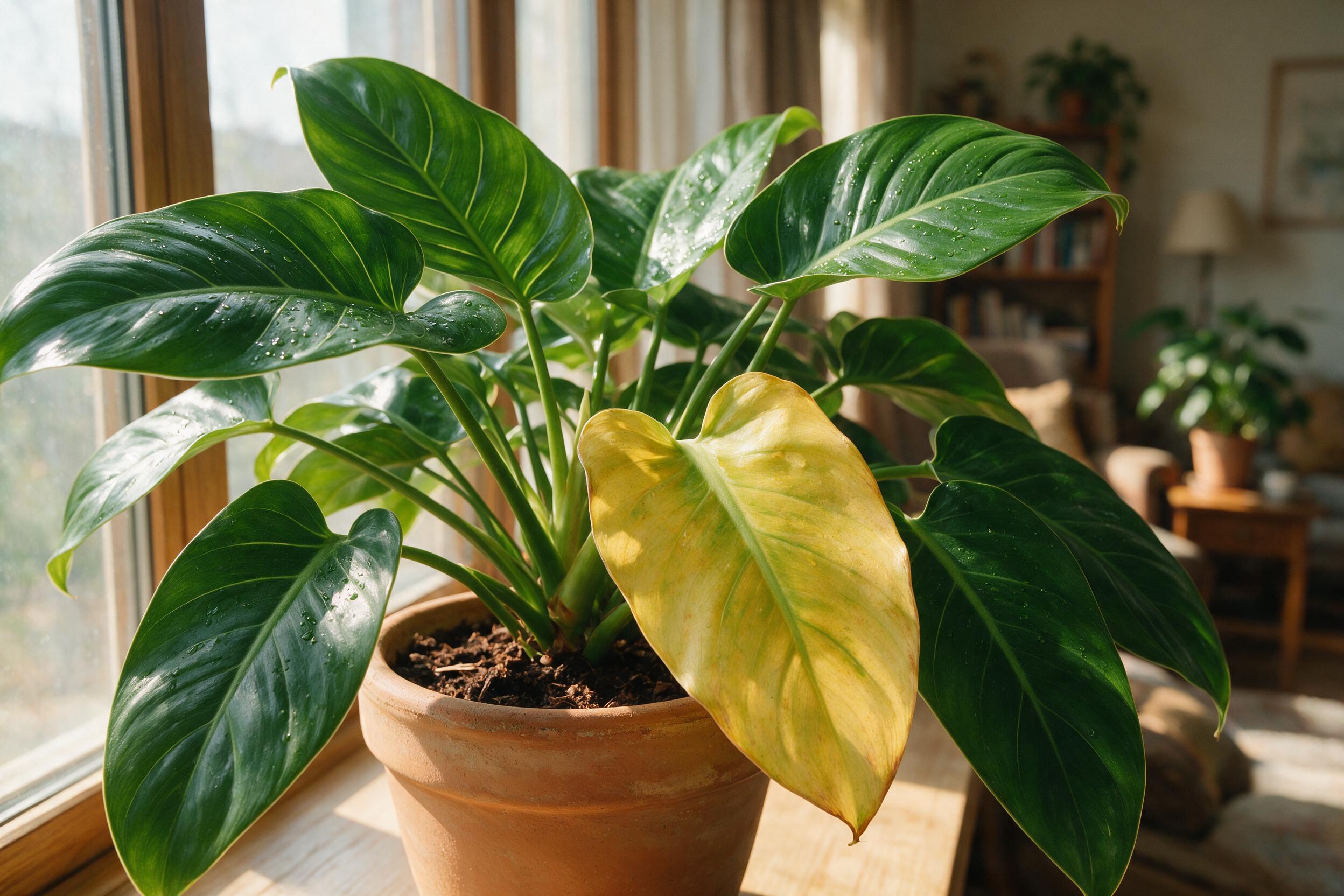
You walk past your philodendron and notice it: a leaf that was deep green yesterday now looks washed out, pale, or fully yellow. It’s one of those plant-parent moments that sends you straight to the internet looking for answers.
The good news is that yellow leaves are your plant’s way of communicating. Once you figure out what it’s trying to tell you, the fix is usually pretty simple. This guide walks you through every cause of philodendron yellowing — from the most common to the easy-to-miss — so you can diagnose the problem and get your plant back on track.
What Does It Mean When Your Philodendron Has Yellow Leaves?
Philodendrons are beloved houseplants across the United States for good reason. They originate from Central and South America, require little attention, and add a native tropical feel to your home with their large, green, and glossy leaves. You can read more about this plant’s full care profile in our philodendron houseplant guide.
Yellowing — technically called chlorosis — occurs when chlorophyll production slows or breaks down faster than it’s replaced. This isn’t random decay; it’s a metabolic recalibration. The plant redirects resources away from older, less efficient leaves toward newer growth or survival functions like root repair.
Yellowing leaves on your philodendron are almost never a sign of inevitable decline — they’re a readable signal that something in its environment or care routine has shifted. In over 90% of cases, the culprit is one of seven well-documented factors: overwatering, insufficient light, nutrient imbalance, low humidity, temperature stress, root-bound conditions, or natural leaf aging.
Pro Tip: Pay attention to the pattern of yellowing, not just the color. Where the yellow appears — old leaves vs. new, edges vs. veins — tells you exactly which problem you’re dealing with.
Is Yellowing in Philodendrons Always a Sign of a Problem?
Not always. Yellowing leaves on a philodendron are sometimes just a natural part of its life cycle. As the plant matures, older leaves may slowly turn yellow and die off while the plant focuses its energy on new, healthy growth. If only the older leaves turn yellow and the new growth looks vibrant, there’s no need to worry — this is simply a sign that your plant is prioritizing new growth.
If your philodendron is pushing out new growth and the yellowing leaves are older, particularly at the bottom of the plant, this yellowing is natural. Your plant sheds its old leaves and sends energy to new growth. This process is completely normal and doesn’t require any intervention beyond tidying up the affected leaves.
The pattern that should concern you is when yellowing spreads to multiple leaves at once, affects new growth, or appears alongside other symptoms like mushy stems, spots, or wilting. In those cases, something in the care routine needs to change.
Watering Issues Causing Philodendron Yellow Leaves
The most common cause of yellowing leaves among philodendron plants is improper soil moisture — in particular, overwatering. This is the first place to look whenever you notice widespread yellowing across your plant.
When a philodendron is watered too often or the pot lacks proper drainage, the soil can become waterlogged, leading to root rot. Without healthy roots to absorb the nutrients and oxygen that plants need, the leaves — especially those at the base — begin to yellow. An overwatered philodendron will also show drooping, slightly mushy stems, and sometimes a musty smell from the soil.
Underwatering is the other side of the coin. Insufficient water can also stress the plant. Underwatering can manifest in various ways, with one of the most noticeable symptoms being yellowing leaves. The leaves may also become dry, crispy, or start to curl at the edges — signs of dehydration.
Providing proper and consistent soil moisture is important in caring for a philodendron. Alternating between bone dry and wet soil from ill-timed waterings can create stress and cause your philodendron to yellow. The fix is to develop a consistent, soil-responsive watering habit rather than following a fixed calendar schedule.
Pro Tip: Only water your philodendron when the top 25% of the soil in the pot is dry. Soil should remain damp, but not wet. Stick your finger about two inches into the soil — if it still feels moist, wait another day or two.
Light Conditions Behind Philodendron Yellow Leaves
Philodendrons prefer bright, indirect light, similar to their natural habitat. In the wild, they grow beneath taller trees, receiving sunlight filtered through the canopy. In low-light conditions, they struggle to photosynthesize effectively, leading to yellowing leaves. This is a common issue in American homes during winter months when natural light is reduced.
Indoor plant expert Vladan Nikolic of Mr Houseplant explains: “Philodendron leaves can turn yellow from insufficient light. This occurs because the amount of light available to the plant allows it to support only a certain number of leaves. Older leaves will turn yellow and die if your philodendron doesn’t receive enough light to support all of its leaves.”
Too much light causes its own problems. Direct sunlight can be too intense and scorch the leaves, causing unsightly yellow or brown spots. If your philodendron plant is getting too much light, its foliage will look bleached or pale, and you may notice crisp, dry leaf tips or brown, scorched spots on the leaves from overexposure to full sun.
The sweet spot is a bright spot away from direct sun — think a few feet back from a south- or east-facing window. If your space doesn’t have enough natural light, our guide to the best houseplants for low-light areas can help you find the right placement strategy. Artificial lighting can also be a great alternative to sunlight — LED grow lights are specifically designed to deliver the optimal light spectrum for healthy growth.
Soil, Nutrients, and Root Health Causing Philodendron Yellow Leaves
Even when you water correctly, the soil itself and what’s in it can drive yellowing. Nutrient deficiencies are a common and often overlooked cause, and each deficiency shows up in a distinct pattern that helps you identify it quickly.
| Nutrient Deficiency | Which Leaves Are Affected | What It Looks Like |
|---|---|---|
| Nitrogen | Older, lower leaves | Uniform yellowing across the whole leaf |
| Iron | Newer, younger leaves | Yellow tissue between veins while veins stay green (interveinal chlorosis) |
| Magnesium | Older leaves | Yellow patches between veins, veins remain green |
Iron plays a crucial role in chlorophyll production, especially in new leaves. If your philodendron lacks iron, you’ll notice yellowing between the veins of newer leaves while the veins remain green — a condition known as interveinal chlorosis. This is a classic sign of iron or magnesium deficiency, and it’s common in alkaline soils or hard water regions.
Feed your philodendron with a balanced liquid fertilizer during the growing season — spring through early fall. Once a month is usually plenty. In winter, you can skip fertilizing or cut back to every six to eight weeks. Watch out for over-fertilizing too: salt buildup from too much fertilizer can also cause yellowing. If you’ve been heavy-handed, flush the soil by watering thoroughly a few times to wash out excess salts.
Root-bound plants are another soil-related cause. If your philodendron has been in the same pot for years and you’re seeing unexplained yellowing, check the roots. Roots circling the inside of the pot or poking out of drainage holes signal it’s time to repot. Choose a pot one to two inches larger in diameter and give your plant fresh, well-draining potting mix to give roots room to spread and access nutrients again.
Environmental Stress Triggering Philodendron Yellow Leaves
In the wild, philodendrons grow beneath forest canopies where humidity stays above 60%, temperatures hover between 65–85°F, and rainfall is frequent but well-drained. When grown indoors, even minor deviations from these parameters trigger visible stress responses.
Temperature is a big one, especially in American homes during winter. Temperature fluctuations can quickly trigger philodendron yellowing. When room temperatures drop significantly — much lower than what most tropical plants prefer — the plant begins losing color. Keep your philodendron away from cold drafts, air conditioning vents, and exterior windows in winter.
Sudden, uniform yellowing across multiple mature leaves is a strong indicator of cold shock, recent repotting trauma, or an abrupt reduction in light. If you’ve recently moved your plant, rearranged furniture, or turned on the AC for the season, that change may be the trigger.
Low humidity and dry soil cause leaves to droop and brown on their edges, later followed by entire yellowing. Misting the leaves of your philodendron often will increase the humidity. You can also place your pot on a pebble tray filled with water or use a small humidifier nearby — both are effective options for US homes with dry indoor air, especially in heated spaces during winter.
Key Insight: Philodendron plants feel best in bright light in humid, warm environments with temperatures ranging from 65°F to 80°F. Keeping your home within that range during the growing season makes a significant difference in leaf health.
Pests and Disease Leading to Philodendron Yellow Leaves
A weakened or stressed philodendron is more susceptible to insect infestations. Sap-sucking bugs like spider mites can drain your plant of moisture, and this problem quickly manifests itself by yellowing leaflets and fronds. Pest damage is often confused with other causes because the yellowing looks similar — but a close inspection of the leaves will reveal the culprit.
Pests can turn the plant yellow. Common culprits include spider mites, aphids, mealybugs, and scale insects, which feed on the plant’s sap, leading to wilting, yellowing, and overall decline in health. If your philodendron has spider mites, you may notice fine webbing on the leaves, discoloration on the foliage — brown and yellow spots — and a general decline in the plant’s health.
Brown or yellow spots on philodendron leaves, especially if they’re spreading, can be a sign of fungal or bacterial disease. Fungal spots will normally have a brown or black ring around them, while bacterial spots are often mushy and discolored. Move an affected plant away from other plants, and treat it with the appropriate fungicide.
Early detection and swift action are essential to deal with pests effectively. Inspect your philodendron regularly, particularly the undersides of leaves, where pests tend to hide. If you spot any signs of infestation, isolate the plant to prevent further spread. Treat the affected plant with a gentle insecticidal soap or neem oil, following the product instructions carefully — these natural remedies can help control pests without harming the plant or the environment.
How to Diagnose Why Your Philodendron Is Turning Yellow
Diagnosing the cause of philodendron yellowing is mostly about reading the pattern. When you notice philodendron leaves turning yellow, the most helpful first step is to look at the pattern rather than focusing on a single leaf. The location of the yellow leaf, how quickly it appeared, and what recently changed in the plant’s environment can usually point to the real cause.
Work through this checklist in order:
- Check the soil moisture. Push your finger two inches into the soil. Wet and soggy? Overwatering is likely. Bone dry? Underwatering may be the issue.
- Look at which leaves are yellowing. Older leaves turning yellow first, starting at tips or margins, often signals natural aging — or early overwatering. Yellowing only on new leaves with stunted or distorted growth suggests severe nutrient lockout, pH imbalance, or root damage.
- Inspect for pests. Flip leaves over and look along stems for tiny bugs, webbing, or sticky residue. Use a plant identification app — our roundup of the best iPhone apps for identifying plants and the best Android apps for identifying plants includes tools that can help with pest and disease ID too.
- Assess the light. Is the plant near a window, or sitting in a dim corner? Has the season changed and reduced the hours of natural light it receives?
- Review your fertilizing history. If you haven’t fed the plant in months, deficiency is possible. If you’ve been fertilizing heavily, salt buildup could be the cause.
- Consider recent changes. Did you move the plant, repot it, turn on the heat or AC, or bring it inside from a porch? Environmental shifts often precede yellowing by a week or two.
Important Note: Yellowing is rarely caused by disease in healthy indoor philodendrons — it’s almost always a cultural issue you can observe, diagnose, and correct within days. Start with the most common causes before assuming disease.
How to Fix a Philodendron That Is Turning Yellow
Once you’ve identified the cause, the fix is usually straightforward. Here’s what to do for each scenario:
If overwatering is the problem: Hold off on watering until the top 25% of soil is dry. Check the roots — if they’re brown and mushy instead of white or tan, you’ve got root rot. Trim the damaged roots, repot in fresh soil, and scale back your watering schedule. Make sure your pot has drainage holes — no exceptions.
If underwatering is the problem: Water your plant thoroughly until water flows freely from the drainage holes. Make sure you provide enough water so that liquid flows from the drainage hole at the bottom of the pot and into the saucer, then discard any excess water in the saucer and do not let your plant sit in standing water.
If light is the problem: Move your philodendron to a location with bright, indirect light. Ideal locations include near windows with sheer curtains or rooms where light is filtered through trees or architectural features. Consider purchasing a grow light if you can’t provide it with the amount of natural light it needs.
If nutrients are the problem: Apply a balanced liquid fertilizer at half strength and water it in well. For interveinal chlorosis on new leaves, look for a fertilizer that includes chelated iron. Use a balanced fertilizer to provide all the necessary nutrients, and always dilute the recommended dose to avoid overfertilizing.
If pests are the problem: Immediately isolate any infected plant. Treat with insecticidal soap or neem oil. Some severe infestations may require weekly treatment for four to six weeks.
What to do with the yellow leaves themselves: It’s a good idea to remove yellow leaves from a philodendron. Yellow leaves indicate that there may be a problem with the plant’s health, and removing them can prevent further issues and promote overall growth. You can’t un-yellow a leaf, so go ahead and trim off the damaged ones. New growth will come.
How to Prevent Philodendron Yellow Leaves Going Forward
Most philodendron yellowing is preventable with a few consistent habits. Temperature fluctuations, poor humidity, pests, and diseases can all be causes behind unhealthy-looking philodendron plants — but luckily, most of these problems are fixable by making small adjustments to your plant’s care routine.
- Water by soil feel, not by schedule. Checking how quickly the soil dries between waterings is often more helpful than simply following a fixed schedule.
- Fertilize consistently during the growing season. A balanced liquid fertilizer once a month from spring through early fall keeps nutrient levels stable.
- Maintain humidity above 40%. In the winter, allow your plant to dry out a little more between waterings, but boost humidity with regular misting, a humidifier, or pebble tray.
- Keep temperatures stable. Avoid placing your philodendron near heating vents, air conditioners, or drafty windows. These tropical plants feel best in environments with temperatures ranging from 65°F to 80°F.
- Inspect leaves regularly. Inspect your philodendron regularly, particularly the undersides of leaves, where pests tend to hide. Catching an infestation early is far easier than treating a severe one.
- Repot when root-bound. Check roots annually and move up one pot size when roots start circling or escaping the drainage holes.
- Give it the right light year-round. Give your plant bright, indirect light. Place the plant in front of a window instead of to the side, and closer to the window rather than five feet away.
If you enjoy growing other easy-care tropicals alongside your philodendron, take a look at our guides on different types of rubber plants and types of spider plants — both are excellent companions with similar care needs. For a broader look at what to grow indoors, our types of plants guide is a great starting point.
FAQ
Why are my philodendron leaves turning yellow even though I water it regularly?
Regular watering doesn’t always mean the plant is receiving the right amount of water. In many indoor situations, philodendron leaves turning yellow is actually linked to soil staying wet for too long rather than lack of water. When the roots sit in constantly moist soil, oxygen levels drop and the plant struggles to absorb nutrients. As a result, older leaves may gradually turn yellow even though the plant is being watered frequently.
Should I cut off yellow leaves on my philodendron?
If a leaf has turned completely yellow, it usually won’t recover, and removing it can help the plant redirect energy to healthy growth. Use clean, sharp scissors or pruning shears and cut the leaf at the base of the stem.
Can yellow philodendron leaves turn green again?
No — once a leaf has fully yellowed, the chlorophyll is gone and it won’t reverse. They won’t turn green, but new growth will be healthier once you address the underlying cause. Focus your energy on fixing the problem so future leaves come in strong.
How do I tell the difference between overwatering and underwatering yellowing?
An overwatered philodendron will likely have drooping and yellow leaves and slightly mushy stems. In severe cases, you’ll also notice a musty smell from the soil, which will feel soggy. An underwatered philodendron’s leaves turn yellow and brown from the tips. The soil will feel dry and pull away from the edges of the pot.
Is it normal for a philodendron to drop lower leaves as it grows?
Yes, completely. Older leaves at the bottom of your plant will naturally yellow and drop off as the plant grows — this is just your philodendron redirecting energy to new growth. If you’re seeing one or two lower leaves turn yellow occasionally, that’s nothing to stress about.
What kind of philodendron do I have, and does it matter for yellowing?
Philodendron plants include upright and trailing varieties, and they have long been popular as houseplants due to their low-maintenance care requirements and beautiful, luxuriant foliage. The causes of yellowing are consistent across most common varieties, though some thinner-leaved varieties like Lemon Lime are slightly more sensitive to cold stress. You can explore the full range of varieties in our philodendron houseplant guide.
Can I use a plant app to help diagnose my yellowing philodendron?
Yes — plant identification and care apps can be a helpful tool when you’re not sure what you’re looking at. Check out our picks for the best iPhone apps for identifying plants or the best Android apps for identifying plants to find one that works for you.