Traditional Oromo Clothing: The Garments That Define Oromo Dress and Identity

November 19, 2026
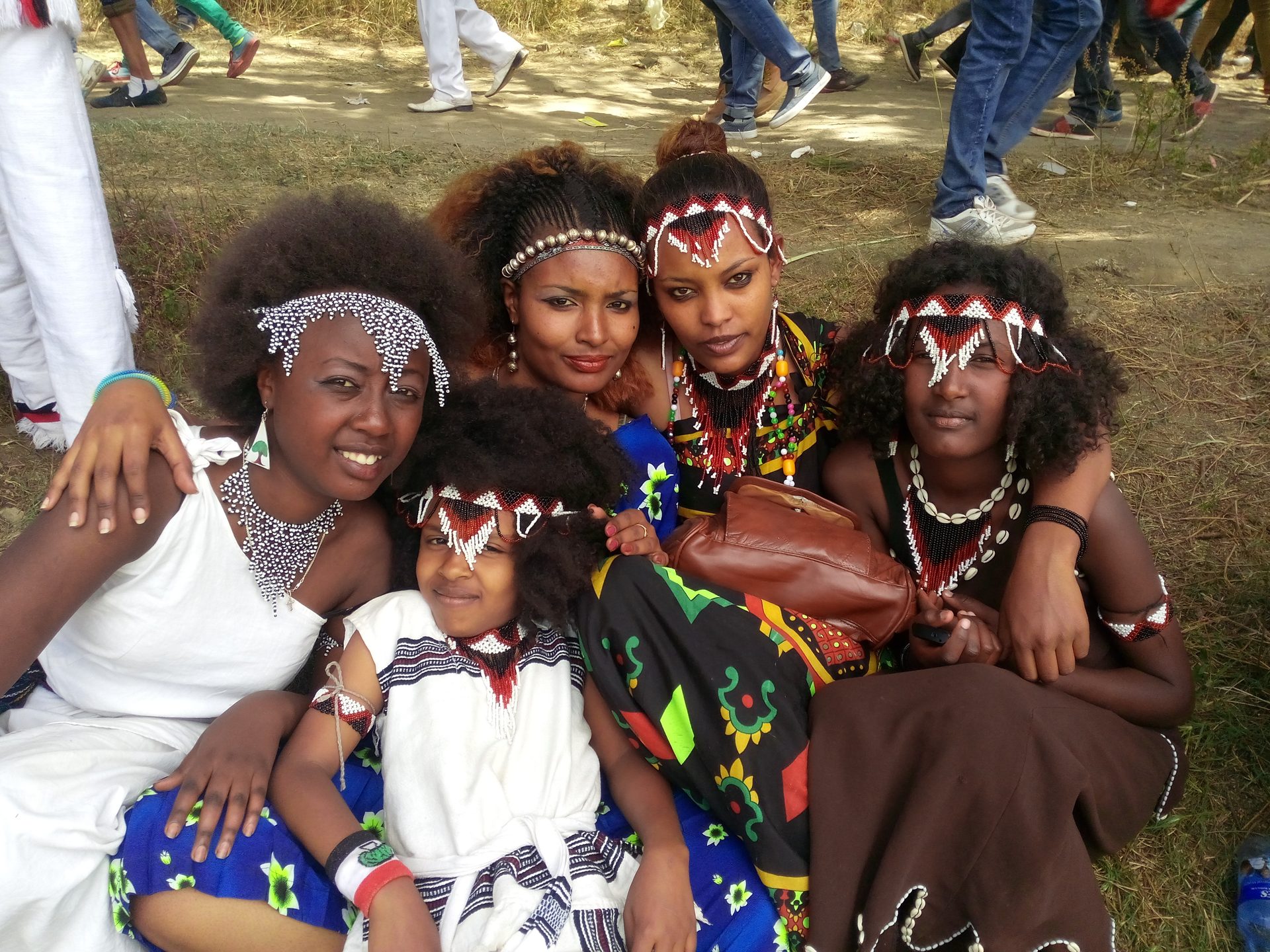
Long before cotton and tailoring reached the highlands and lowlands of Oromia, Oromo communities were already dressing according to a precise, inherited code written in leather, beads, and color. Traditional Oromo clothing grew out of a pastoralist way of life built around cattle, and almost every garment still carries a practical job and a symbolic one at the same time. A woman’s skirt or a man’s cloak was never just fabric; it signaled clan ties, marital status, and standing within the Gadaa system of governance.
This piece walks through ten garments and ornaments that make up the core vocabulary of Oromo dress, from the structured cowhide skirt known as the wandabo to the forehead ornament called the kallacha. Readers comparing dress traditions across cultures may also find it useful to look at how other regions encode status through clothing, such as in traditional Chinese clothing or traditional Indian clothing, where color and layering carry similarly specific meaning.
1. Wandabo
The wandabo sits at the center of traditional Oromo women’s dress across much of Oromia, from the Gibe region to the central highlands. According to Wikipedia’s entry on the Oromo people , across the territory from the forests of Illubabor to the arid plains of Borana, the primary garment is the Wandabo, a wrap-around skirt or dress made from meticulously softened cowhide or goatskin.
Cowhide was chosen deliberately rather than by default. The thickness of the cowhide provides protection against thorny acacia landscape, which mattered for women moving through brush and grazing land on a daily basis. Yet the hide was not left stiff: it is often scraped thin enough to be pliable but remains heavy enough to provide a distinct, structured silhouette. The result is a skirt reaching roughly to the knee that balances durability with movement.
In Jimma, early European travelers documented the garment directly. The Wikipedia page on Jimma Oromo women’s cultural clothing notes that a Jimma Oromo woman was photographed wearing qollo and wandabo in the 1880s, showing the garment paired with its companion cloak even in the earliest visual records.
2. Gorfo
Less widely photographed than the wandabo but equally significant, the gorfo represents a fuller version of women’s cowhide dress. Gorfo, also recorded as Sadetti, is a complete cowhide dress for women, often decorated with beads, according to Wikipedia’s clothing in Ethiopia entry .
Where the wandabo functions as a wrap-around skirt, the gorfo covers more of the body, making it a complete garment rather than a single piece worn in combination with a separate top or cloak. The beadwork applied to it is not random decoration; across documented Oromo dress traditions, beading typically follows patterns tied to clan identity and household wealth, a principle that recurs throughout Oromo material culture. This same logic appears in related garments like the gurda belt, discussed further below, where bead arrangement again signals social information rather than pure ornament.
3. Qollo
The qollo is the shoulder cloak that pairs with the wandabo to form daily wear for Oromo women. Research compiled by Wikipedia’s Jimma Oromo clothing page describes the qollo simply as a skin worn over the shoulders, made from a different hide category than the skirt beneath it.
Material choice set the qollo apart from heavier cowhide pieces. The Clothing in Ethiopia overview explains that goat and sheep skin was used for more flexible or intimate items such as the qollo, and these skins were often treated with butter or oils to maintain softness and act as a preservative. That softer hide draped more naturally across the shoulders than stiff cowhide would allow.
Outside Ethiopia’s academic record, the qollo also appears in contemporary accounts of Oromo identity. A 2016 piece published in Index on Censorship and indexed via SAGE Journals reported that Oromo women also wear qollo and sadetta, cotton cloths traditionally hand-spun and hand-woven, and sometimes other garments such as leather or animal skin robes, showing that cotton versions of the cloak exist alongside the older leather form.
4. Woya
For Oromo men, the woya serves a role roughly parallel to the qollo for women, though its construction and silhouette differ noticeably. The same SAGE-indexed report describes woya for men as toga-like robes, usually white, worn over the body in a draped style reminiscent of garments found elsewhere in the Horn of Africa.
Scholarly sources focused on Jimma add detail on the leather version of this garment. Research cited on Omiren Styles’ account of Jimma Oromo dress notes that Oromo clothing traditions centered on hide items such as the wandabo and the woya, a toga-like robe of softened hide worn by men. The Clothing in Ethiopia entry similarly lists the woya alongside the qollo as softened sheep or goat skin cloaks and a toga-like leather robe worn over the shoulder.
The white cotton woya and the leather woya likely reflect different periods and trade influences, with cotton weaving arriving from highland regions while leatherwork remained the older pastoralist baseline. Readers interested in how other cultures use draped, toga-style garments for status may find a useful comparison in traditional Australian clothing, where similarly practical, climate-driven garment choices shaped everyday dress.
5. Sirra
The sirra, also recorded in academic sources as siraa, belongs to men’s dress rather than women’s. According to the Wikipedia page on Jimma Oromo cultural clothing, siraa is a layered leather wrap worn by men.
The layering distinguishes the sirra from single-piece garments like the woya. Multiple layers of worked hide would have added both visual weight and practical durability, useful for men engaged in herding or travel across rough terrain. As with most Oromo leather garments, construction followed a defined process: preparation included scraping, sun-drying, softening with oils or fats, repeated folding, and the addition of decorative elements, with some hides smoked to increase durability.
Pro Tip: When comparing historical photographs of Oromo dress, look for the number of hide layers and the shoulder line — these details often distinguish the sirra from the single-layer woya more reliably than color alone.
6. Gurda
If any single accessory communicates status in traditional Oromo women’s dress, it is the gurda. The Clothing in Ethiopia entry describes it precisely: the gurda, also called sabaqa, refers to wide, stiff leather belts heavily encrusted with beads, and specific bead patterns often indicate a woman’s clan affiliation and family wealth.
Detailed research on Jimma dress adds that the gurda was not merely decorative but structural. A piece published on Omiren Styles explains that the gurda was a wide, stiff leather belt, heavily encrusted with white and coloured glass beads, cinching the wandabo at the waist. Worn at the waistline, it held the wandabo skirt in place while simultaneously displaying the wearer’s social position through its beadwork.
The Jimma Oromo clothing page also notes a more sacred, secondary meaning for related waist cords: gurda can refer to a sacred leather string or thin belt tied around the waist, suggesting the term covers both the ornate beaded belt and a simpler ritual cord depending on context and region.
7. Hirpha
Documentation of the hirpha is thinner in published academic sources than for garments like the wandabo or gurda, and naming for Oromo dress items varies considerably by clan, dialect, and region. This pattern of regional variation is well established elsewhere in Oromo material culture studies.
Important Note: Research into Guji Oromo ornaments published on ScienceDirect confirms that Oromo women wear several cultural ornaments on various parts of their body, mainly their hair, neck, hands, shoulder, and waist, most made by local craftsmen from locally available materials such as beads, cattle skin, and metals. Terminology for individual pieces, including items like the hirpha, can shift considerably between clans such as the Guji, Borana, Arsi, and Shewa.
What remains consistent, even where a specific term is less documented in English-language sources, is the broader framework behind it: items worn on the body in Oromo communities tend to encode information about marital status, age-grade, or household achievement rather than functioning as neutral decoration. Readers wanting a sense of how regional subgroups adapt a shared garment vocabulary can see a parallel in traditional Pakistani clothing, where provincial variation produces distinct local forms of a broadly shared dress tradition.
8. Kallacha
Among men’s ornaments, the kallacha is the most visually striking and the most tied to political authority within the Gadaa system. The Wikipedia entry on the Oromo people states plainly that for men, the kallacha, a phallic-shaped wood or metallic ornament, is worn on the forehead by elders and Abba Gadaas.
Its meaning is reinforced by comparison with women’s parallel ornaments. Research on Guji Oromo ornamentation published on ScienceDirect notes that during Gadaa ritual, the wife of Abbaa Gadaa wears samaxee while her husband wears a phallic symbol called kallacha on his forehead. The pairing shows that Oromo ornament systems were designed around complementary male and female markers rather than isolated individual pieces.
Because the kallacha is worn only by elders and office-holders within the Gadaa structure, it functions less like everyday jewelry and more like a badge of office, comparable in social function, though not in form, to ceremonial regalia found in other dress traditions such as the formal pieces documented in traditional Japanese clothing.
9. Ambarka
As with the hirpha, the ambarka is not extensively documented in the English-language academic sources reviewed for this piece, and spelling or usage may vary between Oromo regional dialects. Rather than guess at specifics that cannot be verified, it helps to place the term within the material categories that are well documented across Oromo dress.
Oromo clothing and ornament draw from three recognized skin categories : cowhide for structured garments like the wandabo, goat and sheep skin for more flexible items such as the qollo, and wild animal skins historically reserved for warriors or those in the ruling age-grade of the Gadaa system. Beadwork and metal ornamentation layer onto these hide bases to create the fuller range of named pieces that exist across different Oromo communities, including regionally specific accessory names that have not been widely translated into English-language scholarship.
This gap in documentation is itself worth noting rather than papering over. Oromo dress has historically been passed down through oral tradition and direct apprenticeship with local tanners and beadworkers, meaning many specific garment and accessory names simply have not made it into published academic record outside of targeted ethnographic fieldwork, such as the Guji-focused study referenced earlier.
10. Qarma
The qarma rounds out this list as another regionally specific term without extensive standalone documentation in the sources reviewed here. Rather than present an unverified definition, it is more accurate to situate it within the broader, well-sourced picture of how Oromo communities build meaning into dress and ornament.
Color plays as large a role as material in that broader picture. Reporting from the BBC, cited in coverage of Oromo ethnic pride, observed that a person wearing a bead on their neck or a bracelet is likely identifiable as Oromo, and that specific color combinations on traditional skirts carried political weight significant enough that showing resistance colors on the hem of a skirt could result in arrest during periods of political tension in Ethiopia. That same report found that Oromo colors are immediately recognisable even to outside observers, with red, black, and white carrying consistent symbolic weight across regions.
That political and symbolic charge is part of why individual regional terms like the qarma matter beyond simple costume history. As one overview of Oromo heritage in fashion put it, Oromo fashion is identity rendered visible, going beyond aesthetics to serve as a visual language of belonging, history, and values. Those interested in how everyday dress can carry comparable layers of regional and historical meaning may also want to review traditional German clothing or browse the broader clothing and style category for cross-cultural comparison.
Oromo Garments at a Glance
| Garment/Ornament | Worn By | Primary Material |
|---|---|---|
| Wandabo | Women | Softened cowhide or goatskin |
| Gorfo | Women | Cowhide, beaded |
| Qollo | Women | Goat or sheep skin |
| Woya | Men | Cotton or softened hide |
| Sirra | Men | Layered leather |
| Gurda | Women | Stiff beaded leather |
| Kallacha | Men (elders/Abba Gadaa) | Wood or metal |
Traditional Oromo clothing endures not because it has been frozen in place but because each piece still carries legible social information, from the cowhide wandabo that protected women moving through thornbush to the kallacha that marks a man’s standing within the Gadaa system. Beadwork, hide preparation, and color choice remain active signals rather than historical curiosities, and that is part of why these garments continue to appear at ceremonies like Irreecha today. Anyone exploring Oromo dress will find that the same questions apply as with other heritage clothing traditions worldwide, such as those covered in traditional American clothing: what does the material say, what does the color say, and who is allowed to wear which piece.