Traditional Nigerian Clothing: 20 Garments That Define the Country’s Ethnic Heritage

November 18, 2026
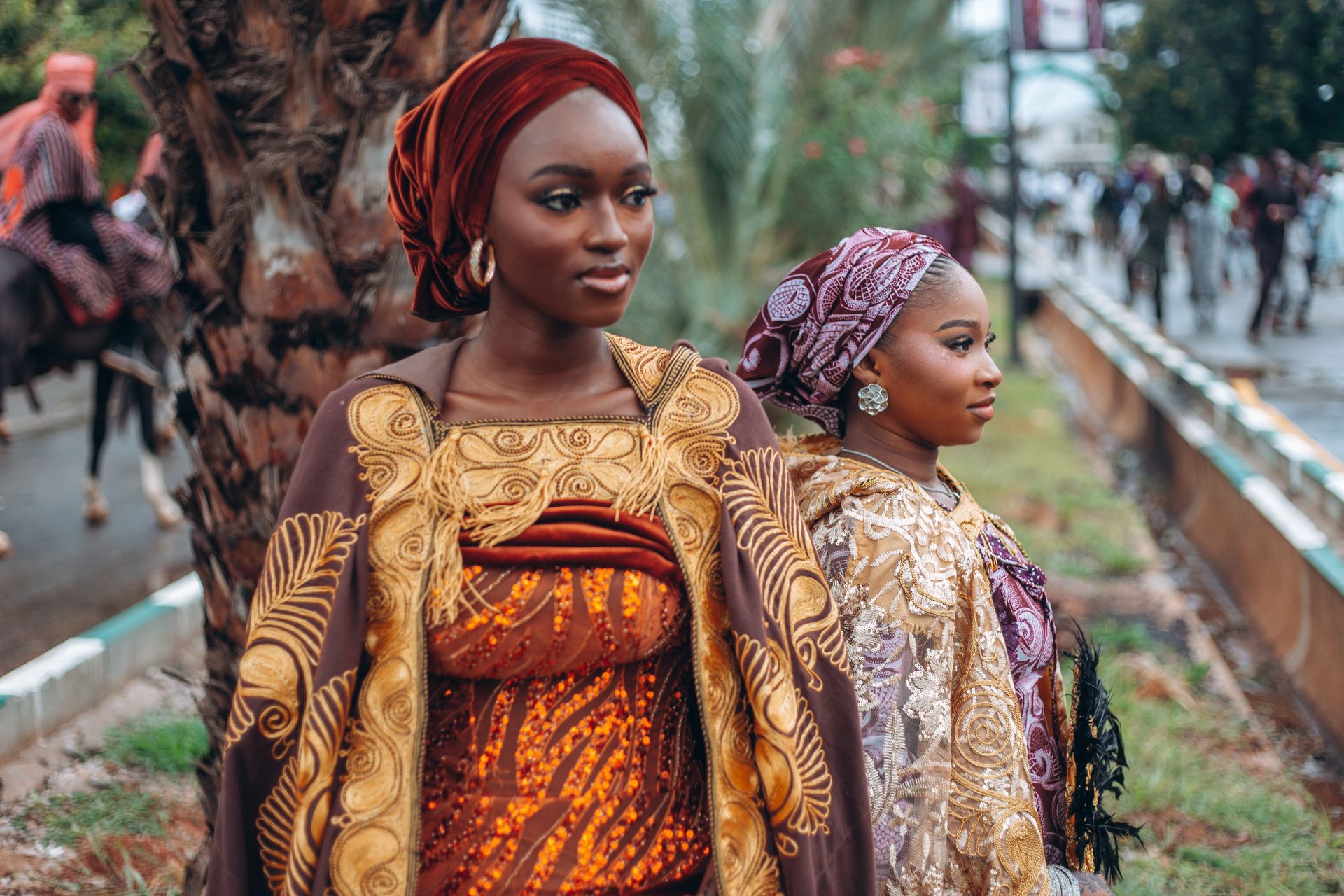
Nigeria is home to more than 250 ethnic groups, and nearly every one of them has a distinct way of dressing for weddings, chieftaincy ceremonies, and everyday life. Traditional Nigerian clothing ranges from the flowing, richly embroidered agbada worn by Yoruba and Hausa men to the beaded bridal wrappers of the Efik and Ibibio people in the south. Each garment carries its own history, symbolism, and rules about who can wear it and when.
This guide walks through 20 garments and accessories that together form the backbone of Nigerian traditional dress, moving from the Yoruba and Hausa staples most people picture first to the lesser-known Efik, Ibibio, Edo, and Tiv pieces that rarely make it into mainstream fashion coverage.
| Ethnic Group | Signature Garments | Typically Worn By |
|---|---|---|
| Yoruba | Agbada, Iro, Buba, Gele, Ipele, Fila, Aso oke | Men and women |
| Hausa-Fulani | Babban riga, Sokoto, Hula, Zani, Jalabia | Mostly men |
| Igbo | Isiagu | Men and women, often chiefs |
| Efik/Ibibio | Onyonyo, Ofod Ukod Anwang, Okuku | Mostly women, bridal occasions |
| Edo (Benin) | Ivie coral beads | Royalty and titled chiefs |
| Tiv | Anger | Men and women |
1. Agbada
The agbada is a large, flowing robe worn by men across southwestern and northern Nigeria, typically as part of a three-piece set with a buba underneath and a sokoto trouser below. It is cut from a wide rectangle of fabric with an opening for the head, giving it a dramatic, voluminous silhouette once the arms are extended. According to the Wikipedia entry on fashion in Nigeria , agbada-style robes appear under different names across several West African cultures, including the Dagomba and Yoruba.
Wealthier families commission agbada in aso oke or heavily embroidered cotton, with the embroidery often concentrated around the neckline and chest. The more elaborate the stitching, the more formal the occasion it is reserved for, from Friday prayers to chieftaincy installations and weddings.
2. Babban Riga
Babban riga is the Hausa name for essentially the same oversized robe worn as agbada, though the cut and embroidery style often reflect northern Nigerian tailoring traditions rather than Yoruba ones. Fashion in Nigeria notes that Hausa wear Babaringa as their equivalent of this large gown.
In Hausa communities, babban riga is frequently paired with an elaborately embroidered cap and carried with a walking stick for formal appearances. Regional dress like this tends to vary as much in detail as broader national costume traditions do elsewhere, a pattern also visible in traditional German clothing, where each historical region developed its own version of a shared silhouette.
3. Sokoto
Sokoto refers to the loose-fitting trousers worn underneath the agbada or babban riga, gathered at the waist with a drawstring and tapering toward the ankle. The name is shared across Yoruba and Hausa dress, even though the two groups are not otherwise linguistically related, which hints at how much tailoring knowledge has moved between Nigeria’s regions over generations.
Because the trousers are hidden under the outer robe for most of the day, sokoto is usually made from a plainer fabric than the agbada or babban riga worn over it. The waistband is adjustable, which makes the trousers easy to fit without a tailor present for every wearing.
4. Buba
The buba is a loose, long-sleeved top worn by both men and women, though the cut differs by gender and region. Men’s buba sits as an undershirt beneath the agbada, while women’s buba is typically shorter, with a round or V-shaped neckline, and is worn as a standalone blouse with a wrapper.
A Yoruba woman’s buba and iro combination is one of the most recognizable traditional looks in southwestern Nigeria, often finished with a matching gele and ipele for special occasions. The fabric choice, from plain cotton to lace to aso oke, signals the formality of the event.
5. Iro
Iro is the Yoruba wrapper skirt worn by women, a rectangular length of cloth wrapped around the waist and tucked in rather than sewn or fastened with buttons. It is almost always worn as part of a matching set with buba, gele, and ipele, giving the full outfit a coordinated, layered look.
The way the iro is tied can change its formality: a tighter, higher wrap suggests a more conservative or formal event, while a looser, lower tie is common for everyday wear. Fabric choice again plays a role, with lace and aso oke iro reserved for weddings and ceremonies.
6. Gele
The gele is an elaborate headwrap worn by Yoruba women, folded and starched into tall, structured shapes that have become a visual signature of Nigerian celebrations. Styles range from simple knotted wraps for daily wear to architectural, multi-point creations for weddings, often requiring a professional tier to achieve the sharpest folds.
The craft involved in shaping a gele has parallels in other textile-driven dress traditions, including the precise folding techniques seen in traditional Japanese clothing, where fabric structure and styling carry as much meaning as the cloth itself.
Pro Tip: A stiffer, heavily starched fabric such as ankara or aso oke holds gele folds far better than soft cotton, which tends to collapse within a few hours.
7. Ipele
Ipele is a shoulder sash or shawl draped over the iro and buba, usually in a fabric that either matches or deliberately contrasts with the rest of the outfit. It is tossed over one shoulder and allowed to hang down the back or front, adding an extra layer of color and texture to the overall look.
While not strictly necessary for everyday wear, ipele is considered an important finishing touch for formal Yoruba occasions, often matched to the gele rather than the iro to create visual balance across the outfit.
8. Fila
Fila is the general Yoruba term for a traditional cap, worn by men as the finishing piece atop an agbada or buba-and-sokoto outfit. The style varies by region and personal taste, and several named variations exist within the category:
- Gobi: a tall, rectangular cap that can be folded flat or stood up
- Abeti aja: a softer cap with flaps that resemble a dog’s ears, which can be worn up or down
- Bentigo: a more structured, pointed style often worn by chiefs and elders
The fabric used for a fila typically matches or complements the rest of the outfit, with aso oke and embroidered cotton being common choices for formal occasions.
9. Kembe
Kembe refers to a traditional wrapper-style outfit worn in parts of Nigeria’s Middle Belt, where wrapper-and-blouse combinations remain the standard form of formal women’s dress. As with many regional garments outside the most heavily documented Yoruba, Hausa, and Igbo traditions, naming and styling can vary noticeably from one community to the next.
What stays consistent is the wrapper’s role as the base layer of the outfit, usually paired with a fitted or loose blouse and finished with beads or a headtie depending on the occasion and the wearer’s age or status.
10. Aso Oke
Aso oke is the hand-woven cloth at the center of Yoruba ceremonial dress, traditionally produced on narrow horizontal looms and stitched together in strips to create wider fabric. It is used to make agbada, iro, gele, and fila, which is why a full aso oke outfit is considered one of the most prestigious choices for weddings and chieftaincy events.
The weaving itself is a specialized craft passed down within families, comparable in cultural weight to other hand-loomed heritage textiles such as those behind traditional Indian clothing, where handwoven silk and cotton carry similar ceremonial status.
11. Isiagu
Isiagu, sometimes called Chieftaincy, is a pullover tunic shirt associated with Igbo men, instantly recognizable by its bold print of a lion or leopard head repeated across the fabric. Wikipedia describes it as a highly prestigious attire that is worn by the Igbo people which signifies power, authority, and pride, and notes that the shirt can be long or short-sleeved with a breast pocket on the front.
Historically, the garment was reserved for titled men. Face2Face Africa reports that the traditional attire became popular with the Igbos after the Biafra War, and it has since become a broader marker of Igbo identity worn by men and women at weddings, naming ceremonies, and coronations.
Key Insight: The animal motif on isiagu is meant to signal strength and leadership, a symbolic use of imagery that shows up in other traditional dress systems around the world, including the dragon and phoenix patterns found in traditional Chinese clothing reserved for nobility.
Isiagu is commonly paired with a red cap or the Igbo leopard-skin style cap known as Okpu Agu, along with coral beads and a walking stick, to complete a chieftaincy look.
12. Hula
Hula is a Hausa term for a traditional cap, distinct in style from the Yoruba fila even though both serve the same basic purpose of topping off a formal outfit. Hula caps are often more tightly fitted and heavily embroidered, with geometric patterns stitched by hand or machine depending on the quality and price point.
Color choice for hula often follows the rest of the outfit, though white and cream caps remain popular for everyday and religious wear across northern Nigeria.
13. Zani
Zani is a flowing robe associated with northern Nigerian dress, worn as an additional layer over or alongside other garments such as babban riga, depending on the region and occasion. As with several northern Nigerian terms for traditional dress, naming conventions can shift from one community to another, so descriptions of zani vary by source and locality.
What remains consistent across accounts is its place within the broader layered dressing style common to Hausa-Fulani and other northern communities, where multiple loose garments are worn together rather than a single fitted piece.
14. Jalabia
Jalabia, also spelled jellabiya in other parts of the Islamic world, is a long, loose-fitting robe with roots in Arab dress that became part of northern Nigerian wardrobes through centuries of trade and religious exchange across the Sahel. It is simpler in cut than the agbada or babban riga, usually made from lightweight cotton and worn without a separate trouser underneath.
The garment is especially common during Ramadan and Eid celebrations in northern Nigeria, much as similarly Islamic-influenced silhouettes appear in traditional Pakistani clothing, where shared religious and trade history shaped comparable loose-robe styles.
15. Dashiki
The dashiki is a loose-fitting, pullover shirt worn across West Africa, often decorated with bold embroidery around the neckline and sleeves. Fashion in Nigeria draws a direct comparison between this garment and isiagu, describing the latter as a men’s pullover shirt similar to a dashiki that is worn by many groups in Africa.
Outside Nigeria, the dashiki became closely tied to the Black pride and civil rights movements of the 1960s and 1970s, a connection still reflected in how the garment is worn and discussed within traditional American clothing circles today.
Important Note: Not every pullover shirt sold as a “dashiki” today follows traditional embroidery patterns; mass-produced versions often simplify the design, so handmade pieces from West African tailors remain the more culturally accurate choice.
16. Anger
Anger is a hand-woven, black-and-white striped cloth closely associated with the Tiv people of Nigeria’s Benue State, where it functions as both everyday and ceremonial fabric. The cloth’s distinctive stripes make it one of the more visually identifiable traditional textiles in Nigeria, worn by men and women alike and often fashioned into wrappers, shirts, or caps.
Because the weaving pattern is so closely tied to Tiv identity, anger cloth is frequently worn at cultural festivals and community gatherings as a visible marker of ethnic pride, much the way aso oke functions for the Yoruba.
17. Onyonyo
Onyonyo is a long, flowing bridal gown worn by Efik women, often compared in style to a Victorian-era dress or ball gown and typically made from lace. According to a Wikipedia overview of the Efik people , Efik women’s main dresses are the onyonyo and the ofod ukod anwang, and the onyonyo is a long gown used mostly for bridal occasions.
BuzzNigeria describes the bride’s complete look as including hair pins and a decorated staff which is carried by the bride, alongside coral bead necklaces and beaded hand and leg accessories known as ekpa ku kwa.
18. Ofod Ukod Anwang
Ofod Ukod Anwang is the other major Efik and Ibibio bridal outfit, a two-piece ensemble consisting of a knee-length skirt and a short, sleeveless blouse that covers only the bust. Legit.ng explains that it consists of two pieces, roughly speaking, with the bigger one a kind of skirt that falls down from the waist and covers the bride’s legs to the knees.
The outfit is designed to be worn with heavy coral bead jewelry and fuzzy arm and leg ornaments. WithinNigeria notes that the women’s version is made up of a knee-length dress or skirt wrapped around the waist and a short beaded blouse that covers only the top half of the body, while men wear a simpler wrapper-and-shirt version for the same ceremony.
Important Note: Spelling varies across sources, with “Ofod Ukod Anwang” and “Ofong Ukod Anwang” both appearing in Nigerian media; both refer to the same bridal outfit.
19. Okuku
Okuku refers to a crown-like hairstyle worn by Efik and Ibibio brides, created by weaving strings of coral beads directly into the hair rather than wearing a separate headpiece. It is typically reserved for brides and women of high social standing, completing the look started by the ofod ukod anwang or onyonyo.
The Ibibio people , closely related to the Efik, share many of these bridal dressing customs, reflecting the deep cultural overlap between the two groups in Nigeria’s South-South region.
20. Ivie
Ivie is the Edo word for coral beads, among the most recognizable symbols of Benin royal regalia. Worn by the Oba of Benin and titled chiefs, ivie beads once signaled wealth and rank so precisely that specific bead combinations were reserved for particular titles within the Benin court system.
Today, ivie beads remain central to Edo ceremonial dress, worn around the neck, wrists, and ankles during coronations, weddings, and festivals that honor Benin’s royal history. The beads are often layered with other traditional pieces rather than worn alone, adding weight and color to an otherwise simpler outfit.
From the flowing agbada of the southwest to the coral-draped bridal wear of the southeast and south-south, traditional Nigerian clothing reflects the country’s extraordinary ethnic range rather than a single national costume. Each piece, whether it is the hand-woven aso oke, the symbolic isiagu, or the striped anger cloth of the Tiv, tells a story about regional history, craftsmanship, and social rank that continues to shape how Nigerians dress for the moments that matter most.
Readers curious about how other nations express identity through dress can find similar depth in traditional Australian clothing or browse more cultural style guides on the clothing hub for comparisons across continents.