Traditional Hmong Clothing: What Every Color, Stitch, and Symbol Means

November 18, 2026
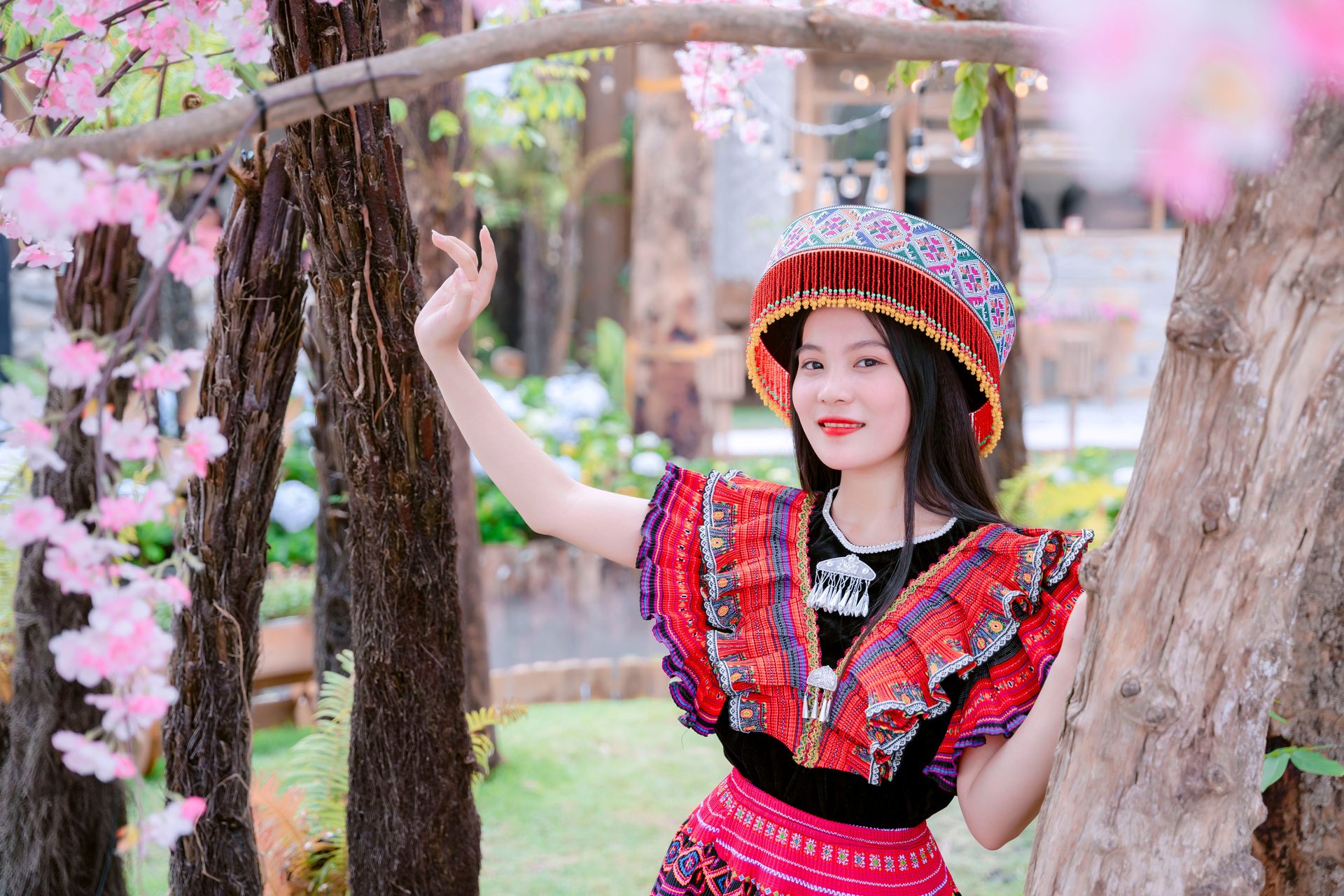
Ask ten different Hmong families to describe traditional Hmong clothing and the answers will rarely match, because Hmong communities have never settled on a single national costume. Color, pleating style, and embroidery pattern have long worked as a kind of visual dialect, telling outsiders which subgroup a woman’s family belongs to before she says a word.
This guide walks through the major clothing subgroups and the individual garments that build a complete ensemble, from the pleated tiab skirt to the silver xauv necklace, the coin sashes, and the hand-stitched paj ntaub cloth that ties the whole look together. Related textile traditions, such as traditional Chinese clothing, share some roots with Hmong dress given the long history of migration out of southern China, and readers curious about other folk dress traditions can browse the wider clothing and style collection for comparison.
1. White Hmong Clothing
White Hmong, or Hmoob Dawb, take their name from the pale, undyed pleated skirts their women traditionally wear rather than from everyday clothing color. Hmoob Dawb (White Hmong) are recognized by the white pleated skirts worn by women. Their clothing typically features less embroidery, giving it a simpler appearance. White Hmong live in Laos and Thailand, with sizable diaspora communities now settled across the United States and parts of Europe.
Daily wear looked different from the ceremonial skirt. White Hmong women wear long dark blue loose trousers with plain long-sleeved jackets with embroidered collar flaps and a turban. That combination of dark trousers for fieldwork and a plain white skirt for festivals is one of the clearest visual markers separating White Hmong from their more heavily embroidered neighbors.
2. Green Hmong Clothing (Hmoob Ntsuab)
Green Hmong clothing takes a near-opposite approach to decoration. Hmoob Ntsuab (Green Hmong) wear more elaborately embroidered clothing. Embroidery on sleeves, collars, and other elements often featured blue or green tones, which inspired their name, and the contrast with the plainer White Hmong style is immediate even from a distance. Green Hmong live in Laos and Thailand as well, often in neighboring villages to White Hmong communities.
Because Green Hmong women invest so much time in appliqué and cross-stitch, a single festival outfit can represent months of needlework. The jackets typically pair with batik-dyed skirts and layered sashes, a combination covered in more detail in the tiab and sash sections below.
Important Note: Group names like “Black Hmong” are not used consistently across every source. Some writers use it for a subgroup within the White/Striped Hmong lineage in Laos and Vietnam, while others apply it more loosely to Hmong hill-tribe communities in northern Thailand with a predominantly dark color palette. Both uses appear in published material, so readers researching a specific region should confirm which definition a source intends.
3. Black Hmong Clothing (Hmoob Dub)
Black Hmong clothing is defined less by a separate ethnic branch and more by a distinct silhouette. Black Hmong are technically a subgroup of the White Hmong, same with the Striped Hmong. The Black Hmong can be deciphered by the clothing, since they wear black pants instead of a pleated skirt. That single substitution—trousers instead of the pleated tiab—is the fastest way to tell a Black Hmong outfit apart from its White or Striped counterparts.
In parts of northern Thailand, the term describes a related but visually distinct hill-tribe style. Black Hmong women wear their hair in a bun and wear dark blue and white pleated knee-length skirts with embroidered borders. Indigo-heavy dyeing, dark trousers or skirts, and minimal appliqué (compared to Green Hmong) remain the consistent threads across both regional uses of the name.
4. Striped Hmong Clothing (Hmoob Txaij Npab)
Striped Hmong clothing earns its name from the arms, not the skirt. In Hmong, “txaij” means striped and “npab” means arm, so the group is literally named for the colored bands wrapped around their sleeves. Striped Hmong women wear a jacket with blue or white stripes around their black sleeves, a detail visible from across a market or festival ground even when the rest of the outfit looks similar to a White Hmong ensemble.
Many Striped Hmong communities share close linguistic and clan ties with White Hmong groups, and the two styles are often worn side by side at the same celebrations. The table below summarizes how all four major subgroups compare at a glance.
| Subgroup | Signature Color or Pattern | Typical Lower Garment | Distinguishing Detail |
|---|---|---|---|
| White Hmong (Hmoob Dawb) | Undyed white, light embroidery | Pleated skirt (festival) or dark trousers (daily) | Plain collar flaps, turban |
| Green Hmong (Hmoob Ntsuab) | Bright appliqué, blue-green embroidery | Batik-dyed pleated skirt | Dense cross-stitch and appliqué |
| Black Hmong (Hmoob Dub) | Deep indigo or black | Trousers instead of pleated skirt | Minimal appliqué, dark palette |
| Striped Hmong (Hmoob Txaij Npab) | Striped sleeve bands | Pleated skirt similar to White Hmong | Colored arm stripes |
5. Tiab (Pleated Skirt)
The tiab is the pleated skirt that anchors a woman’s festival outfit across most Hmong subgroups, though the color and decoration vary by group. A single skirt can require batiked, finger-pleated fabric decorated with cross-stitch and ribbon appliqué, a process that historically took weeks of hand-folding before a single stitch of embroidery was added. Finger-pleating by hand, rather than machine pressing, is what gives an older tiab its characteristic crispness and movement when a woman dances or walks.
Color tells the subgroup apart as clearly as pattern does. White Hmong skirts stay undyed, while Green and Black Hmong versions typically start as indigo or batik-dyed cloth before any stitching begins. Skirts made for everyday farm work are often simplified or swapped for trousers entirely, since the long pleated hem is heavy and easily soiled, a practical trade-off also seen in the draped and pleated garments of South Asia.
6. Dab Tsho (Spirit Collar)
The dab tsho, or spirit collar, is a small decorative panel attached to the back of a woman’s jacket, positioned right where the collar meets the neckline. Rather than serving a structural purpose, it carries spiritual weight, believed in Hmong tradition to help protect the wearer’s soul and guide it safely during rituals and after death.
Because the spirit collar sits at the back of the neck rather than the front, it is easy to miss in photographs that only show a jacket’s front panel. Embroiderers often reserve some of their most intricate appliqué work for this piece precisely because of its protective symbolism, making it a quiet but important counterpart to the more visible front-facing decoration on a Hmong jacket.
7. Xauv (Silver Spirit-Lock Necklace)
No formal Hmong outfit feels complete without a xauv, a heavy silver necklace whose name translates to “lock” in the Hmong language. The necklace is worn snug around the throat and is thought to lock a person’s soul to their body, a belief tied closely to Hmong spiritual practices around protecting children and young women from illness or misfortune.
Silver has carried this protective meaning across generations and regions, visible in photographs of Hmong New Year celebrations from refugee camp communities decades ago through to festivals held today. The weight and craftsmanship of a xauv also signal family status, similar to how elaborate bridal jewelry traditions in India communicate family wealth and milestone celebrations.
8. Hlab Nyiaj (Coin-Beaded Sash)
The hlab nyiaj is a wide sash decorated with real or imitation coins, worn around the waist over a jacket and skirt for festivals and New Year gatherings. A well-documented example from a 1968 Green Hmong girl’s New Year ensemble shows how the piece worked within a full outfit: the outfit included a jacket with appliqué collar, a batiked and appliqué skirt or tiab, an apron or daim sev, and a belt decorated with appliqué and French coins.
French Indochina-era coins were especially common in older sashes because they were widely available in Laos and Vietnam during the colonial period, and families often repurposed currency that was no longer useful for trade into something that displayed wealth on the body instead. The weight and number of coins on a sash, much like the metal detailing seen on traditional Pakistani clothing and other coin-adorned folk dress, often reflected a family’s standing.
9. Hlab (Waist Sash)
Beyond the coin-decorated version, Hmong women also wear a plainer hlab, or waist sash, as a practical layer that cinches the jacket and skirt together and keeps the heavy pleated tiab from shifting during movement. These everyday sashes are usually woven or appliquéd cloth rather than metal, and the colors and motifs often echo the jacket’s embroidery rather than standing out on their own.
A waist sash also acts as a visual transition piece between the upper jacket and the lower skirt, often hiding the point where the two garments overlap. Because it sits underneath the more decorative hlab nyiaj on formal occasions, the plain sash rarely gets photographed on its own, even though it is doing most of the structural work holding an outfit together.
10. Hlab Sev (Apron Sash)
The hlab sev, sometimes documented under the related term daim sev, is an apron-style panel worn at the front of the waist over the skirt. It protects the pleated tiab underneath from everyday wear while adding another layer of embroidery or appliqué to the front of the outfit, often coordinated in color with the jacket’s collar and cuffs.
On ceremonial outfits, the apron sash is frequently the most heavily decorated single panel in the entire ensemble, since it sits at eye level and faces forward. Pattern complexity on the apron has traditionally signaled a wearer’s skill with a needle, making it something of a quiet résumé stitched directly into the clothing.
11. Paj Ntaub (Flower Cloth)
Paj Ntaub, literally “flower cloth,” is the umbrella term for Hmong textile art and the embroidery technique found across nearly every garment described so far. A nomadic people with a history of persecution in China, the Hmong people used embroidery as a means of preserving and passing down their stories, stitching paj ntaub into clothing, ceremonial cloths, and other textiles. Paj ntaub is an integral part of Hmong culture, and this traditional needlework dates back several centuries, creating patterns and designs with thousands of needle strokes on a single piece of cloth.
Key Insight: According to Learn Uake , Hmong oral history holds that women once hid elements of their banned written script inside the motifs stitched into pleated skirts, turning everyday clothing into a quiet form of resistance during periods of persecution in China.
There are two distinct types of Hmong paj ntaub: traditional flower cloths built from geometric and organic shapes, and pictorial story cloths that developed later in Thai refugee camps during the 1970s. Both forms share the same needle techniques but serve different purposes:
- Traditional flower cloth – Geometric and nature-inspired motifs stitched directly into clothing panels, collars, and sashes
- Story cloth – Pictorial scenes depicting migration, village life, and historical events, typically made as standalone textiles rather than worn garments
The embroidery techniques behind paj ntaub, including reverse appliqué, cross-stitch, and batik resist-dyeing, sit alongside other globally recognized hand-needlework traditions documented by groups such as the Embroiderers’ Guild of America , and share some technical ground with the detailed handwork seen in traditional Chinese clothing from the regions Hmong communities once called home.
12. Leggings
Trousers and leg wraps fill a practical role that the heavy pleated skirt cannot always cover, especially for farm work and travel over mountain terrain. Trousers are typically black, though White Hmong men also wear trousers of blue or green, and White and Striped Hmong women also wear loose trousers of black or blue for daily tasks since their long hemp skirts are heavy and the light color is easily soiled.
Leg wraps or fitted leggings worn under a skirt add warmth in mountain climates without sacrificing the pleated silhouette during festivals, a layering approach not unlike the functional underlayers found in traditional German clothing worn in colder alpine regions. For men, trousers paired with a jacket make up the entire lower-body outfit, since Hmong menswear does not traditionally include a skirt equivalent.
13. Turban
A wrapped turban, rather than a structured hat, is the most common daily headwear for both Hmong men and women across several subgroups. White Hmong women traditionally pair their outfit with plain long-sleeved jackets finished with embroidered collar flaps and a turban. The wrapping style and the cloth’s color can shift slightly by region, but the basic technique of winding a long strip of dark fabric around the head stays consistent.
This type of turban is typical of Laos, worn not only by the Hmong but also by the neighboring Mien people, which suggests the wrapped-cloth style spread across ethnic lines in the region’s highlands well before modern borders were drawn. Wrapped headwear of this kind appears in many folk traditions worldwide, including the structured head coverings seen in parts of traditional Japanese clothing, though the materials and symbolism differ considerably.
14. Peaked Hat
Alongside the turban, some Hmong subgroups, particularly Green Hmong communities, favor a structured peaked or pointed hat for festivals and New Year gatherings. The shape is built up from layered, stiffened cloth and finished with embroidered bands or appliqué along the brim, giving it a silhouette distinct from the simpler wrapped turban worn for everyday tasks.
Pro Tip: When trying to identify a Hmong subgroup from photographs, check the headwear alongside the skirt color. A plain wrapped turban paired with an undyed skirt usually points to White Hmong, while a structured peaked hat with heavy appliqué is more common among Green Hmong festival wear.
Because the peaked hat takes considerably longer to construct than a turban, it tends to appear mainly at major celebrations rather than in daily wear. Structured festival headwear built up from stiffened fabric shows up in other folk costume traditions too, including some regional styles documented among traditional German clothing worn at harvest and folk festivals.
15. Hmong New Year Hat
Hmong New Year celebrations bring out the most elaborate headwear of the year, often reserved exclusively for this festival rather than worn at any other time. Young girls typically wear smaller, simplified versions of the adult festival hat, finished with tasseled ties and bright embroidered trim scaled down to fit a child’s head while still matching the adult silhouette.
For Hmong American communities, New Year celebrations have become one of the main occasions where full traditional outfits, headwear included, still get worn regularly outside of weddings or funerals. Large annual gatherings in cities with established Hmong populations function similarly to how traditional American clothing events and festivals preserve regional dress that might otherwise only appear in museums.
16. Batik Skirt
Batik-dyed cloth, made by applying melted wax to fabric before dyeing so the waxed areas resist the dye, is closely associated with Green and Black Hmong pleated skirts rather than the plain white version worn by White Hmong. Traditionally, these skirts were dyed blue or black with batik designs, then decorated with bright, colorful stitching layered directly over the resist-dyed pattern once the wax was removed.
The wax-resist process requires drawing or stamping a pattern freehand before dyeing, meaning no two batik skirts turn out identical even when the same motifs are intended. This hand-drawn, resist-dye approach shares technical similarities with other indigo-dyeing traditions found in traditional Pakistani clothing and across South and Southeast Asian textile regions, where plant-based indigo dye has shaped folk costume for centuries.
Taken together, these subgroups and garments show that traditional Hmong clothing was never meant to be one fixed look. Instead, it works as a layered system where skirt color, sash type, headwear, and embroidery density all combine to say something specific about who a person is and where their family comes from. Communities in Laos, Thailand, Vietnam, and the wider diaspora, including large populations now settled across the United States, continue to keep these distinctions alive at New Year gatherings, weddings, and other milestone events, much as other diaspora communities preserve regional dress documented in guides to traditional Australian clothing and beyond.