The Traditional Lisbon Breakfast: 14 Dishes and Drinks Locals Order Every Morning

November 22, 2026
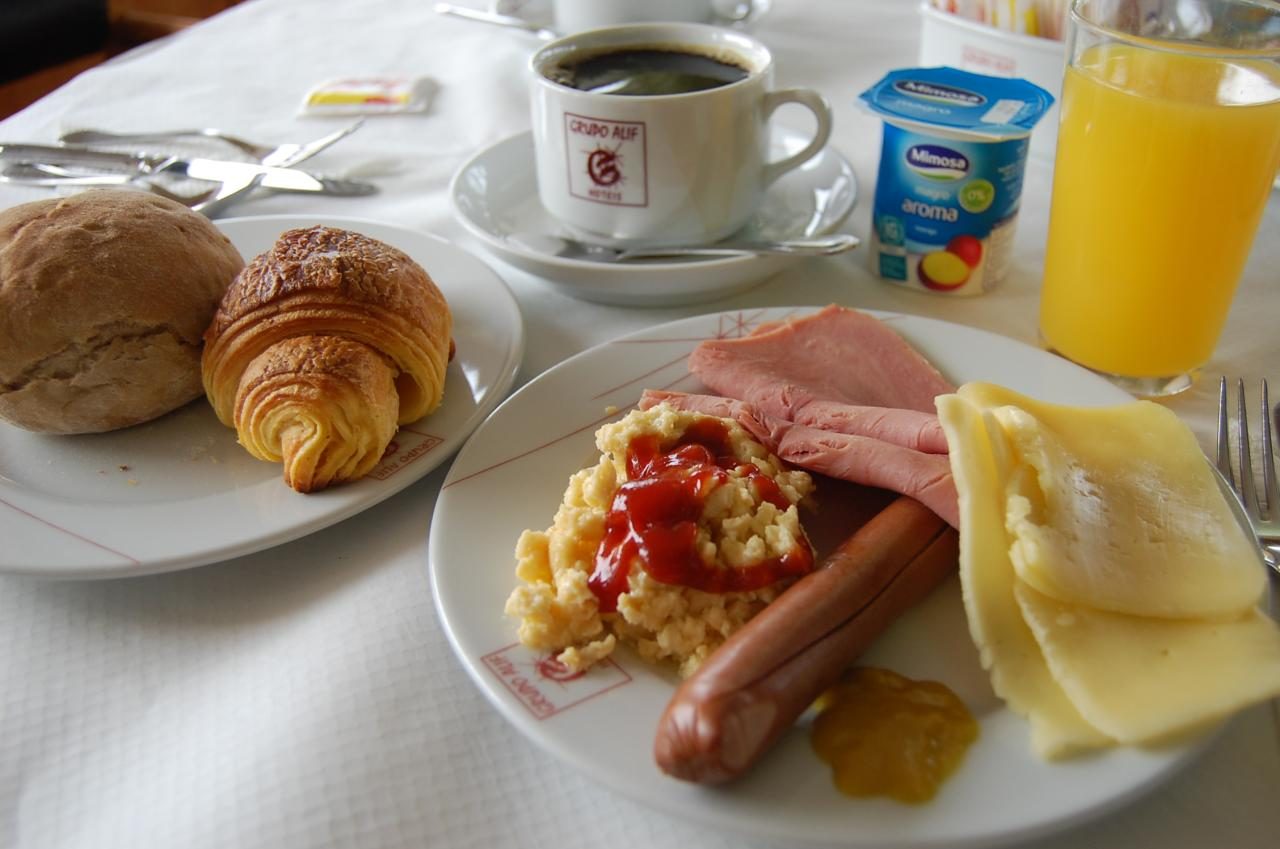
A traditional Lisbon breakfast rarely takes longer than it does to drink a small cup of coffee. While much of Europe lingers over fruit platters and cereal bowls, Lisboetas tend to stand at a tiled café counter, order something simple, and head back out the door within minutes.
That brevity doesn’t mean the meal is an afterthought. Portugal’s capital has built an entire culture around its morning counter: specific coffee styles with their own names, custard tarts eaten warm, and toasted bread ordered with the precision of a password. This guide walks through the 14 dishes and drinks that make up a genuine Lisbon morning, from the first sip of coffee to the orange juice squeezed to order.
1. Galão
A galão is coffee served tall, poured into a glass rather than a cup, with steamed milk making up roughly two-thirds to three-quarters of the drink. It sits closer to a weak latte than a cappuccino, and ordering one signals that a long sip-and-read session at the counter, not a quick caffeine hit, is the plan.
The glass itself matters. Lisboetas judge a café partly on whether the galão arrives properly layered, with the espresso visible at the bottom before it’s stirred in. Pairing a galão with a pastry is such a standard combination that many cafés list the two together on a chalkboard menu, the same way other breakfast traditions around the world pair a signature drink with a signature bite.
2. Meia De Leite
Meia de leite translates to “half milk,” and that’s roughly the ratio: equal parts espresso and steamed milk, served in a cup instead of a glass. It’s the drink most Portuguese order when they want something milkier than a bica but less diluted than a galão.
Visually it resembles a flat white, though the coffee base and milk-steaming style differ from the Australian original. Travelers who’ve sampled milk-forward morning drinks in other cultures, including the rice-and-miso routines covered in this traditional Japanese breakfast guide, will recognize the same instinct: soften a strong base flavor just enough to drink it slowly.
Pro Tip: If a café doesn’t specify cup size, meia de leite usually arrives smaller than a galão. Ask for it “num copo” (in a glass) if the larger format is preferred.
3. Bica
Bica is the term commonly used in certain areas of Portugal for coffee similar to espresso, but extracted to a greater volume than its Italian counterpart and a little smoother in taste, due to a slightly lighter roast. Order a bica anywhere else in the country and locals will usually understand “um café” instead, since the name is tied specifically to the Lisbon region.
The name’s origin is debated even among Lisboetas. One version traces it to A Brasileira do Chiado, where the term is said to be an abbreviation of “beba isto com açúcar,” meaning “drink this with sugar” — a phrase supposedly used to coax early 20th-century customers into trying the new, bitter Brazilian coffee the café was selling. Coffee historians are skeptical of this story, though: the acronym etymology is almost certainly apocryphal, and the word more plausibly derives from the Portuguese term for a water tap or spout, describing how coffee pours from the espresso machine into the cup.
Important Note: Sources disagree on where “bica” actually comes from. The sugar-acronym story is the one most often repeated in cafés, but linguists lean toward the simpler spout-and-fountain explanation.
Whichever version is true, ordering a bica is an exercise in speed. Most Lisboetas drink it standing, in under two minutes, the same brisk ritual that defines a traditional Lisbon breakfast more than any single dish does.
4. Pastel De Nata
No traditional Lisbon breakfast list is complete without the custard tart that made the city famous. Pastéis de nata are pastries inspired by an original recipe called pastéis de Belém, created before the 18th century by Catholic monks at the Jerónimos Monastery in the Belém district.
The backstory behind the recipe is almost as well known as the tart itself. Convents at the time used large quantities of egg whites for starching clothes, so monasteries commonly turned the leftover egg yolks into cakes and pastries, which is how an egg-yolk-heavy custard became the filling. When Portugal’s religious orders began closing in the 1830s, the monks sold their recipe to a nearby sugar refinery, and production began in 1837 in buildings attached to that refinery, using what the bakery describes as an old monastery recipe.
Key Insight: A pastel de nata and a Pastel de Belém are related but not interchangeable names — Pastéis de Belém refers specifically to the tarts made at the original Lisbon bakery using its closely guarded recipe, while pastel de nata is the broader term used across Portugal.
Order one warm, dusted with cinnamon and powdered sugar, and expect a flaky, spiraled crust giving way to a custard center that’s deliberately a little loose. It’s the pastry most people searching for a breakfast treat worth celebrating end up picturing, even if they’ve never been to Lisbon.
5. Pastel De Feijão
Less famous outside Portugal but just as traditional, pastel de feijão is a small almond-and-white-bean pastry, sweet rather than savory despite the bean filling. The texture sits between a tart and a dense cookie, with a marzipan-like bite that comes from ground almonds mixed into the bean paste.
It’s typically smaller than a pastel de nata and often sold in pairs, making it a common second pastry for anyone who wants variety at the counter without committing to a full second coffee. Regional pastry traditions elsewhere follow a similar logic of pairing legumes with sugar, a pattern also visible in some traditional Greek foods built around nuts and syrup-soaked dough.
6. Tosta Mista
Tosta mista is Portugal’s version of a grilled ham-and-cheese sandwich, pressed flat on a toasted sandwich press until the cheese melts and the bread crisps at the edges. It’s the closest thing to a savory, filling option on a typical breakfast menu, ordered by people who skipped dinner the night before or have a long morning ahead.
Most cafés serve it cut diagonally into triangles, plated alongside a small stack of napkins since the melted cheese tends to run. The combination of ham, cheese, and pressed bread places it in the same family as France’s croque monsieur, though the Portuguese version is generally lighter on sauce and simpler in presentation.
7. Torrada
Torrada is simply toast, but ordering it reveals how specific Lisbon’s breakfast vocabulary can get. The bread is sliced thick, toasted on a press rather than in a pop-up toaster, and served with butter packets on the side so diners can spread it themselves while it’s still hot.
It’s the default order for anyone who wants something plain alongside their bica or galão, and it’s common to see torrada and coffee ordered together as a package deal at older, no-frills cafés. Other cultures have their own version of the butter-and-bread morning combination, including the parathas and flatbreads that anchor breakfast tables across South Asia.
Common Mistake: Ordering torrada expecting thin, pre-sliced toast. Portuguese torrada is thicker and pressed, closer to grilled bread than the quick-pop variety found elsewhere.
8. Pão
Pão, meaning bread, covers a wide range of shapes sold fresh each morning from neighborhood padarias. A few common types show up again and again on breakfast tables:
- Carcaça — a crusty, hollow-centered roll, often split and filled with ham or cheese
- Papo-seco — a small, soft-crusted roll similar to a dinner roll, eaten plain or toasted
- Broa — a dense cornbread, heavier and slightly sweet, more common outside the capital but still found in Lisbon bakeries
Bread culture runs just as deep across the Mediterranean and North Africa, where flatbreads play a similarly central role; the baladi loaves described in this overview of traditional Egyptian food serve a comparable everyday function. In Lisbon, fresh pão bought that same morning is considered non-negotiable — day-old bread gets toasted rather than served plain.
9. Croissant Português
The Portuguese croissant borrows its shape from the French original but tends to be denser and less buttery, with a firmer crumb that holds up better to a filling. It’s common to order one “misto,” meaning filled with ham and cheese and warmed on the press, turning a pastry into something closer to a light sandwich.
This adaptation reflects a pattern seen across French food traditions as they travel: the base technique stays recognizable while local bakeries adjust texture and filling to match what customers actually order for breakfast rather than dessert.
10. Pão De Deus
Pão de Deus, literally “bread of God,” is a soft, slightly sweet bun topped with a layer of shredded coconut baked until golden. The coconut topping is the giveaway; underneath it, the bun itself is similar to a brioche, light and faintly sweet rather than dense.
It’s often eaten plain, without butter or jam, since the coconut crust already provides enough sweetness and texture contrast. Sweet, enriched breads show up in breakfast traditions well beyond Portugal, including the sweetened flatbreads found in parts of Indian breakfast cooking, where sugar and ghee serve a similar role.
11. Bolo De Arroz
Bolo de arroz, or rice cake, is a small muffin-shaped pastry made partly with rice flour, giving it a slightly coarser, denser crumb than a standard wheat muffin. Despite the name suggesting something light, rice cakes like this one are often more caloric than custard tarts, since the batter needs extra fat to avoid drying out.
They’re baked in paper cups and sold individually at nearly every bakery counter, making them an easy grab-and-go option alongside a bica. Rice-based cakes and flours anchor morning menus in several other cuisines too, a pattern visible in the rice-flour snacks common across traditional Malaysian food.
12. Sumo De Laranja Natural
Sumo de laranja natural is freshly squeezed orange juice, made to order rather than poured from a carton. Most cafés keep a manual or electric press behind the counter specifically for this, and the juice typically arrives in a small glass rather than a full tumbler.
It’s less about volume and more about the freshness signal: a café that squeezes juice to order is generally seen as taking its breakfast menu seriously. Fresh, citrus-forward morning drinks play a similar cultural role elsewhere, including the hibiscus and citrus infusions detailed in this guide to traditional Egyptian drinks.
13. Romeu E Julieta
Romeu e Julieta pairs a slice of fresh, mild cheese — usually queijo fresco — with a thick slab of quince paste called marmelada. The combination of salty-soft cheese against firm, sweet fruit paste is eaten on its own or spread over a slice of bread or toast.
It’s named after Shakespeare’s star-crossed lovers for the way the two contrasting flavors are considered inseparable once combined. The cheese-and-fruit-paste pairing isn’t unique to Portugal; similar combinations of fresh cheese with guava or fruit paste appear in traditional Venezuelan food, where the same salty-sweet logic applies at the breakfast table.
14. Abatanado
An abatanado is the Lisbon answer to an Americano: for anyone who isn’t a milk person, it’s simply a bica topped up with water, served in a larger cup than a standard espresso shot. It’s a relatively recent addition to café menus compared to bica or galão, but it’s become a standard order for anyone who wants the flavor of coffee without the concentrated hit.
Because it shares a base with bica, ordering an abatanado still gets a Lisbon coffee’s characteristic smoothness rather than the sharper edge of a straight Americano. The table below summarizes how the four main coffee styles compare, since the differences come down almost entirely to milk ratio and cup format.
| Drink | Milk Ratio | Serving Vessel | Closest Equivalent |
|---|---|---|---|
| Bica | None | Demitasse cup | Espresso / lungo |
| Meia de leite | About 50% | Cup | Flat white (lighter) |
| Galão | About 70-75% | Tall glass | Weak latte |
| Abatanado | None (water added instead) | Larger cup | Americano |
Strong black coffee drunk quickly isn’t unique to Portugal; similar straight, no-milk coffee rituals show up in the tea-and-coffee culture surveyed in this piece on traditional Russian drinks. In Lisbon, though, the abatanado sits firmly at the lighter end of that spectrum, built for lingering rather than a quick jolt.
Pro Tip: If a café counter looks busy, ordering a bica or abatanado and standing to drink it is faster and more in keeping with local habit than taking a table.
Put together, these 14 items explain why a traditional Lisbon breakfast feels so different from a cooked British fry-up or a Scandinavian smorgasbord: it’s built around fast, specific orders rather than a shared plate. A galão and a pastel de nata, or a bica and a torrada, cover most mornings, with items like Romeu e Julieta or bolo de arroz reserved for whenever there’s a few extra minutes at the counter. Visiting Lisbon without trying at least three or four of these is, by local standards, a missed morning.