Why Is My Dieffenbachia Turning Yellow? Causes, Fixes, and Prevention

September 23, 2026
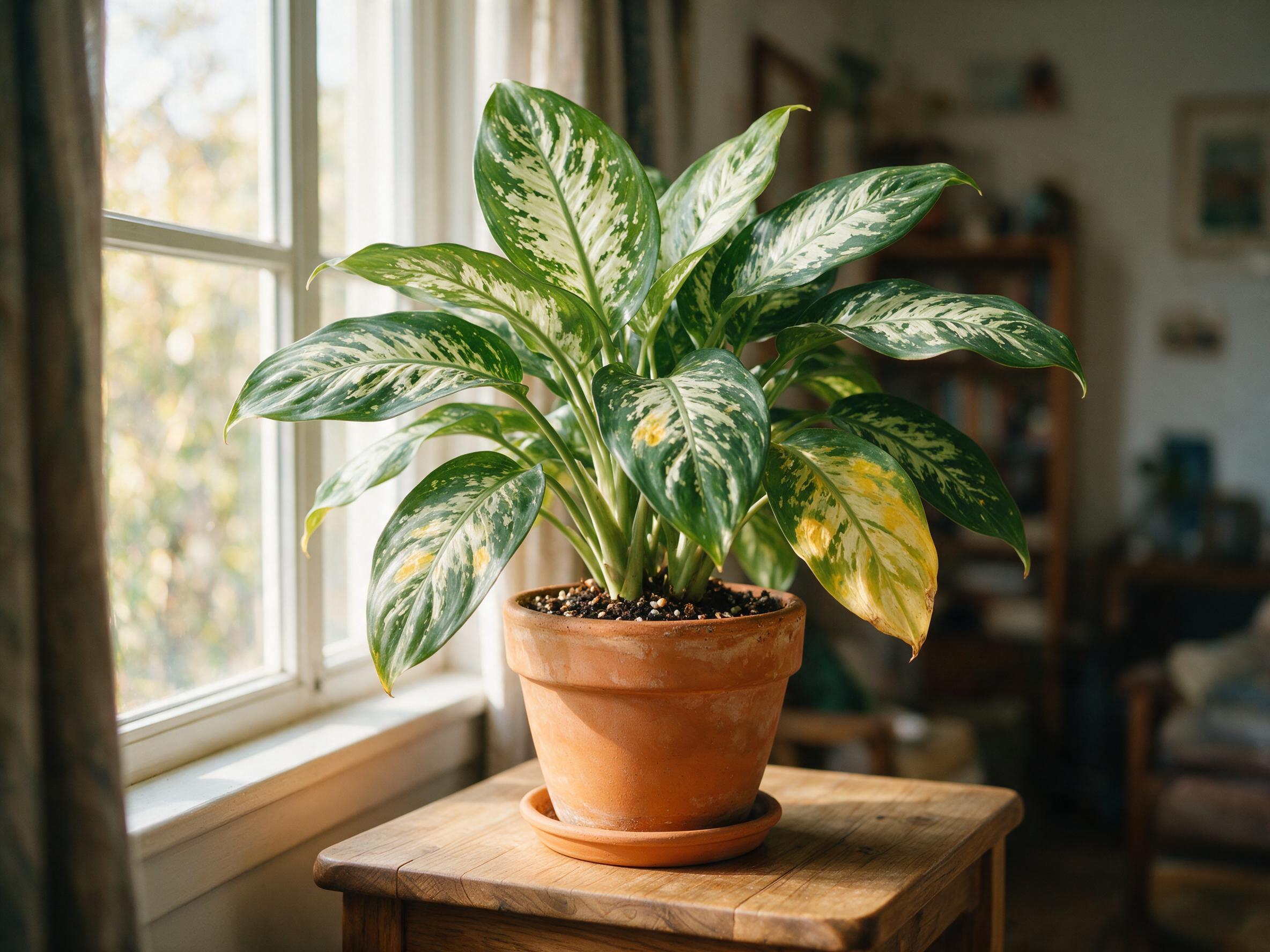
Few things stop a plant parent in their tracks like walking over to a beloved dieffenbachia and spotting a cluster of yellow leaves that weren’t there last week. Dieffenbachia, also known as dumb cane, is one of the most common houseplants because it is easy to care for — yet yellow leaves can develop when the plant’s needs are not met. The good news is that yellowing is almost always fixable once you know what’s behind it.
This guide walks you through every major cause of dieffenbachia yellowing — from watering habits and light placement to pests, soil health, and environmental stress — and gives you a clear action plan for each one. Whether you’re a first-time plant owner or a seasoned indoor gardener, you’ll leave here knowing exactly what your plant is trying to tell you and how to respond.
What Does It Mean When Your Dieffenbachia Is Turning Yellow?
Yellow leaves are your dieffenbachia’s way of sending a signal. They are usually an early sign of stress from watering, nutrients, or natural aging — and the key is to look at where the yellowing is happening to narrow it down quickly.
Dieffenbachia (Dieffenbachia seguine) is native to the tropical rainforests of Central and South America, where it grows beneath a dense forest canopy in warm, humid, filtered-light conditions. Because this plant comes from tropical environments, it needs an average temperature of 60°F–85°F (15°C–30°C) to stay comfortable. When any of those baseline conditions shift indoors — too much water, too little light, dry air from a heating vent — the leaves respond by losing their green.
The location and pattern of the yellowing often tells you which problem you’re dealing with. Yellowing at the tips or edges is usually caused by inconsistent watering — when the soil swings between too dry and too wet. Yellowing that starts on the oldest, lowest leaves and moves slowly upward, on the other hand, often has a completely different explanation.
Pro Tip: Before you do anything else, check where the yellow leaves are on the plant. Lower leaves yellowing on an otherwise healthy plant usually signals natural aging. New or mid-stem leaves turning yellow almost always point to a care problem worth investigating.
Is Yellowing in Dieffenbachia Always a Sign of a Problem?
Not always. If there is new growth on your plant and the yellowing leaves are older — particularly at the bottom — this yellowing is natural. Your plant sheds its old leaves and sends energy to new growth, and you can simply trim any old leaves off to help your plant focus its energy on new and healthy growth.
The final reason for yellowing is that the leaves are aging. If you only have a few yellow leaves every once in a while, that could be the case. However, if you have a lot of yellowing going on, you’ve likely got one of the other problems.
A helpful rule of thumb: one or two lower leaves yellowing over several weeks is almost certainly normal leaf turnover. Multiple leaves yellowing at once — especially on different parts of the plant — warrants a closer look at your care routine. You can also check out this overview of types of plants to better understand the general care differences between tropical houseplants and other varieties.
| Yellowing Pattern | Likely Cause | Urgency |
|---|---|---|
| 1–2 lower/oldest leaves, slow pace | Natural aging | Low — trim and monitor |
| Tips and edges of multiple leaves | Inconsistent watering | Medium — adjust schedule |
| Many leaves at once, all over plant | Overwatering, root rot, or pests | High — act quickly |
| Pale, washed-out color across leaves | Too much direct sun or nutrient deficiency | Medium — check placement and feeding |
| New growth yellowing | Nutrient deficiency or root-bound stress | High — repot or fertilize |
Watering Issues Causing Dieffenbachia Yellowing
Watering problems are the single most common reason a dieffenbachia turns yellow, and both too much and too little water can trigger the same symptom — which makes diagnosis a little tricky.
The most common culprit behind yellow leaves on a dieffenbachia is overwatering. These plants prefer moist but not soggy soil. If you’re watering too frequently or the soil isn’t draining well, the roots can become waterlogged, leading to root rot — which prevents your plant from absorbing essential nutrients, causing the leaves to yellow.
While overwatering is a leading cause, underwatering can also cause your dieffenbachia to develop yellow leaves. If the plant isn’t receiving enough moisture, it may begin to shed its older leaves to conserve water, leading to yellowing. Overwatering causes limp, slightly moist brown or yellowing leaves. Underwatering causes crispy ones. That texture difference is one of the fastest ways to tell the two apart.
Alternating between bone dry and wet soil from ill-timed waterings can also create stress and cause your plant to have discolored leaves. If the plant gets too dry for too long, the roots start to shrivel and die back.
The fix is straightforward. When you water your dieffenbachia, check the soil first. It is time to water if the soil is dry to your first knuckle — any wetter than that, and you will be overwatering. Water thoroughly when the top 50–75% of soil is dry, and be sure to empty the saucer of any excess water to prevent root rot.
Pro Tip: If your pot sits in a decorative cache pot with no drainage hole, standing water collects at the bottom without you seeing it. Always lift the inner pot and check — or switch to a pot with drainage holes you can monitor directly.
Also consider pot size. If the plant is in a pot that is too large for the root system, the soil will not dry enough between waterings, causing the roots to stay wet for too long and develop root rot. Choosing a pot that is only about 2 inches wider than the root ball helps the soil dry at a healthy pace.
Light Conditions Behind Dieffenbachia Yellowing
Light is the second most common trigger for yellow leaves, and it works in both directions. Dieffenbachia plants thrive in moderate indirect light, but too much direct sunlight can burn the leaves, causing yellowing. On the flip side, insufficient light can slow down photosynthesis, leading to yellow leaves as well.
Dieffenbachias thrive in partially shady and indirect light. They do well in an east-facing window or a window that does not get much direct light. Too much direct sunlight can turn the leaves yellow and cause problems — they are native to jungle-like environments where other plants block them from direct sunlight.
In American homes, the most common light mistake is placing a dieffenbachia in a south- or west-facing window without a sheer curtain to filter the afternoon sun. The intense rays scorch the large leaves quickly. The opposite problem — tucking the plant in a dim hallway or far corner — is equally damaging over time.
If your plant sits in the middle of a room away from a light source, move it closer to a windowsill where it can receive softened, indirect light. If it is already on the sill, add a sheer curtain or shift it slightly away from the direct rays.
If you’re unsure how much natural light your space actually provides, the best houseplants for low-light areas guide can help you calibrate your expectations — and you might find that your dieffenbachia actually needs a brighter spot than you assumed. During winter, supplementing with artificial grow lights can help prevent color changes in the leaves when natural daylight hours are short across much of the US.
Soil, Nutrients, and Root Health Causing Dieffenbachia Yellowing
Even if your watering and light are dialed in, poor soil conditions or a depleted nutrient supply can still push your plant toward yellow. This category of causes tends to develop slowly, which is why it often goes unnoticed until the yellowing is widespread.
Sometimes, yellowing leaves are a sign that your dieffenbachia isn’t getting enough nutrients. If you haven’t been fertilizing your plant regularly, it may be lacking essential minerals like nitrogen, which can cause the leaves to lose their green color. If the leaves turn yellow due to a lack of minerals and nutrients, you may notice random spots of the leaves turning yellow while the rest of the leaves are fine.
If multiple leaves are turning pale or yellow at once, especially with slower growth, your plant may be lacking nutrients — and this usually happens when the soil hasn’t been refreshed for a long time.
According to the University of Connecticut’s Home Garden Education Center , dieffenbachias are considered heavy feeders. As a general guide, use a complete fertilizer such as 20-20-20 and feed every 4–6 weeks only during the active growing season.
Soil mix matters too. Dieffenbachias thrive in pure peat moss or a 1:1 peat moss and perlite mix. They can also do well in a 1:1:1 peat moss, perlite, and soil mix, but avoid planting a dieffenbachia in pure soil with no peat moss.
Root-bound plants face a related problem. A root-bound plant may experience water stress, which can lead to yellowing or brown leaves. To fix this, repot your dumb cane into a container a couple of inches wider than the current one, use fresh potting medium, and gently loosen the roots before planting in the new pot.
Pro Tip: Overfertilizing is just as damaging as underfertilizing. Too much fertilizer can lead to a buildup of salts in the soil, and the excess salts can cause browning of the leaf tip and margins, eventually spreading across the whole leaf. Always dilute to half-strength and follow the label.
Environmental Stress Triggering Dieffenbachia Yellowing
Your dieffenbachia is a tropical plant living in a temperature-controlled American home, and the everyday appliances around it — air conditioners, heating vents, ceiling fans — can create environmental conditions that stress the plant significantly.
Dieffenbachia appreciates conditions between 65 to 75°F and an ambient humidity of 60%, and sudden shifts above or below this range can shock the plant and cause the leaves to turn yellow or drop off. Try to avoid keeping this plant in overly hot rooms or near an AC vent in the summer, or anywhere near drafty and cold windows and doors in the winter.
The leaves will turn yellow as the temperature drops below 60°F (15°C). This is worth keeping in mind during US winters, when drafts near older windows or doors can easily dip below that threshold even while the rest of the room feels comfortable.
Low humidity is another reason why dieffenbachia can get yellowing leaves and start to drop those leaves. Central heating systems in particular strip moisture from indoor air during fall and winter. Try to keep the humidity levels around 50% by misting your dieffenbachia daily with a micro-mist bottle or running a cool-mist humidifier in the room. Houseplants that are grouped together in a single area maintain higher humidity levels amongst themselves.
Transplant shock is another environmental stressor worth knowing about. If you have repotted the plant recently, the leaves may turn yellow temporarily because it is a changing phase of the plant — and after a few days, the plant will return to normal.
Pests and Disease Leading to Dieffenbachia Yellowing
A weakened or stressed plant is more vulnerable to insect attack, and several common houseplant pests target dieffenbachia specifically. Scale, mealybugs, and spider mites occur frequently in indoor conditions. If not killed early on, these small pests proliferate and move all along leaves and into nooks and crannies. The piercing mouths of the insects exhaust your plant and accelerate yellowing, especially if your plant is already unhealthy from poor lighting, a nutrient deficiency, or improper soil moisture.
Spider mites feed on the houseplant, which damages its foliage. As they feed, you may notice dieffenbachia leaves turning yellow. They draw sap from the foliage, which leads to curling and discoloration. In heavy infestations, they may even weave fine webs around the leaves.
You have a mealybug infestation if there is a cottony mass on the stems or leaves. Aphids can be seen on the plant’s large leaves. Mealybug nymphs feed on the sap of the plant by piercing the outer layer of plant tissue. They can be controlled by wiping the area with a cotton ball dipped in rubbing alcohol.
Beyond insects, fungal and bacterial diseases can also cause yellowing. Various bacterial and fungal infections can harm both the foliage and flowers. Yellow patches on the leaves can also be a sign of infection. Infections may not only cause yellow dieffenbachia leaves but can also discolor flowers and deform stems.
Root rot is a common fungal disease that develops when a plant experiences water stress from overwatering. One of the main symptoms is yellowing leaves that become mushy at the base. The fungus enters through the roots and moves upward into the foliage. To treat root rot, remove the damaged parts and stop watering for a while to see whether the plant stabilizes.
If you suspect pests, using a plant identification app or a plant care app on Android can help you photograph and identify the specific pest before choosing a treatment. For a broader pest control approach, Epic Gardening recommends managing spider mites with neem oil, a damp cloth wipe-down, or insecticidal soap.
| Pest / Disease | What to Look For | Treatment |
|---|---|---|
| Spider mites | Fine webbing under leaves, stippled or yellowed foliage | Neem oil, insecticidal soap, damp cloth wipe |
| Mealybugs | White cottony masses on stems and leaf joints | Rubbing alcohol on cotton ball, neem oil |
| Scale insects | Small brown or black bumps on stems and leaves | Insecticidal soap, rubbing alcohol, horticultural oil |
| Root rot | Mushy stems at base, soggy soil, overall wilting | Remove damaged roots, repot in fresh dry mix, reduce watering |
| Bacterial leaf spot | Water-soaked spots that turn brown and necrotic | Remove affected leaves, avoid overhead watering, apply copper fungicide |
How to Diagnose Why Your Dieffenbachia Is Turning Yellow
Diagnosing yellow leaves is a process of elimination. Work through these steps in order before deciding on a fix — treating the wrong cause can make things worse.
- Check the location of the yellowing. Lower, oldest leaves turning yellow slowly? Likely natural aging. Multiple leaves across the plant? Move to step 2.
- Feel the soil. Stick your finger about an inch into the potting mix. If the leaves have lost their green color, check the pot to see whether the soil is dry or wet. If the soil is wet, reduce the number of times you water. Alternatively, if the soil is dry, start watering it more regularly.
- Assess the light. Is the plant getting harsh afternoon sun from a south or west window? Or is it sitting in a dim corner? Both extremes cause yellowing.
- Check the temperature and airflow. Is the pot near an AC vent, a heating register, a drafty window, or an exterior door? If your plant sits on a window ledge or near an air conditioner during winter, move it to a spot that still gets bright light but stays warm and free from drafts.
- Inspect for pests. Check the underside of the leaves for a webby material — this is a sure sign that the plant has spider mites. Also look for cottony white clusters (mealybugs) and sticky residue (scale).
- Review your fertilizing history. Nutritional deficiencies are another possible cause, such as not enough nitrogen or other micronutrients. If you haven’t fertilized your dieffenbachia in a while and all other reasons don’t apply, it could be that the plant needs nutrients.
- Check the roots. Gently remove the plant from its pot. If the soil is already wet and the plant is wilting, it may be suffering from root rot. Inspect the roots and trim any black or mushy parts to help the plant recover if caught early.
Key Insight: Light plays a big role in watering problems too. In low light, soil stays wet longer, increasing the risk of overwatering. In brighter light, the plant dries out faster, increasing the risk of underwatering. Always consider light and water together, not separately.
How to Fix a Dieffenbachia That Is Turning Yellow
Once you’ve identified the cause, here’s how to act on it. The most important thing to know upfront: once your dieffenbachia plant is dry and the leaves change color, they will not turn to their original color again. Simply cut them off so they don’t affect others — most of the time, removing leaves that are turning yellow is the best course of action.
Use clean, sharp scissors or pruning shears. Remember that dieffenbachia has a sap that can be irritating, so if you pinch it out with your fingers, be sure to wash your hands well. It’s better to use gloves and snip it out, then discard it.
Beyond leaf removal, apply the fix that matches your diagnosis:
- Overwatering: Allow the top few inches of soil to dry out between waterings. Make sure the pot has drainage holes and use a well-draining soil mix. Consider reducing watering frequency if the soil stays wet for long periods.
- Underwatering: When the leaves droop, turn yellow, and the soil is dry, water from the top until water pours through the drainage holes in the bottom.
- Too much direct sun: Put the plant back from the window so that all the light it receives is indirect. It needs some sunlight, but never directly onto its leaves.
- Too little light: Move the plant closer to a bright window, or add a grow light during winter months.
- Temperature or humidity stress: Ensure your plant is in a warm spot, away from drafts or cold windows. Boost humidity by misting the leaves or placing a humidity tray near your plant.
- Nutrient deficiency: Feed your plant with a diluted general houseplant fertilizer once a month during the growing season (spring and summer). This will give your dieffenbachia the nutrients it needs to stay healthy and prevent yellowing leaves.
- Pests: You can manage spider mites with neem oil, by wiping the leaves with a damp cloth, or by using insecticidal soap. Isolate the affected plant from your other houseplants immediately.
- Root rot: Remove the plant from its pot, trim all black or mushy roots with sterilized scissors, let the roots air-dry briefly, and repot into fresh, well-draining mix. Hold off on watering for several days.
Even badly damaged dieffenbachia can often be recovered. However, any damage to the leaves is permanent and they will not return to normal. If you want your plant looking its best again, cutting the plant back encourages fresh, healthy growth — and as long as the stem is firm and healthy, your dieffenbachia will grow back, often bushier than before.
How to Prevent Dieffenbachia Yellowing Going Forward
Prevention is far easier than recovery. Once your plant is back on track, a few consistent habits will keep yellow leaves from returning. If you enjoy growing a variety of indoor plants, understanding the care needs of different species — including rubber plants and spider plants — can also help you spot when something is off across your whole collection.
- Water on a schedule tied to the soil, not the calendar. Water thoroughly and then not again until the surface of the potting medium is dry to the touch. The frequency will change with the seasons.
- Always empty the saucer. Water thoroughly, and be sure to empty the saucer of any excess water to prevent root rot.
- Keep it in the right temperature range. Keep indoor temperatures at 65–75°F during the daytime and no colder than 60°F at night.
- Maintain humidity. Group your dieffenbachia with other tropical houseplants, use a pebble tray filled with water, or run a humidifier nearby — especially during winter heating season.
- Fertilize during the growing season only. Give your dieffenbachia a complete fertilizer such as 20-20-20 every 4 to 6 weeks during its growing season, and much less in dormant times — usually every 8 to 10 weeks.
- Inspect leaves monthly. Inspect houseplants regularly to ensure that any infestation is quickly treated and not spread to other plants.
- Repot every 1–2 years. Fresh potting mix replenishes nutrients and prevents the compaction and salt buildup that lead to yellowing over time.
- Quarantine new plants. Before adding a new plant to your collection, keep it separate for two to three weeks to make sure it isn’t carrying pests. Use clean, sterilized tools when pruning or propagating to prevent the spread of viral diseases.
Important Note: Dieffenbachia sap contains calcium oxalate crystals, which are toxic to pets and can irritate human skin. If you have cats or dogs, review which strategies keep cats away from houseplants before placing your dieffenbachia at floor level.
FAQ
Why are only the lower leaves on my dieffenbachia turning yellow?
Dieffenbachia naturally sheds older leaves as part of normal growth. If only the lower leaves are yellowing and the rest of the plant looks healthy, this is not a problem. Trim them off and keep monitoring.
Can yellow dieffenbachia leaves turn green again?
Once your dieffenbachia plant is dry and the leaves change color, they will not turn to their original color again. Simply cut them off so they don’t affect others. New healthy growth will replace them once you address the underlying cause.
How often should I water my dieffenbachia to avoid yellowing?
There’s no single correct frequency — it depends on pot size, light level, and season. Water when the top 50–75% of soil is dry, water thoroughly, and be sure to empty the saucer of any excess water to prevent root rot. In summer you may water weekly; in winter, every 10–14 days is common.
What does an overwatered dieffenbachia look like compared to an underwatered one?
Overwatering causes limp, slightly moist brown or yellowing leaves. Underwatering causes crispy ones. Feel the leaf texture and check the soil moisture to tell them apart quickly.
Is my dieffenbachia getting enough light if it’s near a window?
Not necessarily. Unlike plants growing outdoors, houseplants do not receive consistent sunlight throughout the day, even in bright indirect light. Too much direct sun can scorch the leaves, causing them to yellow and droop. An east-facing window or a spot a few feet back from a south or west window is usually ideal. You can also explore low-light houseplant options if your home has limited natural light.
Are yellow leaves on a dieffenbachia toxic to pets?
The entire dieffenbachia plant — leaves, stems, and sap — contains calcium oxalate crystals that are toxic to cats and dogs. Yellow leaves being trimmed off should be disposed of immediately and kept out of reach. If you’re concerned about your pet’s interaction with houseplants, this guide on plants that repel cats may also be useful for your setup.
My dieffenbachia was just repotted and now it’s turning yellow. Is that normal?
If you have repotted the plant recently, the leaves may turn yellow temporarily because it is a changing phase of the plant — and after a few days, the plant will return to normal. Give it one to two weeks to settle before assuming something is wrong.