Why Are My ZZ Plant Leaves Drooping? Causes, Diagnosis, and Fixes

September 1, 2026
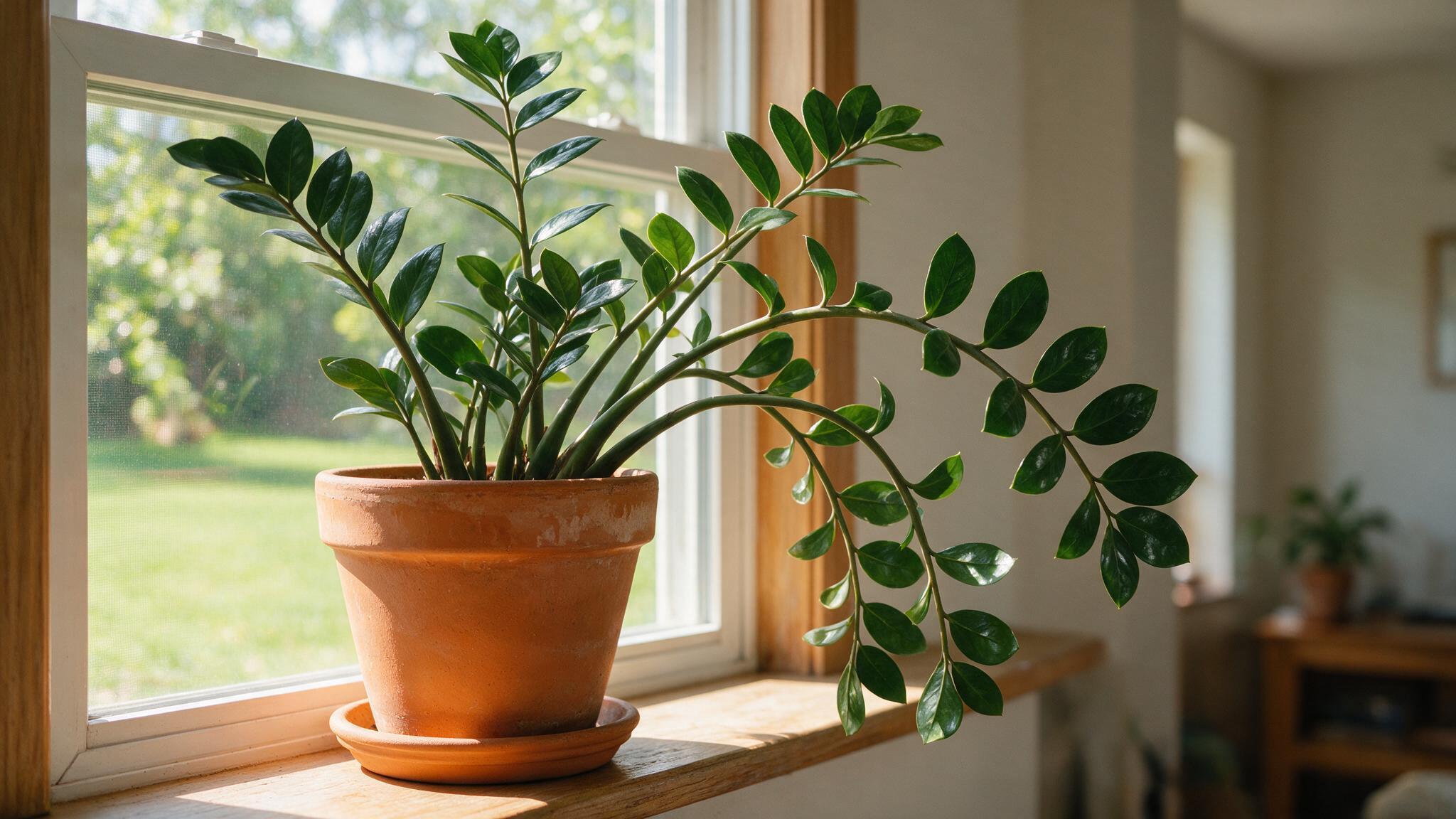
ZZ plants have a well-earned reputation as nearly indestructible houseplants, so noticing those glossy stems starting to sag can feel alarming. The good news is that drooping is one of the most correctable problems a ZZ plant can experience — once you know what is causing it.
This guide walks you through every reason your ZZ plant leaves might be drooping, how to figure out which one is the culprit, and exactly what to do to bring your plant back to its upright, architectural best. Whether you are a first-time plant owner or a seasoned houseplant enthusiast, you will find clear answers here.
What Does It Mean When Your ZZ Plant Is Drooping?
The ZZ plant, also known as Zamioculcas zamiifolia, is a beautiful plant recognizable by its glossy dark green leaves growing on gracefully curved stems. Native to the dry grasslands and forests of eastern Africa — specifically Tanzania and Zanzibar — this semi-evergreen perennial belongs to the Araceae family, which includes other popular houseplants such as the peace lily and the philodendrons.
The glossy-leaved ZZ plant has many adaptations to handle both low light and drought conditions. It has extremely thick underground roots called rhizomes that store water, and that waxy sheen on its leaflets is not just for aesthetics — it prevents moisture loss as well.
A ZZ plant will droop if it is not growing in optimal conditions. There is no need to remove droopy stems if they are otherwise healthy and undamaged — simply adjust the growing conditions and care, and it should start to perk up again. Drooping is your plant’s way of communicating that something in its environment is off, and identifying that signal early makes recovery much faster.
Is Drooping in ZZ Plants Always a Sign of a Problem?
Not always. Drooping can sometimes be completely normal, and knowing the difference between a natural process and a genuine care problem saves you from unnecessary worry — or unnecessary action that could make things worse.
If you notice that only a few of the oldest leaves are drooping while the rest of the plant looks healthy and is producing new growth, it is likely just the plant shedding old foliage. You can prune these leaves to tidy up the plant’s appearance.
Sometimes drooping stems are simply a sign that your plant is older and some of its growth has reached the end of its life cycle. Trimming the older stems will help with new growth, and this is completely normal — not a sign of anything you have done wrong.
Many people think ZZ plants naturally sprawl or drape like some other houseplants, but that is not really the case — ZZ plants are architectural and structural by nature. If yours is leaning significantly, something needs fixing. Use the sections below to narrow down the cause.
Pro Tip: Before troubleshooting, check whether new growth looks healthy and upright. If only the oldest, lowest stems are drooping and fresh shoots are perky, your plant is probably fine and simply cycling out older growth.
Watering Issues Causing ZZ Plant Drooping
The main reason a ZZ plant might be drooping is watering issues, mainly overwatering and inadequate light. Both too much and too little water produce drooping, which is why it is important to look at the other symptoms alongside the drooping itself to determine which direction you have gone wrong.
Overwatering
If you overwater your ZZ plant, it can result in the roots rotting. This in turn suffocates the plant as the roots cannot absorb the nutrients and water it needs, leading to the drooping you are worried about. Watch for these warning signs alongside the drooping: yellow leaves that eventually droop, mushy or soggy stems, and a nasty smell coming from the soil.
A pot that is too large may also be the culprit. Excess soil volume without enough root mass holds water around the roots, creating the same waterlogged conditions as overwatering even when you are watering at a reasonable frequency.
Underwatering
ZZ plants are built to survive droughts — they have rhizomes under the soil that store water. But if you neglect them for too long, the water they have stored will eventually run out, and that is when the leaves and stems will start to droop and wilt.
When a ZZ plant does not get enough water, the stems start drooping and leaning to the side. The leaves might wrinkle or curl inward, and the whole plant looks sad and deflated. You can usually tell by lifting the pot — if it feels very light, the soil is bone dry. The good thing about this cause is that reversing it is much easier than with overwatering.
According to Gardener’s Supply , ZZ plants should be treated like cacti and succulents and watered deeply only when their soil feels completely dry. Depending on the humidity and temperature of your home, this typically means watering your ZZ plant once every two to three weeks.
Pro Tip: Always use a pot with drainage holes. As noted by Little Flower Cottage, without drainage holes, even good soil will not save your plant.
Light Conditions Behind ZZ Plant Drooping
Light is the second most common trigger for drooping, and it works in both directions — too little and too much can each cause your plant to lose its upright posture in different ways.
ZZ plants are able to put up with low light, but that does not mean they like it. When they are not getting enough light, they will start to stretch toward whatever the nearest source of light is, and the stems will grow too long and droop. You may also notice pale, lighter green leaves and poor growth compared to earlier seasons.
When the degree of light is too much, your plant may also start showing signs of drooping. The ZZ tends to be averse to intense lighting, so if you place it in brightly lit conditions, it can start moving its stems away from the light. The leaves can also react by drooping and showing a yellow hue, and in time they can start curling and shedding.
The sweet spot for ZZ plants is bright, indirect light. It is essential to avoid exposing your ZZ plant to direct sunlight, as this can cause the leaves to burn and turn yellow. To ensure optimal growth conditions, place your ZZ plant near a north-facing window or in a location that receives bright, filtered light.
Rotating your plant a quarter turn every few weeks encourages even growth all around and prevents the lopsided, drooping posture that develops when all the new growth pushes toward a single light source. You can find more houseplants suited to low-light areas if your space is particularly dim.
Soil, Nutrients, and Root Health Causing ZZ Plant Drooping
Even when watering and light are dialed in, the wrong soil mix or a depleted nutrient supply can quietly undermine your ZZ plant’s structure over time.
Soil Mix and Drainage
The ideal soil for ZZ plants is well-draining and slightly acidic with a pH of 6.0 to 7.0. A good soil mix can be made by combining two parts all-purpose potting mix, one part coarse sand, and one part perlite or pumice, which allows the roots to breathe and prevents waterlogging.
According to Epic Gardening , overwatering damages roots and leads to their inability to uptake moisture and nutrients. Root rot is a fungal disease that pops up during prolonged saturation, causing the roots to turn brown and mushy, and as they decay they cannot function to support growth.
Fertilizer and Nutrients
ZZ plants require little fertilizer most often, but not giving them any can cause problems such as drooping of stems and leaves in the long run. They do need their small dose of fertilizer to keep them in top health.
A ZZ plant usually needs fertilizer every three to six months. Both under-fertilizing and over-fertilizing can cause drooping and yellowing of leaves. Use a balanced fertilizer (a 10-10-10 formula is a good choice) during the growing season in spring and summer, feeding sparingly — once every two to three months is enough. Do not fertilize in fall and winter, as your plant will naturally slow down.
Root-Bound Plants
A plant that has outgrown its pot can begin to droop due to restricted roots. ZZ plants grow slowly and do not need to be repotted very frequently. Check the roots — when they are twisting around each other and emerging from the soil, it is time for a larger pot. As always, choose a new container with a drainage hole on the bottom.
Environmental Stress Triggering ZZ Plant Drooping
Your ZZ plant’s environment inside your home — temperature, humidity, drafts, and sudden changes — plays a bigger role in drooping than most plant owners realize, especially during the extreme seasons common across much of the United States.
ZZ plants are native to Eastern Africa, where they enjoy warm temperatures and moderate humidity. Extreme temperature fluctuations can stress the plant, leading to droopy leaves. The ideal temperature range is 60 to 75°F (15 to 24°C), with the danger zone falling below 50°F (10°C) or above 85°F (29°C).
Keep your ZZ plant away from air conditioners, heaters, or windows with drafts. In winter, move it somewhere that keeps a stable temperature, especially if temperatures are dropping overnight. This is particularly relevant in climates with harsh winters or in homes where central air conditioning runs aggressively through summer.
ZZ plants are resilient, but they can still experience stress from sudden changes in their environment, which can cause leaves to droop temporarily. Give your plant a little time to adjust to its new conditions, ensure it is in a stable environment, and avoid making too many changes at once. With patience and proper care, your ZZ plant should bounce back from stress-induced droopiness.
Physical damage is another environmental factor worth checking. Even if you pick your plant right back up after knocking it over, the stems sometimes stay bent or droopy afterward. Physical damage weakens the stem structure, and a hard bump can crack the internal tissue even if you do not see it on the outside. Those damaged stems struggle to stay upright and often lean permanently.
Pests and Disease Leading to ZZ Plant Drooping
Though ZZ plants are generally pest-resistant, they can occasionally fall victim to common houseplant pests like spider mites or mealybugs. These pests can weaken the plant, causing the leaves to droop. ZZ plants can also attract scale insects, aphids, whiteflies, and fungal gnats.
According to The Old Farmer’s Almanac , ZZ plants may be hard to kill, but they can still experience common issues. Pests like mealybugs and scale may feed on ZZ plant leaves, while fungus gnats frequent these plants when they are overwatered.
Here is a quick reference for the pests most likely to affect your ZZ plant:
| Pest | Signs to Look For | Treatment |
|---|---|---|
| Spider Mites | Fine webbing on leaves, tiny moving dots | Wipe leaves with damp cloth; apply neem oil |
| Mealybugs | White cottony clusters on stems and leaf joints | Dab with rubbing alcohol; use insecticidal soap |
| Scale Insects | Brown bumps on stems, sticky residue on leaves | Scrape off manually; treat with neem oil |
| Fungus Gnats | Tiny flies around soil surface | Allow soil to dry out; use yellow sticky traps |
| Aphids | Clusters of soft insects on new growth | Rinse with water; apply insecticidal soap |
Fungal diseases can also manifest from overwatering. Ensure your plant is in a well-ventilated area and avoid overcrowding with other plants to reduce the risk of fungal diseases. ZZ plant care should include checking the underside of your plant’s leaves to detect pests early on. You should normally be able to get rid of the bugs by removing them with a cotton pad soaked in warm soapy water.
If you are concerned about pests spreading to other houseplants, check out this guide to keeping pets away from your houseplants — curious cats can accidentally spread pests from plant to plant. You can also use a plant identification app to help confirm what you are looking at on your plant’s leaves.
How to Diagnose Why Your ZZ Plant Is Drooping
The fastest way to fix drooping is to match the drooping pattern to the right cause. Work through this checklist in order — it moves from the most common problems to the least common.
- Check the soil moisture first. Stick your finger two inches into the soil. Soggy soil points to overwatering or poor drainage. Bone-dry soil that pulls away from the pot edges points to underwatering. Check soil moisture before watering — stick your finger in the soil up to the first knuckle. If it is dry, it is time to water. If not, hold off.
- Smell the soil and look at the stems. Healthy roots will be white and feel firm. Rotting roots will be brown or black and mushy. A foul smell from the pot is a clear root rot signal.
- Assess the light situation. In the case of low light, the growth of the plant will slow down. If the plant is getting very little light, it might survive, but the stems will start leaning and drooping toward an area with more light. If there is excess light, the plant will start bending and drooping away from the light.
- Check the temperature and location. Is your plant near an air conditioner vent, a drafty window, or a heating vent? Keep your ZZ plant in a comfortable climate with average room temperatures between 65–75°F (18–24°C). Extreme temperatures can cause stress, leading to droopy leaves. Avoid placing your plant near drafty windows or heat sources.
- Inspect for pests. Look at the undersides of leaves and along stems for webbing, sticky residue, tiny insects, or white cottony clusters.
- Check the pot size and roots. If roots are circling the bottom or poking out of drainage holes, the plant is root-bound. If the pot is much larger than the root ball, excess soil may be holding too much moisture.
- Review your fertilizer history. You might be using the wrong fertilizer if your ZZ plant is drooping soon after you have added fertilizer to it. Conversely, if you have never fertilized, nutrient depletion could be a factor.
Key Insight: Always start with soil moisture before investigating anything else. According to Little Flower Cottage , watering mistakes are the number one cause of drooping ZZ plants — and they are the most common misdiagnosis too.
How to Fix a ZZ Plant That Is Drooping
Once you have identified the cause, the fix is usually straightforward. Here is what to do for each scenario.
Fixing Overwatering and Root Rot
Drooping leaves, brown tips, and an unpleasant odor from the roots are all signs of root rot. Remove your plant from its pot, cut off all the rotting roots and rhizomes, and repot the plant in a container with good drainage. Add new well-draining potting soil and do not water the plant until it recovers.
Overwatering can cause ZZ plants to develop yellow leaves or brown leaf spots with yellow halos, and it may result in plants wilting dramatically or developing smelly roots. Mild cases of overwatering and root rot can be corrected by adjusting your watering schedule and potentially repotting your plant; however, if rot is severe, you may want to propagate new plants from stem cuttings or start over with a new ZZ plant.
Fixing Underwatering
Water thoroughly until it drains out the bottom holes, then let the soil dry out before the next watering. Recovery is usually quick once you give the plant a good soak — within a few days, the stems start perking back up.
Fixing Light Problems
Put your ZZ plant near a bright window — an east or north-facing one usually works well. Keep it out of direct sunlight so it does not get burnt. Use sheer curtains to filter the light if you are having to put your plant in a bright room. Rotate the plant every few weeks so every side gets an even amount of light.
Fixing Temperature and Environmental Stress
Relocate the plant to an area of your house that remains warm. You can cut off the stems and leaves that have been damaged due to the cold. Take care of the ZZ plant by letting it have indirect light and not exposing it to extreme cold — it will slowly recover in a few weeks.
Fixing Nutrient Deficiency
If you feel the need to feed, use a balanced, water-soluble fertilizer diluted to half-strength every two to three months during the growing season in spring and summer. Stop fertilizing entirely in fall and winter when the plant’s growth naturally slows. If you recently over-fertilized, flush the soil thoroughly with water to dilute the excess salts, then hold off on feeding until the plant recovers.
Fixing Pest Infestations
Use insecticidal soap or neem oil to eliminate pests. For a lighter infestation, wiping down each leaf with a damp cloth or cotton pad soaked in diluted rubbing alcohol is often enough. Isolate the affected plant from your other houseplants while you treat it to prevent the pests from spreading. If you grow spider plants or rubber plants nearby, check those for pests too, since mealybugs and spider mites move easily between houseplants.
How to Prevent ZZ Plant Drooping Going Forward
Preventing drooping is much easier than fixing it. A few consistent habits will keep your ZZ plant standing tall for years. ZZ plants are slow growing and long-lived — with even the tiniest bit of care, they can live for decades.
- Water by soil feel, not by schedule. Assess the dryness of the soil before watering. In brighter light or warmer conditions, your plant will drink more frequently. In winter, it is more of a sipper.
- Choose the right pot. Always use a pot with drainage holes and size it appropriately — not much larger than the root ball. Well-draining soil in a pot that is just the right size fits well and feels great. Too tight or too loose, and it is awkward for the plant.
- Rotate regularly. Rotate your plant a quarter turn every few weeks to encourage even growth all around.
- Keep temperatures stable. Avoid exposing ZZ plants to extreme temperature changes or drafts, as this can cause stress and damage to the plant.
- Fertilize lightly during the growing season only. A diluted balanced fertilizer applied once every two to three months in spring and summer is all your ZZ plant needs.
- Inspect leaves monthly. ZZ plant care should include checking the underside of your plant’s leaves to detect pests early on. Catching an infestation when it is small is far easier than dealing with a widespread one.
- Handle carefully. Always move the plant by supporting the base of the pot. Do not put it somewhere that gets crowded or has lots of people walking past, as it can get bumped into. Prune any damaged stems so the plant does not get more stressed.
If you are looking to expand your indoor plant collection, check out this guide to types of houseplants or explore different types of aloe vera plants — another drought-tolerant group that shares some care similarities with ZZ plants. For offices or rooms with minimal windows, the best houseplants for low-light areas list is a helpful resource.
Important Note: ZZ plants contain calcium oxalate crystals. According to Nature & Garden , small crystals in the sap may cause rashes on skin where touched, and sensitive persons should wear gloves when performing tasks like repotting, transplanting, and dividing ZZ plants. Keep the plant out of reach of pets and small children.
FAQ
Why are my ZZ plant leaves drooping after repotting?
Recent replanting causes drooping because when you repot your ZZ, the roots need time to anchor into the new soil. Until they establish a good grip, the stems wobble and tip easily. Give the plant a few weeks in a stable spot with bright indirect light and avoid overwatering during this adjustment period.
Can I save a ZZ plant with severe root rot?
Root rot is not usually easy to diagnose until it has affected the plant a great deal. Ideally, it is best to check for root rot when the leaves start yellowing. If it gets to the point of falling over and drooping, it might be quite hard to save the ZZ plant — though it is not impossible. Remove all rotted roots, repot in fresh well-draining soil, and hold off on watering until the plant shows signs of recovery.
How often should I water my ZZ plant to prevent drooping?
In summer, ZZ plants take watering every week or two, allowing soils to dry a bit between sessions. In winter, when growth slows, reduce watering to about once a month to prevent overwatering. Continue to gauge the timing by feeling the soil surface for dryness.
Will my ZZ plant recover from drooping on its own?
A ZZ plant will droop if it is not growing in optimal conditions. There is no need to remove droopy stems if they are otherwise healthy and undamaged — simply adjust the growing conditions and care, and it should start to perk up again. Recovery speed depends on the cause: underwatering resolves within days, while root rot recovery can take several weeks.
Is drooping different from wilting in a ZZ plant?
Wilted leaves on ZZ plants most often indicate watering problems — too much or too little — followed by too much sun or low humidity. Drooping typically refers to stems losing their upright posture, while wilting more specifically describes leaves going limp and losing turgor. Both can occur together and often share the same root causes.
Do ZZ plants droop in low light?
ZZ plants can survive in low light, but they will not thrive. Inadequate light leads to weak, etiolated growth, with leaves reaching for any light source. Although ZZ plants tolerate low light, providing more bright, indirect light will encourage new growth to be compact and sturdy.