Why Are My Tomato Leaves Turning Yellow? Causes, Fixes, and Prevention

September 16, 2026
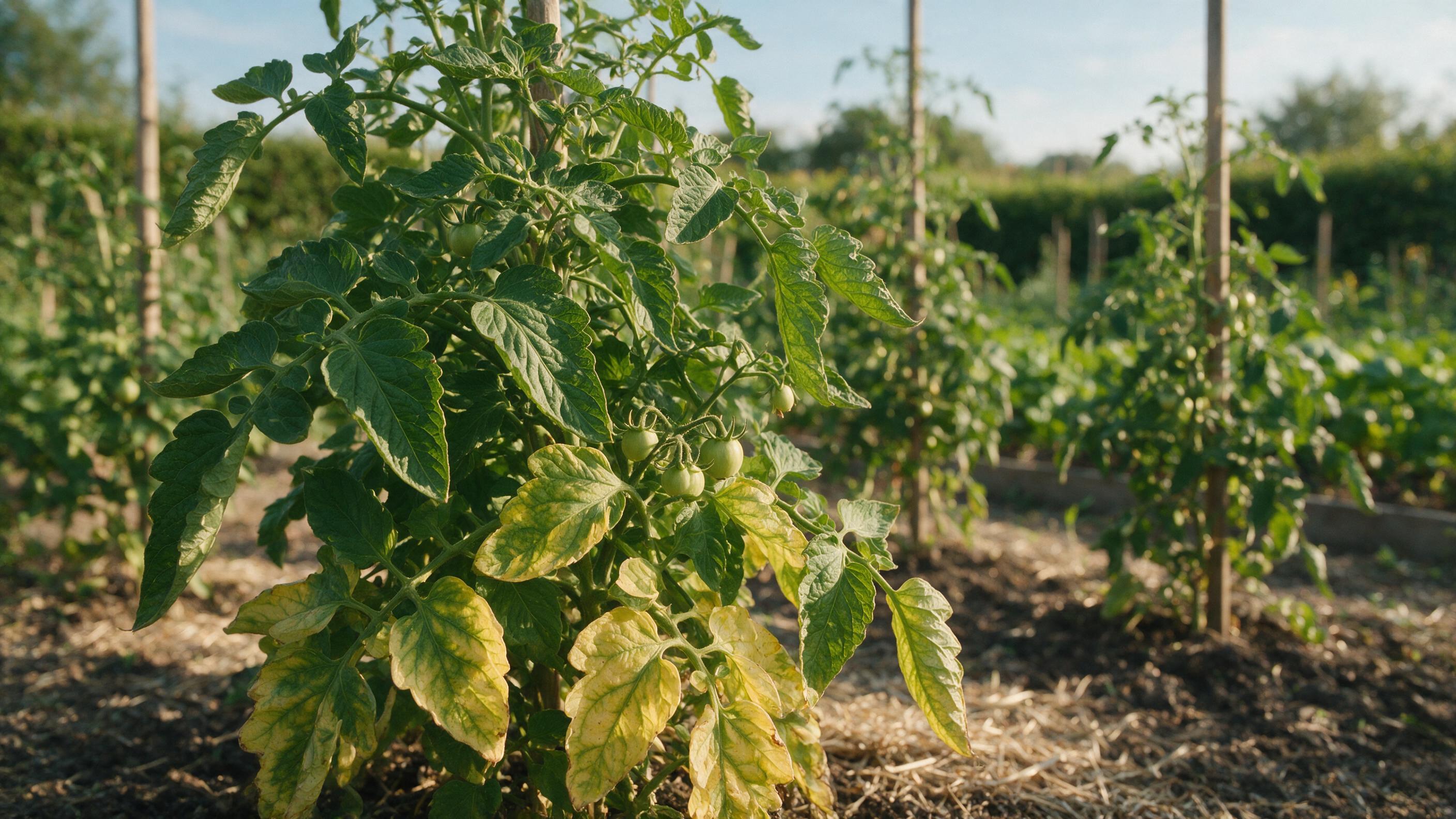
You head out to the garden, coffee in hand, and notice it right away — your tomato leaves have gone from lush green to a worrying shade of yellow. It’s one of the most common frustrations for home gardeners across the United States, and it happens to beginners and experienced growers alike.
The good news is that yellow leaves on tomato plants are an incredibly common problem that countless gardeners encounter at some point during the growing season, and most often the problem is an easy fix — or may not even be cause for alarm at all. Before you panic or start pulling plants, it helps to understand exactly what’s going on and why.
This guide walks you through every major reason tomato leaves turn yellow, how to accurately diagnose the cause in your own garden, and what steps you can take to fix the problem and keep it from coming back.
What Does It Mean When Your Tomato Leaves Are Turning Yellow?
Yellow leaves on a tomato plant — a process called chlorosis — signal that something is disrupting the plant’s ability to produce or maintain chlorophyll, the green pigment responsible for photosynthesis. Typically, yellowing leaves are a result of a nutritional imbalance or disease outbreak, but other causes can play a part.
The tomato plant (Solanum lycopersicum) is a warm-season vegetable that is particularly sensitive to changes in its growing environment. While the symptoms may look alarming, most tomato problems stem from a few common causes: nutrition, environmental stress, pests, diseases, or herbicide exposure.
Where the yellowing appears on the plant is one of your best diagnostic clues. Symptoms of some nutrient deficiencies will show up in the older leaves lower down on the plant, meaning the tomato was able to move nutrients from older growth to new leaves that need those minerals the most. Yellowing that starts at the top of the plant, by contrast, often points to a different set of problems entirely.
Pro Tip: Before reaching for fertilizer or pesticide, note exactly where on the plant the yellowing is occurring — bottom leaves, top leaves, or scattered throughout — and whether any brown spots, patterns, or wilting accompany it. This single observation will narrow your diagnosis significantly.
Is Yellowing in Tomatoes Always a Sign of a Problem?
Not always. Some yellowing is a completely normal part of a tomato plant’s life cycle, and recognizing these harmless situations can save you a lot of unnecessary worry.
If the bottom leaves on your tomato plants are yellow, these are likely the seedling leaves that will eventually fall off. The next leaves up have more cause for concern if you see a yellowish tint. These lowest leaves, sometimes called cotyledons, naturally die back as the plant matures and redirects energy upward.
Transplant shock is another common and temporary cause. If you’ve recently transplanted your seedlings and notice yellowing leaves on the bottom of the plant, transplant shock is likely the cause. The shock can cause the bottom few leaves to turn yellow, but this is just a short phase of adjustment. As long as the new growth is green and healthy, there is no cause for alarm, and the yellow leaves will eventually drop off as the plant returns to good health.
That said, any form of widespread or spreading yellowing is not good and warrants closer attention. The key is to distinguish between isolated, expected yellowing at the base of a healthy plant versus yellowing that is spreading, accompanied by spots, or affecting mid-plant and upper leaves.
Watering Issues Causing Tomato Leaves to Turn Yellow
The most probable cause of yellowing leaves on tomato plants is incorrect watering — a practice many gardeners get wrong, sometimes by providing too little water but often by providing too much. Both extremes disrupt the plant’s ability to absorb and transport nutrients.
Overwatering saturates the soil, depriving roots of oxygen and potentially causing root rot, while underwatering leads to dehydration and hinders nutrient absorption. Proper watering balance is essential for maintaining healthy foliage.
Before yellow leaves stand out due to incorrect watering, you may notice wilting and brown edges. When roots sit in waterlogged soil, they begin to suffocate. The roots do not have access to enough oxygen and begin to suffocate, and they cannot transport the oxygen, water, and other nutrients throughout the plant — causing the leaves to turn yellow.
Container-grown tomatoes are especially prone to moisture swings. Tomatoes in containers dry out faster and need extra watering, and some container tomato plants will need water twice a day. Always water at the base of the plant.
Pro Tip: A good rule of thumb is to do a moisture test by placing a finger several inches deep in the soil to test for moisture near the roots. If it feels dry, it’s time to water — and as the tomato plants get closer to full maturity, they will require more and more water.
Light Conditions Behind Tomato Leaf Yellowing
Tomatoes are sun-loving plants that need at least six to eight hours of direct sunlight each day. Too little light causes the plant to slow photosynthesis, which leads to pale, yellowing foliage — especially on leaves that are shaded by dense canopy growth or nearby structures.
Too much intense, direct sun can cause the opposite problem. Leaves will experience sunburn when they haven’t been properly hardened off or when water droplets concentrate light on the leaves. If the burn is not too extensive, your plants will heal on their own and are not cause for concern.
Spacing is a key factor in light distribution. When tomato plants are crowded together, lower and inner leaves get cut off from sunlight and begin to yellow and drop. This is especially common in raised beds and container gardens where plants are placed too close together. Pruning suckers and maintaining good airflow between plants helps every leaf get the light it needs. For more ideas on what to grow alongside your tomatoes to maximize space and light, see this guide on different plants to grow with tomatoes.
Soil, Nutrients, and Root Health Causing Tomato Leaf Yellowing
Nutrient deficiencies are among the most common reasons tomato leaves turn yellow, and each deficiency leaves a slightly different pattern that you can learn to read.
Nitrogen is the most common cause, because people generally don’t fertilize tomatoes enough. The absence of adequate nitrogen is the top culprit for tomato leaf discoloration. Without nitrogen, the older leaves on the lower parts of the plant typically start to turn yellow, as these leaves divert nutrients to younger, growing leaves.
Other key deficiencies produce distinct visual patterns:
- Magnesium deficiency: Tomatoes that don’t have enough magnesium will develop yellow leaves with green veins. This interveinal yellowing typically appears on older, lower leaves first.
- Potassium deficiency: A lack of potassium will cause the outer edge of the leaf to yellow before turning brown and looking burned.
- Iron deficiency: Yellowing can be the result of an iron deficiency in the plant, but this will be most prominent in the youngest leaves.
- Calcium deficiency: Calcium deficiency can cause younger leaves to turn yellow and, in addition to yellow leaves, can also lead to blossom end rot, where the bottoms of tomato fruits develop large brown or black spots.
Soil pH plays a critical role in whether your tomato plant can actually access the nutrients in the ground. The pH level is important because it plays a role in nutrient availability. If the soil is too acidic, plants will have a hard time absorbing calcium and magnesium.
It’s best practice to have your soil tested to confirm nutrient deficiencies before adding anything other than organic fertilizer and compost. Adding too much synthetic fertilizer can burn your plants, and overuse of lime and wood ash can alter your soil pH, causing more problems with nutrients than they prevent.
Root health matters just as much as soil chemistry. When the soil around your tomato plants has inadequate aeration, the roots do not have access to enough oxygen and begin to suffocate. It is best to start the plant in good soil enriched with organic matter to avoid this problem altogether. Soil compaction is often caused by walking on the soil, so growing tomatoes in raised beds or large pots is one way to solve the issue.
Understanding how different leaf types show stress can also help you read what your tomato plant is communicating through its foliage.
Environmental Stress Triggering Tomato Leaf Yellowing
Extreme temperatures, poor soil drainage, and improper sunlight exposure can stress tomato plants, causing their leaves to turn yellow. In the United States, these stressors vary widely by region and season.
Cold snaps are a real threat for gardeners who plant early in spring. Frost damage on tomatoes can harm the leaves in a few ways — you may notice yellowing, wilting, spots between leaf veins, or blackened leaves. If the frost was mild and the plant’s stem is still healthy, you can simply remove the damaged leaves and let the plant recover.
Heat stress is the opposite problem and is particularly common in the South and Southwest during summer. When temperatures climb above 95°F consistently, tomato plants struggle to photosynthesize efficiently, and leaves may pale or yellow as a result. Leaf curling is often caused by environmental stress, not disease, and while curling leaves may not cause permanent damage, prolonged stress can reduce fruit production.
Herbicide drift is an often-overlooked environmental stressor. Herbicide drift can damage plant roots, making it difficult for the tomato plant to absorb water and nutrients — and the resulting yellowing can look similar to a nutrient deficiency. Roundup injury to tomatoes creates a bleaching effect from the inside to the outside of the leaf and affects the newest growth of the plant, such as the youngest leaves and shoots.
Important Note: If you recently used a lawn herbicide near your garden or your neighbor did, herbicide drift should be on your diagnostic checklist. The yellowing pattern — starting on new growth and affecting the growing tips — differs from typical nutrient deficiency patterns that start on older, lower leaves.
Pests and Disease Leading to Tomato Leaf Yellowing
Pests and disease are two of the most serious causes of yellow tomato leaves, and they often work together. Pests are a common cause of tomato leaf problems and are often carriers of tomato diseases as well, so it’s prudent to keep an eye out for any insects on your tomatoes.
Common pests: Mites and aphids are two common predators that place added stress and damage on the plant, causing yellowing leaves as one result. You may also see curling leaf tips. Certain pests, such as aphids and whiteflies, can suck the sap from tomato plants, causing damage and yellowing of leaves. Viruses such as tomato yellow leaf curl virus are often spread by insects like whiteflies and can cause both yellowing and curling.
Fungal diseases: Early blight, caused by a soil-borne fungus, travels from the soil to the lower leaves. At the earliest stage of infection, these lower, older leaves will begin showing irregularly shaped yellow splotches that progress into brown spots with a yellow “halo” around them — the splotches appear almost like a target with a brown center.
Another fungal disease, Septoria leaf spot, mimics early blight in many ways. Like early blight, spots on the lower, older leaves begin yellow but then darken into brown and then to tan or gray. These spots are smaller and more numerous than those in early blight, and they take more of a circular appearance.
Wilt diseases: With verticillium wilt, leaves will exhibit yellow and brown areas from the middle vein of a leaf to the edge, often in a V-shape. Plants wilt in the hot part of the day. Verticillium wilt is slow to progress and more uniform throughout the plant, but unfortunately there is no cure and it will eventually overtake the plant.
Fusarium wilt begins in the soil and infects the plant’s roots, preventing the transportation of water to the stems and leaves. The plant will appear wilted even though there is enough water in the soil, and the leaves will begin to drop off the plant from the bottom up.
Dappled yellow leaves with twisty new growth are common with tobacco mosaic virus, which is often transmitted by insects and especially aphids. There is no cure for this virus — affected plants should be removed and destroyed.
To help manage pest pressure naturally, you can explore companion planting strategies for tomatoes that use pest-repelling plants nearby. You may also find it helpful to use a plant identification app to help pinpoint what’s affecting your tomatoes.
How to Diagnose Why Your Tomato Leaves Are Turning Yellow
A systematic approach to diagnosis will save you time and prevent you from applying the wrong fix. Work through the following steps before taking any corrective action.
- Note the location of yellowing. Lower, older leaves point to nitrogen deficiency, early blight, or normal aging. Upper, newer leaves suggest iron or calcium deficiency, herbicide drift, or viral infection. Scattered yellowing throughout the plant may indicate a systemic issue like fusarium wilt or overwatering.
- Look for accompanying symptoms. Yellowing foliage that begins on the bottom leaves and works its way up, accompanied by brown bullseye-shaped spots rather than large irregular patches of brown, with no serious wilting, is likely a manageable disease.
- Check your watering habits. Stick your finger 2–3 inches into the soil. If it’s soggy, you’re overwatering. If it’s bone dry, you’re underwatering. Both produce yellowing, but overwatering often comes with a faint musty smell from the soil.
- Inspect the undersides of leaves. Aphids, spider mites, and whiteflies often hide on the undersides of leaves. Look for tiny insects, webbing, or sticky residue.
- Test your soil. Before reaching for fertilizer, do a quick soil test. The test results will include the amount of nutrients in the soil, the soil pH level, and recommendations on what products should be added. Soil test kits are available at most US garden centers and through your local cooperative extension office.
- Consider recent environmental events. Did temperatures drop below 50°F recently? Was herbicide used nearby? Did you transplant within the last two weeks? These events all have predictable yellowing signatures.
If you suspect that your tomato plant has a bacterial or fungal disease or is being eaten by insects or mites, reach out to your local agricultural extension service for help diagnosing the problem and finding a solution. Your state extension program may have information on their website about tomato health problems that are common in your area.
Key Insight: The pattern of yellowing — which leaves are affected, whether veins stay green, and whether spots or wilting accompany the color change — is more diagnostic than the yellow color alone. Take a few photos and compare them against a disease reference chart from your state’s university extension service.
How to Fix a Tomato Plant That Is Turning Yellow
The right fix depends entirely on the cause. Here’s how to address each major category.
Fixing watering problems: Adjust your schedule to water deeply and less frequently rather than lightly and often. Once you transplant your tomato plants into the garden, keep a consistent watering schedule and use deep watering techniques throughout the week, especially when temperatures get warmer. If root rot has set in from chronic overwatering, remove the plant from the pot, trim any black or mushy roots, and repot in fresh, well-draining soil.
Fixing nutrient deficiencies: If you’re sure of a magnesium deficiency, try a homemade Epsom salt mixture — combine two tablespoons of Epsom salt with a gallon of water and spray the mixture on the plant. If the problem was truly due to magnesium deficiency, leaves should start to become green within a week of treatment. For nitrogen deficiency, apply a balanced tomato fertilizer. Begin fertilizing when the plants start to flower, and continue every four to six weeks throughout the growing season. Avoid over-fertilizing, as this can lead to nutrient imbalances and other issues.
Fixing fungal disease (early blight and Septoria leaf spot): Remove any yellow leaf and throw it away in case it is diseased so it will not spread and infect others. Remove that leaf, spray a fungicide, and hopefully the problem will be resolved by early diagnosis. When removing leaves, be sure to remove them with a clean hand and properly dispose of the leaf. Wash your hands thoroughly before continuing to work on other healthy plants to avoid spreading any disease between plants.
Do not clip yellow tomato leaves or stems when the plant is wet. Whether because of dew or a recent rain, handling the plant when wet will only spread the fungal spores more. Instead, plan your pruning for the evening and destroy the affected leaves — do not compost them.
Fixing fatal wilt diseases: The most common fatal diseases you might find on your tomato plants are late blight and fusarium or verticillium wilts. If you find a fatal disease on your tomato plants, you need to remove and dispose of the entire affected plant immediately to prevent the disease from spreading to your other plants.
Fixing pest infestations: Neem oil, spinosad, or insecticidal soap are popular options to deal with mites, whiteflies, and other common garden pests. If you deal with aphids in your garden, consider using organic sprays or natural predators, and clean out the dead plant material. Use a variety of tomato companion plants in your garden that repel aphids, such as catnip, garlic, or chives.
| Cause | Key Symptom | Fix |
|---|---|---|
| Nitrogen deficiency | Uniform yellowing, older lower leaves first | Apply balanced tomato fertilizer |
| Magnesium deficiency | Yellow leaves, green veins remain | Epsom salt spray (2 tbsp per gallon) |
| Overwatering | Yellowing + soggy soil, possible root rot | Reduce watering, improve drainage |
| Early blight | Brown bullseye spots with yellow halo, lower leaves | Remove leaves, apply fungicide |
| Aphids / mites | Yellowing + sticky residue or webbing | Neem oil or insecticidal soap |
| Fusarium / verticillium wilt | Wilting + yellowing despite moist soil | Remove and destroy plant; rotate crops |
| Transplant shock | Bottom leaves yellow, top growth healthy | Trim yellow leaves; wait it out |
How to Prevent Tomato Leaf Yellowing Going Forward
Prevention is far easier than treatment, and most yellowing problems are avoidable with consistent, proactive care throughout the growing season.
Start with healthy soil. Before adding or getting rid of any fertilizer, soil testing is the most reliable method to understand what nutrients your soil needs, as it provides insights into soil composition, pH, and nutrient levels. Amend with compost each season to build organic matter and improve drainage simultaneously.
Mulch around the base of your plants. Mulch thickly — since early blight originates in the soil, inhibit its path to the plant by laying on a 4-inch layer of mulch around the tomato plant. Mulch also regulates soil moisture and temperature, reducing both overwatering risk and heat stress.
Water at the base, not the leaves. When irrigating, choose a drip or soaker hose method to dispense water to the root zones of the plants. Aim not to let the leaves get wet, which will allow disease to spread more easily. If you must use overhead watering, do so at the beginning of the day so the water can evaporate quickly.
Keep lower leaves off the ground. Clip the lower leaves on your tomato plant, even if they’re unaffected. When the plant reaches about 18 inches high, clip all stems growing on the lower 6 inches of the plant. As the plant grows higher, aim for no stems on the bottom 12 inches of the plant. If the leaves are allowed to touch the soil, early blight will continue to spread.
Use preventive fungicide in humid climates. Using a fungicide protectant on a regular basis — once every seven to ten days, and up to 14 days in a dry year — and spraying on a schedule whether you think you need it or not is a strategy recommended by Texas A&M AgriLife Extension for gardeners in hot, humid states.
Rotate your crops. At the end of the season, remove all plants and destroy them — do not compost. Rotate crops next season. Moving tomatoes to a different bed each year prevents soil-borne fungi and wilt pathogens from building up in the same spot.
Choose disease-resistant varieties. One of the easiest ways to ensure healthy plants is to grow disease-resistant varieties. Look for tomato seed packets and transplants labeled with resistance codes like V (verticillium wilt), F (fusarium wilt), and N (nematodes). When choosing tomato varieties for future gardening seasons, look for the TMV resistant label as well, especially if tobacco mosaic virus has been a problem in your area.
Healthy tomatoes start with healthy companion planting and smart garden design. Explore plants that grow well with tomatoes to build a more resilient growing environment, and browse our broader guide to types of plants for more inspiration on building a thriving garden. If you’re looking for practical tools to help identify problems in the field, check out the best Android apps for identifying plants or the best iPhone apps for identifying plants.
Frequently Asked Questions
Can yellow tomato leaves turn green again?
Yellow leaves will not return to green. Once a leaf is affected, there really isn’t hope for that leaf or even that stem. Cut it off as quickly as possible to stop the spread of the disease. Your energy is better spent protecting the healthy green leaves that remain.
Should I remove yellow leaves from my tomato plant?
Yes, in most cases. Even if you don’t know the cause, remove any yellow leaf and throw it away in case it is diseased so it will not spread and infect others. Just make sure to do so when the plant is dry, not after rain or watering, to avoid spreading fungal spores.
Why are only the bottom leaves of my tomato plant turning yellow?
This is usually one of three things: normal leaf aging and die-off of the lowest seedling leaves, early blight spreading up from the soil, or nitrogen deficiency pulling nutrients from older growth to fuel new growth at the top. Fungal pathogens like early blight typically start on the bottom leaves, while yellowing can also be a sign of nutrient deficiencies. Check for brown spots to help tell them apart.
Why are the top leaves of my tomato plant turning yellow?
Some nutrient deficiencies will be evident in new growth at the tips of branches and toward the top of the plant. Calcium and iron deficiency can cause younger leaves to turn yellow. Herbicide drift and certain viral infections also tend to affect new growth first.
How often should I fertilize tomatoes to prevent yellowing?
Young tomatoes will need fertilization every two weeks before you can start cutting back. If you have tomatoes in containers, you may need to fertilize them every two to four weeks. As always, make sure the plants are well watered before and after fertilizing.
Can too much sun cause tomato leaves to turn yellow?
Intense, direct sun can cause sunscald, which typically appears as pale, papery patches rather than uniform yellowing. Leaves will experience sunburn when they haven’t been properly hardened off or when water droplets concentrate light on the leaves. This is more common with seedlings moved outdoors too quickly without a gradual hardening-off period.
Is it safe to eat tomatoes from a plant with yellow leaves?
In most cases, yes. Tomato plants with manageable diseases should still produce healthy tomatoes. However, if the plant has a fatal disease like late blight or fusarium wilt, the fruit quality may be compromised and the plant should be removed entirely. When in doubt, contact your local agricultural extension service for region-specific guidance.