What to Serve With Chicken Parmesan: 15 Pairings That Always Work

September 2, 2026
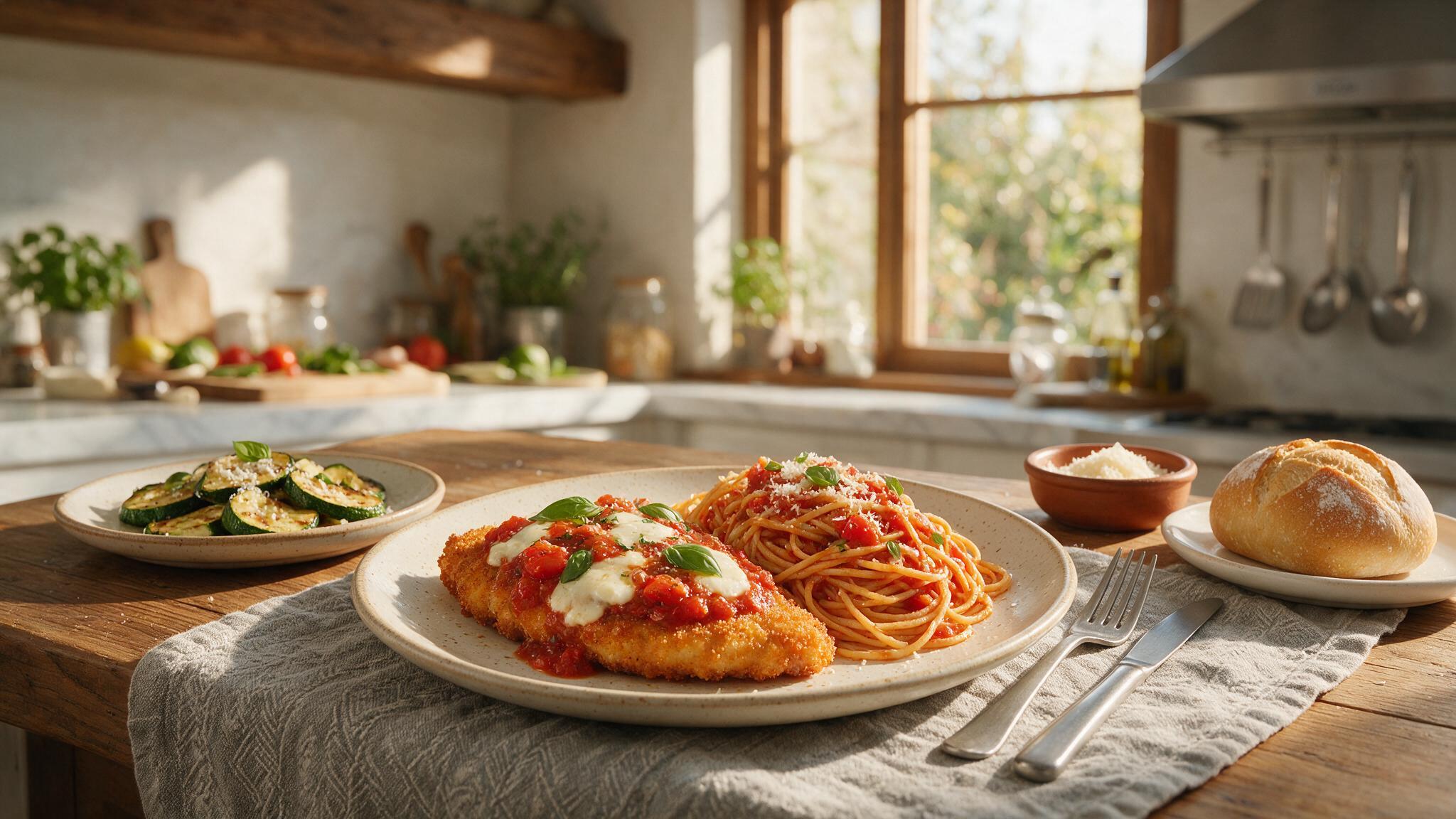
Chicken parmesan is really two meals stacked on one plate: a crispy fried cutlet and a generous layer of tomato sauce and melted cheese. That’s exactly why figuring out what to serve with chicken parmesan matters more than it does for a simpler main course — the wrong side either piles on more richness or fights with the sauce instead of complementing it.
This savory, cheese-forward Italian-American classic pairs with far more than a plate of spaghetti. Below are 15 sides, salads, and drinks that round out the meal, from crisp salads and roasted vegetables to creamy starches and two Italian wines worth pouring.
Caesar Salad
A crisp Caesar is one of the most reliable starters or side salads for chicken parmesan because the cold, crunchy romaine and salty parmesan cut straight through the richness of the fried chicken and sauce. One popular recipe roundup calls it “A classic pairing that never disappoints”, and it’s easy to see why: the anchovy-forward dressing echoes the umami of the marinara without competing with it.
Keep the croutons on the smaller side so the salad stays light, and go easy on extra parmesan since your chicken parm is already carrying plenty of cheese. If you’re short on time, a bagged Caesar kit dressed up with fresh lemon and cracked pepper works just fine on a weeknight.
Spaghetti
Spaghetti is the pairing most people picture first, and for good reason. Chicken parmesan is most often served with pasta, with marinara as its sauce, since boiling a pot of noodles takes about as long as the chicken needs to bake or fry. The pasta also gives you something to do with any extra sauce simmering in the pan.
For a more traditional Italian plate, dress the noodles simply — olive oil, a little reserved pasta water, and fresh basil — rather than drowning them in a second sauce. If you want to lean further into the classic marinara-and-tomato combination, keep the seasoning simple and let the chicken parmesan’s sauce do the heavy lifting on flavor.
Pro Tip: Toss cooked spaghetti with a spoonful of the chicken parmesan’s own marinara before plating so the noodles pick up flavor without needing a separate sauce.
Garlic Bread
Garlic bread earns its spot at the table for one simple reason: it’s built to mop up leftover marinara. A soft, buttery loaf brushed with garlic and parmesan turns every last streak of sauce into another bite instead of something left on the plate. Chicken parmesan is traditionally served with pasta such as spaghetti, garlic bread and a simple green salad, so this trio has been the default for a reason.
Homemade garlic bread takes fifteen minutes, but a good store-bought loaf warmed in the oven works just as well when you’re short on time. Either way, serve it warm so the butter stays soft enough to soak into every bite.
Roasted Broccoli
Roasted broccoli brings color, crunch, and a slightly charred, nutty flavor that balances the softness of the breaded chicken. Tossing the florets in olive oil, salt, and a squeeze of lemon before roasting at high heat gives you crispy edges without extra sauce or cheese, which is exactly the contrast a rich plate needs. Fresh vegetables like this help lighten up a plate filled with crispy chicken, rich tomato sauce, and melted cheese, adding color and freshness to the meal.
A finishing sprinkle of red pepper flakes or grated parmesan keeps it in the same flavor family as the main dish without duplicating it.
Roasted Brussels Sprouts
Halved and roasted until the edges caramelize, Brussels sprouts add a slightly bitter, nutty note that plays well against the sweetness of the marinara. This is one of the healthier swaps many recipe collections point to: one guide lists “sauteed spinach and roasted brussel sprouts” right alongside garlic bread and bruschetta as go-to sides for chicken parmesan.
Toss them with a mix of fresh herbs, olive oil, and a splash of balsamic vinegar before roasting for extra depth. A high oven temperature (425°F or hotter) is what gets those crispy, caramelized edges.
Mashed Potatoes
Mashed potatoes lean fully into comfort-food territory, giving you a creamy, neutral base that soaks up sauce the same way pasta does. Several side-dish roundups list them right alongside the other classics, noting that “Garlic bread, Caesar salad, roasted vegetables, risotto, mashed potatoes, and spaghetti squash are all popular side dishes” for this meal.
Because chicken parmesan is already a rich, cheese-heavy plate, a smaller portion of potatoes — or a lighter mash made with more milk than butter — keeps the meal from feeling too heavy.
Important Note: Chicken parmesan and its richer sides are best enjoyed in moderation as part of a balanced diet. If you’re managing your heart health, this guide on foods to eat and avoid with coronary heart disease is worth a look before planning a menu around fried, cheese-heavy dishes.
Roasted Asparagus
Roasted asparagus is one of the easiest vegetable sides to pull together, and its slightly grassy, mineral flavor cuts through the richness of the cheese and breading. One recipe collection tops roasted asparagus with bruschetta and asiago cheese for an Italian vegetable side that’s ready in about 15 minutes.
Trim the woody ends, coat the spears lightly in oil, and roast until just tender with a bit of char. A squeeze of lemon at the end brightens the whole plate.
Spring Mix Salad
A spring mix salad brings the same fresh contrast as a Caesar but with a lighter, more delicate texture and a milder dressing. Toss the greens with a simple vinaigrette, some shaved parmesan, and cherry tomatoes so the salad still feels connected to the main dish’s flavors. As one recipe writer puts it, fresh salads, roasted vegetables, pasta, potatoes, and bread are all delicious options that can be customized to suit any taste, and a spring mix is one of the easiest ways to check that first box.
Because the greens are so light, this is a good option when you already have a heavier starch like risotto or mashed potatoes on the table and just need a bit of crunch.
Creamy Polenta
Swap the pasta for creamy polenta when you want something in the same comfort-food category with a different texture. Slow-cooked cornmeal finished with butter and parmesan gives you a soft, spoonable base that soaks up marinara the way mashed potatoes do, but with a distinctly Italian character.
Polenta also holds up well for make-ahead dinners since it reheats easily with a splash of milk or broth stirred back in. It’s a smart pick if you’re building an Italian-themed menu and want a starch that isn’t spaghetti.
Sautéed Spinach
Quick-wilted spinach with garlic and olive oil is one of the lightest, fastest sides on this list, and it earns its place for a reason. As one recipe blog explains, “Light and nutritious, sautéed spinach is a simple yet flavorful side dish” that adds vibrant color and a refreshing balance to the richness of the chicken parmesan.
A few minutes in a hot pan with garlic, a pinch of salt, and a squeeze of lemon is all it needs. Skip heavy cream or extra cheese here — the point is contrast, not more richness.
Roasted Green Beans
Roasted or sautéed green beans give you a snappier, more substantial vegetable side than spinach or broccoli, especially when dressed up with almonds and brown butter. One popular version, Green Beans Almondine, tosses “vibrant French style green bean are tossed with brown butter, almonds, shallots, garlic and a squeeze of lemon” for a side dish worth repeating.
Green beans also show up on more than one “best vegetables” list for this meal, alongside “roasted asparagus, green beans, Brussels sprouts, and carrots” as options that add color, texture, and freshness to balance the rich sauce and cheese.
Arugula Burrata Salad
For a more elegant dinner, an arugula and burrata salad turns a weeknight staple into something closer to restaurant plating. The peppery greens and creamy cheese play well against the sauce, and as one food blog describes it, “With its creamy burrata, peppery greens, and burst of sweet cherry tomatoes, this Arugula Burrata Salad is equal parts elegant and effortless”.
A drizzle of balsamic reduction and a scatter of toasted pine nuts finish the salad without adding much extra work. This is the pairing to reach for when you’re serving chicken parmesan for a dinner party rather than a Tuesday night.
Risotto
Risotto brings the same creamy, cheese-forward comfort as mashed potatoes but with a more distinctly Italian profile that fits naturally alongside chicken parmesan. It’s frequently named in the same breath as the other classics, with one guide listing risotto among the popular side dishes served alongside garlic bread and mashed potatoes.
A simple parmesan risotto, stirred slowly with warm chicken broth, gives you a rich, spoonable base without needing extra sauce. It’s a heavier pairing, so it works best when you skip a starchy pasta side and let the risotto carry that role instead.
Chianti Wine
Chianti is the wine most sommeliers reach for with chicken parmesan, and the reasoning comes down to acidity. This Italian wine is “Sangiovese-based… its cherry and herb notes harmonize beautifully with the tomato sauce, while its acidity cuts through the richness of the cheese”, according to Savory Suitcase .
Look for a bottle labeled Chianti Classico rather than plain Chianti — it requires a higher percentage of Sangiovese grapes, which keeps that bright, food-friendly acidity intact.
| Wine | Style | Best Paired With | Flavor Notes |
|---|---|---|---|
| Chianti Classico | Medium-bodied red | Marinara sauce, melted cheese | Cherry, plum, dried herbs |
| Prosecco | Light sparkling white | Fried breading, rich sauces | Green apple, citrus, floral |
Key Insight: Reds with high acidity and low tannin — Chianti, Barbera, or Pinot Noir — pair best with tomato-based dishes because heavy tannins clash with acidic marinara sauce.
Prosecco
If you’d rather skip red wine altogether, Prosecco is the pairing worth trying. A Prosecco or Champagne can cleanse the palate between bites with its effervescence, according to TexasRealFood , and the bubbles do a nice job cutting through the fried breading and melted cheese.
Prosecco’s light, fruity profile also makes it a versatile pour beyond the dinner table — it works just as well alongside a casual spread of nachos if you’re hosting game day and want one bottle that covers both a hearty Italian plate and a lighter appetizer course.
Any of these 15 pairings works on its own, but the easiest approach is to pick one starch, one vegetable or salad, and — if you’re pouring wine — a glass of Chianti or Prosecco to round things out. If chicken parmesan has you planning other Italian-leaning menus, the same mix-and-match logic applies to dishes like meat empanadas or even a shrimp boil, where fresh sides balance a rich, savory main the same way. And if you end up with extra chicken parmesan or sides, a quick guide on how to ship frozen food with ease can help you pack up leftovers for family or friends without losing quality along the way.