Traditional Persian Clothing: 20 Garments That Defined Iran’s Royal and Everyday Dress

November 18, 2026
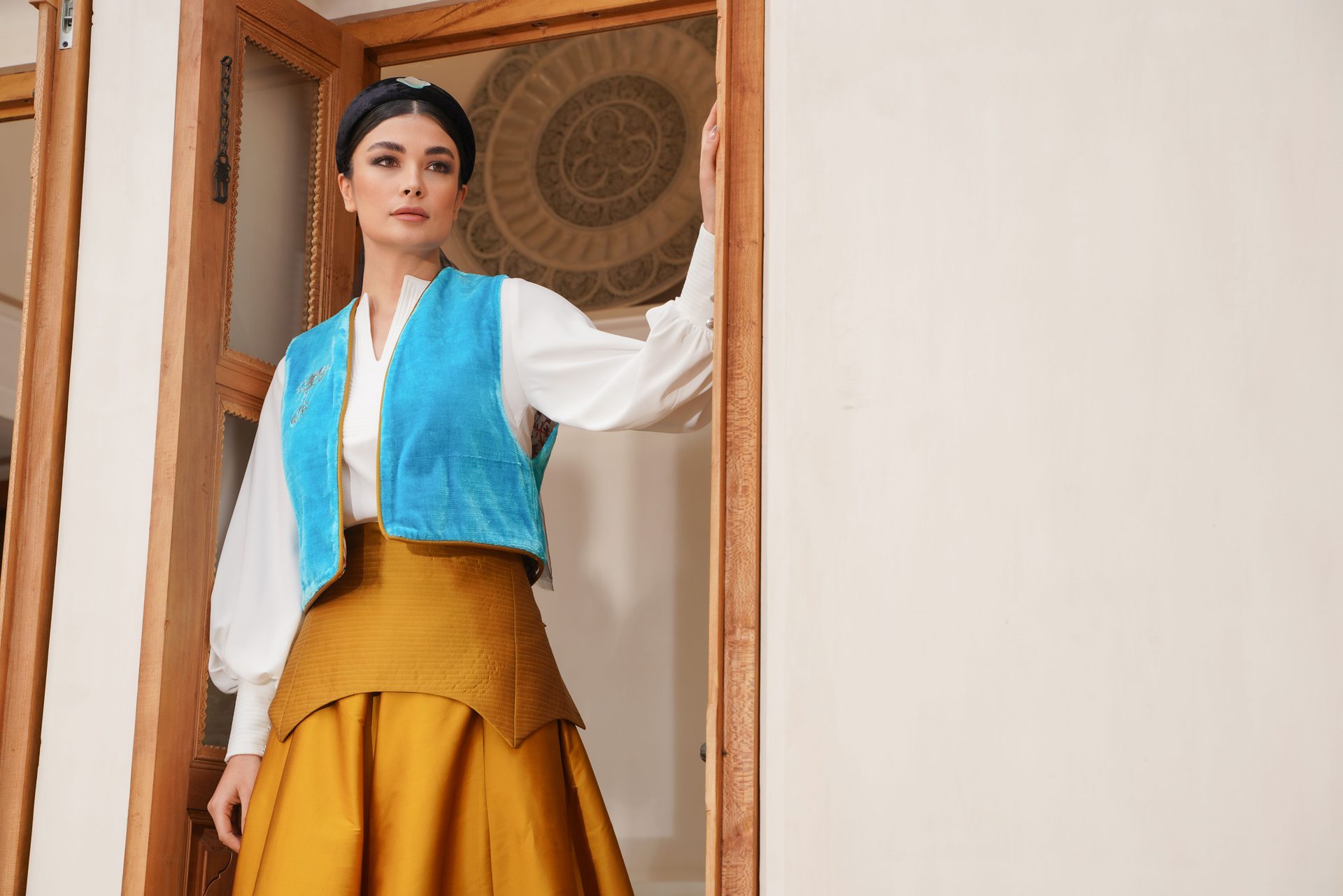
In January 1936, a single government decree made it illegal for Iranian women to appear in public wearing the chador, erasing the most visible layer of traditional Persian clothing from city streets almost overnight. The order, known as Kashf-e hijab, banned all Islamic veils and swept away men’s traditional garments along with them.
That single ban only hints at how layered Persian dress really was before the 20th century. Centuries of court fashion, religious practice, and regional climate built a wardrobe system running from the plain cotton shirt worn under everything to the jeweled robe of honor a shah might drape over a favored minister’s shoulders. This guide walks through 20 garments, piece by piece, tracing Iranian traditional attire from Achaemenid court robes to the felt caps still worn in rural villages.
1. Pirāhan
The pirāhan was the basic shirt or shift worn next to the skin by both men and women, the layer everything else in a Persian wardrobe was built around. According to the traveler Chardin , in the Safavid period men’s versions were collarless and long, worn outside the trousers and fastened on the right shoulder, while both sexes trimmed their shifts with pearls or decorative braid at the neck.
By the 18th century the style had changed noticeably. The traveler Droville described a shorter pīrāhan fastened over the chest with laces, buttons, or a jeweled pin, edged in velvet for formal wear. Women’s versions stayed in use well into the Qajar era, often paired with a drop-waisted skirt called a jāma, worn at home with even more of the torso left visible than fashion of the era allowed in public.
2. Shalvār
Shalvār were the loose trousers worn beneath a shirt and outer coat, forming the lower half of the standard Persian silhouette for more than a thousand years. Wikipedia’s entry on the subject notes that Iranian dress from the Safavid period onward generally consisted of a pirāhan and thick shalvār worn beneath a long qabā, with wealthier wearers adding fur-lined outer layers in cold months.
Historians trace the garment’s popularization to the Sassanian era, when it appeared alongside the early caftan as a defining feature of Persian fashion. The style later spread well beyond Iran’s borders; readers familiar with the shalwar found in Pakistani dress are looking at a close regional cousin of the same loose-trouser tradition.
3. Qabā
The qabā functioned as the great unifying outer garment of Persian society, worn by shahs, clerics, merchants, and farmers alike, though fabric quality separated the ranks sharply. Wikipedia describes it plainly as a long coat with sleeves and buttons, similar to a cassock, open at the front , worn over a shirt and trousers and sometimes closed with a running line of buttons down the chest.
Color carried meaning. Clerics favored black or dark hues, affluent men chose green, blue, or gold, and most everyone else wore subdued, practical tones. The garment’s reach extended across centuries; Mongol-period paintings show men wearing a sashed or belted qabā with lapels and elbow-length sleeves over a long tunic and trousers tucked into boots, a silhouette that persisted with only gradual changes through the Timurid century. A qabā of fine cloth was also valuable enough to double as a formal coat comparable to garments in Indian dress, bestowed as an honor in its own right.
4. Kaftān
The kaftān is the long-sleeved, ankle-length robe most people picture when they imagine Middle Eastern or Central Asian court dress, and its name is a direct loan into English from Persian. The word is generally traced to Persian ḵaftān , though some linguists argue the Persian and Arabic forms may themselves reflect an earlier Turkic word.
Light fabrics suited warm climates, while heavier brocades turned the kaftan into a mark of royalty at court. The garment traveled widely along trade routes, and the loose-robe silhouette shows up in wardrobes as far-flung as Japan; the draped, sash-closed construction echoes the logic behind robe-style garments found in Japanese dress, even though the two traditions developed independently.
5. Jobbeh
The jobbeh was a long, loose-fitting gown with full sleeves, worn by men as an overgarment on top of the qabā and pirāhan. Eleventh-century chronicles already describe it in detail, and historical records note the garment going out of fashion as Persian elites had more contact with European dress in later centuries.
The decline was not immediate everywhere. Court records from the Safavid and Qajar periods show short, fitted jackets gradually replacing the old jobbeh in general use, yet some court officials kept wearing the long-sleeved brocaded version with wide, rolled-up sleeves well into the 19th century. The pattern of a loose overcoat giving way to tighter, European-influenced tailoring parallels shifts seen in traditional German clothing, where regional coats also narrowed under outside fashion pressure.
6. Chādor
No garment on this list carries more cultural and political weight than the chador, a full-body semicircle of fabric, open down the front, that a woman holds closed by hand. Wikipedia defines it as an outer garment or open cloak worn by many women across Iran, Afghanistan, Pakistan, and several Shia communities beyond Persia’s historical borders.
Scholars trace veiling practices in the region back to ancient Mesopotamia, where covering marked the wives and daughters of high-ranking nobles under sumptuary law. The chador itself became standardized as modesty dress during the Safavid dynasty and remained common among urban and elite women through the Qajar era. Reza Shah’s 1936 decree then banned the garment outright , a policy forcefully enforced until his abdication in 1941 restored women’s choice over whether to wear it.
Important Note: The chador’s legal status in Iran has shifted repeatedly across the 20th and 21st centuries, from government-enforced bans to government-mandated wear. This article covers its cultural and historical role as a garment, not current Iranian law, which readers should verify through up-to-date legal sources.
Similar full-body coverings exist in other traditions worn by diverse communities, and the broader category of modesty fashion appears across clothing traditions worldwide, each shaped by its own regional history rather than a single shared origin.
7. Rūbandeh
The rūbandeh was the face veil traditionally paired with the chador, covering the lower or entire face while leaving the eyes visible or, in some regional variants, screened behind an embroidered mesh panel. European travelers who visited Persia in the 1700s and 1800s recorded this layered combination repeatedly, sketching women wearing both the body-length chador and a separate facial covering during the same outing.
Unlike the chador, which remained a near-universal garment across classes, the rūbandeh saw more regional and class variation, with finer mesh or lace versions reserved for wealthier households and simpler cloth versions common elsewhere. The combination of a body veil with a distinct face covering appears in other regional dress systems too, including some veiling customs documented in parts of South Asia.
8. Kātebi
The kātebi was a long-sleeved jacket worn as a middle layer between the shirt and the heaviest outer robes, giving Safavid-era men an extra option for warmth without committing to a full qabā. French traveler Jean Chardin documented the style directly, describing a long-sleeved jacket he recorded as “cadebi” alongside a separate short, sleeveless waistcoat called the kordī.
Both garments reflect how Safavid and Qajar wardrobes built flexibility into layering, letting wearers add or remove jackets depending on season and setting rather than relying on one fixed outer coat. That kind of modular layering shows up in many traditional wardrobes, including the vest-and-jacket combinations found in historical clothing collections from other regions.
9. Kolijeh
The kolijeh was a fitted, often short jacket worn by women over the pirāhan, typically tailored close to the body and finished with decorative stitching or trim along the seams. It belonged to the same family of mid-layer garments as the men’s kātebi, but cut and styled specifically for a woman’s wardrobe during the Qajar period, when urban fashion grew increasingly tailored and detailed.
Unlike the looser chādor or jobbeh, the kolijeh’s close fit made it a practical choice for everyday indoor wear. The idea of a short, fitted jacket layered over a longer dress recurs across Asian fashion history; it is worth comparing to the fitted tailoring found in traditional Chinese garments, where similarly structured jackets served a comparable purpose.
10. Candys
The candys was an ancient sleeved overcoat associated with Median and early Persian nobility, distinctive because its long sleeves often hung empty, draped over the shoulders rather than worn with the arms threaded through. Greek writers who encountered Persian court dress described the garment as a marker of rank, distinct from the simpler tunics worn by ordinary soldiers and laborers.
Carved reliefs from Persepolis preserve some of the clearest surviving images of robes like the candys, showing nobles and courtiers in long, draped garments that later travelers compared directly to the medieval qabā. The practice of using an overcoat as a status symbol rather than purely for warmth has echoes in ceremonial coats and formal dress customs found in many cultures.
11. Jāmag
Jāmag is the Middle Persian root behind the later word jāma, a general term for a robe or garment that appears repeatedly in Zoroastrian and early Islamic-era Persian texts. Qajar sources use the related term jāma specifically for a drop-waisted skirt that women wore at home paired with a transparent pīrāhan , leaving more of the torso visible than public dress allowed.
The same root word traveled into South Asian courts as well, surfacing in Mughal-era wardrobes as a four-pointed long coat distinct from the qaba. Tracing a single word across centuries and borders like this shows how deeply Persian vocabulary shaped dress terminology well beyond Iran, including garments now described in regional Asian clothing histories.
12. Khilʿat
A khilʿat was not an everyday garment at all but a robe of honor, typically a fine qabā or kaftan, presented by a ruler to a dignitary, official, or foreign envoy as a mark of favor. Wikipedia’s entry on the qaba notes it was often bestowed as a khilʿat to dignitaries and as diplomatic gifts , turning an otherwise ordinary coat into a political statement.
The tradition had real economic weight. Court records show that robes distributed at court were treated almost as currency, with brocaded wool from Kermān and Kashmir carrying significant resale value of its own. The custom of rewarding service with a ceremonial garment rather than cash has parallels in honorary and ceremonial dress traditions elsewhere, where a specific robe or sash still signals achievement rather than simple utility.
13. Kolāh
Kolāh is the general Persian word for hat, and it covered an enormous range of styles across different eras, regions, and social classes rather than referring to one fixed design. Tall felt or fabric kolāh styles marked Qajar-era court rank, while simpler versions served ordinary men in both cities and villages.
Headwear carried status signals almost everywhere in pre-modern dress, and Persian kolāh styles were no exception, shifting shape and height to track changing fashions at court. Distinctive regional hat traditions show up repeatedly in world dress; the strong identity tied to specific hat shapes recalls the role of regional hats in German folk costume, where a hat’s shape alone can identify a wearer’s home region.
14. Kolāh-E Namadi
The kolāh-e namadi was a simple felt hat, its name combining kolāh with namad, the Persian word for felt, made from pressed wool rather than woven cloth. Shepherds and rural laborers across Iran’s mountainous regions relied on this hat for its durability and weather resistance, favoring function over the decoration found on court headwear.
Felt’s practical advantages for outdoor work made it a natural choice wherever herding was a way of life, a pattern echoed far from Iran in the felt and wool hats of traditional Australian bushwear, where similarly rugged felt hats became an outdoor-work staple for entirely unrelated reasons.
15. Amāmeh
The amāmeh, or turban, was wound cloth headwear worn primarily by clerics, scholars, and religious figures, distinguishing them visually from laymen in both color and wrapping style. Fine cotton imported through long-distance trade routes supplied much of the material for higher-quality turbans worn by the educated and religious classes.
Turban styles varied by region and religious rank, with color sometimes indicating specific scholarly lineage or status within a religious hierarchy. The turban as a marker of learning or spiritual authority is far from unique to Persia; comparable traditions appear in turban customs documented in Pakistani dress, where wrapped headwear similarly signals identity and status.
16. Khalīl-Khānī
The khalīl-khānī belongs to the more regionally and historically specific end of the Persian wardrobe, a garment style associated with particular court circles rather than widespread everyday use. Costume records describing it are thinner than those covering mainstream pieces like the qabā or kolāh, reflecting how localized naming conventions for Persian clothing could become across different courts and eras.
Important Note: Documentation of the khalīl-khānī is limited compared with better-recorded Persian garments, so descriptions of its exact cut and use should be treated as provisional rather than definitive.
What is clear is that Persian dress terminology often attached a place name, family name, or patron’s name to a garment style, a naming pattern that helped identify which court or region a particular fashion originated from.
17. Kolāhak
Kolāhak is a diminutive form of kolāh, literally meaning “little hat,” and it referred to small caps worn either under larger headwear or on their own by children and in informal settings. The diminutive naming pattern itself is instructive, showing how Persian dress vocabulary often built smaller, specialized terms directly off a base garment word.
Small under-caps like the kolāhak served a practical purpose beyond sizing: they kept larger turbans or hats from direct contact with the scalp and hair, extending the life of more expensive outer headwear. Similar small inner caps worn beneath larger headwear turn up in other traditions, including some of the layered cap systems found in historical Japanese headwear.
18. Araqchīn
The araqchīn was a close-fitting skullcap, its name built from araq, meaning sweat, reflecting its practical role as a lining worn under heavier turbans or hats to absorb perspiration and protect the fabric above it. Embroidered cotton or silk versions were common, often decorated with fine needlework even though the cap itself was rarely seen fully on its own.
Men sometimes wore the araqchīn alone indoors or at home, without the turban or outer hat layered on top, making it one of the more versatile headwear pieces in the Persian wardrobe. Lightweight skullcaps worn either as a base layer or standalone indoor cap remain common well beyond Iran, including embroidered cap traditions documented in parts of Pakistani regional dress.
19. Chārqad
The chārqad was a square headscarf worn by women, typically folded into a triangle and tied under the chin or at the nape of the neck, offering a lighter alternative to the full chador for everyday hair covering. Rural and working-class women especially favored the chārqad for its practicality, since it allowed freer movement than a full-body cloak while still meeting modesty expectations.
Printed cotton versions were common for daily wear, while finer silk chārqad with decorative borders appeared on special occasions. The table below summarizes how these Persian headwear styles compared in typical wearer and material, offering a quick reference across the pieces covered in this guide.
| Headwear | Typical Wearer | Common Material |
|---|---|---|
| Kolāh | Men across most social classes | Felt, wool, or brocade |
| Kolāh-e namadi | Shepherds and rural laborers | Pressed wool felt |
| Amāmeh | Clerics and religious scholars | Fine cotton cloth |
| Araqchīn | Men, worn under turbans or at home | Embroidered cotton or silk |
| Chārqad | Women, rural and urban | Printed cotton or silk |
A lighter headscarf worn for daily practicality rather than full-body covering is a common solution across many dress traditions, similar in function to the headscarves found in some regional clothing styles elsewhere.
20. Kamarband
The kamarband was a waist sash or belt used to cinch both the shalvār and, at times, the qabā itself, and it carried more social meaning than its simple function might suggest. In the Caspian region specifically, the belt helped identify the status of the individual wearing it , with finer materials and fastenings reserved for higher-ranking men.
Beyond status signaling, the kamarband served the practical function every sash does: keeping loose trousers and robes secured at the waist without the need for a fitted waistband. The English word “cummerbund,” still used for formal menswear today, descends directly from this Persian term, a quiet linguistic reminder of how far traditional Persian clothing vocabulary traveled beyond Iran’s borders.
Pro Tip: When researching or shopping for Persian-inspired formalwear, cross-reference garment names against Encyclopaedia Iranica’s clothing entries first; many online retailers use looser, interchangeable terms for pieces that historically had distinct names and uses.
Taken together, these 20 garments show that traditional Persian clothing was never one fixed outfit but a flexible system of shirts, coats, sashes, and headwear that could be combined and layered to signal class, profession, and religious role. Many of the underlying ideas, modular layering, status-marked headwear, and ceremonial robes of honor, still echo in formal and regional dress found well beyond Iran today.