Traditional Ottoman Clothing: 20 Garments That Defined an Empire’s Wardrobe

November 18, 2026
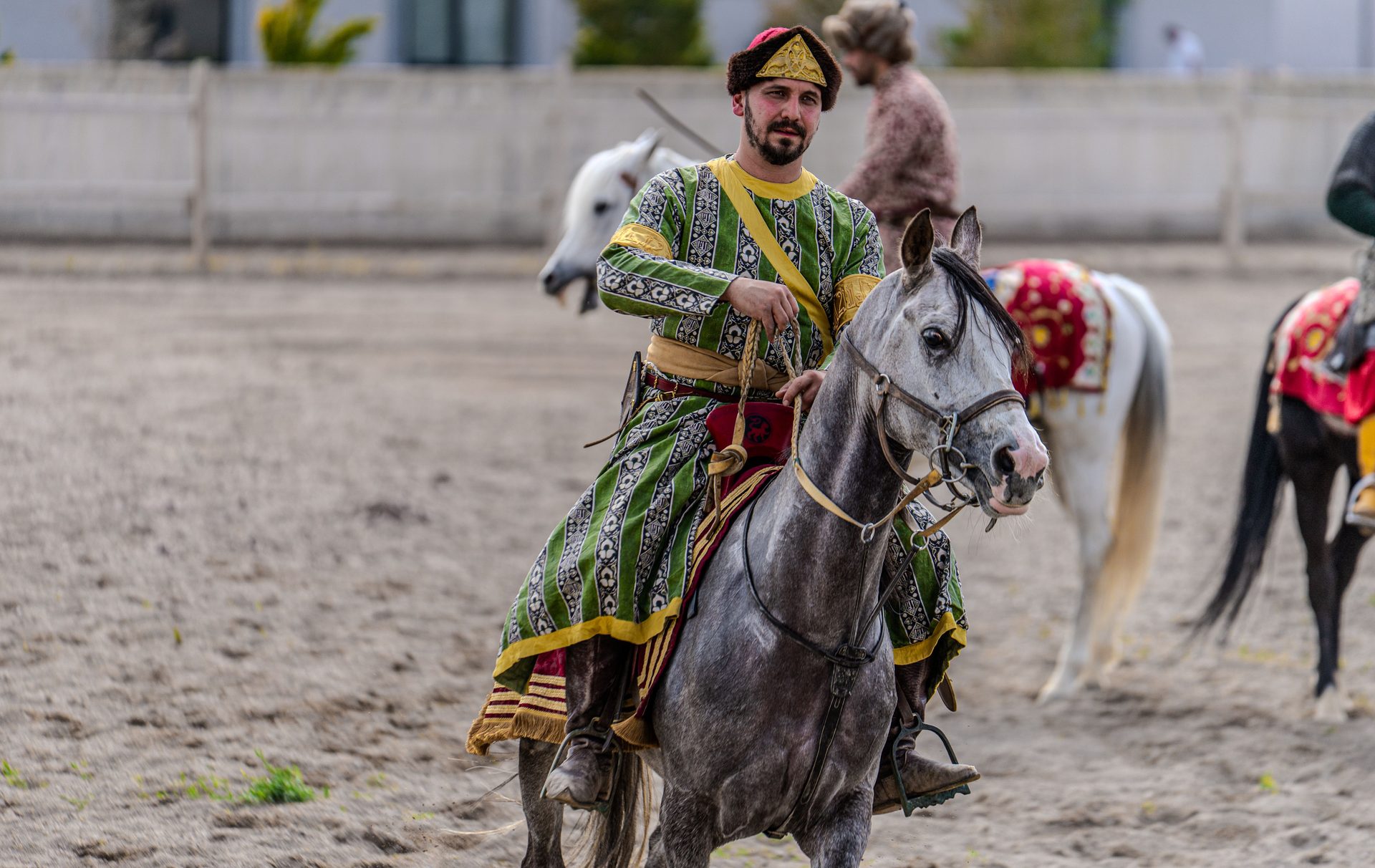
For over six centuries, what a person wore in the Ottoman Empire said almost everything about who they were. Traditional Ottoman clothing told observers a person’s religion, occupation, wealth, and region before a single word was exchanged, and sumptuary laws dating back to the reign of Suleiman the Magnificent made sure those visual rules stayed in place. From the sultan’s fur-lined kaftan to a farmer’s plain vest, each garment carried its own history and purpose.
This guide walks through twenty garments that defined Ottoman dress, from inner shirts and sashes to veils and headwear. Along the way, it traces how these pieces shaped clothing traditions across the empire’s vast territory, including the Balkan provinces where local costume, such as Turkish folk dress and regional Albanian garments, absorbed and adapted many of the same forms.
1. Entari
The entari was the centerpiece of a woman’s wardrobe for several centuries. The entari, or robe, was the primary garment of indoor dress for women in the Ottoman Empire for several centuries, worn over an undershirt called the gömlek and baggy trousers called the şalvar. A single loom width of fabric made up the body of the garment, with no shoulder seam, while long triangular side pieces called peş were sewn on to add width.
Construction changed gradually over time. Earlier entaris were closed at the sides, but by the eighteenth century it became customary to leave the side seam open near the waist, revealing the şalvar and gömlek underneath. Men also wore a version of the entari as outdoor dress, cut as a long robe similar to the kaftan. If you enjoy comparing how different cultures built layered dress systems around a central robe, the structure of traditional Chinese clothing offers an interesting point of comparison.
Pro Tip: The easiest way to tell an entari from a kaftan at a glance is length and occasion. The entari was everyday indoor wear cut for women, while the kaftan was the grander outer robe worn by both sexes for formal or court occasions.
2. Şalvar
The şalvar formed the foundation of nearly every outfit, male or female. Turkish şalvar, also called Turkish trousers or dimiye, are traditional baggy trousers gathered in tightly at the ankle. A woman’s full daily ensemble typically combined the gömlek, şalvar, and entari.
Men and women across many parts of Turkey continued to wear the şalvar regardless of social status, even after Mustafa Kemal Atatürk’s dress reforms in the 1920s moved official fashion toward Western styles. Similar loose-fitting trousers spread through the empire’s provinces and influenced regional Albanian garments and other Balkan folk costumes, where tailors adapted the cut to local fabrics and embroidery styles.
3. Gömlek
Underneath every layer sat the gömlek, a lightweight undershirt. The gömlek was the chemise worn beneath the entari and şalvar as the innermost layer of Ottoman women’s dress. It typically came down to mid-calf or ankle length and was paired with a sash or belt tied at or just below the waist.
Men wore their own version of the gömlek as a base layer beneath vests and jackets. Because it sat closest to the skin, the gömlek was usually made from lighter cotton or linen, even when the robes layered over it used heavier silk or wool.
4. Zıbın
The zıbın was a fitted short jacket worn directly over the gömlek. It formed part of women’s everyday wear alongside the şalvar and a waist sash. Both the zıbın and the kaftan buttoned to the waist, leaving the skirts open in front, and had buttons running to the throat that were often left open at the bust.
Historical garment researchers note that the terminology around the zıbın shifted over time. When later terms like entari began appearing in Istanbul court records during the 1630s and 1640s, it was the zıbın they replaced rather than the kaftan. This makes the zıbın one of the oldest layering pieces in the Ottoman wardrobe system.
5. Mintan
For men, the mintan served a role similar to the zıbın. It functioned as a vest or short jacket worn as part of men’s outer clothing, alongside the şalvar, kuşak sash, and either an entari or kaftan. Typical wardrobes combined a mintan underlayer with a kuşak sash and şalvar or potur trousers.
The mintan remained in use well into the nineteenth century. Even as administrators adopted Westernized trousers and jackets, officials at the Sublime Porte continued wearing the mintan alongside newer garments. It shows how older Ottoman pieces persisted even as fashion at the top of society modernized.
6. Cübbe
The cübbe marked a step up from everyday jackets, worn by the middle classes and often associated with scholars and officials. While administrators and the wealthy wore fur-lined, embroidered caftans, the middle class instead wore the cübbe, a mid-length robe. The cübbe and the hırka together formed a recognizable style of jacket associated with this social tier.
Merchants in particular relied on the cübbe to signal respectability without the expense of a full fur-lined kaftan. Wearing the cübbe and hırka set merchants apart from other social classes in busy marketplaces. Readers interested in how middle-class dress codes functioned elsewhere might also find the layered formality of traditional German clothing worth exploring.
7. Hırka
The hırka sat just below the cübbe in formality, described in modern Turkish as a cardigan-style garment. It served as a short robe or tunic worn by the middle class alongside the cübbe. When a yelek was worn over an entari rather than under it, that same outer layer was instead called a hırka or cepken, cepken meaning cloak and hırka meaning cardigan in modern Turkish.
This overlapping terminology reflects how Ottoman clothing names often described a garment’s position in an outfit as much as its actual shape. The same basic jacket pattern could carry different names depending on whether it was worn as an underlayer or an outer piece.
Key Insight: Many Ottoman garment names changed depending on layering position rather than cut alone. A yelek worn under an entari kept its name, but the same piece worn over the entari was called a hırka or cepken instead.
8. Yelek
The yelek is one of the most versatile pieces in the Ottoman wardrobe. Essentially a short version of the entari, the word yelek means a vest or waistcoat in modern Turkish, describing its role in a woman’s wardrobe. It could be worn alone over a gömlek during hot weather, or worn under an entari for warmth and fashion.
Among the lower classes, the yelek took on a simpler form. The poor commonly wore collarless versions called cepken or yelek instead of embroidered robes. Vest-style garments of this kind spread widely through the empire’s provinces, and embroidered waistcoats remain a recognizable feature of Albanian national dress and other Balkan folk attire to this day, though regional tailoring traditions gave each area its own decorative style.
9. Kaftan
The kaftan sat at the top of the Ottoman clothing hierarchy. Administrators and the wealthy wore caftans with fur lining and embroidery, distinguishing them clearly from the middle and lower classes. Upper-class and royal figures wore fur-lined, embroidered kaftans, and sultans took great pride in commissioning robes from the finest available materials.
Specific fabrics such as brocade, velvet, metallic silk, taffeta, cashmere, and cotton were reserved for the sultan’s clothing. Designs for these court garments came from specialist palace artists, and production centers in Bursa and Istanbul kept pace with constant demand from the court. Collectors interested in how formal robes conveyed rank in other traditions may also appreciate the ceremonial layering found in traditional Japanese clothing.
10. Kuşak
No Ottoman outfit was complete without a kuşak. Functioning similarly to a girdle, cloth waist-wrap, or cincture, the kuşak was tied around the waist to hold an outfit’s layers in place. It appeared consistently in men’s outer clothing lists alongside the mintan, şalvar, and entari or kaftan.
For women, the sash served a similar structural purpose. A sash or belt tied at or just below the waist held the gömlek and zıbın together as part of everyday dress. Wealthier households used sashes woven from silk or decorated with metal thread, while working households relied on plain cotton or wool versions.
11. Fez
The fez marks one of the clearest turning points in Ottoman fashion history. One of the most significant reforms in Ottoman fashion took place during the reign of Mahmud II between 1808 and 1839, when the sarık turban was officially replaced by the fez. This change followed the 1826 abolition of the janissaries, after which Mahmud mandated Westernized uniforms to distinguish the new armed forces from the old.
The fez quickly spread beyond the military and administration into everyday civilian life across the empire’s Balkan provinces, including Albania, where it remained common headwear well into the twentieth century. Its red felt body and black tassel became one of the most recognizable symbols of late Ottoman dress, even as other garments around it continued to modernize.
12. Sarık
Before the fez took over, the sarık dominated Ottoman headwear for centuries. The sarık was a large, wrapped headpiece that usually differed from a traditional turban and varied from region to region. It appeared in the standard list of men’s headwear alongside the kalpak as part of outer Ottoman dress.
The way a sarık was wrapped, the fabric used, and the number of folds often indicated a man’s profession or rank within religious and government institutions. Scholars, judges, and court officials each had recognizable wrapping styles that set them apart from ordinary tradesmen.
13. Kalpak
The kalpak was a tall fur or felt cap that predated the fez as standard Ottoman headwear. It was listed among the standard items of men’s outer clothing, worn on the head alongside the sarık. Military officers, provincial governors, and members of court frequently wore kalpaks, with the height and fur type signaling rank.
| Headwear | Typical Wearer | Key Feature |
|---|---|---|
| Fez | State officials, later general public | Red felt cap, replaced the sarık after 1826 |
| Sarık | Scholars, judges, officials | Wrapped turban, varied by region and rank |
| Kalpak | Military officers, nobility | Tall fur or felt cap |
| Külah | Common people | Conical cap, often covered in cloth |
14. Külah
The külah was a simple conical cap worn by ordinary people throughout the empire. Common people wore külahs covered with fabric called abani or Yemeni, while members of higher society wore more elaborate bashlyks such as the yusufi, örfi, or katibi styles.
This distinction shows how even modest headwear participated in the same status signaling that governed robes and jackets. A külah wrapped in plain cloth marked a working person, while the fabric quality and wrapping style of an elite bashlyk announced rank just as clearly as an embroidered kaftan did.
15. Çizme
Footwear rounded out the Ottoman silhouette, and the çizme, a leather boot, was among the most common choices for men. Çizme appeared alongside çarık, çedik, and Yemeni as the standard foot coverings listed in Ottoman dress. Footwear such as çarık and çizme completed daily looks for men across different trades.
- Çizme – sturdy leather boots for daily wear and travel
- Çarık – simple raw-hide sandals common among rural workers
- Çedik – soft leather shoes, often worn indoors
- Yemeni – flat, lightweight shoes named for their trade origin
16. Yemeni
The term Yemeni carried two related meanings in Ottoman dress. As footwear, it described a flat, soft shoe that took its name from trade routes connecting the empire to Yemen. It appeared in the standard list of foot coverings alongside çarık, çizme, and çedik.
As a textile, the same word described the cloth used to wrap conical caps. Common people’s külahs were often covered with this Yemeni fabric, distinguishing them from the finer bashlyk headwear worn by the upper classes. The dual use of one word for both a shoe style and a fabric type is a reminder of how closely Ottoman clothing vocabulary tracked trade and material origin.
17. Ferace
When an Ottoman woman stepped outside her home, the ferace covered everything underneath it. A woman leaving the house covered her brightly colored indoor clothes with a ferace, a dark, modestly cut robe that buttoned all the way to the throat. This garment continued without much change through the nineteenth-century Tanzimat and Meşrutiyet periods, appearing alongside the entari, kuşak, and şalvar in descriptions of women’s dress in Ottoman mansions and palace courts.
The ferace traveled with Ottoman administration into provincial territory, and modest dark outer robes of a similar type appeared among Muslim communities throughout the empire’s Balkan regions, including parts of Albania, where they were adapted using local wool and weaving techniques. For readers comparing modesty-focused outer garments across cultures, traditional Pakistani clothing offers a useful parallel in how an outer layer can transform an everyday outfit for public settings.
Important Note: Descriptions of Ottoman outdoor coverings like the ferace and çarşaf vary by period and region, since dress codes were never fully uniform across the empire’s many provinces and religious communities.
18. Çarşaf
The çarşaf developed as a later, simplified alternative to the layered ferace-and-veil combination. Rather than combining a separate robe with a face veil, the çarşaf was typically a single, loose outer covering, often dark in color, that could be wrapped over daily clothing in one motion. It became increasingly common in the later Ottoman period as women sought a more practical option for public modesty than the multi-piece ferace ensemble.
Versions of this full-body covering appeared across the empire’s Muslim communities, including in Balkan provinces, where the history of Albanian clothing shows local adaptations of similar modest outer garments worn for travel and public appearances. The exact cut and name varied by region, but the underlying purpose, a quick, complete covering layer, remained consistent.
19. Peçe
The peçe was a face veil, typically worn in combination with an outer covering like the ferace or çarşaf rather than on its own. It covered the lower portion of the face, leaving the eyes visible, and was most closely associated with urban upper and middle-class women in cities such as Istanbul.
Unlike the yashmak, which had a more structured, recognizable form, the peçe functioned more generally as a simple veil attachment, varying in fabric weight and sheerness depending on season and the wealth of the household. Lighter, more transparent peçe fabrics were a mark of fashion rather than strict concealment in many urban settings.
20. Yashmak
The yashmak was the most distinctive and recognizable face veil of Ottoman women’s dress, particularly among the elite classes of Istanbul. It consisted of two pieces of fine white muslin, one covering the forehead and the other the lower face, joined to leave only the eyes visible. Historical accounts of mid-Ottoman women’s clothing list the yasmak alongside the kaftan, ferace, yelek, entari, hırka, and kuşak as a defining item of the period’s female wardrobe.
The yashmak’s crisp white fabric contrasted deliberately with the dark ferace worn beneath it, creating one of the most recognizable silhouettes of Ottoman women in Western travel illustrations and paintings from the eighteenth and nineteenth centuries. Its association with refinement made it a frequent subject in European artistic depictions of Ottoman court and city life.
Taken together, these twenty garments show how thoroughly clothing organized Ottoman society, marking religion, wealth, occupation, and gender at a glance. The empire’s reach meant that pieces like the şalvar, yelek, and fez traveled far beyond Istanbul, shaping regional dress from Anatolia to the Balkans and leaving a visible mark on traditional Albanian costumes and other folk attire that persisted long after the empire itself ended. Readers curious about how other regions built distinct national dress traditions around similarly layered garments can find related comparisons among traditional Indian clothing and the broader collection at Homequirer’s clothing section.