Traditional Korean Clothing: 18 Hanbok Pieces and What They Mean

October 19, 2026
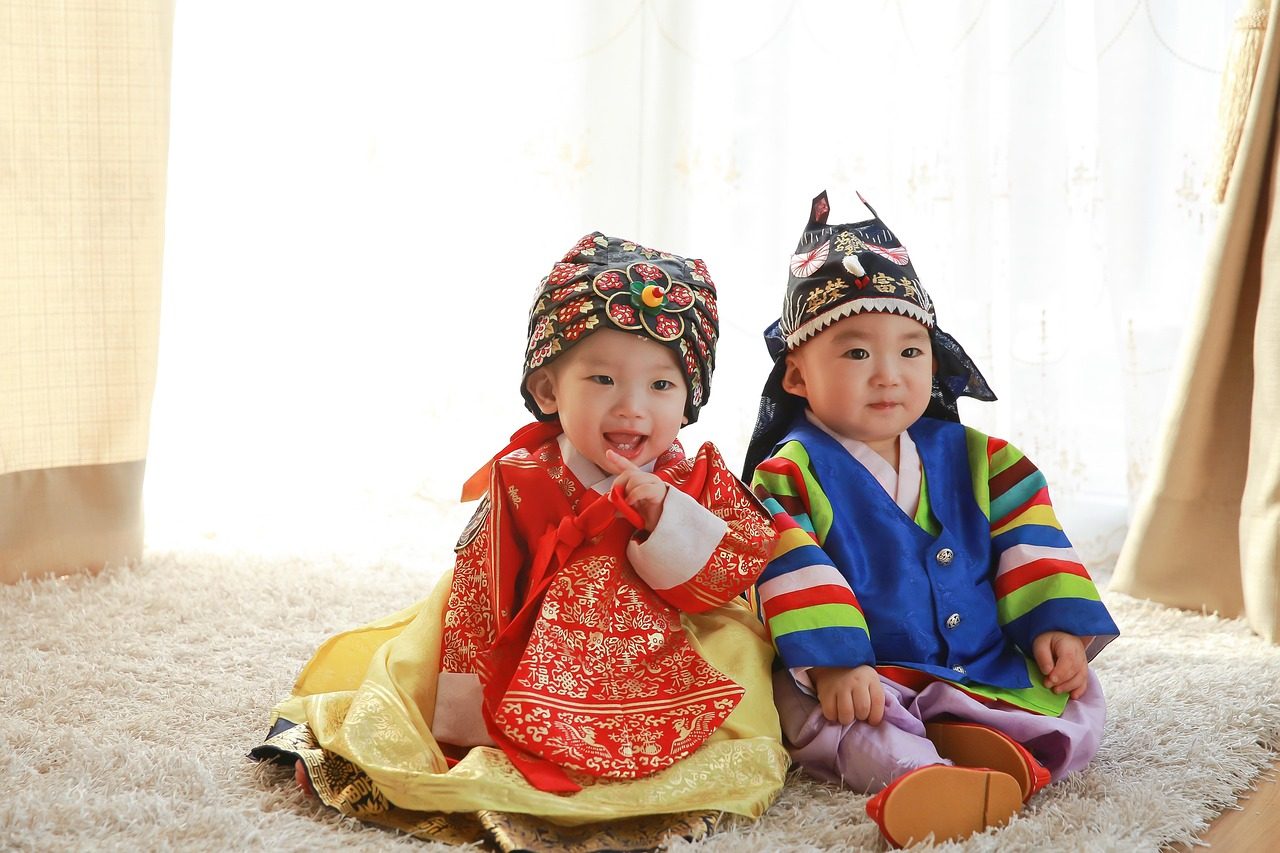
Most people picture a single outfit when they hear the word hanbok, but traditional Korean clothing is actually a layered system of jackets, skirts, trousers, coats, hats, and accessories, each with its own name and purpose. A bride’s ensemble alone can involve a silk robe, a lacquered headpiece, and jewelry worn nowhere else in the wardrobe. Understanding these individual pieces reveals how rank, age, season, and occasion were once communicated through fabric and color alone.
This breakdown moves through 18 components of Korean cultural dress, starting with the everyday jacket and skirt and ending with the hairpins and footwear that completed a formal look. The hanbok is fundamentally composed of a jeogori, baji, chima, and po, and every other garment below builds on or layers over these four core pieces.
1. Jeogori
The jeogori is the upper garment worn by both men and women, and it sits at the center of every hanbok ensemble. According to Korea.net , the jeogori comprises the collar (git), white collar trim (dongjeong), front panel (seop), sleeves (somae), and ties (goreum), with each part serving both a structural and decorative role.
The Jeogori has changed shape more than almost any other hanbok piece. Women’s versions shortened dramatically over the centuries, while men’s jeogori stayed close to hip or waist length throughout. The sleeves remain wide and roomy on both versions, which allows for the free arm movement that jackets in Korea’s neighboring countries, like the structured tops seen in traditional Japanese clothing, handle quite differently.
Pro Tip: Look for the dongjeong first when identifying a jeogori’s formality — a crisp, bright white collar trim signals a dressier or more ceremonial jacket, since it has to be re-sewn or replaced after every wash.
2. Chima
The chima is the wrap skirt worn by women, paired with a jeogori to form the ensemble commonly called chima jeogori. As Wikipedia’s entry on the garment notes, chima is a generic term for the skirt worn together with jeogori, or a short jacket, and it has stayed far more stable in shape over time than its jacket counterpart.
Made from a rectangular length of cloth gathered onto a waistband, the chima falls in soft, voluminous pleats that create movement as the wearer walks. Korea.net describes how the skirt extends from the waist to the ankles and features pleats that create graceful curves with movement. A simplified, seamless version called tongchima appeared toward the end of the 19th century for everyday convenience, and it later became the standard skirt worn with school uniforms.
3. Baji
Baji are the loose, baggy trousers that pair with a jeogori to form men’s traditional hanbok, though women also wore them as an underlayer beneath the chima. Wikipedia notes that a baji is baggy and loose, so it is tied around the waist, and the roomy design is aimed at making the clothing ideal for sitting on the floor, a practical choice rooted in Korea’s floor-centered domestic life.
This ease-of-movement design traces back to the Three Kingdoms period, and it shares a design logic with other wide-cut traditional trousers around the world, including the loose shalwar seen in traditional Pakistani clothing. Baji can be made from leather, silk, or cotton, and both lined and unlined versions existed depending on the season and the wearer’s status.
4. Durumagi
The durumagi is the standard overcoat of hanbok, worn as the topmost layer over a jeogori and baji by both men and women. Its name literally means “closed all around,” and Wikipedia describes it as a form of outerwear that is usually worn as the topmost layer of clothing over a jeogori and baji.
Korea.net adds that the durumagi is worn over the jeogori by both men and women for formal occasions or when going outdoors, functioning much like the formal overcoats found in traditional German clothing ensembles worn for festivals and ceremonies. A groom’s durumagi for a wedding is typically cut in deep blue or black, drawing a clear visual line between everyday and ceremonial dress.
5. Magoja
The magoja is a long jacket worn over the jeogori, and it stands out as one of the few hanbok pieces with a documented foreign origin. Wikipedia explains that the magoja was originally a Manchu style of clothing, but was introduced after Heungseon Daewongun, father of King Gojong, returned from political exile in China in 1887.
Button placement distinguishes men’s and women’s versions: in a male magoja, buttons are attached to the right side, while on women’s magoja they are attached to the left, per the same source. The magoja’s Manchu roots echo the cross-cultural exchange visible across East Asia, including the garment layering found in traditional Chinese clothing.
Important Note: Sources disagree slightly on the exact year Heungseon Daewongun returned from exile and popularized the magoja, with some citing 1885 and others 1887. The garment’s Manchu origin and its introduction in the late 19th century are well established regardless of the precise year.
6. Jokki
The jokki is a vest worn over the jeogori, and unlike most hanbok pieces, it has no deep historical roots in Korea’s pre-modern wardrobe. One guide to hanbok history explains that the jokki is a vest, essentially a Korean adaptation of the Western waistcoat, worn over the jeogori for warmth or dress-up.
It entered Korean dress during the late Joseon period as Western clothing styles began reaching the peninsula, much the way tailored vests became part of traditional American clothing during the same general era of global trade expansion. Today the jokki is often layered under a magoja for both added warmth and a cleaner silhouette.
7. Baeja
The baeja is a sleeveless outer vest, distinct from the jokki mainly in how it’s worn. One explainer on hanbok components notes that baeja is a sleeveless outer jacket or vest worn on their own, rather than layered beneath another outer piece the way a jokki typically sits under a magoja.
Because it has no sleeves, the baeja adds warmth to the torso without restricting arm movement, making it practical for both work and seasonal transitions. It was worn by men and women alike, and its simple silhouette made it an easy piece to layer over almost any jeogori.
8. Jungchimak
The jungchimak is an older style of outerwear that largely fell out of everyday use by the close of the 19th century. A glossary of Korean folk costume terms describes it as traditional outerwear used until the late 19th century, noting that it has very long sleeves, and several slits on the sides and sometimes on the back.
Those side slits set the jungchimak apart from the simpler durumagi, giving the wearer more freedom of movement, especially useful for men on horseback or engaged in physical tasks. By the time Western-style coats became common, the jungchimak had largely been replaced by shorter, more practical outer layers like the magoja.
9. Hwarot
The hwarot is a ceremonial robe reserved almost exclusively for brides, and it ranks among the most visually striking pieces in traditional Korean clothing. One overview of wedding hanbok notes that the bride wears hwarot – a red and blue silk robe with phoenix embroidery, paired with a matching headpiece called hwagwan.
The red and blue color pairing reflects the broader Korean color philosophy of balancing yin and yang, feminine and masculine energy, within a single garment. Phoenix motifs embroidered across the chest and sleeves were historically associated with royal rank, and commoner brides were permitted to wear similarly styled robes only on their wedding day as a special exception.
10. Wonsam
The wonsam is a female ceremonial topcoat that carried strict rules about who could wear it and when. According to Wikipedia’s list of Korean clothing , the queen, princess consort, and consort to the first son of the crown prince wore it as a soryebok, a robe for small ceremonies, while wives of high officers and sanggung wore it as daeryebok, a robe for major ceremonies.
Color and decoration were never arbitrary on a wonsam: the color and decorations of the garment around the chest, shoulders and back represent the wearer’s rank, the same source notes. This rank-coded approach to color and ornament appears across many court dress traditions worldwide, including the ceremonial regalia found within traditional Indian clothing for royal occasions.
| Garment | Worn By | Primary Use |
|---|---|---|
| Jeogori | Men and women | Everyday upper garment |
| Chima | Women | Everyday lower garment (skirt) |
| Baji | Men (also women’s underlayer) | Everyday lower garment (trousers) |
| Durumagi | Men and women | Outdoor and formal overcoat |
| Hwarot | Brides | Wedding ceremony robe |
| Wonsam | Royal and noble women | Rank-based ceremonial topcoat |
11. Kkachi Durumagi
The kkachi durumagi is a brightly patchworked overcoat made specifically for young children, most visibly worn during Seollal, the Korean New Year. Wikipedia explains that it was worn over a jeogori or jokki while the wearer could put a jeonbok over it, and that kkachi durumagi was also worn along with headgear such as bokgeon, hogeon or gulle.
The rainbow-striped sleeves, called saekdong, are the garment’s signature feature and are believed to have originated from the idea that vivid, mismatched colors ward off misfortune for small children. Families still dress toddlers in a kkachi durumagi for first-birthday celebrations and Lunar New Year gatherings as a way of connecting young children to this older visual tradition.
12. Gat
The gat is the wide-brimmed, cylindrical-crowned hat most associated with Joseon-era Korean men, particularly the yangban scholar-official class. Woven from fine horsehair and bamboo over a black-lacquered frame, the hat sat high on the head and was secured under the chin with a long string called a gatkeun, which could be made of simple cord or strung with beads depending on the wearer’s rank.
Because the gat was so tightly linked to social status and adulthood, young men traditionally received their first gat as part of a coming-of-age ceremony, signaling their transition into full adult standing within the community. The hat’s silhouette, tall and narrow at the crown with a flat, wide brim, remains one of the most recognizable visual markers of historical Korean dress in film and art.
13. Jokduri
The jokduri is a small, black ceremonial coronet worn by brides, typically paired with the hwarot or wonsam for a wedding ceremony. Built over a stiffened base and covered in black fabric, it was ornamented with gold leaf, jade, coral, and other gemstones arranged in symbolic patterns meant to invite good fortune and prosperity into the marriage.
Unlike everyday headwear, the jokduri was worn for a single day and then stored, often passed down within families as an heirloom piece. Its compact, boxy shape contrasts sharply with the taller hwagwan crown sometimes worn in its place, and regional customs historically determined which of the two a bride would choose.
Common Mistake: The jokduri and hwagwan are often confused because both are bridal headpieces worn with ceremonial robes. The jokduri is a smaller, boxier black coronet, while the hwagwan is a taller, more elaborate crown — the choice between them historically depended on regional custom and family tradition.
14. Ayam
The ayam is a padded winter cap worn mainly by women during the Joseon period, designed to protect the head and ears from cold weather while still looking decorative. Wikipedia describes it as a traditional winter cap mostly worn by women during the Joseon period, adding that it is also called aegeom, meaning ‘covering a forehead’.
The ayam typically featured a long decorative tail, called deurim, that hung down the back and swayed with movement, often finished in silk tassels or embroidery. Because it lacked a crown on top, it functioned more like a wide headband than a full hat, leaving the top of the head exposed while fully covering the ears and forehead.
15. Hogeon
The hogeon is a peaked cloth hat decorated with a tiger motif, made specifically for young boys. It appears consistently alongside the kkachi durumagi in historical accounts of children’s hanbok, with Wikipedia noting that formal children’s outfits were worn along with headgear such as bokgeon, hogeon or gulle, the hogeon being the boys’ version featuring a stylized tiger face across the front panel.
Tigers held protective symbolism in Korean folk belief, and dressing a young boy in a tiger-patterned hat was meant to borrow some of the animal’s strength and ward off illness or bad luck. The hogeon was almost always paired with a matching saekdong-sleeved jacket, making a child’s formal outfit instantly recognizable by its bold color blocking and embroidered headwear.
16. Binyeo
The binyeo is an ornamental hairpin used to secure the jjok, the low bun or chignon worn by married women in traditional Korean society. A woman typically received her first binyeo during gwallye, a coming-of-age ceremony that marked her transition into adulthood and eligibility for marriage, making the hairpin as much a social marker as a styling tool.
Material signaled rank and wealth: jade and gold binyeo belonged to the upper classes and royal court, while silver, bronze, or wood versions were common among ordinary households. Many of these hairpins carried carved finials shaped like phoenixes, dragons, or floral motifs, details that are catalogued alongside other hanbok accessories on pages like this clothing and style collection.
17. Daenggi
The daenggi is a long ribbon used to tie off a braid, worn almost universally by unmarried women and children before they adopted the married woman’s jjok hairstyle secured with a binyeo. A bright red daenggi, often called jebi daenggi, was reserved for especially festive or ceremonial occasions, while simpler colors were used for everyday wear.
The length and placement of the daenggi varied by region and era, with some versions tied at the very end of a single braid and others woven partway up the hair for added decoration. Because the ribbon disappeared the moment a woman married and switched to a binyeo-secured bun, the daenggi became strongly associated with youth and unmarried status in traditional Korean society.
18. Hwa
The hwa refers to the knee-high boots worn as formal footwear within traditional Korean dress, distinct from the flatter slip-on shoes called hye used for everyday wear. Typically made from leather, felt, or heavy fabric and sometimes lined for warmth, hwa were worn by royalty, officials, and military personnel as part of formal court or ceremonial attire.
Their tall shaft offered more protection and structure than everyday footwear, functioning similarly to the formal riding boots found in many court dress traditions, including some styles seen in historical Japanese footwear and formalwear. Boots versus shoes was, in practice, one more way that Joseon-era clothing quietly signaled a wearer’s rank and occasion without a single word being spoken.
Key Insight: Nearly every accessory in traditional Korean clothing, from the binyeo hairpin to the hwa boot, doubled as a rank or life-stage marker. Material, color, and shape told observers a person’s marital status, social class, or the formality of the occasion before a single word was exchanged.
Traditional Korean clothing reveals its full complexity only when you move past the basic hanbok silhouette and look at how each piece, from the structural jeogori and chima down to a single hairpin, carried its own name, rules, and symbolism. Pieces like the hwarot and jokduri appeared once in a lifetime, while others like the jeogori and baji were worn daily for centuries with only gradual changes in shape. Readers curious about how Korean naming conventions carry similar layers of meaning might also enjoy browsing Korean naming traditions, which follow a comparable logic of symbolism built into everyday language.