20 Traditional Polish Clothing Garments from Noble Robes to Folk Dress

November 20, 2026
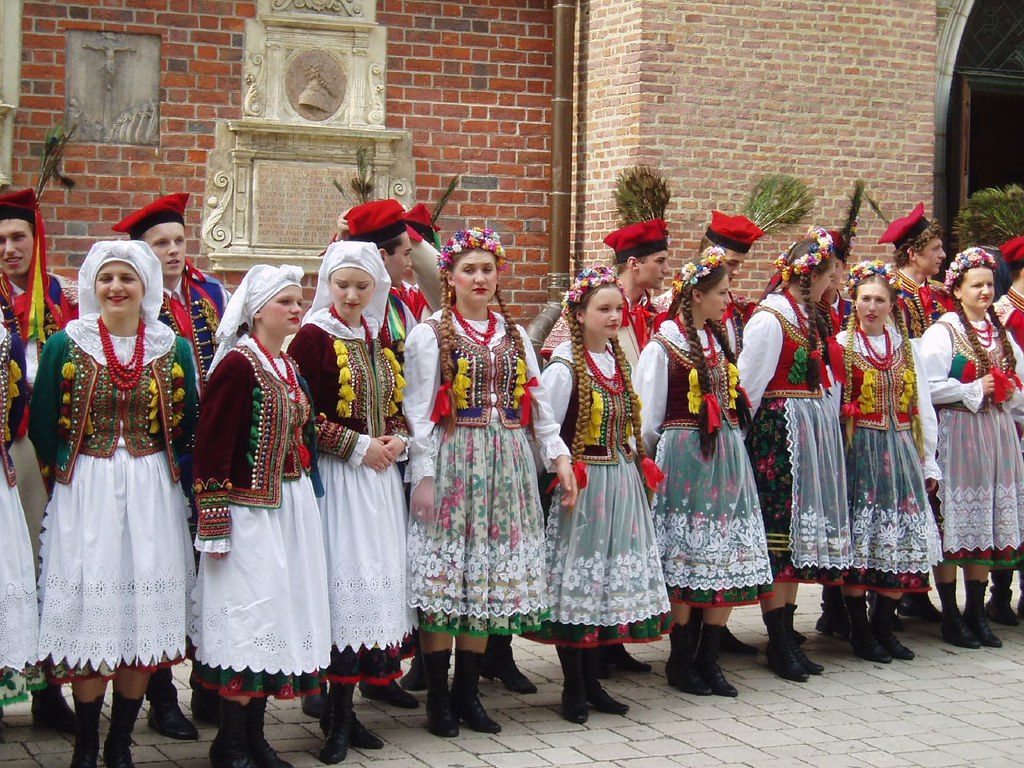
Poland never settled on a single national costume, and that is exactly what makes its wardrobe so interesting. Traditional Polish clothing actually splits into two distinct traditions: the silk-and-fur dress of the old nobility and the wool-and-linen garments worn by farmers, shepherds, and villagers across dozens of regions. Both strands survive today in museum collections, folk ensembles, and festival parades, and together they tell a longer story about trade routes, social class, and rural craft than most single-garment histories ever could.
This guide walks through twenty garments and accessories that define Poland’s traditional wardrobe, starting with the robes of the szlachta nobility and moving into the regional folk pieces still stitched by hand in villages around Kraków, the Tatra foothills, and beyond. Each item carries its own construction details, regional quirks, and social meaning.
| Garment | Category | Traditionally Worn By |
|---|---|---|
| Kontusz | Outer robe | Nobility (szlachta) |
| Żupan | Inner tunic | Nobility, worn under the kontusz |
| Pas kontuszowy | Ceremonial sash | Nobility |
| Delia | Fur-lined overcoat | Wealthy nobility, winter wear |
| Sukmana | Peasant coat | Rural men and women |
| Kierezja | Regional coat variant | Eastern Krakowiak men |
| Gunia | Woolen winter coat | Highland and rural communities |
| Portki | Trousers | Peasant and folk men’s dress |
| Kierpce | Leather moccasins | Górale highlanders |
| Rogatywka | Four-cornered cap | Nobility, later military dress |
| Krakuska | Peaked festive cap | Kraków-region young men |
| Angierka | Short, English-style coat | 18th-century gentry |
| Katanka | Short fitted jacket | Krakowiak men |
| Zapaska | Wraparound apron-skirt | Peasant women |
| Rańtuch | Linen head veil | Married women, Kraków region |
| Chusta czepcowa | Headscarf over a bonnet | Married women |
| Tybetka | Wool or cashmere-blend shawl | Kraków-region women |
| Czółko | Decorative headband | Unmarried girls |
| Korale | Coral bead necklaces | Women, festive dress |
| Chamełka | Regional bodice or jacket | Varies by locality |
1. Kontusz
No single garment defines traditional Polish clothing quite like the kontusz. It is a type of outer garment worn by Polish, Lithuanian, and Hungarian nobility, and a symbol of Sarmatian identity. It became popular in the 16th century after being introduced into the Polish–Lithuanian Commonwealth from Turkey through Hungary. By the following century it had become inseparable from noble identity across the region.
The kontusz was a long robe, usually reaching to below the knees, with a set of decorative buttons down the front, and the sleeves were long and loose, worn untied on hot days. The kontusz was usually of a vivid colour, and the lining was of a contrasting hue. It was tied with a long, wide sash called a pas kontuszowy.
Key Insight: The kontusz was rarely worn alone. Nobles layered it over a żupan and cinched it with a kontusz sash, turning a single outfit into a three-piece statement of rank that is still recreated for reenactments and national holidays today.
Much like other countries use layered outerwear as a marker of status, readers curious about how national dress communicates social rank elsewhere might compare it with the structured court wear found in traditional German clothing, where regional guild dress served a similar signaling function.
2. Żupan
Underneath the kontusz sat the żupan, a fitted, long-sleeved tunic that functioned as both an inner garment and, for poorer nobles, a complete outfit on its own. Nobles and the affluent, such as merchants, wore it underneath customary outer garments like the bekiesza, delia, ferezja, szuba, and burka. Gradually the garment was made lighter for wear underneath the kontusz, while the belt became a colorful affair worn over the kontusz.
In the case of poorer nobles and men of lesser social class, the żupan remained an outer garment until its abandonment, while affluent burghers wore it as an inner garment along with the kontusz and other outer garments, in the fashion of nobility. A crimson żupan, in particular, became closely associated with formal noble dress across the Polish–Lithuanian Commonwealth.
3. Pas Kontuszowy
The pas kontuszowy, or kontusz sash, turned a plain robe into a display of wealth. It was a cloth sash used for girding a kontusz, and it became one of the most distinctive items of male dress among Polish and Lithuanian nobility, forming a key component of the Polish national costume.
The sash comprised a 3- to 4.5-meter-long strip of fabric around 40 centimeters wide, with the most luxurious versions made from silk and gold thread. Initially such sashes were imported from Persia and Turkey, which explains their rich, almost carpet-like patterning. Depending on the sash’s width, it could be folded in different ways to reveal different designs, and the most ornate versions were considered to have four distinct sides.
4. Delia
When winter set in, nobles reached for the delia, a heavy overcoat worn over the kontusz for extra warmth and extra show. In winter a fur lining could be attached to the kontusz, or a delia worn over it. The delia typically hung loose from the shoulders, often left unbuttoned so its fur trim and lining could be seen, and it was lined with sable, fox, or lynx depending on the wearer’s means.
Szlachta nobles had their own attire, which included the kontusz, pas kontuszowy, and a crimson żupan, and the delia completed this ensemble as the outermost, most visibly expensive layer. Owning a fur-lined delia was as much a financial statement as a practical one, since the garment’s bulk made it unsuitable for anything but ceremonial walking or riding in a carriage.
5. Sukmana
Step outside the noble manor and into the village, and the wardrobe changes completely. The sukmana is a type of traditional coat once worn by peasants in Poland and some other Central European countries, as well as Hungary, and it was particularly common from the 18th to early 20th centuries. It was made from a simple, hand-woven wool fabric comparable to russet cloth, usually retaining its natural white or grayish color, with a long cut that was wider toward the lower parts.
Not every sukmana looked alike. As with most folk outfits, there were day-to-day and festive versions: everyday sukmana were plain and unembellished, while festive coats carried embroidery, braiding, colorful borders at the neck and cuffs, cording, pom-poms, and tassels. For many Bay Area Polish heritage groups preserving the craft today, the sukmana is more than a costume — it is a connection to the land for descendants of rural Polish families.
Anyone exploring how practical, climate-driven garments evolve into cultural symbols elsewhere might also enjoy the parallel story told in traditional American clothing, where frontier workwear followed a similar path from necessity to heritage symbol.
6. Kierezja
The kierezja is a regional variant of the sukmana, worn specifically by the eastern branch of the Krakowiak people near Kraków. Men’s outfits in this group included a characteristic sukmana-type overcoat called kierezja, featuring a triangular collar trailing down the back, most often made of brown homespun cloth, though sometimes navy blue, grey, or black.
Geography decided the details. Western inhabitants of the Kraków area wore sukmana coats with mandarin collars and red trimming, while eastern inhabitants wore the kierezja, mostly in brown, with a large triangular collar falling onto the back. Decoration followed the same east-west divide, with colored fringe marking a wearer’s home village at a glance.
That kind of hyper-local dress coding has echoes in rural communities worldwide; readers interested in region-specific outerwear traditions may want to see how it plays out in traditional German clothing, where valley-by-valley variation is just as pronounced.
7. Gunia
Where the sukmana was a coat for everyday village life, the gunia was built for genuinely cold weather. A gunia is a woolen winter coat, heavier and often shaggier than the sukmana, typically cut from thick, felted sheep’s wool that could stand up to mountain winters.
Highland shepherding communities relied on the gunia for its insulation as much as its appearance, and it remains one of the more practical pieces of regional Polish garments still referenced in folk costume glossaries today. Similar heavy-wool outerwear built for harsh climates shows up in traditional Australian clothing, albeit adapted for very different weather extremes.
8. Portki
Portki is the folk term for men’s trousers, typically cut from linen for summer wear or heavier wool for winter. They were usually loose through the leg, gathered or tied at the waist, and worn tucked into boots or paired with kierpce depending on the region and season.
Unlike the nobility’s fitted European-style trousers, portki kept a simple, practical cut that prioritized freedom of movement for fieldwork over tailoring. The same logic, trousers shaped around labor rather than fashion, appears in many folk traditions, including the loose-cut trousers found in traditional Pakistani clothing.
9. Kierpce
Kierpce are soft, single-piece leather moccasins most closely associated with the Górale, the highlanders of the Tatra Mountains and the Podhale region. Cut from a single piece of undyed cowhide or pigskin and gathered at the toe, they were tied around the ankle with leather thongs that wrapped up the calf.
Pro Tip: Kierpce remain in active use today, not just as museum pieces. Folk dance ensembles and highland festival-goers across the Podhale region still wear hand-stitched kierpce for performances and local celebrations.
Their soft sole made them ideal for mountain terrain, flexible enough to grip rock yet simple enough for a village cobbler to resole in minutes. Traditional handmade footwear built around minimal materials and maximum durability also defines parts of traditional Japanese clothing, where straw and wood sandals served a comparable role.
10. Rogatywka
The rogatywka is Poland’s distinctive four-cornered cap, instantly recognizable by its stiff, square-topped crown. It began as a nobleman’s hat, sometimes called a confederate cap, before evolving into a defining piece of Polish military headwear worn by cavalry units and later the Polish Legions.
Its angular shape set it apart from the rounder caps common elsewhere in Europe, and the design proved durable enough to survive into modern ceremonial army uniforms. The same instinct to preserve a historically specific headwear shape for ceremonial use recurs in ceremonial dress found in traditional American clothing, where military-era hats likewise outlived their original battlefield purpose.
11. Krakuska
The krakuska is a tall, flat-topped cap closely tied to the Kraków region’s festive dress. Traditionally made in red felt with a stiff, square crown, it is decorated with a peacock feather, colorful ribbons, and sometimes small metal studs along the band.
Young men from the Krakowiak villages wore the krakuska as the finishing touch on a full festive outfit, and it remains one of the most photographed pieces of Polish folk attire, largely thanks to its continued use by national folk ensembles performing traditional Krakowiak dances at cultural festivals.
12. Angierka
The angierka was a shorter, English-influenced overcoat that gained ground among the lesser nobility and burghers during the 18th century, a period when Polish fashion was genuinely split down the middle. At the beginning of the 18th century, Poland entered a fashion conflict known as the War of the Kontusz and Frock, in which the Polish nobility split between adopting Western fashion and keeping Old Polish clothing.
The angierka represented a practical middle ground: shorter and less ceremonial than the kontusz, but still distinctly Polish in its proportions and trim. It never replaced the kontusz entirely, but it signaled a shift toward Western tailoring that would eventually dominate noble wardrobes after the partitions reshaped Polish identity and dress.
13. Katanka
The katanka is a short, close-fitting jacket worn over a shirt, often as an inner layer beneath a sukmana in Krakowiak men’s dress. A sukmana was most often worn over a navy kaftan, a sleeveless tunic with red lining, which was a typical element of men’s lavish Krakowiak costume.
Decorated with embroidery, braid, or contrasting piping along the edges, the katanka added a splash of color that peeked out from beneath the heavier outer coat. It functioned much like a waistcoat does in other European dress traditions, visible at the collar and cuffs even when a full coat was worn over it.
14. Zapaska
The zapaska is a wraparound apron-skirt tied around the waist over a woman’s underskirt, common across eastern and southern Poland. Usually woven in bold stripes or small floral patterns, it was tied at the back or side and often paired with a matching or contrasting woven belt.
Far from purely decorative, the zapaska protected the underskirt during fieldwork and household chores while still allowing for a festive version in brighter colors for Sunday wear. Wraparound skirt garments serving a similar dual purpose, practical by day and decorative for celebration, also define parts of traditional Indian clothing, where draped lower garments follow comparable regional variation.
15. Rańtuch
The rańtuch is a large, fine linen veil traditionally draped over the head and shoulders by married women, particularly in the Kraków region. Often starched and carefully pleated, it fell in soft folds down the back and was reserved for church attendance, weddings, and major festivals rather than everyday wear.
Because fine linen was expensive to weave and bleach to a bright white, a well-made rańtuch signaled both marital status and household prosperity. The veil’s size and fabric quality made it one of the more labor-intensive pieces among regional Polish garments, often passed down between generations of women in the same family.
16. Chusta Czepcowa
The chusta czepcowa is a headscarf tied over a czepiec, a fitted bonnet worn underneath it, and together the two pieces marked a woman’s transition from unmarried girl to married wife. The scarf’s knot style, fabric, and pattern varied by region, acting as a kind of visual shorthand for where a woman came from and her place within the community.
Married women wore their hair fully covered beneath the chusta czepcowa, a custom rooted in older folk beliefs about modesty and status rather than simple fashion. Head-covering customs tied to marital status are far from unique to Poland; similar symbolic headwear traditions appear throughout traditional Chinese clothing, where hairstyle and headpiece once signaled a comparable life stage.
17. Tybetka
The tybetka is a soft shawl made from tybet, an imported wool fabric named for its resemblance to fine Tibetan wool, prized for its warmth and gentle drape. Women in the Kraków region wore it over the shoulders as part of festive dress, often finished with a decorative fringe along the edges.
Patterns ranged from solid jewel tones to printed florals, and the shawl’s soft texture made it a noticeable contrast against the stiffer, more structured bodices worn underneath. As an imported material reworked into local tradition, the tybetka is a reminder that Polish folk attire was never entirely homemade; trade fabrics shaped regional dress just as much as homespun wool did.
18. Czółko
The czółko is a narrow, decorative headband worn across the forehead, typically reserved for unmarried girls as part of festive Kraków-region dress. Made from stiffened fabric or card covered in beads, sequins, or artificial flowers, it sat just above the eyebrows and was often tied at the back with ribbons.
Where married women covered their hair with a chusta czepcowa, young unmarried women wore their hair visible, often in braids, with the czółko as decoration rather than concealment. The contrast between the two headpieces made a woman’s marital status immediately readable at a glance, a detail folk costume researchers still use to date old photographs.
19. Korale
Korale are the multi-strand necklaces, traditionally made from natural coral beads, worn by women as part of nearly every regional Polish folk costume. The number of strands mattered: more rows of coral signaled greater family wealth, and a particularly impressive necklace could include a dozen or more loops stacked from collarbone to chin.
Genuine coral grew expensive and scarce over time, so many regions substituted glass or ceramic beads dyed to match the traditional deep red or orange-red color. Jewelry used as a visible marker of family status rather than pure ornament shows up across many folk dress traditions, including the layered necklaces seen in traditional Chinese clothing ceremonial wear.
20. Chamełka
The chamełka appears in regional folk costume glossaries as a type of women’s fitted bodice or short jacket, though its exact cut and construction vary noticeably from one locality to another. Unlike better-documented pieces such as the sukmana or zapaska, detailed written records of the chamełka are thinner, and local museum collections sometimes use the term slightly differently depending on the village of origin.
Important Note: Documentation for some hyper-local folk garments like the chamełka is limited and inconsistent between regional sources. Readers researching a specific family or village tradition are best served by consulting local ethnographic museums directly for the most accurate regional definition.
What is consistent is the garment’s role: like the katanka, it layered over a blouse or underdress to add shape, color, and a surface for embroidery, fitting into the broader pattern of traditional Polish costumes built from distinct, stackable layers rather than a single cut-and-sew outfit.
From the kontusz and żupan of the old nobility to the kierpce and korale still worn at village festivals, Poland’s wardrobe never settled into one fixed look, and that variety is exactly why it has endured. Each region kept its own version of a coat, cap, or necklace, and those small differences are precisely what folk costume researchers and festival organizers continue to document and recreate today. For readers comparing how other nations preserve their own layered dress traditions, the broader clothing and style traditions found around the world offer plenty of parallel stories worth exploring.