Traditional Spanish Clothing for Women: 19 Garments That Define Spain’s Regional Dress

November 19, 2026
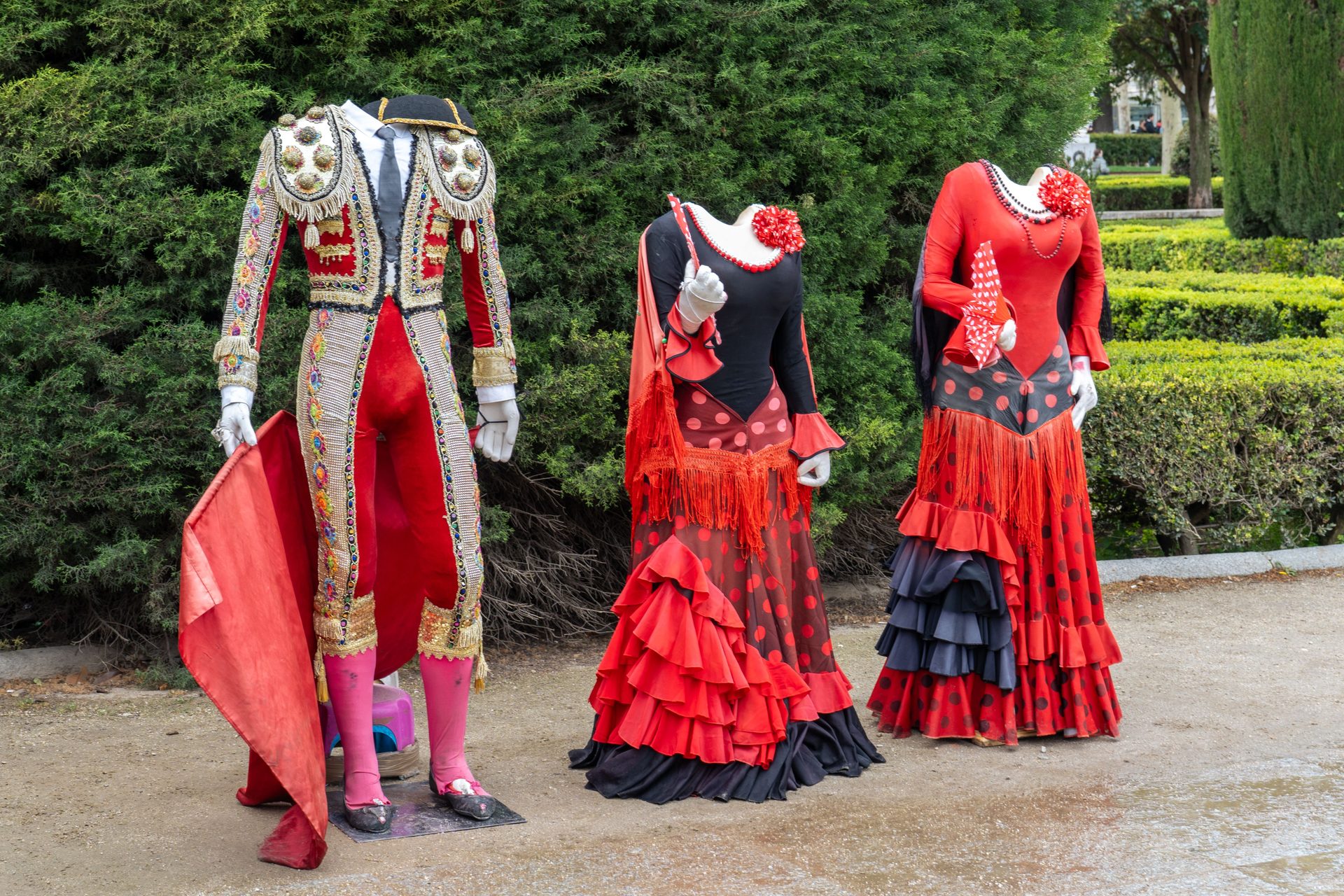
Spain never settled on a single national costume for women, and that is precisely what makes its traditional dress so interesting. A fallera in Valencia, a chulapa in Madrid, and a flamenca dancer in Seville wear garments shaped by different climates, trade routes, and centuries of regional identity.
This guide walks through 19 pieces of traditional Spanish clothing for women, from full festival costumes to the individual skirts, blouses, veils, and footwear that built them. Readers researching traditional clothing from other countries will notice a similar pattern: regional pride, not a single national uniform, usually drives the design.
1. Traje De Flamenca
The traje de flamenca, also called the traje de gitana, is the dress traditionally worn by women at Ferias (festivals) in Andalusia, Spain. It exists in two main versions, and one worn by dancers and the other as a day dress, with the day dress body-hugging to mid-thigh before continuing in ruffles to the ankle while the dancers’ version flares from higher on the hip for ease of movement.
Both styles share the same decorative language. Both versions are trimmed with layers of ruffles on the skirt and sleeves, typically in bold colors such as black or red, with the polka-dotted traje de lunares as the most famous pattern. A finished look traditionally pairs the dress with a fringed shawl and a decorative comb, since the outfit is traditionally completed with a mantón de Manila worn over the shoulders, along with hair styled in a bun and a decorative comb.
Although the dress is closely tied to the Roma community of Andalusia, it was attributed to the Gitanos but is now generally thought of as typically Andalusian. Today it appears each spring at Andalusia’s biggest festivals, where women wear the traje de flamenca at the Feria de Abril in Seville, the Feria de Malaga, and the Feria del Caballo in Jerez.
Pro Tip: If you’re buying a flamenco-style dress for a festival, look for genuine ruffled tiers and a fitted bodice rather than a generic costume cut — the silhouette is what distinguishes it from other festival and folk clothing styles.
2. Traje De Fallera
The traje de fallera is the formal dress worn during Valencia’s Las Fallas festival, one of the most elaborate regional costumes in Spain. During one of the festival’s events, la ofrenda a la Virgen Desamparados, thousands of locals dress in the traditional fallera dress and fallero suit and bring baskets of colorful flowers to place at a giant figure of the Virgin.
The silhouette is instantly recognizable for its volume and ornamentation. The fallera dress is long, voluminous, and colorful, with a lace front, sash, and veil. Fabrics are often silk brocade woven specifically for the Valencian region, and a full ensemble can take skilled seamstresses weeks to assemble by hand, which is why many families pass dresses down across generations rather than buying new ones each year.
Unlike the flamenco dress, which spread well beyond Andalusia in popular imagination, the fallera costume remains tightly associated with Valencia and is rarely worn outside the region’s own festival calendar.
3. Traje De Chulapa
The traje de chulapa is the traditional dress of Madrid’s working-class neighborhoods, most visible today during the San Isidro festival each May. The chulapa costume was typical of late 19th-century Madrid, and today San Isidro day is a good occasion to see women dressed as “manolas” in it.
The dress carries specific tailoring details that set it apart from other Spanish regional costumes. Chulapas at Madrid’s traditional verbenas wear fabrics that are usually polka-dotted, though plain, printed, or checked versions exist, with a fitted cut to above the knee followed by a half-cape ruffle to the ankle, and a bodice front trimmed with lace strips and ribbon.
The look did not appear overnight. Its roots trace back to the late 18th century, when working-class Madrid neighborhoods actively rejected the French-influenced fashions brought by the Bourbon court, forging their own distinct style instead. That costume is still worn each 15 May, when Madrid dresses up to celebrate its patron saint San Isidro, with residents heading to the meadow in the characteristic chulapa and chulapo outfits.
| Garment | Region | Signature Feature |
|---|---|---|
| Traje de flamenca | Andalusia | Ruffled tiers, polka dots |
| Traje de fallera | Valencia | Silk brocade, lace front |
| Traje de chulapa | Madrid | Fitted bodice, half-cape ruffle |
4. Mantón De Manila
Despite its name, the Manila shawl did not originate in Spain at all. The mantón de Manila or mantón de seda is an embroidered silk shawl derived from the Philippine alampay or scarf, and it traveled to Europe through colonial trade routes. These square silk garments are embroidered with chinoiserie-style motifs and were typically folded in half to form a triangle before being worn over the shoulders.
The shawl’s popularity spread far beyond its origin point. It was popular in the Philippines, Latin America, and Spain during the colonial era, and it was later adopted into European fashion during the 19th century. Seville added its own regional twist to the design, since the shawl became a fashion statement in Seville and Latin America, with local women requesting fringe added to the border for extra movement.
Today the shawl is inseparable from flamenco culture. Female flamenco dancers use it during performance because it enhances the dance and adds drama when twirled around the body, and it reappears outside Andalusia too, since it also serves as a traditional accessory of the manola madrileña, or chulapa attire, during the San Isidro Fair. Compare this cross-regional borrowing to how traditional Chinese garments also absorbed trade-route influences over centuries.
5. Mantilla
The mantilla is a lace veil worn over the head and shoulders, historically tied to religious observance. It is a lace or silk veil draped over the head and shoulders, held in place by a tall comb called a peineta, and its roots go back centuries, since the mantilla tradition dates to the sixteenth century and is linked to the Catholic practice of women covering their heads in church.
Not all mantillas are made the same way. The finest examples are made from black or white Chantilly lace or from heavier blonda lace produced in the Valencia and Catalonia regions, with the lace town of Almagro in Castilla-La Mancha serving as the historic production center. Earlier versions of the garment appeared even before lace became common, since during the Visigothic period women wore long dresses with a distinctive keyhole neckline, and this era also introduced the mantilla as a traditional veil.
Although everyday use faded over the 20th century, the mantilla never disappeared from formal occasions. It remains standard dress for Holy Week in Seville and formal Catholic occasions nationwide, and Spanish royal women, including Queen Letizia, wear it at Vatican events. A top-quality piece is still a genuine investment, since handmade black Chantilly mantillas from the Almeria mantillera tradition can run into thousands of euros.
6. Peineta
The peineta is the tall, curved comb that anchors a mantilla in place, and it does far more than hold fabric steady. The peineta raises the mantilla above the crown of the head and creates the distinctive tall silhouette seen in Spanish portraiture from Goya onward.
Traditionally carved from tortoiseshell or dark-stained wood, the comb sits at the crown of the head before the lace is draped and pinned over it. The taller the peineta, the more dramatic the resulting silhouette — a detail Spanish portrait painters captured repeatedly across the 18th and 19th centuries. Flamenco dancers borrow the same accessory on a smaller scale, since a decorative comb often finishes the hairstyle that accompanies the traje de flamenca.
7. Saya
The saya refers to the main skirt worn as the base layer of many Spanish regional costumes, predating the elaborate festival dresses that built on top of it. In everyday rural dress across northern and central Spain, the saya was typically made of wool or heavy cotton, cut full enough to allow movement during farm or household work.
Decoration varied enormously by province — some regions favored solid dark colors trimmed with a single band of contrasting fabric, while others used woven stripes or embroidered hems. The saya sat under additional layers such as an apron or overskirt, forming the structural foundation that other garments on this list, including the refajo and enagua, were designed to complement.
8. Refajo
The refajo is a decorative underskirt or petticoat historically worn beneath the main saya, adding both warmth and visual fullness. In many regional costumes, a glimpse of the refajo’s embroidered or striped hem peeking from under the outer skirt was considered an intentional design detail rather than an accident.
Thicker wool refajos were common in colder northern regions such as Asturias and Galicia, where layering served a practical purpose against damp mountain weather. In warmer central and southern provinces, lighter cotton versions prioritized volume over insulation, helping skirts hold their shape during folk dances performed at local festivals.
9. Chambra
The chambra is a loose-fitting blouse that served as a practical, everyday top across much of rural Spain before becoming part of formalized regional costume. Cut generously through the body and sleeves, it allowed freedom of movement for agricultural and domestic work.
Most chambras were made from plain white or cream cotton or linen, often finished with simple embroidery at the collar, cuffs, or front placket. When paired with a corpiño or vest on top, the chambra became the visible undergarment layer, its sleeves and collar peeking out to frame the face and wrists — a styling choice still followed in folk dance troupes performing traditional regional routines today.
10. Corpiño
The corpiño is a fitted, sleeveless bodice or vest worn over the chambra blouse, typically laced or buttoned up the front or back. It shaped the torso and gave regional costumes their characteristic silhouette, nipped at the waist above a full skirt.
Decoration on the corpiño often signaled regional identity more clearly than any other single piece, since embroidery patterns, button styles, and fabric choices varied from valley to valley. Velvet and wool corpiños appear frequently in colder northern costumes, while lighter, more ornately embroidered versions turn up in warmer provinces where festival dress leaned toward brighter colors and finer materials.
11. Mandil
The mandil is a decorative apron worn over the skirt, and in traditional Spanish dress it functioned as both a practical garment and a canvas for embroidery. Everyday mandiles were plain and functional, protecting the saya underneath during cooking or farm work.
Festival versions, by contrast, were often the most heavily decorated piece in an entire regional costume, embroidered with floral motifs, geometric patterns, or regional symbols in bright silk thread. A well-made mandil could take as long to produce as the skirt it covered, and in many communities a young woman’s embroidery skill on her own mandil was a point of personal and family pride.
12. Manteleta
The manteleta is a small cape or shoulder covering, shorter and less formal than a full mantilla, typically worn for warmth rather than ceremony. Unlike the lace mantilla reserved for church and formal events, the manteleta was a practical, everyday piece made from wool or heavier cloth.
It sat across the shoulders and upper back, sometimes fastened at the front with a brooch or tied loosely, offering protection from wind and cold during outdoor festivals or market days. Regional versions differ mainly in trim — fringed edges in some provinces, embroidered borders in others — but the basic cut remained consistent across Spain’s rural communities.
13. Dengue
The dengue is a short cape-like garment that covers the shoulders and upper arms, historically associated with 18th and 19th-century maja fashion later echoed in several regional costumes. It typically crossed at the front or was pinned at the chest, adding structure above a fitted bodice.
Painters of the period frequently depicted women in the dengue paired with a fan and a full skirt, a combination that became a visual shorthand for fashionable Spanish femininity of the era. Modern folk costume revivals in some provinces still include a dengue-style shoulder piece as a nod to this older silhouette.
14. Enagua
The enagua is a petticoat worn beneath the main skirt, serving a function similar to the refajo but typically made from plainer, undyed fabric since it was rarely meant to be seen. Its primary job was adding fullness and structure to the skirts above it.
In festival costumes with especially voluminous skirts, women sometimes layered multiple enaguas to achieve the desired silhouette, a technique comparable to the layered underskirts found in other European folk dress traditions. The number and stiffness of enaguas worn often reflected the formality of the occasion, with everyday dress requiring far less volume than a festival appearance.
15. Zapi
The zapi is a regional head covering or scarf found in some areas of rural Spain, typically a simple square or rectangular piece of fabric tied under the chin or at the nape of the neck. It served the practical purpose of protecting hair from sun, wind, or dust during outdoor work.
Important Note: Documentation on highly localized garments like the zapi is limited outside regional costume archives and museum collections, so terminology and exact construction can vary noticeably between provinces and even between neighboring villages.
16. Rebosillo
The rebosillo is a fine lace or embroidered headpiece associated with Valencian traditional dress, closely linked to the same festival wardrobe as the traje de fallera. It sits over the crown of the head, often paired with the elaborate hairstyle and ornate hair combs worn during Las Fallas celebrations.
Unlike the mantilla, which drapes down over the shoulders, the rebosillo tends to be shorter and more structured, framing the face rather than covering it. It is almost always seen alongside the full fallera costume rather than worn as a standalone piece, reinforcing its role as a regional accessory rather than a nationwide Spanish tradition.
17. Gandalla
The gandalla is a lesser-documented regional garment term that appears in some local costume inventories, generally describing a style of overskirt or wrap layered atop the main saya. As with several other hyper-local pieces on this list, construction details and naming can shift from one village archive to the next.
Because regional Spanish costume was passed down through family sewing traditions rather than standardized patterns, pieces like the gandalla often survive today mainly through museum collections, folk dance troupes, and local heritage associations working to preserve pre-industrial rural dress.
18. Set Vetes
Set vetes, meaning roughly “seven ribbons,” refers to a decorative ribbon-trimmed skirt style found in parts of eastern Spain, where vetes (ribbons) were sewn in multiple rows near the hem as both reinforcement and ornamentation. The number of ribbon bands could signal the wearer’s village, marital status, or the formality of the occasion, depending on local custom.
This ribbon-banding technique shows up in folk costumes well beyond Spain’s borders — comparable ribbon-trimmed skirts appear in Central European and Mediterranean folk dress — which is a reminder that regional European costume traditions often developed similar decorative solutions independently.
19. Alpargatas
Alpargatas are flat, rope-soled canvas shoes that complete most traditional Spanish women’s costumes, from flamenco dress to everyday rural wear. Their woven esparto-grass or jute soles made them lightweight, breathable, and inexpensive to produce, which is why they became the standard footwear across both festival and working dress for centuries.
Ribbons or laces crisscrossing up the ankle are common on festival versions, adding a decorative element that coordinates with the rest of the outfit, while plainer slip-on styles served daily wear. The basic design has proven durable enough to survive largely unchanged into the present, and similar rope-soled sandals appear under different names throughout the Mediterranean, much as traditional American garments and traditional Indian garments each developed their own practical, climate-driven footwear traditions.
Readers curious about how regional dress intersects with other cultural traditions might also enjoy looking at traditional Spanish Christmas foods, which share the same strong sense of regional identity found in Spain’s folk costumes. Similarly, comparing these 19 garments against traditional Pakistani clothing or traditional Japanese clothing highlights how differently climate, trade, and local craft shape a country’s dress.
Taken together, these 19 pieces show that “Spanish traditional dress” is really a patchwork of regional wardrobes rather than one fixed national look. From the ruffled drama of the traje de flamenca to the quiet practicality of alpargatas and a simple saya, each garment still carries the identity of the province, town, or even family that shaped it over generations.