How Much Does an Apartment Cost in Hanoi? Rent, Buy & Neighborhood Prices Explained

April 13, 2026
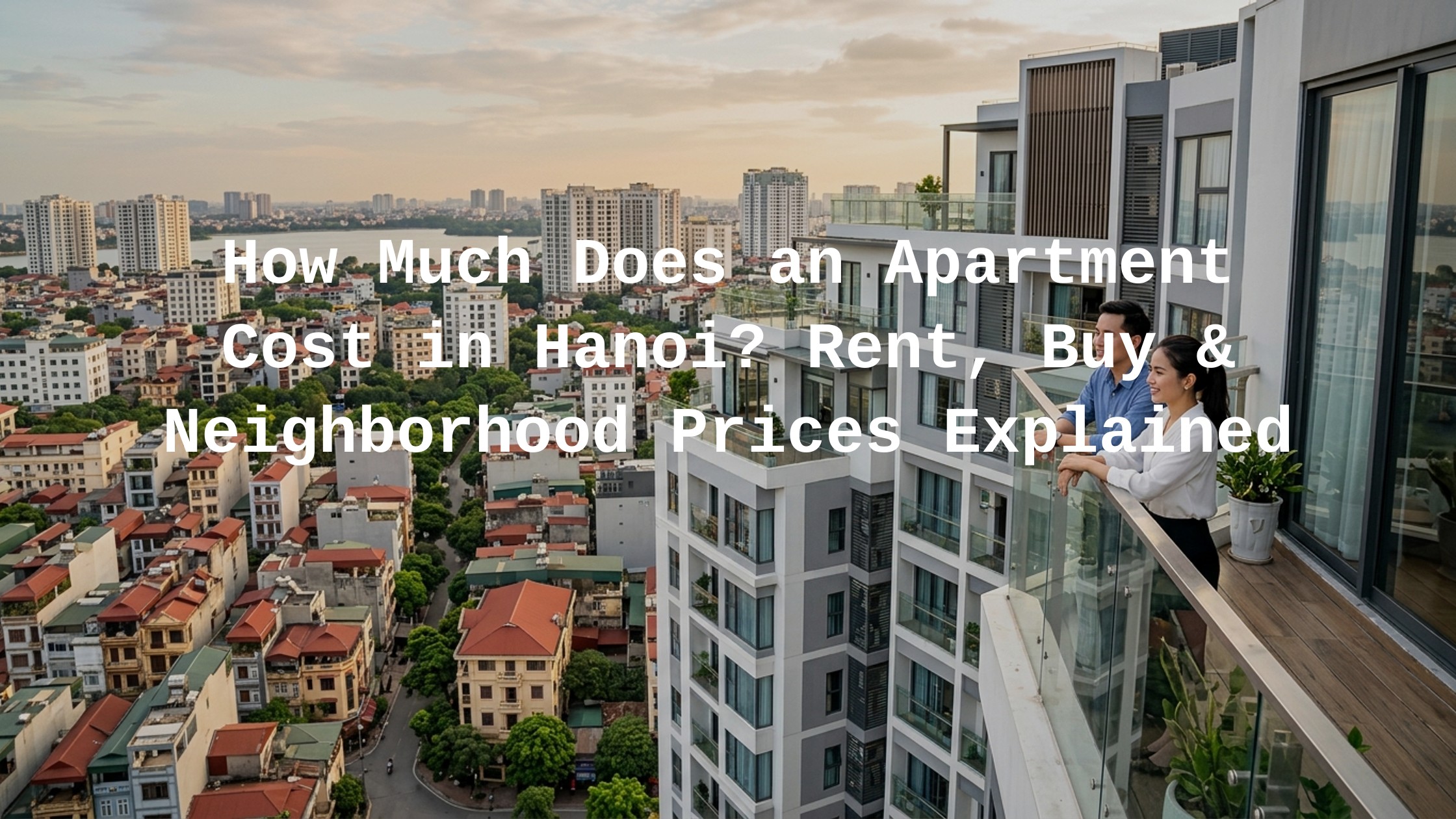
Hanoi’s apartment market has changed dramatically in recent years — and if you’re planning a move without current numbers, you could be in for a shock. In 2024 alone, apartment prices in Hanoi rose 40% to 50% compared to 2023, with some areas seeing even higher jumps. That’s not a slow-burn market. That’s a city in motion.
Whether you’re relocating for work, considering a property investment, or simply trying to figure out what your budget will realistically get you, understanding how much an apartment costs in Hanoi requires more than a single number. Location, size, building quality, and your status as a local or foreigner all play a role. This guide breaks down every major factor so you can make a financially informed decision.
Pro Tip: Prices in Hanoi are quoted in both USD and Vietnamese Dong (VND). For context, 1 USD ≈ 25,000 VND. Always confirm which currency your landlord or agent is using before signing anything.
Average Rent in Hanoi by Apartment Size
Rental prices in Hanoi vary widely depending on the size of the unit, the district, and whether the building is a standard residential complex or a high-end serviced property. That said, there are reliable baseline ranges you can use to set your budget.
In 2025, a one-bedroom apartment in Hanoi typically costs between $450 and $850 per month, depending on the location and amenities. Studio apartments start lower, while larger multi-bedroom units in premium buildings push well above $1,000 per month.
| Apartment Size | Budget Range (Monthly) | Mid-Range (Monthly) | Luxury/Serviced (Monthly) |
|---|---|---|---|
| Studio | $300–$400 | $400–$600 | $700–$1,000+ |
| 1 Bedroom | $450–$600 | $600–$850 | $1,000–$1,500+ |
| 2 Bedrooms | $600–$800 | $800–$1,200 | $1,500–$2,500+ |
| 3 Bedrooms | $900–$1,200 | $1,200–$2,000 | $2,500–$3,500+ |
For expats seeking larger family homes, three-bedroom apartments in luxury buildings can range from $1,800 to $3,500 per month depending on the location and amenities. At the very top end of the market, luxury buildings with high-end facilities such as Vinhomes Metropolis or West Lake residences may reach rental prices between $2,500 and $4,000 per month for larger units.
It’s also worth noting what’s typically included — or not. In Hanoi, utilities are usually excluded from rent unless stated in the agreement. Standard apartments typically exclude utilities, which tenants pay separately, including electricity at 2,500–4,000 VND per kWh. If you’re renting a serviced apartment, more costs may be bundled in, but you’ll pay a premium for that convenience. If you’re curious how Hanoi’s apartment types of apartments compare in terms of layout and features, that breakdown is worth reviewing before you start your search.
Key Insight: Serviced apartments include cleaning, Wi-Fi, and sometimes utilities — ideal for short-term stays. Standard condos cost less monthly but require you to manage utilities and furnishings separately.
Average Apartment Purchase Price in Hanoi
If you’re thinking about buying rather than renting, Hanoi’s purchase market is one of the most active — and most expensive — in Southeast Asia right now. Prices have surged sharply, and the trend shows no sign of reversing.
In Hanoi, average apartment prices climbed to around VND 100 million (approximately US$3,804) per square meter, representing a much sharper year-on-year increase of about 40%, based on reports from Savills. To put that in practical terms, a modest 60 sqm one-bedroom apartment in a mid-range building would cost roughly $228,000 at that average rate.
60% of apartments launched in the first half of 2025 were priced above 80 million VND per square meter. Since the third quarter of 2024, no new developments have been recorded with prices below 60 million VND per square meter. Affordable housing has effectively disappeared from the new-build market.
| District / Area | Purchase Price Range (USD) |
|---|---|
| Tay Ho (West Lake) | $185,000 – $11,000,000 |
| Cau Giay | $265,000 – $11,800,000 |
| Ha Dong (suburban) | $175,000 – $303,000 |
| Thanh Xuan | From $242,000 |
Beyond the sticker price, factor in the transaction costs. Buyers will need to pay a stamp duty of 0.5% of the property’s value and a notary fee of around $50. There’s also a 0.06% charge on property values exceeding 1 billion dong (approximately $45,000), and a 0.65% income tax when buying apartments in Vietnam.
The Ministry of Construction said apartment prices are likely to continue soaring in 2025, following a hike last year. If you’re on the fence about buying, waiting for prices to drop may not be a reliable strategy in the near term.
Important Note: New-build prices in Hanoi are quoted per square meter. Always calculate the total price based on the actual usable floor area — not the gross area, which includes hallways and shared spaces.
Cost of Renting vs. Buying in Hanoi
Deciding whether to rent or buy in Hanoi isn’t just a lifestyle choice — it’s a financial calculation that depends on how long you plan to stay, your access to financing, and your risk tolerance in a fast-moving market.
On the rental side, you get flexibility and lower upfront costs. On the buying side, you’re entering a market where values have risen dramatically but where carrying costs and ownership restrictions (especially for foreigners) add complexity. The average rental yield in the city’s central districts is 3.69%, and in locations further from the centre, it’s 4.08%. Those yields are modest compared to other investment destinations, which means buyers are largely betting on continued price appreciation rather than strong cash flow.
For those who do pursue a mortgage, banks offer loans covering up to 70% of the full apartment cost. The mortgage term can be 5, 10, or 20–25 years, and the typical interest rates range from 6.5% to 7.5% annually.
| Factor | Renting | Buying |
|---|---|---|
| Upfront Cost | 1–3 months deposit | 30%+ down payment + fees |
| Monthly Cost | $300–$3,500+ | Mortgage + management fees |
| Flexibility | High | Low |
| Price Risk | Rent increases possible | Market appreciation or depreciation |
| For Foreigners | Straightforward | Leasehold only (50 years) |
Expect average rental prices to increase at a more sustainable rate of 3–5% annually, in line with Vietnam’s projected GDP growth and inflation. If you’re staying fewer than three years, renting almost always makes more financial sense given transaction costs alone. For longer-term stays or investment purposes, buying may offer stronger returns — but do your due diligence carefully. You can also explore how apartment costs in Kathmandu compare if you’re evaluating other Asian cities for relocation or investment.
Cheapest and Most Expensive Neighborhoods in Hanoi
Where you live in Hanoi has an enormous impact on what you pay. The city’s districts range from historic, premium-priced central zones to affordable suburban areas with modern infrastructure. Knowing the landscape helps you get more for your money — or understand exactly what you’re paying a premium for.
Most Expensive: Tay Ho (West Lake)
Tay Ho offers a strong and welcoming expat community, beautiful scenery, quiet and safe streets, and the best international dining scene — but it also commands the highest rental prices in Hanoi. Prices in Tay Ho can be especially high for luxury apartments, ranging from $700 to $2,000 per month. The Xuan Dieu and To Ngoc Van street corridors are the social hub, while the Ciputra International City compound on the district’s edge is popular with families for its international schools and gated facilities.
Premium Central: Hoan Kiem & Ba Dinh
In the city center (Hoan Kiem, Ba Dinh), monthly rents typically range from $400 to $1,500. Hoan Kiem is Hanoi’s historic and cultural core — walkable, atmospheric, and surrounded by dining and entertainment options. The area is extremely noisy and crowded, tourist-heavy, and properties are generally older and smaller with very little green space. Ba Dinh, by contrast, is the political center of Vietnam, home to embassies and government offices, and offers a more tranquil central living experience.
Mid-Range Modern: Cau Giay & Nam Tu Liem
Cau Giay and Nam Tu Liem offer modern, high-quality apartments at a more affordable price than the central districts, with excellent options for families seeking top-tier international schools and less traffic congestion than the city center. In Cau Giay and other suburban districts, more affordable options are available, generally between $300 and $800 per month.
Most Affordable: Ha Dong, Long Bien & Outer Districts
Tay Ho and Ciputra are pricier, while Long Bien and Hai Ba Trung offer more affordable options. Ha Dong, located further from the center, has seen significant residential development and remains one of the most budget-friendly areas for both renting and buying. The average purchase price range in Ha Dong runs from $175,000 to $303,000 — notably lower than central and lakeside districts.
Pro Tip: Long Bien district sits across the Red River and is often overlooked by expats. It offers quieter streets, lower rents, and good access to the city center via bridge — making it a smart value pick for budget-conscious renters.
What Affects Apartment Prices in Hanoi
Hanoi’s apartment prices aren’t arbitrary. Several concrete factors drive the wide range you’ll see across the market — and understanding them helps you negotiate smarter and set realistic expectations.
Location and District
Location is one of the most important factors affecting the cost of renting an apartment in Hanoi. Proximity to West Lake, the Old Quarter, embassies, international schools, and major business hubs all push prices up. Suburban districts with newer infrastructure but longer commutes tend to offer the best value per square meter.
Supply and Demand Imbalance
Despite a strong recovery in Hanoi’s apartment market, a growing imbalance between supply and demand is becoming increasingly apparent, as affordable housing has almost vanished. The supply of apartments in Hanoi saw a steep decline between 2018 and 2023, dropping from over 20,000 units in 2018 to just around 10,000 units in 2023. While supply has partially recovered, pricing pressure remains intense.
Foreign Investment and Expat Demand
A significant influx of Foreign Direct Investment (FDI) into the northern industrial provinces, coupled with the full-scale return of international business and tourism, has supercharged demand for high-quality, modern, and well-managed rental properties. In 2024, foreigners purchased more than 2,800 apartments in Hanoi alone, more than double the total number of foreign purchases recorded during the five-year period from 2018 to 2022.
Building Quality and Amenities
A brand-new high-rise with a rooftop pool, gym, 24/7 security, and concierge services will always command a premium over a mid-century walk-up with basic finishes. Apartments in Hanoi are usually fully furnished and situated in contemporary residential complexes, complete with amenities like swimming pools, gyms, playgrounds, and 24/7 security — at least in the upper tiers. Budget units offer far fewer of these perks. If you’re thinking about how to set up a comfortable urban space once you’ve found a place, these urban living essentials for big-city apartments are a helpful starting point.
Furnished vs. Unfurnished
Furnished apartments carry a notable price premium but eliminate the cost and hassle of buying furniture. Most foreign residents in Hanoi stay for one to three years, making fully furnished apartments the most convenient option, as furnished units eliminate the need to purchase furniture and simplify the relocation process.
Common Mistake: Many renters focus only on the headline rent and forget to budget for electricity, internet, parking fees, and management charges. These extras can add $100–$200/month to your actual housing cost.
How Hanoi Compares to Other Major Cities
Understanding where Hanoi sits in the regional and global context helps you assess whether you’re getting good value — or whether another city might better fit your financial goals.
As of April 2024, Hanoi surpassed Ho Chi Minh City as the most expensive city to live in Vietnam, with Ho Chi Minh City coming second and Da Nang in third. That said, Hanoi remains significantly more affordable than most comparable Asian capitals.
| City | Avg. 1BR Rent (Central) | Avg. Purchase Price/sqm | Notes |
|---|---|---|---|
| Hanoi, Vietnam | $450–$850/mo | ~$3,800 | Fastest price growth in Vietnam |
| Ho Chi Minh City, Vietnam | $500–$1,000/mo | ~$3,200–$3,500 | 20–30% price increase in 2024 |
| Bangkok, Thailand | $700–$1,400/mo | ~$4,500–$6,000 | Freehold ownership available |
| Kuala Lumpur, Malaysia | $600–$1,200/mo | ~$3,000–$5,000 | Strong foreigner ownership rights |
| Singapore | $2,500–$4,500/mo | ~$15,000–$25,000 | Among the world’s most expensive |
In Ho Chi Minh City, apartment prices rose 20% to 30% in 2024 compared to the previous year, lower than the pace seen in Hanoi. Hanoi is currently the faster-moving market of the two Vietnamese cities, which means higher short-term appreciation potential but also higher entry costs. When compared with Bangkok and Singapore, Hanoi provides marginally superior rental yields, particularly with the ongoing enthusiasm surrounding condominiums and condo-hotel hybrids.
Compared to other Southeast Asian countries, Vietnam is at the cheaper end of the spectrum in general. For expats coming from Western Europe, North America, or Australia, the cost of living difference remains substantial even with recent price increases. You might also find it useful to compare apartment costs in Kathmandu if South Asia is on your radar.
Can Foreigners Buy an Apartment in Hanoi?
Yes — but with important restrictions. Vietnam has opened its property market to foreign buyers, though the rules are meaningfully different from what you’d encounter in fully open markets like Thailand or Malaysia.
Due to legislative changes introduced in 2015, any foreigner can now arrive in Vietnam with a tourist visa and purchase property under a 50-year leasehold ownership, with the option to extend. Before this, buying apartments in Hanoi for foreigners was only possible after at least a year of living in the country as a resident.
The key ownership rules to understand:
- Leasehold only: Foreigners receive a 50-year lease, renewable, rather than freehold ownership. Vietnamese citizens can own property outright.
- Ownership cap per building: A citizen from another country can only buy up to 30% of properties in multi-flat buildings that have a residential commercial project status, in any district where there are no restrictions for foreign nationals.
- Mortgage access: Interestingly, the mortgage conditions are the same for both locals and foreigners — banks offer loans covering up to 70% of the full apartment cost.
- Proof of income required: Proof of income is mandatory when applying for a mortgage.
Important Note: The 30% foreign ownership cap per building means that popular expat-friendly developments can sell out their foreigner quota quickly. Always verify the remaining foreign quota before committing to a purchase.
The strong momentum in foreign purchasing was reported to have continued in 2025, supported by rising numbers of foreign professionals in Vietnam and clearer property ownership rules for overseas buyers. If you’re buying as an investment, the rental yield and appreciation potential are real — but so is the complexity of navigating Vietnamese property law. Working with a licensed local attorney and a reputable real estate agent is strongly advisable. You may also want to review how to cut your overall living costs as you plan your relocation budget.
Tips for Finding an Apartment in Hanoi
Navigating Hanoi’s rental market as a newcomer can be frustrating — listings are often outdated, language barriers are real, and not every agent has your best interests in mind. These practical tips will help you find a good apartment without overpaying or getting caught in common traps.
1. Use Reputable Listing Platforms
You can start by searching online on real estate websites such as Batdongsan.com.vn or Muabannhadat.vn, which offer a range of listings for apartments and condos in Hanoi. For English-language searches, platforms like FazWaz Vietnam and Hanoi Real Estate offer verified listings with filters for district, size, and price. Expat Facebook groups are also a surprisingly effective source of off-market rentals.
2. Work with a Trusted Agent — Carefully
Real estate agents can be an invaluable resource when navigating the competitive and often complex market in Hanoi. With their local knowledge, language skills, and access to a broad range of listings, agents can help you save time and avoid common pitfalls. However, not all agents operate with the same level of professionalism, so it’s important to work with agents who are recommended on trusted expat forums or verified real estate platforms.
3. Visit in Person Before Signing
Photos can be misleading. Always visit the apartments in person to check the condition and surroundings. Pay attention to natural light, noise levels, water pressure, and the condition of appliances. Check the building’s hallways and common areas — they’re a reliable indicator of how well the property is managed. Also use Numbeo’s Hanoi cost-of-living data to benchmark what you’re seeing against market norms.
4. Understand the Deposit and Payment Structure
If your rental rate is $500/month, you’re typically expected to pay two months’ rent upfront and a one-month security deposit, meaning you’ll need to prepare $1,500 before you can move in. This 3-month upfront requirement is standard across most of Hanoi’s rental market, so budget for it in advance.
5. Clarify What’s Included in the Rent
Always double-check what’s actually included in the monthly rent. Electricity is usually not included — as of 2025, expect VND 1,984–3,460 per kWh, with some landlords adding a small service fee. Cleaning, water, and Wi-Fi are usually included, but not always. Get everything in writing before you sign.
6. Get a Bilingual Contract
You will be expected to sign a rental contract, and it is the law to have it in both Vietnamese and the tenant’s native language. This serves to protect the tenant and allows the landlord to update the police records of the tenancy. Don’t accept a Vietnamese-only contract — insist on a bilingual version. If any disputes arise, having a contract in your language is your primary protection. You can review Vietnam Real Estate’s buyer and renter resources for additional guidance on legal requirements.
7. Register Your Tenancy with Local Authorities
When moving into a home in Hanoi, you need to register your whereabouts with the local police. This is for your own safety and applies to both locals and non-locals. It is technically the landlord’s responsibility, so press your landlord to get this done. Failure to register can create complications with visa extensions and residency paperwork. If you’re setting up a full household, check out these urban apartment essentials to make your new space functional from day one.
8. Start Your Search Early
Start searching at least 3–4 weeks before moving, and expats relocating with families should also consider proximity to international schools and hospitals. The first half of 2025 witnessed a notable 15–20% year-on-year increase in rental inquiries, particularly for apartments in the most popular expatriate districts — meaning good units go fast. Starting early gives you negotiating leverage and avoids last-minute decisions. You can also explore pet-friendly apartment considerations if you’re relocating with animals, as some Hanoi buildings have strict pet policies worth verifying upfront.
Pro Tip: Long-term tenants in good standing have real negotiating power at renewal time. When you’re up for contract renewal and you’ve been a low-maintenance tenant, there’s little reason for a landlord to raise your rent — every month their building sits vacant costs them roughly 8% in rental income.