Inside the Traditional Israeli Breakfast Spread: 13 Dishes to Know

November 23, 2026
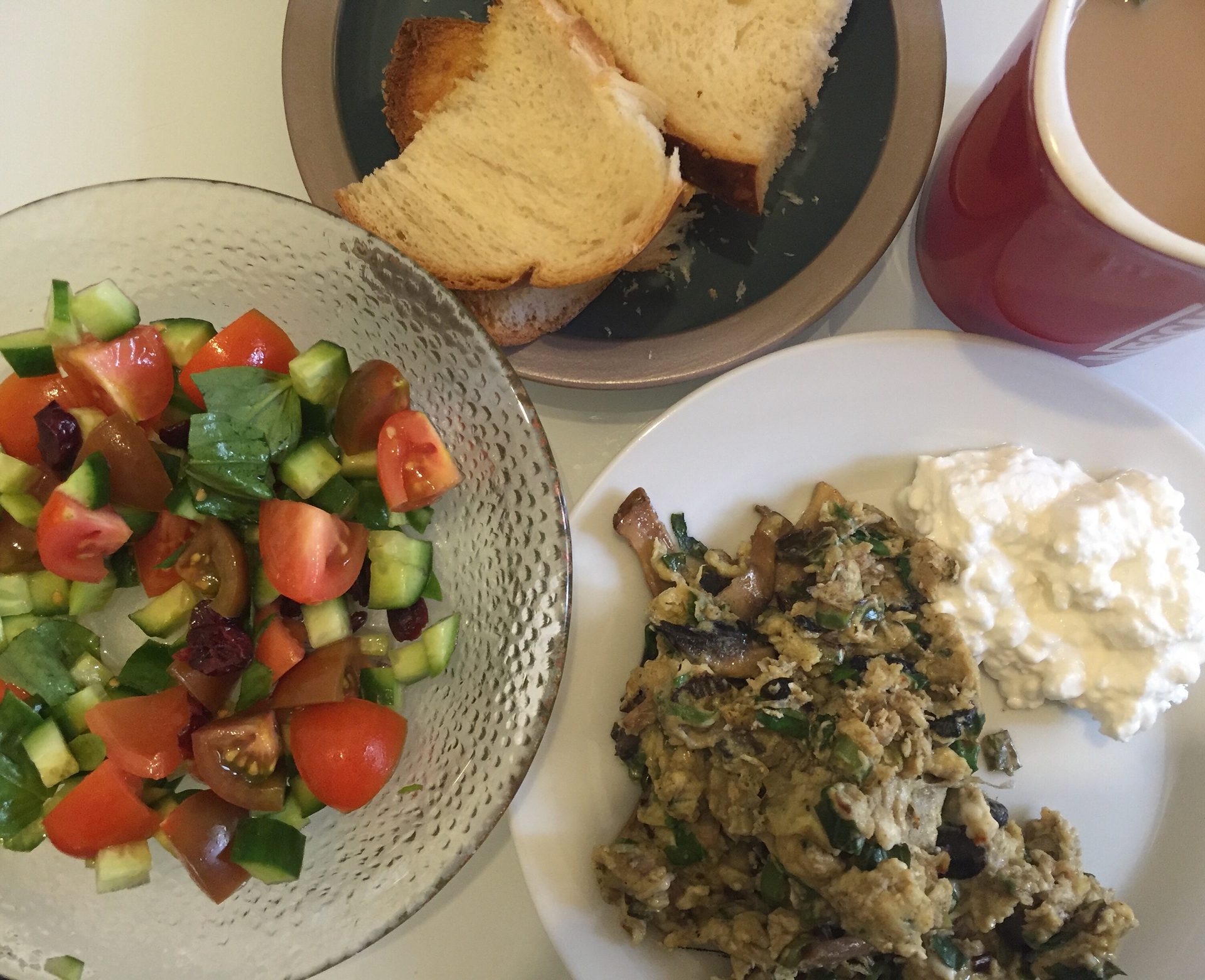
Walk into almost any hotel dining room in Tel Aviv or Jerusalem and the breakfast buffet looks less like a quick morning meal and more like a midday feast. A traditional Israeli breakfast can stretch across a dozen small plates at once: eggs, cheeses, salads, pickled fish, and warm bread, all meant to be shared and mixed on a single plate.
That style did not appear by accident. It grew out of kibbutz farming communities that ate what they produced each morning, then absorbed dishes carried in by Jewish immigrants from North Africa, the Levant, and Eastern Europe. The result is one of the more unusual breakfast traditions, built less around a single national dish and more around variety. Below are 13 foods that show up again and again on that table, along with what makes each one worth knowing.
1. Shakshuka
Shakshuka is the dish most people picture first when they think of an Israeli breakfast: eggs cracked into a bubbling pan of tomatoes and peppers, then scooped up with bread straight from the skillet. According to Wikipedia, it is a Maghrebi dish of eggs poached in a sauce of tomatoes, olive oil, peppers, onion, and garlic, commonly spiced with cumin, paprika, and cayenne pepper.
Despite its strong association with Israel, the dish did not originate there. Food historians trace shakshuka to Maghrebi, or North African, cooking traditions, with the strongest documentation pointing to Tunisia and Libya within a broader regional context. It reached Israeli kitchens through migration, since shakshuka is a North African dish that travelled to Israel with Mizrahi and Sephardic Jewish communities, was absorbed into Israeli food culture, and was then introduced to European and American diners largely through that Israeli context.
Home cooks often build their own version with whatever vegetables are in the fridge, which is part of why it travels so well. Readers curious about other egg-and-vegetable breakfasts rooted in North Africa might also look at traditional Egyptian food, which shares some of the same tomato-forward, bread-dipping habits.
2. Labneh
Labneh is strained yogurt pressed until it turns thick, tangy, and spreadable, usually finished with a pour of olive oil and a dusting of za’atar. Chef Yotam Ottolenghi’s team notes that it originated in the Levant region of the East Mediterranean, in countries such as Lebanon, Syria, Jordan, Israel and Palestine, where straining yogurt was a practical way to keep dairy from spoiling in the heat.
The name itself has a simple root: the word itself comes from the Arabic laban, “milk.” Compared with the Greek yogurt many Western shoppers already know, labneh is a strained yogurt thicker than Greek yogurt, closer in texture to a soft cheese than a spoonable breakfast yogurt.
Pro Tip: Spread labneh thick on a plate, make a shallow well in the center, and fill it with good olive oil and a pinch of za’atar before serving with warm pita. It keeps the yogurt from soaking into the bread too quickly.
Israeli tables often set labneh beside other fresh cheeses rather than serving it alone, a layering approach also seen in traditional Greek foods, where strained dairy plays a similar everyday role.
3. Israeli Salad
Israeli salad is deceptively simple: finely diced tomato and cucumber tossed with lemon juice, olive oil, and chopped parsley, with nothing cooked and nothing hidden under a heavy dressing. The tomato (Solanum lycopersicum) and cucumber (Cucumis sativus) are cut small enough that the pieces barely need chewing, a texture that makes the salad easy to pile onto bread or alongside eggs.
What sets it apart from a typical side salad is how central it is to the meal rather than an afterthought. It sits next to shakshuka, hummus, and cheese as an equal, not a garnish, and the acidity cuts through richer dishes on the same plate. Some versions add diced onion, bell pepper, or a sprinkle of sumac, but the core ratio of tomato to cucumber rarely changes.
4. Matzo Brei
Matzo brei comes from Ashkenazi Jewish kitchens in Central and Eastern Europe, where broken sheets of matzo were soaked in water or milk, mixed with beaten egg, and fried until set. It started as a practical use for stale matzo during Passover, when leavened bread is avoided, but many families now make it year-round as a quick breakfast.
Common Mistake: Soaking the matzo too long turns it mushy before it even hits the pan. A quick dip under running water or a brief soak is usually enough to soften the crackers without losing their structure.
Cooks tend to split into two camps: sweet, with cinnamon and sugar on top, or savory, with salt and pepper and maybe a squeeze of lemon. Both versions trace back to the same Eastern European Jewish communities whose hearty, egg-based cooking also shaped dishes like the one-pot stews covered in German traditional stew traditions.
5. Hummus
Hummus is a thick paste made from cooked chickpeas (Cicer arietinum) blended with tahini, lemon juice, and garlic, usually finished with a swirl of olive oil and a scatter of whole chickpeas or paprika on top. In Israel it is eaten at nearly every meal, but a breakfast serving tends to be lighter and brighter than the heavier lunch version, often paired with a soft-boiled egg pressed into the center.
- Classic: plain hummus with olive oil and paprika
- Masabacha: whole chickpeas folded into the tahini base
- Foul: fava beans blended in alongside the chickpeas
- Hummus with egg: a boiled or fried egg set into the center
Chickpeas show up in breakfast and snack foods well beyond the Levant, including in parts of South Asia, where legume-based pastes and stews are just as common; the chickpea traditions covered in traditional Pakistani food make for an interesting comparison.
6. Bourekas
Bourekas are flaky, layered pastries, usually made from phyllo or puff dough and folded around a filling before baking. Cheese and potato are the most common breakfast fillings, though spinach, mushroom, and eggplant versions are easy to find at bakeries and open-air markets across the country.
The pastry technique has roots in Ottoman and Sephardic cooking, which also shaped flaky pastry traditions elsewhere in the Mediterranean and beyond, including the layered doughs seen in traditional French food. A sesame seed or nigella seed topping is a common way to mark which filling is inside before the pastry is cut open.
7. Mandelbrot
Mandelbrot is a twice-baked almond cookie from Ashkenazi Jewish baking, closely related to Italian biscotti but typically softer and less dense. The name itself is Yiddish for “almond bread,” and the dough is shaped into a loaf, baked once, sliced, then baked again until the edges firm up and turn golden.
It leans sweeter than most of the savory dishes on an Israeli breakfast table, which is why it usually appears alongside coffee rather than eggs or salad. For readers planning a sweeter breakfast spread for a special occasion, the pastry ideas in best Valentine’s Day breakfast offer a useful comparison point for balancing sweet and savory courses.
8. Pita
Pita is the flatbread that holds the entire Israeli breakfast together, literally. Its pocket forms from steam puffing the dough during baking, which leaves a hollow center perfect for stuffing with salad, egg, or hummus, or for tearing into pieces to scoop up dips.
Fresh, warm pita is treated as a given rather than a side dish, and a breakfast spread without it would feel incomplete to most Israeli households. Flatbreads play a similarly central role across other cuisines built around shared, hands-on eating, including the breads featured in traditional Indian foods.
9. Challah
Challah is a braided, egg-enriched bread traditionally baked for Shabbat and Jewish holidays, though leftover loaves often turn into weekday breakfast toast or the base for French toast. Its shiny, golden crust comes from an egg wash brushed on before baking, and the braid itself is meant to symbolize unity at the table.
Poppy seeds, sesame seeds, or a drizzle of honey are common additions depending on the holiday or family tradition. Because it is baked ahead and meant to be shared, challah fits the same communal, prepare-in-advance spirit found in other festive breads around the world.
10. Chopped Herring
Chopped herring is an Ashkenazi dish built from pickled or smoked herring (Clupea harengus) mashed with hard-boiled egg, onion, and sometimes a bit of apple or bread for sweetness and bulk. It has a sharp, briny flavor that stands in contrast to the fresh vegetables and mild cheeses elsewhere on the table.
The dish arrived with Jewish immigrants from Eastern Europe, where pickled herring was already a breakfast and appetizer staple. That same pairing of cured fish with a morning meal shows up in other Eastern European food cultures, including the herring-and-drink traditions discussed in traditional Russian drinks.
11. Israeli-Style Lox
Israeli-style lox refers to cold-smoked or salt-cured salmon (Salmo salar), sliced thin and served alongside cream cheese, bagels, or soft white rolls. It is a lighter, less assertive option than chopped herring and tends to appeal to guests who want fish on the table without the stronger pickled flavor.
Key Insight: Lox and smoked salmon are often used interchangeably, but true lox is traditionally cured in salt brine rather than smoked, giving it a softer texture and milder flavor than cold-smoked salmon.
Fish-forward breakfasts are not unique to Israel. A similar reliance on cured or grilled fish as a morning protein appears in traditional Japanese breakfast, where grilled fish is just as standard as eggs are elsewhere.
12. Leben
Leben is a tangy, drinkable fermented milk, similar in spirit to kefir or buttermilk, often served chilled on its own or poured over cereal and granola. It has a thinner consistency than labneh and is meant to be sipped rather than spread, making it closer to a breakfast drink than a condiment.
Fermented dairy and fermented drinks both rely on the same basic idea of using beneficial bacteria to preserve and flavor a base ingredient, a concept that also runs through the fermented beverage customs in traditional Chinese drinks. On an Israeli table, leben is usually poured just before eating so it stays cold and slightly fizzy from fermentation.
13. Tahini Salad
Tahini salad, sometimes called tahini sauce when thinned out, is made from ground sesame seeds (Sesamum indicum) blended with lemon juice, garlic, and water until it reaches a pourable, creamy consistency. It is drizzled over vegetables, hummus, falafel, or straight onto bread, and its nutty, slightly bitter edge balances out sweeter or more acidic dishes on the table.
| Dish | Main Base | Typical Texture |
|---|---|---|
| Hummus | Chickpeas and tahini | Thick, spreadable |
| Tahini Salad | Ground sesame seeds | Pourable, sauce-like |
| Labneh | Strained yogurt | Thick, soft-cheese-like |
Sesame paste shows up well beyond the Levant, including in sauces and condiments across parts of Southeast Asia, where ground sesame plays a comparable role in dishes covered in traditional Malaysian food. Because tahini salad is so easy to make ahead and keeps for days in the fridge, it is one of the more practical dishes to prepare before guests arrive for a full spread.
Taken together, these 13 dishes explain why an Israeli breakfast rarely looks the same twice. The spread leans on whatever a household or kibbutz has on hand, then layers in the pickled fish, strained dairy, and flatbreads carried over by generations of immigrants. Readers who want to keep exploring morning meals from other cultures can find more ideas in this collection of breakfast traditions from around the world.