Inside a Traditional Hawaiian Breakfast: Loco Moco, Malasadas, and Fried Eggs

November 21, 2026
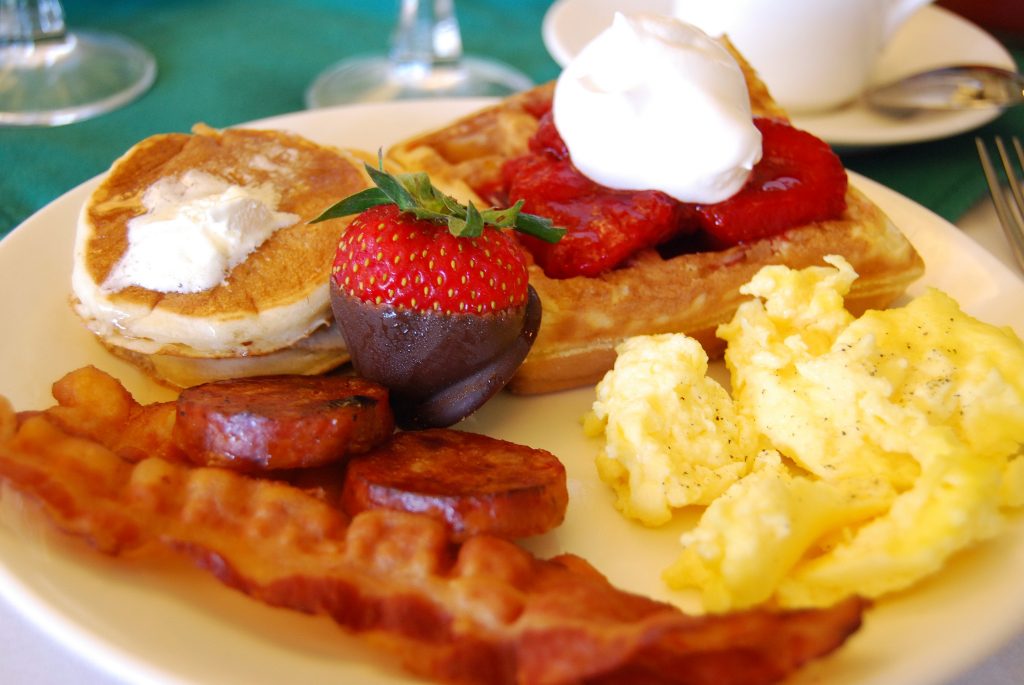
A traditional Hawaiian breakfast rarely looks like a continental spread of toast and cereal. Instead, it tells the story of plantation-era immigration, where Japanese, Portuguese, Filipino, and Native Hawaiian cooking traditions landed on the same plate. The result is a morning meal that is heavier, saltier, and far more interesting than most mainland breakfasts, built around rice, gravy, fried dough, and eggs.
Three dishes anchor this morning table more than any others: a rice-and-gravy plate called loco moco, a sugar-dusted fried dough known as malasadas, and fried eggs served in combinations that reflect decades of island fusion cooking. Anyone exploring Hawaiian recipes for the first time will keep running into all three.
1. Loco Moco
Loco moco is the dish most people picture when they think of a Hawaiian breakfast plate: white rice topped with a hamburger patty, a fried egg, and brown gravy. Loco moco is considered the signature comfort food of Hilo, on the Big Island, and its ingredient list has barely changed since the 1940s.
The dish’s backstory traces to the Lincoln Grill, a diner across the street from Lincoln Park in downtown Hilo. According to Hilo newspaper accounts by Rudy Legaspi, a former county government official, the loco moco had its origins with the Lincoln Wreckers Athletic Club, an informal organization for teenagers during the late 1940s. The Lincoln Wreckers played in the town’s “barefoot” football league of the time, and their main claim to fame became the creation of the iconic dish.
Accounts differ on exactly who invented the combination, but most point to diner owners Nancy and Richard Inouye responding to teenagers who wanted something filling and cheap that wasn’t just another sandwich. The classic version remains white rice topped with a hamburger steak, a fried sunny-side-up egg, and brown gravy, though the dish has since spread far past its Hilo origins into diners, food trucks, and luau party menus across the islands.
Pro Tip: Order loco moco with the gravy on the side if you prefer your rice less saturated — most Hilo diners will happily split it that way.
Modern menus rarely stop at the original recipe. Spam, kalua pork, and even tofu now stand in for the hamburger patty depending on the kitchen and the eater’s preference.
| Variation | Protein Swap | Typical Setting |
|---|---|---|
| Classic Loco Moco | Beef hamburger patty | Diners, plate lunch counters |
| Spam Loco | Grilled Spam | Home kitchens, quick-service spots |
| Kalua Loco | Slow-cooked kalua pork | Luau-style restaurants |
| Fish Loco | Grilled or fried fish | Coastal and seafood-focused menus |
| Tofu Loco | Pan-fried tofu | Vegetarian-friendly cafes |
2. Malasadas
Where loco moco is savory, malasadas carry the sweet half of a traditional Hawaiian breakfast. These fried, sugar-rolled dough balls have no hole in the center, setting them apart from a standard donut, and they arrive at the table still warm enough to steam when torn open.
Portuguese laborers from Madeira and the Azores immigrated to Hawaii to work on the sugar plantations, and they brought with them their traditional foods, including fried doughnuts they called malassadas — now commonly spelled malasadas. The dough spread beyond the Portuguese plantation camps fairly quickly, since Catholic Portuguese immigrants shared it with friends of other ethnicities in the plantation camps, turning a homeland treat into a shared island staple.
Important Note: Sources disagree slightly on the name’s origin — some trace “malasada” to the Portuguese for “poorly cooked,” others to a phrase meaning “badly roasted,” likely a nod to the dough’s rustic, freeform shape rather than its taste.
Back in Portugal, the dough was traditionally fried on Fat Tuesday to use up rich pantry staples before Lent. Traditionally, malasadas were eaten on Terça-feira Gorda, the day before the Christian season of Lent began, known in Hawaii as “Malasada Day,” when families would use up rich pantry staples like lard, sugar, and eggs before weeks of fasting. The custom stuck, and malasadas now show up at celebrations far beyond the religious calendar, the way French pastry traditions also lean on fried dough for festive occasions.
One bakery did more than any other to turn malasadas into an everyday craving rather than a once-a-year treat. Leonard’s Bakery in Kapahulu on Oahu is Hawaii’s most famous maker of malasadas, where tourists and locals alike line up daily for boxes of fresh malasadas served hot, and the bakery can make well over 1,000 malasadas in a single day.
Plain, sugar-rolled malasadas remain the standard order, but bakeries across the islands now fill the dough with regional flavors. Common fillings include:
- Haupia (coconut custard)
- Lilikoi (passion fruit) curd
- Chocolate or vanilla custard
- Ube (purple sweet potato)
- Guava jam
3. Fried Eggs
Fried eggs rarely stand alone on a Hawaiian breakfast plate, but they anchor nearly every combination that does appear. Beyond their starring role inside loco moco, where a fried sunny-side-up egg tops the rice and gravy, eggs show up fried simply and set beside rice, Portuguese sausage, or Spam — a plate often finished with a splash of soy sauce.
That pairing reflects the same mixing of cultures that produced loco moco and malasadas in the first place. Hawaii has long been a cultural melting pot, attracting immigrants from various parts of the world, and this diversity has significantly influenced the culinary landscape, with different ethnic groups contributing their unique cooking techniques and ingredients to the local cuisine. Eggs, cheap and versatile, became the connective tissue between Japanese rice bowls, Portuguese sausage, and American diner habits.
Readers comparing island breakfast customs to other traditional morning meals will notice a similar pattern worldwide: a starch base, a protein, and an egg cooked to order. The same logic shapes a traditional Japanese breakfast, where rice and a protein are built around similarly simple, repeatable components rather than elaborate plating.
Pro Tip: If you like a runny yolk, ask for your eggs “over easy” rather than sunny-side-up when ordering a Hawaiian breakfast plate — the slight extra flip keeps the white fully set while the yolk still runs into the rice.
On restaurant menus, that simple fried egg also gets dressed up. Eggs Benedict variations swap the usual Canadian bacon for pork belly or kalua pork, and poached or fried eggs increasingly appear over rice bowls, waffles, and even poke-adjacent dishes as local chefs keep reinventing the format.
Whether someone is planning a trip, cooking at home, or simply looking for breakfast ideas with more personality than cereal, these three dishes explain why Hawaii’s morning table feels unlike anywhere else. Loco moco carries the plantation-era hustle of Hilo teenagers wanting something filling. Malasadas carry a Portuguese Lenten tradition that outgrew its religious calendar. Fried eggs tie both of them, and dozens of other combinations, together on the same plate. Together, they show how a handful of immigrant communities built a food culture that still defines breakfast across the islands today.