
Ask an Armenian what they ate for breakfast and the answer rarely involves cereal or toast. A traditional Armenian breakfast is a savory, communal spread built on fermented dairy, torn bread, and eggs cooked straight into tomatoes — closer to a small feast than a quick bowl on the way out the door.
The table usually fills up with more dishes than any one person can finish, a habit shared with many breakfast traditions around the world that treat the morning meal as a social event rather than a race against the clock. Below are 11 dishes that show up again and again on Armenian breakfast tables, from the Caucasus highlands to diaspora kitchens abroad.
1. Matzoon
Matzoon is the fermented yogurt that anchors nearly every Armenian breakfast table. Matzoon (Armenian: մածուն, matsun) is a fermented milk product of Armenian origin found in Armenia and Georgia, and the name of the product originates from Armenian matz, meaning sour or glue. It is usually eaten plain with a drizzle of honey, spooned over warm lavash, or stirred with crushed walnuts and garlic as a savory dip.
The tradition of matzoon preparation and use is included in the intangible cultural heritage list of Armenia, which says a lot about how central this one ingredient is to daily life, not just breakfast. The dish also travels well beyond Armenia’s borders: for the last several decades, Erivan Dairy, a small family-owned producer in Pennsylvania, has been a leading manufacturer of traditional Armenian madzoon in the United States, serving diaspora communities who grew up with the same tang on their breakfast table back home.
Pro Tip: If matzoon tastes too sour on its own, thin it with a little water and salt and drink it alongside eggs — it cuts through the richness the same way a squeeze of lemon would.
2. Lavash
No Armenian breakfast table is complete without a stack of lavash, the thin, soft flatbread that doubles as a utensil for scooping up eggs, cheese, and matzoon. In Armenian culture, the preparation of lavash by women is a community event, and the UNESCO Intangible Cultural Heritage List inscribed lavash as an expression of culture in Armenia in 2014.
The dough is nothing more than flour, water, and salt, but the baking method is what sets it apart. UNESCO noted that the knowledge and skills related to preparing lavash have been passed down within families, with the dough rolled into thin layers and stretched over a special oval cushion before being slapped against the wall of a traditional conical clay oven. Armenians also bake heartier loaves like matnakash for everyday meals, though lavash remains the one bread that shows up at nearly every breakfast, much like flatbreads anchor traditional French food and other European baking traditions in their own way.
3. Tsvatsegh
Tsvatsegh is scrambled eggs cooked directly in crushed tomatoes until the eggs turn soft and the sauce thickens into something between a sauce and a stew. It is one of the dishes Armenians genuinely look forward to seeing on a breakfast menu rather than just tolerating out of habit.
Cooks typically start by softening onion in butter, then add tomatoes and let them break down before folding in the eggs at the last minute so they stay tender. The result sits in the same family as Egyptian-style tomato-and-egg dishes, and readers curious about similar Mediterranean breakfast plates might also enjoy exploring traditional Egyptian food for comparison.
4. Loligov Dzvadzekh
Loligov dzvadzekh is close cousin to tsvatsegh, built from the same core of tomatoes and eggs but often finished with onions, bell peppers, and fresh herbs like tarragon or coriander stirred in at the end. The name itself roughly translates to “tomato with scrambled eggs,” which is about as literal as breakfast naming gets.
Regional kitchens treat this dish as a blank canvas: some families keep it simple with just tomato and egg, while others add a chopped chili or a pinch of dried garlic for extra bite. It shares a family resemblance with spiced scrambled-egg dishes found in traditional Indian foods, where eggs are similarly simmered into a seasoned vegetable base rather than fried plain.
Important Note: Names for Armenia’s tomato-and-egg scrambles vary by region and family, so tsvatsegh, loligov dzvadzekh, and pamidorov dzvadzekh are sometimes used interchangeably depending on where in Armenia (or which grandmother’s kitchen) you’re eating.
5. Pamidorov Dzvadzekh
Pamidorov dzvadzekh is yet another name attached to the tomato-and-egg scramble, and in many households it is simply the dish everyone calls breakfast on a lazy Sunday morning. The core method stays consistent — tomatoes cooked down first, eggs folded in last — but the seasoning shifts from kitchen to kitchen.
Some cooks lean into smokiness with a pinch of smoked paprika, while others keep it rustic with nothing more than salt, pepper, and fresh herbs from the garden. It is the kind of unfussy, comforting dish that would feel just as at home on a cozy breakfast-in-bed spread as it does on an ordinary weekday table.
| Dish | Main Flavor Profile | Typical Add-Ins |
|---|---|---|
| Tsvatsegh | Rich, buttery, mildly tangy | Onion, butter |
| Loligov Dzvadzekh | Fresh, herbaceous | Bell pepper, tarragon, coriander |
| Pamidorov Dzvadzekh | Simple, home-style | Salt, pepper, fresh herbs |
6. Khash
Khash is the dish that separates casual fans of Armenian food from people who grew up with it. It is a gelatinous soup made by slow-simmering beef or sheep trotters (and sometimes other cuts) overnight, traditionally eaten early in the morning during the cold winter months, often alongside friends and a shot of vodka.
Diners break dried lavash directly into the bowl, mash in raw garlic, and eat it while it’s still steaming hot, since the broth firms up into jelly as it cools. It functions less like a quick breakfast and more like a slow, hearty winter ritual, the same way a traditional German stew serves as a one-pot centerpiece for a cold-weather gathering rather than an everyday meal.
7. Byorek
Byorek (also spelled beureg or boereg) is a flaky, phyllo-style pastry filled with cheese, spinach, or ground meat, folded into triangles or rolled into logs before baking or frying. It shows up at breakfast tables as a portable, satisfying bite that pairs naturally with a cup of hot tea or coffee.
The cheese version is the most common breakfast choice, usually made with a salty, crumbly cheese similar to feta mixed with egg to bind the filling. Savory stuffed pastries like this appear across the region in different forms, much like the filled breads found in traditional Pakistani food, where dough wrapped around a savory filling is just as much a breakfast staple.
8. Gata
Gata is a sweet, layered pastry filled with khoriz — a mixture of butter, flour, and sugar sometimes scented with vanilla — that gets swirled into the dough before baking. While it’s closely tied to celebrations and church holidays, a slice of gata with coffee is also a common weekend breakfast treat.
The texture sits somewhere between a cookie and a pastry: dense, slightly crumbly, and rich enough that a small piece goes a long way. Armenians often compare it to other laminated sweet doughs found in traditional French food, though gata’s filling is drier and more crumbly than a classic French pastry cream.
9. Bureki
Bureki is a close relative of byorek, typically made with a flakier, more buttery pastry and a filling heavier on cheese than meat or vegetables. Where byorek can be folded by hand into small triangles, bureki is more often baked as a larger tray and cut into squares or rectangles for serving.
Because it’s rich enough to stand on its own, bureki is often the one pastry on the table that gets eaten slowly, torn into pieces alongside tea rather than rushed through. The layered, cheese-forward style has plenty in common with the phyllo pastries found across traditional Greek foods, where similar savory pies are a breakfast and snack staple.
10. Lori Cheese
Lori cheese takes its name from the Lori region in northern Armenia, known for its mountain pastures and dairy farming. It’s a semi-hard cow’s milk cheese with a mild, slightly salty flavor, usually sliced thin and served alongside bread, herbs, and whatever vegetables are in season.
On a breakfast table, Lori cheese rarely stands alone — it gets layered onto lavash with tomato or cucumber, or eaten in small bites between sips of matzoon or coffee. Dairy-forward breakfast spreads like this show up in plenty of other food cultures too, including the cheese-and-bread combinations common in traditional South African food.
11. Armenian Coffee
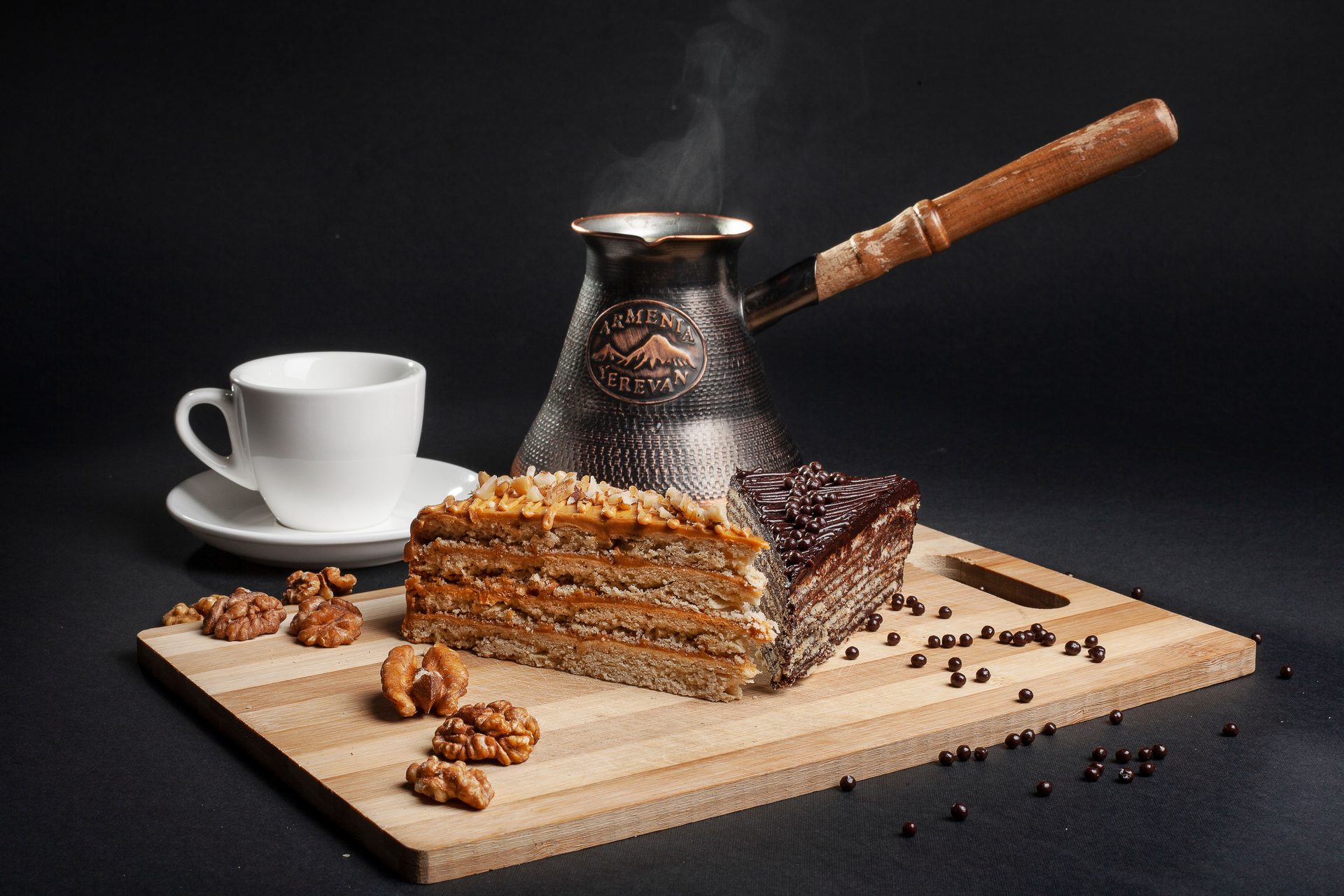
Armenian coffee, known locally as sourj, is finely ground and brewed unfiltered in a small long-handled pot called a jazzve, then poured directly into tiny cups without straining out the grounds. It’s strong, slightly thick, and meant to be sipped slowly rather than gulped down on the way out the door.
Once the cup is empty, it’s common practice to flip it upside down onto the saucer and let the leftover grounds settle into patterns used for informal fortune-telling — a lighthearted ritual that turns the end of breakfast into its own small event. Coffee culture plays a similarly central social role across the region, a pattern also visible in traditional Egyptian drinks, where coffee and tea double as excuses to linger at the table.
Key Insight: Armenian coffee is almost always served after the meal rather than with it, functioning more as a conversation starter than a wake-up drink.
Put all eleven dishes on one table and the pattern becomes clear: a traditional Armenian breakfast is built around sharing, not speed. Tangy matzoon and fresh lavash form the backbone, while tomato-and-egg scrambles, cheese, pastries, and strong coffee round things out depending on the day and the occasion.
Matzoon’s influence even extends into other meals — it’s also the base for spas, a matzoon-based soup that is a traditional dish in Armenia, and for tan, a cold, salted yogurt drink made with matzoon, water, and salt, served alongside grilled meats rather than at breakfast. Whether it’s a simple weekday plate of pamidorov dzvadzekh or a slow weekend khash with friends, the common thread running through Armenian breakfast culture is the same one found at most Armenian meals: nobody eats alone, and nobody leaves the table hungry.