Traditional Austrian Breakfast: 6 Dishes That Define the Morning Meal

November 24, 2026
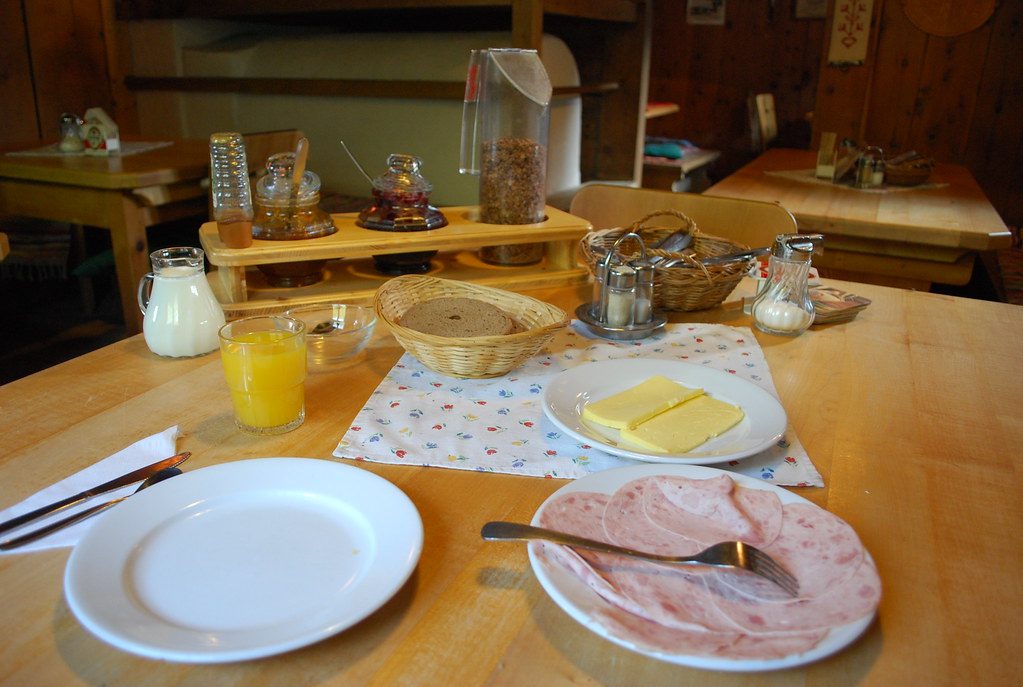
A traditional Austrian breakfast rarely looks like a single dish. It is closer to a small, unhurried assembly of bread, cured meats, eggs, coffee, and sometimes a bowl of grain porridge, pulled together from regions as different as Vienna’s coffeehouse district and the Alpine valleys of Vorarlberg. What ends up on the table depends less on a fixed recipe and more on where in Austria someone wakes up.
This spread of options is part of what makes Austrian breakfast culture worth studying. Unlike a single defining national dish, it is a set of six recurring staples that show up in different combinations: a bread roll, a milky coffee, a cured pork product, an egg preparation, a cereal dish, and in the west, a cornmeal porridge with its own identity. For readers curious how this compares to other traditional Austrian foods, breakfast offers one of the clearest windows into the country’s regional food habits.
1. Semmel
The Semmel is the plain white bread roll that anchors almost every Austrian breakfast table, and its most recognizable version carries a five-point spiral crimp cut into the top before baking. Bakeries across Austria sell it fresh every morning, often still warm, and it gets split open and spread with butter, apricot or plum jam, or a slice of cheese.
Variations exist depending on what gets mixed into the dough or sprinkled on top. Poppy seed Mohnsemmel and sesame-topped versions sit alongside the plain Kaisersemmel in most bakery cases, and some regions add a denser rye roll to the mix. The roll’s simplicity is deliberate: it is meant to carry whatever else is on the table rather than compete with it, a role similar to the baguette’s place at a French breakfast spread.
Pro Tip: Ask for a Semmel “frisch” (fresh) at an Austrian bakery in the early morning hours, since most bakeries bake multiple small batches rather than one large one, and the first batch sells out fast.
2. Melange
Melange is the milky coffee that defines the Viennese breakfast table as much as any food does. According to Wikipedia’s entry on the drink, a Melange, or Wiener Melange , is a specialty coffee drink similar to a cappuccino, with the difference that the Melange is made with milder coffee. At Vienna’s Café Sperl, the standard pour is described as half brewed coffee and half steamed milk, finished with a layer of foam.
The drink’s roots run deep into the city’s coffeehouse history. Secret Vienna traces the broader coffee house tradition in Vienna back to the 17th century, noting that coffee was introduced to Vienna following the defeat of the Turks in the Battle of Vienna. Today, ordering a Melange at breakfast is as much about the ritual of sitting with a newspaper as it is about caffeine, a slower pace shared by many national drink traditions, including traditional Russian drinks built around long tea sessions.
Compared with a cappuccino, the Melange tends to use a gentler coffee base and a thicker layer of steamed milk rather than dense microfoam. Copenhagen Coffee Lab describes the Viennese original as a gentle, well-balanced coffee drink from Vienna’s famous coffee houses, reminiscent of a cappuccino, but with its own character, which is why ordering one abroad can sometimes produce a sweeter, cocoa-dusted imitation rather than the real thing.
3. Schinkenspeck
Schinkenspeck is the cold-cut staple on most Austrian breakfast boards: a lightly smoked, air-dried ham that sits somewhere between prosciutto and bacon in texture. It is sliced thin and served cold alongside bread rather than cooked, making it a convenient addition to a breakfast that is otherwise built around minimal stovetop work.
Alpine regions, particularly Tyrol, have their own curing traditions that feed into what ends up labeled Schinkenspeck or simply Speck on a hotel buffet. The curing process typically combines salting, smoking over wood, and months of air-drying in cool mountain air, a method shared with several other Alpine cured meats. On a typical breakfast table, it appears alongside a simple cheese plate and the morning’s Semmel.
4. Eierspeise
Eierspeise is the catch-all term for an Austrian egg dish at breakfast, and it covers more ground than the English “scrambled eggs” suggests. Soft, lightly set eggs cooked slowly in butter are the most common version, often finished with chives or a touch of cream rather than cooked hard and dry.
A boiled egg served upright in a small egg cup, lid tapped off at the table, is the other common form, closer in spirit to the simple boiled-egg breakfasts found across much of Europe, including many traditional Greek foods built around a few unfussy ingredients. Austrians tend to treat the egg as a side rather than the meal’s centerpiece, pairing it with bread and cured meat instead of building a full plate around it.
Important Note: Portion sizes and exact preparation for Eierspeise vary by household and region, so there is no single fixed recipe; the description above reflects the most commonly cited version across Austrian food writing.
5. Muesli
Muesli shows up on Austrian breakfast tables as the lighter, cereal-based alternative to bread and cold cuts, usually served with yogurt, milk, or fresh fruit stirred in. It sits closer to a health-conscious option than a traditional farmhouse dish, though it has become common enough in hotels and homes that most lists of Austrian breakfast staples include it without hesitation.
The appeal is largely practical: muesli travels well, requires no cooking, and offers a break from the richer combination of bread, meat, and cheese. For travelers comparing breakfast traditions, Austria’s muesli-forward option is a useful contrast to heavier, savory-leaning spreads like a traditional Japanese breakfast, where rice, fish, and miso soup replace the cereal bowl entirely.
6. Riebel
Riebel belongs to Vorarlberg, Austria’s westernmost state, and it looks nothing like the bread-and-coffee spread found further east. TasteAtlas describes it as a traditional dish originating from Vorarlberg, a porridge made with a combination of cornmeal, milk, butter, and salt. The mixture simmers until it swells, then gets fried in clarified butter while being broken apart into small, irregular clumps with a wooden spoon.
Historically, Riebel was food for people with little money rather than a delicacy. According to Vorarlberg Tourism , until about the 1970s, Riebel was primarily a dish for poorer people or farm families, and it was typically eaten at breakfast because it is so filling. That history is tied directly to a specific local corn variety; the Slow Food Foundation’s Ark of Taste notes that Riebelmais has been traditionally cultivated and grown by communities from the mountain valleys of Vorarlberg for the past 350 years, though the registry adds that only 25 small traditional producers of Riebelmais are left in Vorarlberg today.
Modern households still make Riebel, though it has drifted toward lunch and dinner for most families as mornings get busier. It can be served sweet, dusted with sugar and cinnamon or paired with applesauce, or savory, folded with cheese and mushrooms as a side to meat. Either way, it remains one of the few Austrian breakfast dishes that has no real equivalent in neighboring countries, standing apart from heartier comfort dishes like a German traditional stew that fills a similar one-pot, farmhouse role at other meals.
| Dish | Category | Typical Region | Usually Served |
|---|---|---|---|
| Semmel | Bread | Nationwide | With butter, jam, or cheese |
| Melange | Coffee | Vienna and nationwide | In a cup with a saucer |
| Schinkenspeck | Cured meat | Tyrol and Alpine regions | Sliced cold with bread |
| Eierspeise | Egg dish | Nationwide | Soft scrambled or boiled |
| Muesli | Cereal | Nationwide, especially hotels | With yogurt or milk |
| Riebel | Cornmeal porridge | Vorarlberg | Sweet with applesauce or savory with cheese |
Taken together, these six dishes explain why Austria’s breakfast table resists a single, tidy description. A Viennese breakfast built around Semmel and Melange looks almost nothing like a Vorarlberg farmhouse plate of Riebel, yet both are equally “traditional” within their own regions. For anyone exploring the country’s food culture further, the broader breakfast traditions covered across different cuisines make it easier to see what Austria shares with its neighbors and what it keeps distinctly its own.