Traditional Romanian Clothing: 18 Garments That Define Romania’s Folk Heritage

November 20, 2026
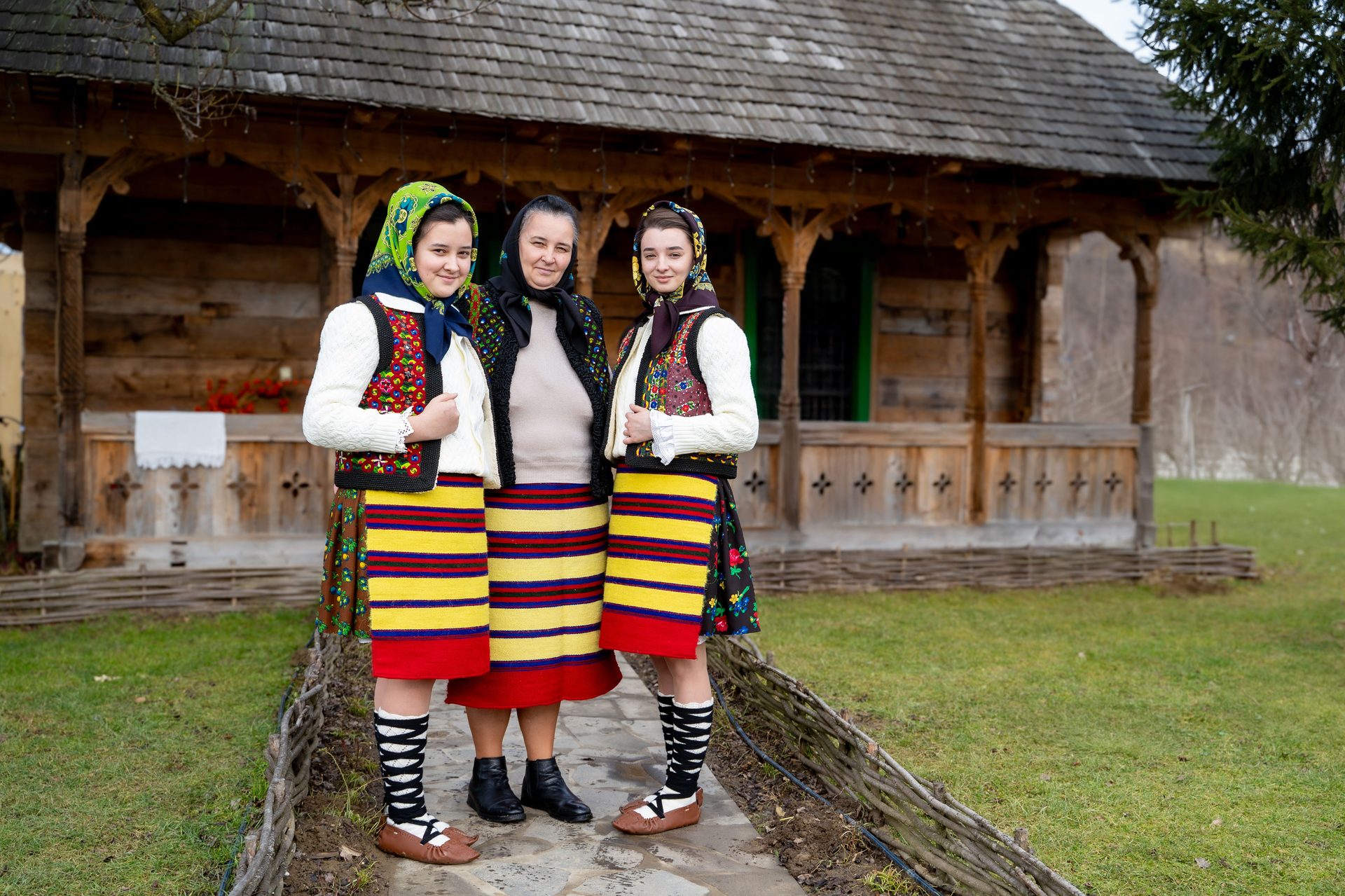
Traditional Romanian clothing turned a farm shirt into a piece of world heritage. In December 2022, UNESCO inscribed the embroidered blouse shared by Romania and Moldova on its Representative List of the Intangible Cultural Heritage of Humanity, cementing in law what villages had known for generations: a shirt could carry a whole identity on its sleeves.
That single garment is only one piece of a much larger wardrobe. Romanian folk dress layers shirts, trousers, vests, coats, belts, hats, and footwear that shift by region, season, and even marital status. Materials were almost entirely homemade – flax, hemp, wool, sheepskin, leather, and borangic silk – and dyed with plants gathered near the village. The eighteen garments below, moving from the body outward to the feet, show how practical farm clothing became one of southeastern Europe’s most recognized folk costumes.
| Garment Category | Typical Examples | Primarily Worn By |
|---|---|---|
| Shirts and blouses | Ie, Cămașă | Women and men |
| Trousers | Cioareci, Ițari | Men (regionally, women in Banat) |
| Outerwear | Suman, Sarici, Pieptar | Men and women |
| Skirts and wraps | Fotă | Women |
| Headwear | Căciulă, Căciulă țuguiată, Clop, Maramă, Basma | Men (hats), women (veils and scarves) |
| Footwear and leg wraps | Opinci, Obiele, Călțuni | Men and women |
| Belts and sashes | Chimir, Brâu | Men and women |
1. Ie
The ie is the white women’s blouse that gave Romanian folk dress its international profile. It is worn primarily in Romania and Moldova , and it remains the garment most people picture when they hear the words “traditional Romanian clothing.” The piece sits at the center of the national costume, cut simply but covered in an embroidery technique called altiță across the shoulder.
UNESCO’s nomination file describes the craft precisely: the art of the traditional blouse with embroidery on the shoulder (called altiță) is an essential part of Romanian and Moldovan folk dress for men and women, juxtaposing a simple cut with rich and colourful ornamentations stitched using complex sewing techniques. The blouses are made from flax, cotton, hemp, or floss silk, and the stitching combines horizontal, vertical, and diagonal seams into a texture unique to each region.
Making an ie was never a solitary task. Made out of flax, hemp, and cotton, crafting the ie was more than putting together elements to create clothes – it was a social event where women would gather together, twist wool, sing, and share the hardships and joys of daily life during the so-called șezătoare. Pattern and color carried their own code:
- Bright, dense floral embroidery signaled an unmarried young woman
- Muted colors and simpler motifs marked a married woman’s devotion to family life, as colorful ia are traditionally worn by girls and unmarried young women to highlight their beauty, while wives wear subdued colors and patterns that emphasize dedication to the family
- Regional motifs – geometric in some areas, floral in others – identified where the wearer was from
The ie’s reach extended well beyond the village. The blouse inspired a series of works by the French painter Henri Matisse, as well as contemporary reinterpretations by designers such as Yves Saint Laurent, Kenzo, and Jean Paul Gaultier, who built collections around its cut and ornamental motifs. That same embroidered-shoulder tradition shares a visual language with embroidery seen in other national dress, including the ornate stitching found in traditional Japanese clothing.
Key Insight: The UNESCO listing is shared jointly by Romania and the Republic of Moldova, recognizing the blouse as one living tradition split across a modern border.
2. Cămașă
Cămașă is the general Romanian word for shirt, and it covers the men’s counterpart to the women’s ie. Where the ie is a decorated, name-carrying garment, the cămașă is the foundational layer worn by both sexes under every other piece of the costume.
For men specifically, the garment is a long, tunic-style shirt that typically extends over the trousers and is cinched at the waist, allowing for a range of motion. Traditional Romanian clothing for men consists of a white shirt (cămașă), white trousers, hat, belt, and waistcoat or overcoat, tailored roughly to suit farm work rather than display. The tunic-over-trouser silhouette echoes other long-shirt traditions found in traditional Chinese clothing, where a similarly loose tunic forms the base layer of the outfit.
3. Cioareci
Cioareci are thick white woolen trousers worn chiefly by men, though regional exceptions exist. They appear in some of the oldest visual records of Romanian dress, sewn from a dense fabric that held up against mountain winters.
The weave sets them apart from lighter trousers: cioareci are peasant pants of white woollen cloth – dimie, pănură, or aba – woven in four threads, making them thicker than ițari. Wear varied sharply by region. In Banat, cioareci are known as canvas or baize stockings worn by women during winter, while in Moldova a version without pleats is worn on working days and called bernevici. In the south and in Moldova the trousers were worn over boots, while in Transylvania they were tucked into the tops of boots instead.
4. Ițari
Ițari are the long, narrow trousers most closely tied to Moldova, cut from a specialized sheep’s wool rather than the dense felt used for cioareci. The result was a lighter, more fitted leg covering suited to year-round wear.
According to Romania Tours , ițari are characteristic of Moldovans, made from țigaie wool at a length of about 2 meters but crimped on the leg from ankle to knee due to their narrowness, worn in both summer and winter, with the summer version made from bulky cotton. That crimped, almost pleated look at the ankle became a visual signature of the Moldovan men’s costume, distinguishing it at a glance from the plainer cut of cioareci worn further south.
5. Suman
The suman is the heavy outer coat that carried Romanian peasants through autumn and early winter. Unlike the fitted vests worn underneath, the suman was cut loose and long, meant to go over everything else.
It is a long peasant coat worn by both sexes, generally knee-length, made of white, cream, brown, grey, or black woollen felt and ornamented with decorative braiding called găitane. The garment goes by several regional names – it is also spelled țundră, zeghe, or dulamă – and its production required real craft. Sumans were often made rough at home by the poor or by specialized suman makers from strips of shrunk, woven boiling-wool fabric treated in water-powered fulling mills known as vâltoare. That same impulse toward heavy, weatherproof wool outerwear shows up across colder parts of Europe, including the felted coats common in traditional German clothing.
Important Note: A vâltoare fulling mill used moving water to beat and shrink wool fabric until it became dense and weatherproof – a process distinct from simple hand-felting and specific to Romanian and Balkan textile traditions.
6. Fotă
The fotă is a women’s wrap skirt worn over an underskirt called the poala, functioning less like a garment of necessity and more like a decorative apron meant to be seen. It is sometimes called a catrință in other regions.
Construction varied by area: the catrință or fotă resembled an apron used for aesthetic reasons, with various colors and designs sewn onto it – either one piece worn in front, two pieces worn front and back, or a full wrap-around skirt, as described by Romania Dacia . In Oltenia especially, the fotă carried geometric motifs – rhombs, crosses, spirals – that distinguished a wearer’s home village. The idea of a decorated wrap-skirt worn over a base layer also appears in draped garments like the sari in traditional Indian clothing, though the two traditions developed independently.
7. Pieptar
The pieptar is the embroidered sheepskin vest worn by both men and women over the cămașă or ie, and it is often the single most decorated item in the entire costume.
Two cuts existed side by side: the pieptar came in an open style (spintecat) with a conventional front cut, and a closed style (înfundat) with a side opening closed by buttons or worn over the head like a pullover, often made of sheepskin with the sheared or unsheared fur worn inside for warmth and the embroidered portion worn outside. The embroidery covers nearly the entire visible surface in dense, multicolored floral and geometric patterns, with leather appliqués and tassels adding texture. A similarly dense, all-over embroidered vest tradition can be found in regional dress across South Asia, including pieces associated with traditional Pakistani clothing.
8. Sarici
The sarici is one of the oldest garments on this list, a shaggy wool coat with long sleeves that were often left hanging loose down the back rather than worn arm-through. It belonged mainly to shepherds working at altitude, where its thick, unshorn wool offered protection from wind and rain that a woven fabric could not match.
Its age is documented in medieval art. The Chronicon Pictum Vindobonense portrays men in white shirts and trousers (cioareci), wearing shaggy sarici with long sleeves left on the back, along with simple leather shoes called opinci. That same combination – shirt, trousers, shaggy coat, leather shoes – still defines the silhouette of Romanian shepherd dress in folk festivals today.
9. Căciulă
The căciulă is the cylindrical fur cap that, alongside the pieptar and opinci, forms one of the three garments most people associate with Romanian men’s folk dress. Made from sheepskin with the wool worn outward, it offered real protection against mountain cold rather than serving as pure decoration.
It sits among the core identifying pieces of the costume: the primary components of Romanian folk costumes include sheepskin vests (pieptar), cylindrical fur caps (căciulă), and leather and fur sandals (opinci), according to Immigration Lawyer Bucharest . Height, color, and the curl of the wool varied by region and by the wearer’s age or status, with taller versions reserved for more formal or festive occasions.
10. Căciulă Țuguiată
The căciulă țuguiată is the tall, pointed cousin of the standard căciulă, rising to a visible peak rather than sitting flat on the head. The shape made it instantly recognizable at a distance, which mattered in festive gatherings where regional identity was often announced through headwear before a word was spoken.
This taller cut is associated with northern and mountainous communities, where it tends to appear alongside heavier winter garments like the suman and sarici. The pointed profile also made the cap practical for shedding rain and snow more quickly than a flat-topped design, a small but useful advantage for anyone working outdoors through a long winter.
11. Clop
The clop is a wide-brimmed felt hat rather than a fur cap, and it belongs to a different register of the men’s wardrobe – closer to festive dress than everyday farm wear. Its broad, stiff brim sets it apart visually from the rounded profile of the căciulă.
Decoration is where the clop earns its place in folk costume displays: it is commonly trimmed with ribbons, feathers, or small bunches of flowers tucked into the band, details that shift with the season and the occasion. Men wore it tilted or angled rather than squarely centered, a small styling choice that added personality to an otherwise uniform costume.
Important Note: Headwear like the clop and căciulă țuguiată varies enormously by village and ethnographic zone; the descriptions above reflect general regional patterns rather than a single fixed standard.
12. Maramă
The maramă is the long veil worn by married women, and it carried more social weight than almost any other garment on this list – it announced marital status at a glance. Unmarried girls wore their hair uncovered, which made the maramă a visible marker of a woman’s change in status after her wedding.
Custom even dictated who placed it on the bride: head coverings worn by women have always played a social role, since only married women could wear one, and it is the godmother’s job to put the maramă on the bride’s head, according to You Could Travel . Geography shaped the fabric too: the maramă is worn mainly in southern Romania, southern Moldavia, and southern Transylvania, typically woven from borangic, a domestic Romanian silk, or fine white cloth that draped past the shoulders.
13. Basma
The basma is the simpler, more colorful alternative to the maramă – a printed cotton headscarf rather than a long silk veil. Where the maramă leaned formal and ceremonial, the basma was practical enough for daily wear while still carrying floral or paisley patterns typical of Balkan scarf traditions, a decorative language shared with headscarves worn across the region, including some forms of Albanian folk attire.
The two garments were close enough in function that wedding custom sometimes used either one: it was the godmother’s job to put the basma or maramă on the bride’s head. In daily life, a basma was the quicker, more affordable choice for married women who needed their hair covered while working rather than celebrating.
14. Opinci
Opinci are simple leather moccasin-style shoes, and they may be the oldest piece of clothing on this entire list – older, by most accounts, than the embroidered blouse that now represents the costume worldwide.
Their roots reach back well before recorded Romanian history: shoes called opinci – known as opanak in Slavic – were worn since ancient times in the Balkans, tracing to Dacian and Thracian dress, according to Romania Dacia . Leather sandals, known as opinci, are often worn with this traditional attire as opposed to boots, which are more commonly worn in the winter. A full traditional foot dressing generally followed a set order:
- Wrap the bare foot in obiele, the cloth leg wraps, for cushioning and insulation
- Pull knitted călțuni stockings over the wrapped foot for an extra warm layer
- Lace the opinci on top and tie the leather cords up the ankle or calf
The same name turning up as “opanak” in neighboring Slavic languages is a reminder that Romanian folk footwear sits inside a much wider Balkan shoe tradition, one that also touches Albanian national dress in villages just across the border.
Pro Tip: The name opinci and its Slavic cousin opanak describe nearly identical leather moccasins worn across several Balkan countries – a useful clue when comparing regional folk footwear.
15. Obiele
Obiele are the cloth foot wraps worn in place of socks, wound tightly around the foot and lower ankle before the opinci went on. They were a practical, low-cost solution long before knitted stockings became common in rural wardrobes, and they remained standard among shepherds and field laborers who needed dry, insulated feet through long working days.
A strip of woven wool or linen, folded and wrapped in a specific pattern, could keep a foot warmer than a loose sock while also cushioning it against the stiff leather of the opinci above. The technique required practice, and an improperly wrapped obiele was a quick way to end up with blisters on a long walk to market or pasture.
16. Călțuni
Călțuni are knitted wool stockings, usually white, worn either over the obiele wraps or on their own under boots. Unlike the utilitarian obiele, călțuni were often knitted with decorative patterns near the ankle or calf, giving women in particular a chance to show off needlework skill even on a garment mostly hidden inside footwear.
Thickness and length varied with the season and the region, with heavier, taller versions reserved for winter and lighter styles worn under lighter summer footwear. Pairing them with opinci rather than boots was the more traditional combination, especially in mountain villages where boots were expensive and harder to replace.
17. Chimir
The chimir is a wide leather belt worn by men, broad enough to double as a storage pocket for coins and small tools rather than serving purely as a waist accessory. Its width also gave it a practical back-support function during heavy physical labor, bracing the lower back the way a modern work belt might.
Sources describe it plainly: brâu sau chimir de piele is the name for the leather waist belt made for men, and men’s leather belts were usually very wide and solid. Some versions were studded with metal fittings or stamped with tooled patterns, turning a working accessory into a visible marker of a man’s craftsmanship or status within the village.
18. Brâu
The brâu is the woven wool sash worn by both men and women at the waist, and it is one of the few garments on this list that genuinely crosses gender lines in nearly identical form, differing mainly in width and color rather than function.
For women, the brâu was never purely practical. It was tied to emphasize a narrow waist and, in folk belief, to encourage fertility – a symbolic weight placed on a strip of woven wool that most other cultures would treat as a simple accessory. Men’s versions tended to run wider and plainer, sometimes overlapping with the leather chimir rather than replacing it, and the colors and floral motifs woven into a brâu often matched the embroidery on the ie or cămașă worn above it. The same instinct to wrap a decorative sash at the waist as both function and symbol appears in sash and belt traditions found in traditional American clothing as well, though the specific symbolism differs from culture to culture.
Key Insight: The brâu’s dual role – practical waist support and fertility symbol for women – illustrates how Romanian folk dress rarely separated function from meaning; nearly every garment on this list carried both.
Eighteen garments, one costume: that is the real story of traditional Romanian clothing. Each piece above answers a specific need – warmth from the suman and sarici, status from the maramă and basma, identity from the ie and fotă – and together they form a wardrobe that regional museums, folk ensembles, and the UNESCO file on the altiță blouse are still working to document fully. Modern interest in reviving these techniques, visible in everything from contemporary folk-inspired fashion to heritage weaving workshops, suggests the costume’s influence is far from finished.