Traditional Ecuadorian Clothing: 16 Garments That Tell the Story of the Andes

November 20, 2026
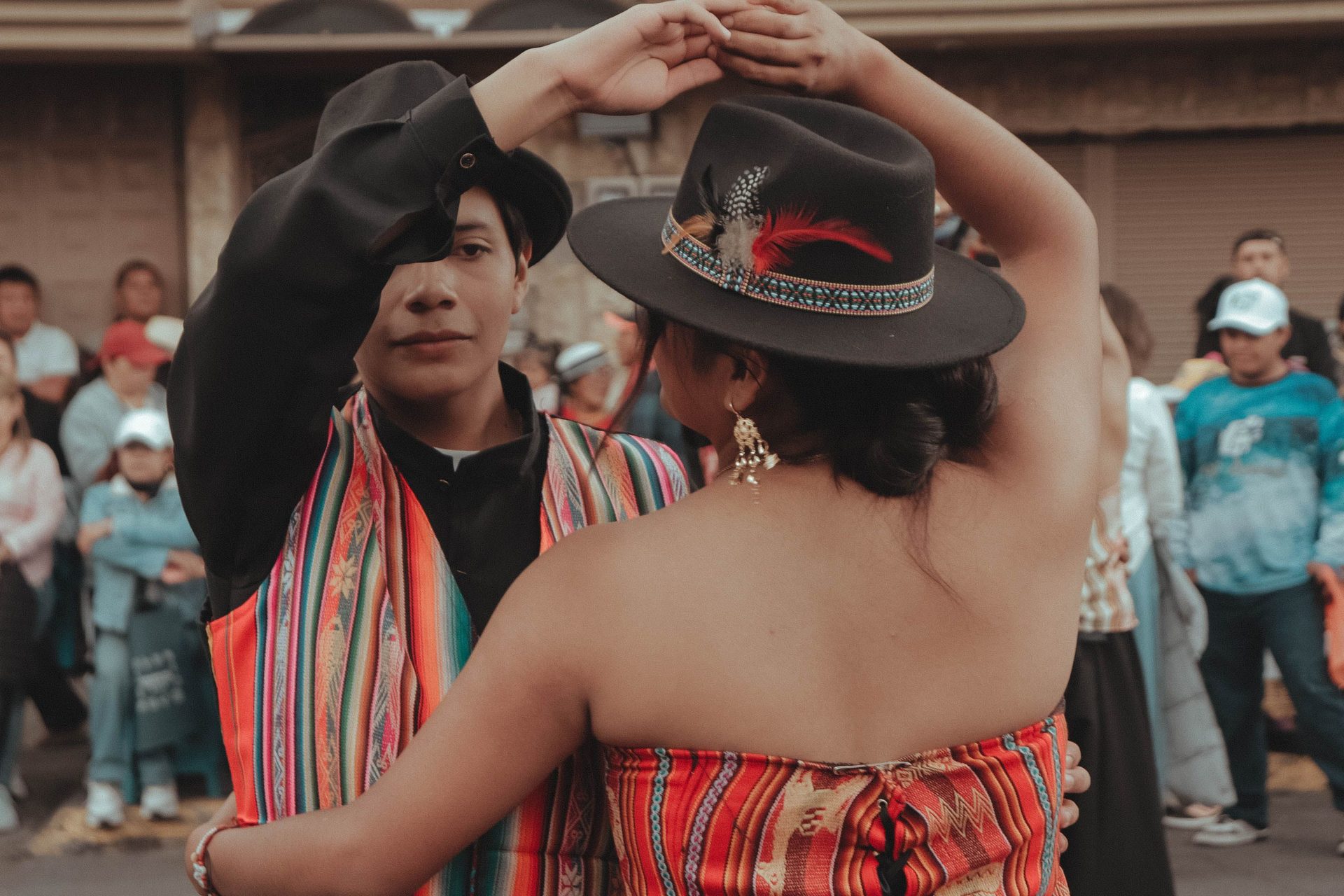
Long before Ecuador appeared on a map, Andean weavers were already dyeing wool, plaiting straw, and pinning cloth with bone and silver. Traditional Ecuadorian clothing survives today not as costume but as everyday dress in towns like Otavalo, Saraguro, and along the coastal lowlands, where each garment still signals region, marital status, or even a wearer’s trade. This guide walks through 16 pieces that make up that wardrobe, from the poncho and the toquilla straw hat to smaller items like the tupu pin and the maki watana bracelet.
Because Ecuador is home to numerous indigenous nationalities, no single outfit represents the whole country. Many of the garments below are most closely associated with the Kichwa-speaking communities of Otavalo and Imbabura Province, whose dress is among the best documented, alongside coastal and highland mestizo pieces worn more broadly. For readers curious how other nations preserve similar sartorial heritage, our overview of clothing traditions around the world offers useful points of comparison.
Important Note: Ecuador has more than a dozen recognized indigenous nationalities, each with its own dress conventions. This article focuses on the garments most frequently documented in Kichwa-Otavalo and coastal mestizo wardrobes rather than every regional variation.
1. Poncho
The poncho is the most recognizable men’s garment in highland Ecuador, cut as a simple rectangle of wool with a slit for the head. Among Otavaleño men, the color carries meaning: the pants are long and white, they use a dark-colored poncho, usually navy blue or black, and its design is based on the shape of the Andean mountains. Outside festival days, everyday use has declined among younger men, but the poncho remains standard for ceremonies, markets, and civic events.
Similar draped cloaks appear across the Andes in Peru and Bolivia, and versions of the poncho also traveled north through colonial trade routes into other parts of the Americas. Readers interested in how the garment shows up elsewhere can look at our piece on poncho traditions across the Americas.
2. Alpargatas
Alpargatas are the flat, open-back sandals worn by both Otavaleño men and women, usually in black or navy with a cabuya-fiber or rubber sole. Historically, simple sandals (alpargatas) were once made from hemp, a detail that points to the fiber crafts long practiced in Imbabura Province. For festivals, wearers often switch to brighter, patterned pairs rather than the everyday black or blue versions.
The shoe’s simplicity is part of its durability: alpargatas are blue or black and are made to cover the feet without the weight of a boot, which suits both market walking and fieldwork. Men’s and women’s alpargatas differ little in construction, though women’s pairs are more often made in a slimmer cut.
3. Felt Hat
A felt hat, usually styled as a fedora, tops off the Otavaleño man’s outfit alongside his poncho and trousers. According to one account of the region’s dress, few men wear the full traditional Otavalo dress apart from on special occasions, but most still wear a felt hat and style their hair in a single braid at the back as a mark of identity and pride. The hat itself is typically wool or cloth, handwoven, and comes in black, blue, or brown.
Women also wear a felt hat on occasion, layered over a headcloth rather than in place of one. European felt-hat traditions, such as the Alpine styles covered in our guide to European felt hat traditions, share a similar wool-felting process despite looking quite different on the head.
4. Calf-Length White Trousers
White, calf-length trousers complete the traditional Otavaleño men’s outfit, paired with the white long-sleeved shirt and dark poncho described above. One description of the ensemble notes simply that Otavalo men have their hair long and plaited, wear calf length trousers, and a blue poncho. The cropped length keeps the trousers clear of mud and allows the alpargatas and ankles to show, a practical cut for highland terrain and market days alike.
| Garment | Worn By | Primary Material | Typical Occasion |
|---|---|---|---|
| Poncho | Men | Wool | Festivals, ceremonies |
| Calf-length trousers | Men | Cotton or linen | Daily and formal wear |
| Anaco | Women | Woven wool cloth | Daily wear |
| Fachalina | Women | Wool | Daily and ceremonial |
| Toquilla straw hat | Men and women | Toquilla straw | Sun protection, formal events |
5. Anaco
The anaco is a long wraparound skirt worn in two layers, one dark and one lighter, each held in place by a faja. Historically, the garment traces back to the Inca period, when the anaku was a skirt-type garment of indigenous women in the Inca Empire, a long drape dress straight in shape, falling to ankle length. Over generations the full-length version shortened in some regions, though it remains a costume that Otavalo people still wear largely in its original ankle-length form.
The color pairing is not arbitrary. An outer black or navy layer is typically worn over an inner white layer, a contrast that distinguishes the Otavalo anaco from skirts in other Andean towns. Readers who want a point of comparison with other wrap-style garments can see our guide to wrap skirts like the saree.
Key Insight: The anaco’s two-tone construction (dark outer layer, pale inner layer) is a visual marker specific to Otavalo dress, distinguishing it from single-layer wrap skirts worn in other Ecuadorian highland communities.
6. Fachalina
The fachalina is a plain woolen shawl worn over the shoulders or crossed at the chest, and it doubles as a head covering in cooler weather. One description calls it a plain woollen “everything cloth,” which can be used as a head covering as well as a wrap. In Otavalo, it is also tied in different ways depending on marital status, with married and unmarried women favoring slightly different knots.
A related account describes the garment as worn like a short cape: the lliclla or fachalina is worn like a very short cape, knotted at the chest by women who follow the traditional style, or knotted over one shoulder by younger women who adopted that style more recently. Layered shawl customs show up in many cultures; our overview of layered shawl traditions explores a different regional approach to the same idea.
7. Faja
The faja is the woven belt that holds the anaco’s two layers in place at the waist, typically made on a backstrap loom with geometric patterns. Descriptions of the Otavalo woman’s outfit note an ankle length skirt (anaco) fastened with an intricately woven cloth belt (faja). The weaving itself is dense and narrow, built to hold two layers of heavy wool cloth snug against the body all day.
In practice, two fajas are often worn at once: an inner band that does the structural work and an outer, more decorative one visible to others. Woven sashes appear in other dress traditions too, including the ones described in our piece on woven sashes from East Asian court dress.
8. Walcas
Walcas are the strings of gold-colored beads that Otavalo women wear stacked around the neck, sometimes a dozen strands at once. One account of the dress notes women wearing multiple strings of golden beads (walcas) around their neck alongside the fachalina and coral bracelets. The beads are usually glass rather than true gold, finished with a gold wash that catches the light.
The number of strands worn is partly a matter of personal choice and partly a family’s accumulated collection, since walcas are often handed down and added to over a lifetime rather than bought as a single set.
9. Maki Watana
Maki watana are the coral or red-bead bracelets wrapped tightly around an Otavalo woman’s wrists, worn alongside the walcas necklace. They are described as coral charms (maki watana) on their wrists to ward off evil spirits, a protective rather than purely decorative function. Red beads in particular carry extra symbolic weight.
According to one explanation of Otavalo symbolism, the red maquiguatana bracelets symbolize fertility, which helps explain why red remains the dominant color choice even when other bead colors are available. The bracelets are wound several times around each wrist rather than worn loose, giving them a stacked, almost sculptural look.
10. Humaguatarina
The humaguatarina is the folded head cloth Otavalo women wear instead of, or sometimes underneath, a felt hat. It is described plainly as the piece worn a felt hat or coloured cloth (humaguatarina) that keeps off the sun. One regional source adds that on the head the woman uses the humaguatarina, which is a folded cloth, distinguishing it from the stiffer, brimmed felt hat men more often wear.
Unlike a fitted hat, the humaguatarina can be folded flat for storage and refolded into different shapes depending on the occasion, making it one of the more adaptable pieces in the wardrobe.
11. Wallka
Wallka is an alternate spelling and pronunciation of the same multi-strand necklace described above as walcas, reflecting dialectal variation in how Kichwa terms are transliterated into Spanish and English. One source describing the women’s outfit uses this version directly: typical jewellery consists of a multi-strand necklace (walka) of gold-coloured glass beads, worn with matching coral wrist bracelets. Another account simply calls them gold necklaces, known as walka, confirming the overlap between the two spellings.
Whichever spelling is used, the necklace functions the same way: stacked strands worn daily, not reserved for special occasions, which sets it apart from jewelry traditions where gold pieces are saved for formal wear only.
12. Tupu
The tupu is a decorative pin, traditionally used to fasten the anaco at the shoulder before safety pins and buttons became common. A historical account of Otavalo dress notes that women’s garments were fastened at the shoulders by means of tupus and at the waist with a faja, a construction method dating back generations. Today, tupus are less commonly used for everyday fastening but still appear in ceremonial outfits and as collectible silver pieces.
Craftsmanship around the tupu connects to a broader embroidery and metalwork tradition documented by Ciudad de Otavalo , which traces how colonial-era chronicles described similar pinned garments among Kichwa communities.
13. Rebozo
The rebozo is a shawl worn crossed under one arm and knotted at the opposite shoulder, distinct from the fachalina in how it is tied rather than draped. A Spanish-language account of Otavalo women’s dress describes it exactly this way: el reboso es una tela que se cruza por debajo del brazo y se amarra en el hombro contrario, meaning it crosses under the arm and ties at the opposite shoulder. Worn together with the fachalina, the rebozo adds a second layer of coverage without the bulk of a full cape.
Shawl-and-wrap combinations like this appear in many cultures as a practical answer to variable highland weather. For a different regional take on layered shawls, see our article on shawl traditions from South Asia.
14. Zamarro
The zamarro is a pair of sheepskin or goat-hide chaps worn over trousers by chagras, the horse-riding herdsmen of Ecuador’s central highlands around Cotopaxi and Pichincha provinces. Unlike the lighter garments worn in Otavalo’s markets, the zamarro is working gear, built to protect a rider’s legs from cold, thorny brush, and long hours in the saddle. Fur typically faces outward, giving the chaps a shaggy, insulated look that stands apart from any other item on this list.
Zamarros remain closely tied to Andean cattle-herding culture and appear prominently at rural festivals that celebrate the chagra lifestyle, where riders wear them alongside ponchos and felt hats rather than as a standalone piece.
15. Toquilla Straw Hat
The toquilla straw hat, globally mislabeled as the “Panama hat,” is woven from the fiber of the Carludovica palmata plant along Ecuador’s coast. Despite the misleading name, the Panama hat is woven in Ecuador, specifically in the coastal villages of Manabí Province, with the best examples produced in and around the town of Montecristi, from the young fibers of the Carludovica palmata palm. The craft’s importance was formally recognized when UNESCO added the traditional Ecuadorian weaving of the toquilla straw hat to its Intangible Cultural Heritage list in 2012.
The hat’s international fame owes something to historical accident. During the construction era associated with the Panama Canal, President Theodore Roosevelt was famously photographed wearing one, propelling the hat into global fame, which cemented the “Panama” misnomer even though the hat has no origin in Panama itself. Other iconic national hats have followed similarly winding paths to fame, a theme explored in our look at iconic national hats.
Pro Tip: A genuine fine-weave toquilla hat should be able to roll into a tight cylinder and spring back into shape without creasing. If a “Panama hat” cannot fold this way, it is likely a lower-grade weave or a different material entirely.
16. Guayabera
The guayabera is a lightweight, pleated button-up shirt with vertical tucks and patch pockets, worn across Ecuador’s warmer coastal cities as smart-casual or semi-formal attire. It is less an indigenous Andean garment than a tropical adaptation shared across much of Latin America and the Caribbean, and in Ecuador it appears most often in Guayaquil and Manabí rather than the highlands. Paired with dress trousers, it serves as an alternative to a full suit jacket in humid lowland climates.
In neighboring Venezuela, the guayabera appears at similarly festive coastal gatherings, often alongside the dishes covered in our guide to traditional Venezuelan food. The shirt’s popularity across the region reflects a shared coastal culture that predates modern national borders.
Taken together, these 16 garments show that Ecuadorian traditional dress is not a single costume but a layered system: color signals status, pins and sashes do structural work, and materials shift from highland wool to coastal straw depending on climate and trade. Many of these pieces, especially the toquilla straw hat and the Otavalo ensemble, remain in daily use rather than museum display, which is part of why they continue to carry such specific cultural weight.